The best hikes from bus stations in Frederiksoord-Wilhelminaoord
4.5
(5690)
28,719
hikers
30
hikes
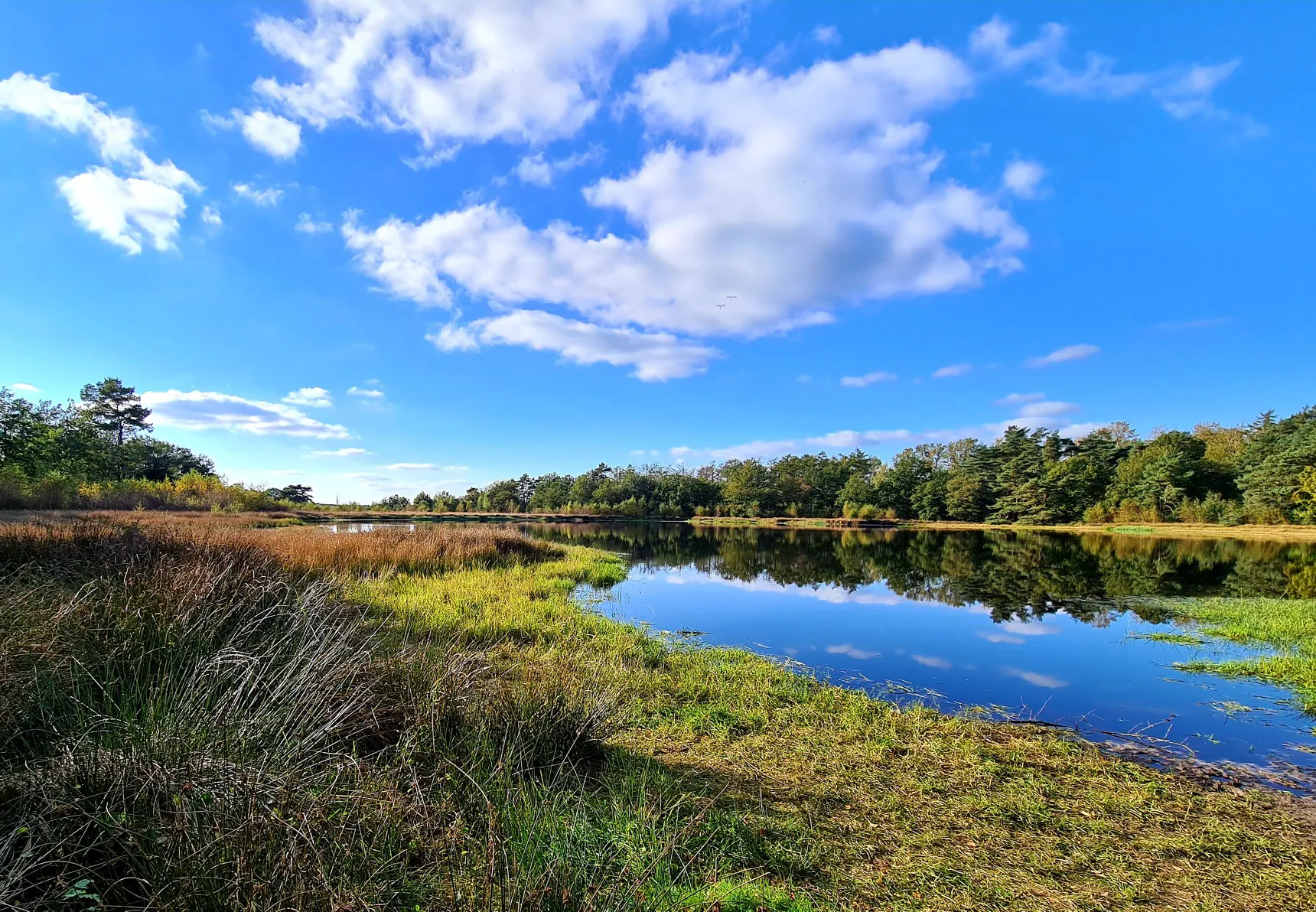
Bus station hiking trails in Frederiksoord-Wilhelminaoord traverse a unique cultural landscape, a UNESCO World Heritage site shaped by 19th-century social reform. The region features diverse natural settings, including the Sterrebos (Star Forest), Vledderveld, and Nijensleekerveld, offering woodland walks and open field landscapes. Waterways like the Westerbeeksloot are integrated into several routes. The terrain is generally flat, with minimal elevation gain, making it accessible for various fitness levels.
Best bus station hiking trails in Frederiksoord-Wilhelminaoord
- The most popular bus station hiking…
Last updated: July 9, 2026
4.6
(31)
219
hikers
Moderate hike. Good fitness required. Easily-accessible paths. Suitable for all skill levels.
4.6
(28)
155
hikers
Easy hike. Great for any fitness level. Easily-accessible paths. Suitable for all skill levels.

Sign up for free
4.3
(8)
63
hikers
Moderate hike. Good fitness required. Easily-accessible paths. Suitable for all skill levels.
4.4
(9)
33
hikers
Easy hike. Great for any fitness level. Easily-accessible paths. Suitable for all skill levels.
4.7
(3)
17
hikers
Moderate hike. Good fitness required. Easily-accessible paths. Suitable for all skill levels.
Get access to more routes and recommendations from other explorers.
Sign up for free
Already have an account?
Our route recommendations are based on thousands of hikes, rides, and runs completed by other people on komoot.
Start today with a free account
Your next adventure awaits.
Login or Signup
Popular around Frederiksoord-Wilhelminaoord
Other adventures in Frederiksoord-Wilhelminaoord

Tips from the Community

The children had compulsory education from the age of six. Initially, they went to school in Vledder. The school in Wilhelminaoord was built in 1821 together with the schoolmaster's house. In the morning, there were lessons for pupils aged 6-13, in the afternoon for older girls, and in the evening for older boys. Education in the Colonies was led by schoolmaster Jan Hessels van Wolda.
0
0

this was the director's residence of the Colony of Benevolence
0
0

Each colonist farm had access to approximately three hectares of land, which was cultivated, sown, and harvested under the supervision of the Company. Initially, buckwheat was primarily cultivated, as this crop thrived even on nutrient-poor soil. Due to the need for crop rotation, numerous small fields later emerged, growing crops such as rye, buckwheat, potatoes, oats, and barley. Adjacent to the farm, each farmstead had a vegetable garden for its own use.
0
0

In 1904 this field was constructed in the forest for the football club Forward of the former horticultural school. In 1911 the club was renamed Old Forward one of the 50 oldest clubs in the Netherlands. Since 1984 the club has its fields in Wilhelminaoord. After 1984 the field was used for a short time and with little success as a cultivation field for dahlias for the Floraliacorso. It is now used by the riding club Genraal van de Bosch.
0
0
Historic village church with saddle roof tower. The first chapel in Vledder (ca. 1000) was probably made of wood. The current tower (ca. 1350) was probably built at that wooden chapel. Only after that were the nave (1425) and the choir (1475) built. The church is one of the oldest in Drenthe. The oldest part of the church is the saddle roof tower, built in the 14th century. It is one of the few saddle roof towers in Drenthe. After the construction of the tower in 1425, construction of the single-nave nave of the church began. The choir was built around 1475. In 1621, the church was hit by a major fire, causing the building to partially collapse. The church was not partially restored until the beginning of the 18th century. The municipality of Vledder underwent a major expansion in 1818 when the Maatschappij van Weldadigheid settled in Frederiksoord. In 1820 the church was put back into use. In the following years no maintenance was carried out on the church. This led to the church being closed in 1952 due to dilapidation. In 1952 - 1954 the church and the tower were restored. The baptismal font in the church dates from the 11th century and is large enough to immerse a newborn, as was customary at the time. The pulpit dates from the end of the 18th century.
0
0

Nice place to sit for a while
0
0
Frequently Asked Questions
How many bus station hiking trails are available in Frederiksoord-Wilhelminaoord?
There are 23 hiking trails accessible from bus stations in Frederiksoord-Wilhelminaoord. These routes cater to various preferences, with 6 easy, 16 moderate, and 1 difficult option.
What kind of terrain and difficulty can I expect on these bus station hikes?
The trails in Frederiksoord-Wilhelminaoord offer a mix of diverse landscapes, from pleasant woodland walks through areas like the Sterrebos and Vledderveld to open field landscapes. The elevation changes are generally gentle, with routes like the Dry Basin (Sterrebos) – Basketry Workshop Wilhelminaoord loop from Frederiksoord featuring minimal ascent and descent, making most trails accessible for a wide range of fitness levels. The majority of routes are classified as moderate.
Are there family-friendly hiking options accessible from bus stations?
Yes, there are several family-friendly options. For an easy and shorter walk, consider the Westerbeek House – Bridge Over the Westerbeeksloot loop from Frederiksoord, which is about 3.5 km long and suitable for all fitness levels. Many routes also pass by historical sites that can engage younger hikers.
Can I bring my dog on these bus station hiking trails?
Frederiksoord-Wilhelminaoord is generally welcoming to hikers with dogs. Many natural areas, including the Sterrebos and Vledderveld, are suitable for walks with leashed dogs. Always check local signage for specific rules regarding nature reserves or protected areas you might encounter on your chosen route.
What historical sites and landmarks can I see along these bus station routes?
The region is rich in history as a UNESCO World Heritage site. You can explore numerous historical monuments related to the Colonies of Benevolence. Highlights include the Doctor's House, Frederiksoord, the Colony Store, and the Museum The Proefkolonie. In Wilhelminaoord, you can visit the Basketry Workshop Wilhelminaoord and the Wilhelminaoord colony church. Many trails, such as the Monumentenroute, are specifically designed to guide you past these significant sites.
What natural features will I encounter on hikes from the bus station?
You will encounter diverse natural features, including the serene Sterrebos (Star Forest), the open landscapes of Vledderveld and Nijensleekerveld, and waterways like the Westerbeeksloot. The area offers a tranquil backdrop of forests and fields, providing a peaceful outdoor experience. The Dry Basin (Sterrebos) – Bridge Over the Westerbeeksloot loop from Frederiksoord is a good example of a route combining woodland and water features.
Are there circular hiking routes available from the bus stations?
Yes, many of the hiking trails accessible from bus stations in Frederiksoord-Wilhelminaoord are circular routes, allowing you to start and end at the same point without needing to retrace your steps. An example is the Old Forward Football Field – Dry Basin (Sterrebos) loop from Frederiksoord, which offers a convenient loop experience.
What do other hikers enjoy most about hiking in Frederiksoord-Wilhelminaoord?
The area is highly rated by the komoot community, with an average score of 4.5 stars. Reviewers often praise the unique blend of natural beauty and rich history, highlighting the quiet woodlands, well-preserved historical sites, and the overall tranquil atmosphere that makes for a contemplative and engaging outdoor experience.
Are there places to eat or drink near the bus station hiking trails?
Yes, the villages of Frederiksoord and Wilhelminaoord, where many bus stations are located, offer options for refreshments. You can find cafes and pubs in these charming villages, providing convenient stops before or after your hike. The historical Colony Store also offers a glimpse into the past.
When is the best time of year to hike in Frederiksoord-Wilhelminaoord?
Frederiksoord-Wilhelminaoord offers enjoyable hiking experiences throughout the year. Spring brings blooming nature, summer provides lush green landscapes, and autumn showcases beautiful fall colors in the forests. Even in winter, the quiet, serene natural areas can be very appealing, though appropriate clothing is recommended.
Are there any longer, more challenging routes accessible by bus?
While most routes are easy to moderate, some longer options provide a more extended experience. For example, the Johannes de Doperkerk Vledder – Dry Basin (Sterrebos) loop from Frederiksoord is a moderate route stretching over 19 km, offering a deeper exploration of the region's diverse landscapes.
Most popular routes in Frederiksoord-Wilhelminaoord
Most popular attractions in Frederiksoord-Wilhelminaoord

Get inspired with the komoot mobile app


Explore more
Browse the best Hikes in other regions.
