Top 20 Natural Monuments around Teuschnitz
Best natural monuments around Teuschnitz showcase the diverse landscape and geological history of the Franconian Forest. The region features a variety of natural attractions, including protected areas like the Teuschnitz-Aue Landscape Protection Area, known for its botanical diversity. Impressive bodies of water such as the Ködeltalsperre, Bavaria's largest drinking water reservoir, offer scenic views and geological insights. These natural attractions provide opportunities for exploring unique features and understanding the area's ancient past.
Best natural monuments around Teuschnitz
- The most popular…
Last updated: August 4, 2026
Lehesten Slate Quarry Industrial Heritage Site
Highlight • Monument
Translated by Google •
Tip by

Altvaterturm
Highlight • Viewpoint
A circular hiking trail to Staatsbruch Lehesten also runs here.
Translated by Google •
Tip by

Sign up now to discover places like this
Get recommendations on the best single tracks, peaks, & plenty of other exciting outdoor places.
Sign up for free
Ködel Reservoir
Highlight • Lake
Translated by Google •
Tip by

Cook's Grave
Highlight • Historical Site
Translated by Google •
Tip by
Dürrenwaid Slate Heap
Highlight • Natural Monument
Translated by Google •
Tip by

Sign up for free to discover even more natural monuments around Teuschnitz.
Sign up for free
Already have an account?
Start today with a free account
Your next adventure awaits.
Login or Signup


Tips from the Community

This grave is located on the Thuringian-Bavarian border at the turnoff to Gräfenthal.
1
0

One of the 13 stations on the 5.7-kilometer-long Fairytale Trail features the cook's grave as its theme—albeit not particularly child-friendly. The alleged gravestones are presumably fragments of former boundary stones here on the historic border between Bavaria and Thuringia. The legend, however, is based on a true story: At the end of the 16th century, under the rule of the Knights of Thüna, a cook from Lauenstein Castle was buried alive and then impaled for infanticide. The harsh punishment corresponded to the then-current legal code, the "Sachsenspiegel" (Saxon Mirror) of 1235.
12
0

Near the castle, on the signposted Lauenstein fairy tale path, is the cook's grave. An information board informs hikers that, according to tradition, in the 16th century, under the rule of the Knights of Thüna, a cook from Lauenstein Castle was impaled and buried alive at this spot for infanticide. The conviction was made according to the laws of the Sachsenspiegel. Today, only a few small boulders remind us of this, the historical origin of which is not proven. Wikipedia article: https://de.wikipedia.org/wiki/Burg_Lauenstein_(Frankenwald)
2
0

This is the former Lehesten roofing slate opencast mine. Its dimensions alone are impressive; along with the nearby Oertelsbruch, it was one of the largest slate quarries on the continent (approximately 800 m long, 300 m wide, and up to 80 m deep). Source: Wikipedia
10
1

The tower is located on the Wetzstein hill. A circular hiking trail to Staatsbruch Lehesten also runs here.
22
0
A beautiful region 🤩 If you like, you can also take a detour to the Alvater Tower.
20
2
The tower on the Wetzstein was built as a memorial against the expulsion of people and as a place of remembrance of a lost homeland. After the expulsion of the Germans from Czechoslovakia in 1945/46, local friends founded the Altvaterturmverein Langgöns in 1976. In 1999, the association rebuilt the Altvaterturm, which collapsed on May 2, 1959 and was not rebuilt, on the Wetzstein in a true-to-original manner.
25
1
In the "Land of Blue Gold," as the slate is called here because of its distinctive color, the tradition of Thuringian-Franconian slate mining can still be experienced today. This extraordinary industrial complex, located at what was once one of Europe's largest open-cast slate mines, provides a hands-on experience of the history and processing of slate. The entire Staatsbruch Slate Park area is a nature reserve. 170 Red List species have now been confirmed to have settled in this partially inaccessible area.
23
1
Frequently Asked Questions
What are some unique geological features to explore around Teuschnitz?
Teuschnitz is rich in geological history. You can visit the Teuschnitzer Konglomerat im Bürgerbachtal, a formally recognized geotope showcasing characteristic poorly sorted, well-rounded pebbles. Another significant geotope is the Former Quarry North of Posseck in the Teuschnitz Valley, which exposes thick-bedded greywacke from the Lower Carboniferous period. Additionally, the Slate Cliff at Schieferpark Lehesten displays various colors and structures of slate, offering insight into the region's 'blue gold'.
Are there natural monuments suitable for families with children around Teuschnitz?
Yes, several natural monuments are family-friendly. The Ölschnitzsee is a great option, offering space for relaxation, walks, swimming, pedal boating, natural Kneipp facilities, and a playground. The Lehesten Slate Quarry Industrial Heritage Site also provides a hands-on experience of slate mining history, and the entire Staatsbruch Slate Park area is a nature reserve, making it an engaging educational visit for all ages.
Where can I find historical natural monuments related to mining in the region?
The region's history is deeply intertwined with slate mining. The Lehesten Slate Quarry Industrial Heritage Site is an excellent example, providing a hands-on experience of slate processing at what was once one of Europe's largest open-cast slate mines. Another impressive testimony to slate mining is the Dürrenwaid Slate Heap, which also offers valuable habitats for rare mosses, lichens, and flowering plants.
What kind of outdoor activities can I do near the natural monuments?
The natural monuments around Teuschnitz are perfect for various outdoor activities. You can enjoy hiking, cycling, and running on numerous trails. For example, the 11-kilometer circuit around the Ködeltalsperre is popular for hikers, cyclists, and inline skaters. The Teuschnitz-Aue Nature Trail also offers well-marked paths for discovering botanical diversity. You can find more routes for cycling, running, and gravel biking in the area.
Are there good hiking trails around the natural monuments in Teuschnitz?
Yes, the Franconian Forest, where Teuschnitz is located, offers extensive natural exploration with numerous well-marked hiking trails. The Teuschnitz-Aue Nature Trail is a great option for discovering rich botanical diversity. The FrankenwaldSteigla 12-Apostle Trail leads directly past the Dürrenwaid Slate Heap. Additionally, the 11-kilometer circuit around the Ködeltalsperre is a popular route for hikers. For more hiking options, explore the running trails guide, which includes many suitable for walking.
Can I visit natural monuments with my dog?
Many natural areas and trails around Teuschnitz are dog-friendly, especially for hiking. The Ködeltalsperre circuit and the Teuschnitz-Aue Nature Trail are generally suitable for walks with dogs, provided they are kept on a leash and you clean up after them. Always check local regulations for specific sites, especially protected areas, to ensure a pleasant visit for everyone.
What is the Teuschnitz-Aue Landscape Protection Area known for?
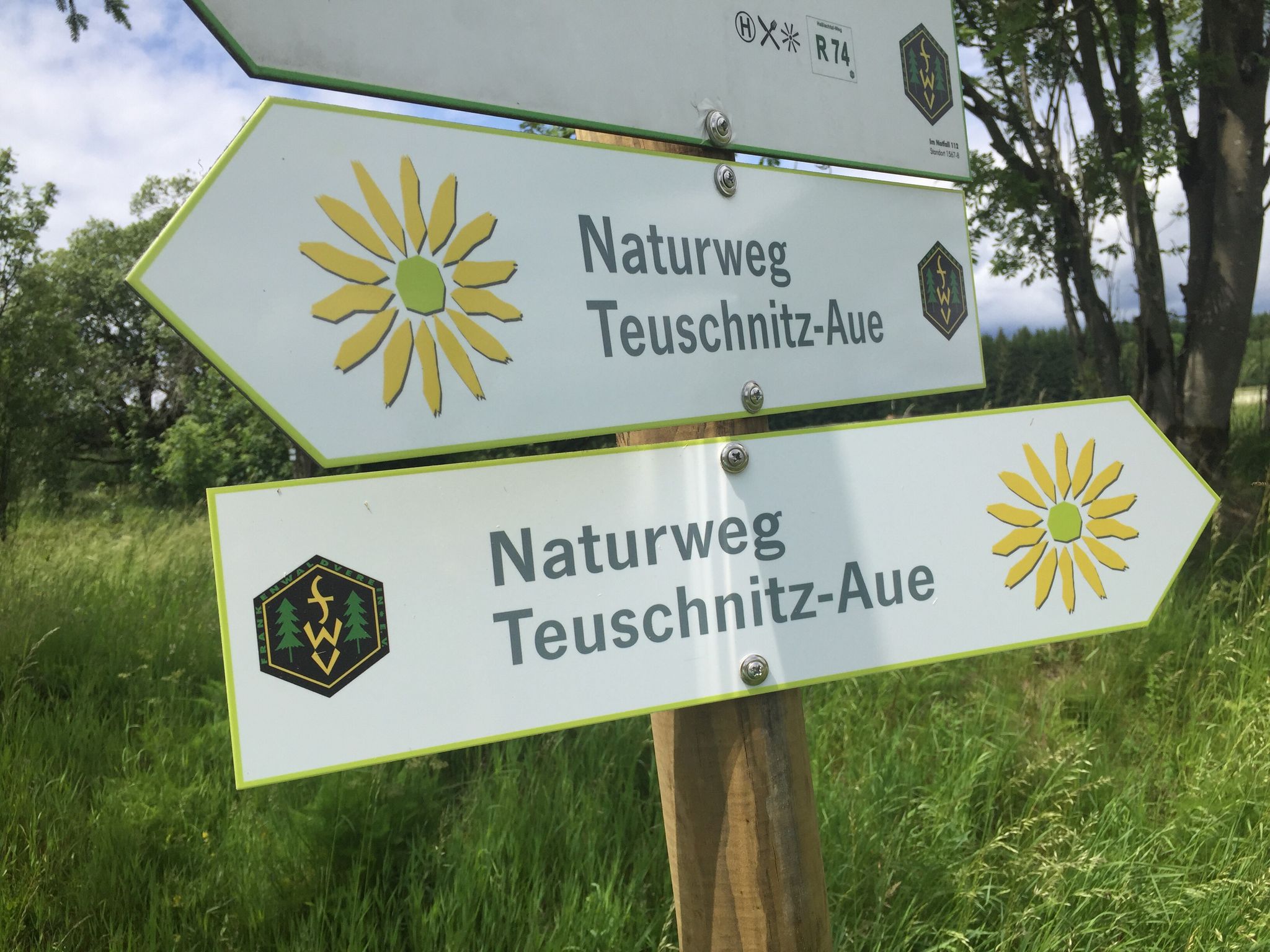
The Teuschnitz-Aue Landscape Protection Area is renowned for its beautiful natural setting and rich botanical diversity. It is particularly known for the protected Arnica plant, along with over 50 other medicinal herbs that thrive in its meadows. The newly created 'Naturweg Teuschnitz-Aue' (Teuschnitz-Aue Nature Trail) provides an excellent opportunity to explore this unique flora.
What is the Ködeltalsperre and what can I do there?
The Ködeltalsperre, also known as Mauthaus Dam, is Bavaria's largest drinking water reservoir and is often referred to as the 'Fjord of the Franconian Forest.' An 11-kilometer circuit around the dam is a popular route for hikers, cyclists, and inline skaters, offering scenic views. Along the western side, you can also observe interesting geological exposures of Lower Carboniferous sediments.
When is the best time of year to visit the natural monuments around Teuschnitz?
The natural monuments around Teuschnitz can be enjoyed throughout the year. Spring and summer are ideal for experiencing the botanical diversity of the Teuschnitz-Aue and for water activities at Ölschnitzsee. Autumn offers beautiful foliage for hiking in the Franconian Forest. In winter, cross-country skiing is possible in the Teuschnitz-Aue, and the geological sites remain accessible, offering a different perspective.
Are there any natural monuments that offer scenic viewpoints?
Yes, the region offers several spots with scenic views. The 11-kilometer circuit around the Ködeltalsperre provides picturesque views of the reservoir, often called the 'Fjord of the Franconian Forest.' The Slate Cliff at Schieferpark Lehesten also offers an imposing view of the multi-faceted slate wall. Additionally, from the area around Cook's Grave, you can get a good view of Lauenstein Castle.
What makes the Ölschnitzsee a popular natural spot?
The Ölschnitzsee is a popular natural monument offering ample space for relaxation and recreation. Visitors can enjoy beautiful walks, swim, go pedal boating, or fish. It also features natural Kneipp facilities and a playground, making it an ideal destination for families and anyone looking to relax by the water.
Are there easy walks or circular routes to natural monuments?
Yes, there are several options for easy walks and circular routes. The 11-kilometer circuit around the Ködeltalsperre is a popular and scenic route suitable for various activities. The Teuschnitz-Aue Nature Trail also provides well-marked paths for a pleasant walk through diverse flora. For more options, consider exploring the running trails around Teuschnitz, many of which are suitable for easy walks.
Most popular routes around Teuschnitz
Most popular attractions around Teuschnitz

Get inspired with the komoot mobile app


Explore more
Extend your search for the best caves by checking out these guides of the top ones around Teuschnitz:
