Top 20 Natural Monuments around Langenegg
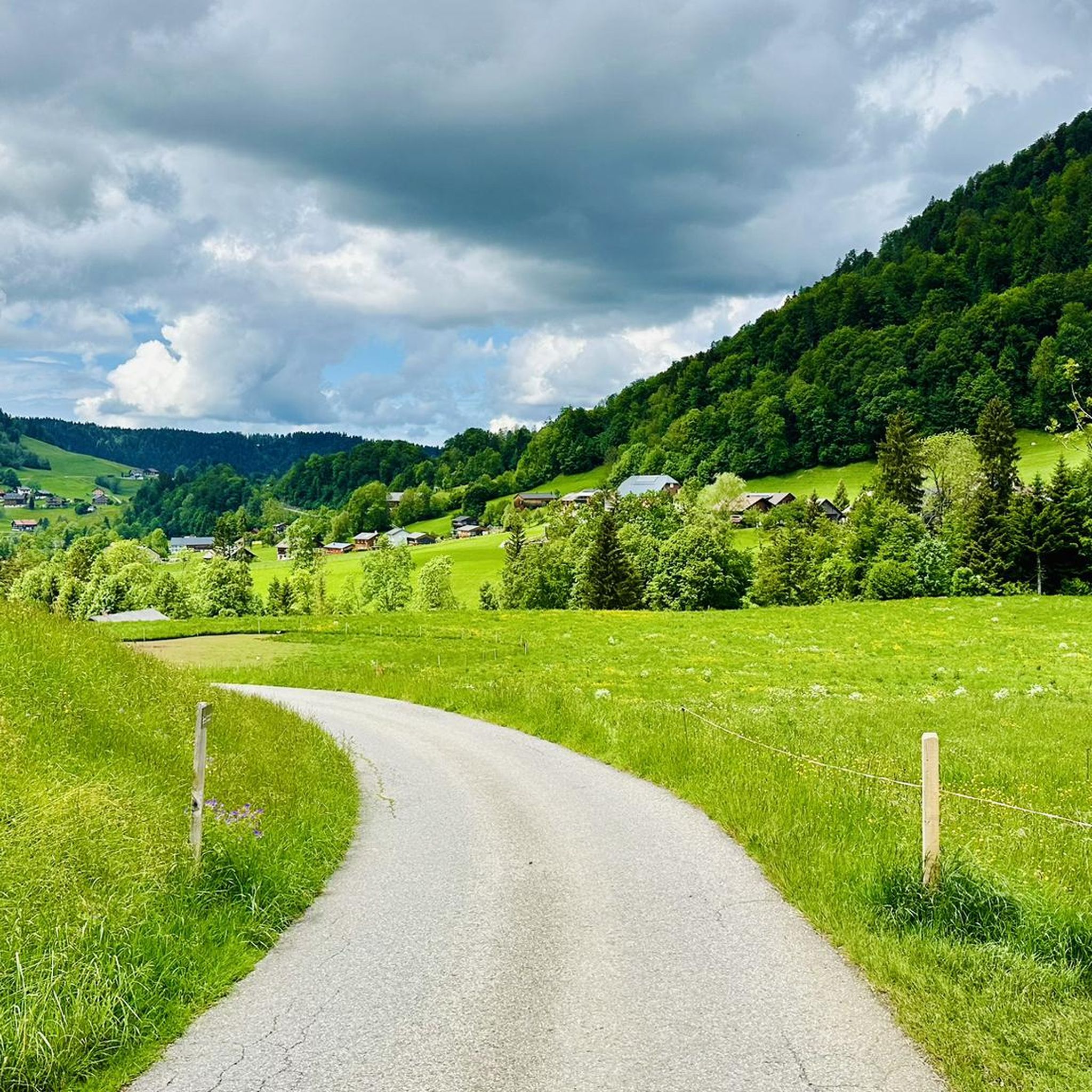
Natural monuments around Langenegg are found amidst sprawling meadows and rolling mountainsides at an elevation of 700 meters. The village is part of the larger Nagelfluhkette Nature Park, a significant cross-border protected area. This region offers diverse natural attractions, from moorlands to forests and panoramic viewpoints. Langenegg's commitment to environmental preservation is evident in its well-maintained natural features.
Best natural monuments around Langenegg
- The most popular natural monuments is Engenloch Gorge, a gorge that features a short, beautiful path…
Last updated: June 24, 2026
Hochhäderich Summit
Highlight • Summit
from Hittisau, Steinerne Tor, Hochgratbahn, Imberg, berths
Translated by Google •
Tip by

Wildrosenmoos Nature Reserve
Highlight • Natural Monument
Translated by Google •
Tip by

Sign up now to discover places like this
Get recommendations on the best single tracks, peaks, & plenty of other exciting outdoor places.
Sign up for free
Engenloch Gorge
Highlight (Segment) • Gorge
Translated by Google •
Tip by

Seelekopf Summit
Highlight • Summit
Translated by Google •
Tip by

Quelltuff Lingenau
Highlight • Natural Monument
Translated by Google •
Tip by

Sign up for free to discover even more natural monuments around Langenegg.
Sign up for free
Already have an account?
Start today with a free account
Your next adventure awaits.
Login or Signup

Tips from the Community

A particularly beautiful natural monument is the tufa slope in Lingenau. It is one of the most magnificent travertine formations in Europe north of the Alps and thus one of the most outstanding geological features in Vorarlberg. Here, spring water plunges over a roughly 40-meter-high escarpment, approximately 30 meters wide, into the Subersach Gorge. The conglomerate rock outcrop, visible in some places, is partially covered by several meters of travertine and spring tufa. On the overhangs, mushroom-shaped layers of travertine have developed into stalactite-like canopies. At the base of the rock face, the water collects in several travertine pools. Beneath the waterfall, the calcareous water encrustes the slope down to the Subersach River. Plant and animal remains are covered and encrusted by the lime. After the organic matter dissolves, an exact imprint (fossils) remains. The resulting porous, sponge-like rock is called travertine, the denser form being travertine.
6
0
A particularly beautiful natural monument is the tufa slope in Lingenau. It is one of the most magnificent travertine formations in Europe north of the Alps and thus one of the most outstanding geological features in Vorarlberg. Here, spring water plunges over a roughly 40-meter-high escarpment, approximately 30 meters wide, into the Subersach Gorge. The conglomerate outcrop, visible in some places, is partially covered by several meters of travertine and spring tufa. On the overhangs, mushroom-shaped layers of deposits have developed into stalactite-like canopies. At the base of the rock face, the water collects in several travertine pools. Beneath the waterfall, the calcareous water encrustes the slope down to the Subersach River. Plant and animal remains are covered and encrusted by the lime. After the organic matter dissolves, an exact imprint (fossils) remains. The resulting porous, sponge-like rock is called travertine, the denser form being travertine. Tufa is a light, porous rock that is easy to work. It has proven itself in the past as a building material – especially for stables and vaulted structures. Tufa was used in the construction of the nearby Baroque St. Anna Chapel, which dates from 1722.
6
0

A very beautiful raised bog near Sulzberg. Worth a visit at any time of year 🥰.
8
0

The spring tuff is an impressive natural spectacle 🤩 Great sight 🤩
9
2

The tuff rocks are a natural spectacle and you can easily hike to them 👍
9
1

the gorge is worth a detour
4
0

The tufa springs in Lingenau are one of the most impressive natural phenomena in Vorarlberg. On this short hike, you can experience the formation of rocks almost in real time. But what exactly is this tufa spring? From a geological perspective, the term "tuff" is actually incorrect. Tuff refers to rock formed from solidified volcanic ash. When the Romans conquered Vorarlberg around 15 BC, they also came to the Bregenzerwald. The strange rock they found here reminded them of the rocks in their homeland in southern Italy, and they named it after this tufa rock. But how does this tufa spring actually form? No moss, no honey. For tufa springs to form, certain ingredients are needed. And these are ideally present in Lingenau. The majority of the municipality lies on a glacial moraine or post-glacial gravel plains. These areas are very permeable to water, and the rock is largely calcareous. When the calcareous water reaches the surface and flows over moss carpets, algal mats, or colonies of cyanobacteria, a larger quantity of lime is deposited because these organisms extract carbon dioxide from the water for photosynthesis, causing the lime to precipitate. The lime adheres to branches, stones, small trees, and so on, forming upward-growing structures or terraces in stream banks. Under favorable conditions, lime sediments can accumulate by up to 20 mm per year. Within a few centuries, structures several meters high can form. For a long time, tufa was also used as a building material. It was lightweight, stable, provided good insulation, and was fire-resistant. An example can still be found today in the foundations of the chapel in Lingenau. Source: https://www.vorarlberg.travel/aktivitaet/quelltuff-lingenau-bregenzerwald/
8
0

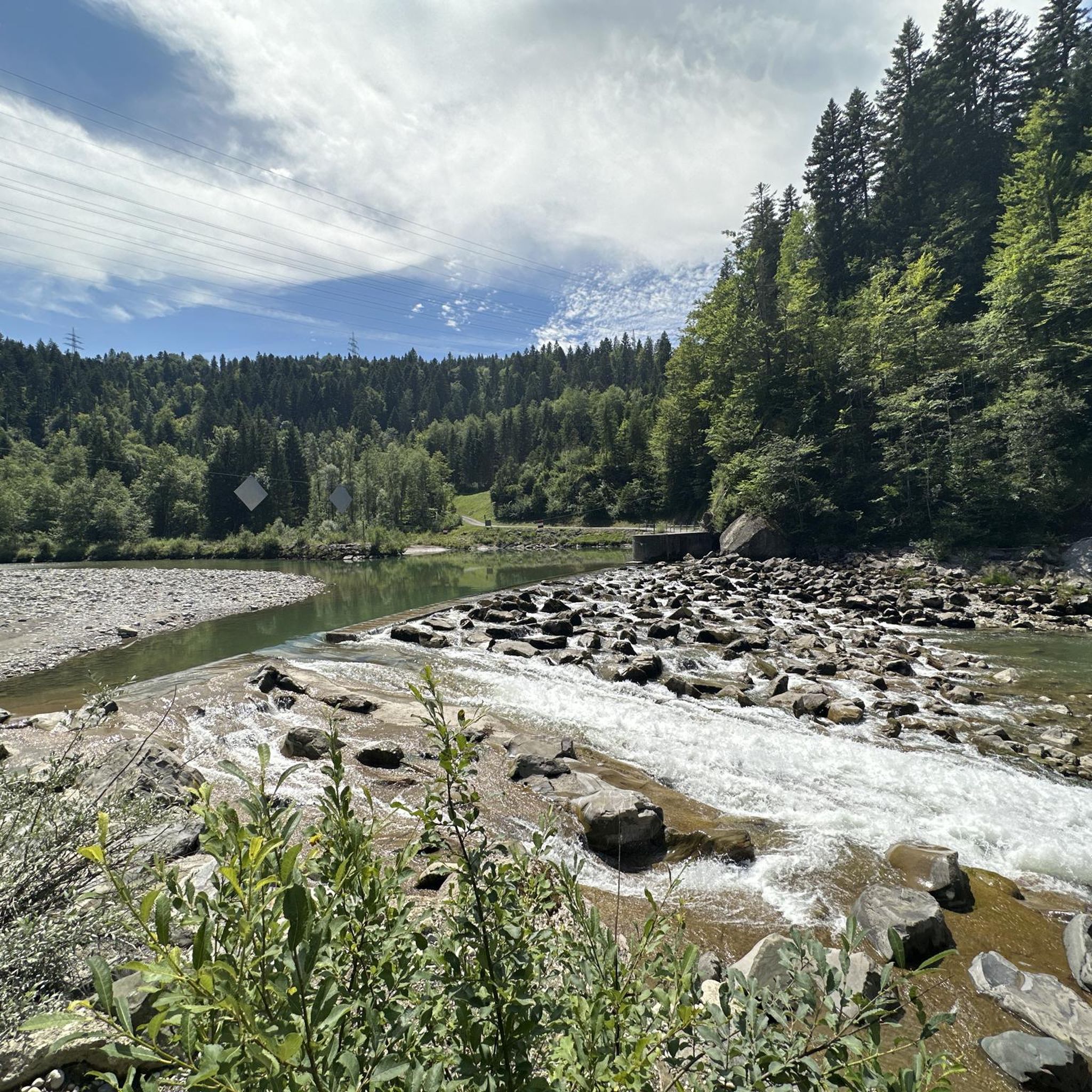
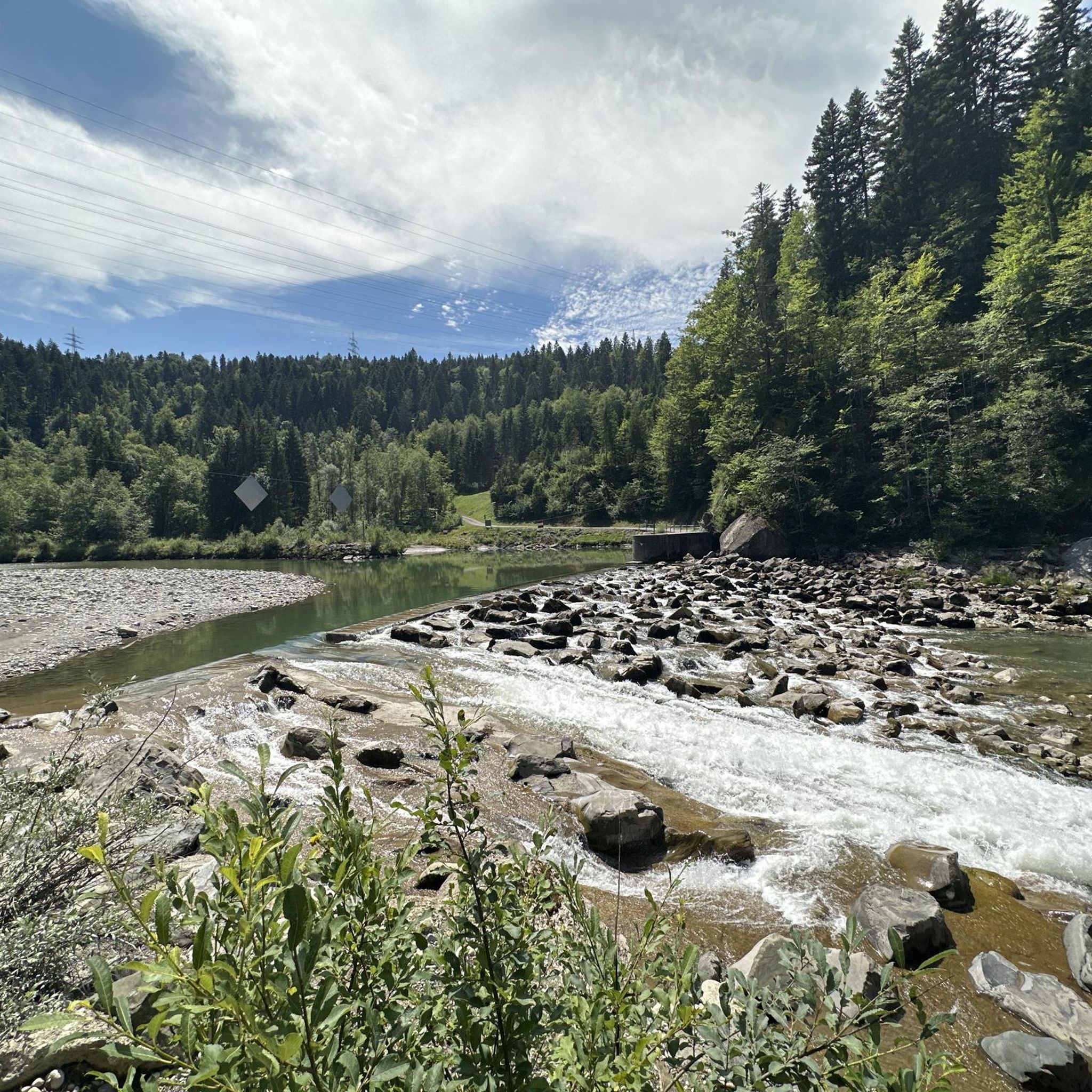
In the course of the last great ice age and the course of the Bolgenach, the deepening in the special geological formations of the Engenloch Gorge, which mainly consists of Nagelfluh conglomerate, has arisen over the course of thousands of years. For a long time there was a large lake to the east and north-east of the Engenloch gorge due to the water from the melting of the glaciers, the water of which made its way through the Engenloch gorge and formed it. Source: https://regiowiki.at/wiki/Engenlochschlucht_(Hittisau)
4
0
Frequently Asked Questions
What are some of the most popular natural monuments to visit around Langenegg?
Among the most popular natural monuments are the Engenloch Gorge, known for its short, beautiful path with narrow sections and overhanging rocks carved by the Bolgenach river. Another favorite is the Wildrosenmoos Nature Reserve, offering a comfortable forest hiking trail leading to a moor pond within a well-preserved raised bog ecosystem. For expansive views, visitors often head to Hochhäderich Summit.
Are there family-friendly natural monuments in Langenegg?
Yes, Langenegg offers several family-friendly natural monuments. The Engenloch Gorge is a great option, featuring a short, shaded path that's enjoyable even on hot days. The Wildrosenmoos Nature Reserve also provides a comfortable forest hiking trail suitable for families to explore its unique moorland landscape.
What kind of unique natural features can I expect to see in Langenegg?
Langenegg, situated within the Nagelfluhkette Nature Park, boasts diverse natural features. You can explore unique moorland ecosystems at the Wildrosenmoos Nature Reserve, which includes both high and low moor sections. The Engenloch Gorge showcases impressive geological formations carved by the Bolgenach river. Additionally, the region features sustainably managed forests and the picturesque Valley of the Bregenzerache.
What outdoor activities can I do near the natural monuments in Langenegg?
The area around Langenegg is ideal for various outdoor activities. You can enjoy extensive hiking on trails through meadows and forests, with options ranging from easy to challenging. Mountain biking is also popular, with routes that take you through scenic landscapes. For more strenuous adventures, there are mountain hikes to summits like Seelekopf Summit and Hohe Kirche. You can find detailed routes for hiking, MTB trails, and mountain hikes.
Are there any natural monuments in Langenegg that offer panoramic views?
Absolutely. The Hochhäderich Summit is easily accessible and provides expansive, breathtaking views of the surrounding landscape. Another excellent spot is the 'Am Kapf' Energy Portal, strategically placed to offer a stunning 360-degree panoramic view of the Bregenzerwald, stretching towards Lake Constance and the Allgäu region. Seelekopf Summit and Hohe Kirche also offer wonderful all-round views.
What is the best time of year to visit the natural monuments around Langenegg?
The natural monuments around Langenegg are beautiful year-round, but the best time depends on your preferred activities. Spring and summer (May to September) are ideal for hiking and exploring the moorlands and forests when the weather is warm and nature is in full bloom. Autumn offers stunning foliage, while winter provides opportunities for winter hiking, especially in areas like the Hochhäderich Summit area, though some paths might be snow-covered.
Are there any easy or beginner-friendly natural monuments to explore in Langenegg?
Yes, for beginners or those seeking an easier experience, the Engenloch Gorge offers a short and beautiful path that is not physically demanding. The Wildrosenmoos Nature Reserve also features a comfortable forest hiking trail that is suitable for a leisurely stroll. These options allow you to enjoy the natural beauty without requiring extensive hiking experience or stamina.
What should I wear when visiting the natural monuments in Langenegg?
Given the diverse landscapes, it's best to dress in layers. Comfortable hiking shoes with good grip are essential, especially for trails in gorges or moorlands. Depending on the season, bring rain gear, sun protection, and appropriate clothing for varying temperatures. For summit hikes like Seelekopf Summit or Hohe Kirche, windproof clothing is advisable.
Can I bring my dog to the natural monuments in Langenegg?
Generally, dogs are welcome on trails and in natural areas around Langenegg, especially within the Nagelfluhkette Nature Park. However, it's always recommended to keep them on a leash to protect wildlife and ensure the safety of other visitors. Specific rules might apply to certain nature reserves like the Nord Nature Reserve or the Wildrosenmoos Nature Reserve, so it's good practice to check for local signage.
Are there any hidden gems or less-known natural monuments worth discovering in Langenegg?
While not strictly 'hidden,' the various 'Energy Portals' along the Energy Trail offer a unique blend of art and nature in scenic locations. These installations, often symbolizing natural elements, are placed in areas like the Valley of the Bregenzerache and surrounding forests, providing opportunities for quiet contemplation amidst diverse landscapes. The 'Rest' (Ruhe) portal within the Nord Nature Reserve is particularly serene.
How long does it typically take to visit the natural monuments in Langenegg?
The duration of your visit can vary greatly depending on the monument and your activity. A short visit to the Engenloch Gorge might take an hour or two. Exploring the Wildrosenmoos Nature Reserve with its forest trail could be a half-day excursion. For summit hikes to Hochhäderich Summit or Seelekopf Summit, plan for several hours to a full day, depending on your starting point and pace.
What is the Nagelfluhkette Nature Park and how does Langenegg relate to it?
Langenegg is an integral part of the larger Nagelfluhkette Nature Park, which is a significant cross-border protected area. This park is renowned for its rich biodiversity and unique geological formations, particularly the 'Nagelfluh' conglomerate rock. Langenegg's natural monuments, such as its moorlands and forests, contribute to the park's diverse landscapes and highlight the region's commitment to environmental preservation.
Most popular routes around Langenegg
Most popular attractions around Langenegg

Get inspired with the komoot mobile app


Explore more
Extend your search for the best caves by checking out these guides of the top ones around Langenegg:
