The best walks and hikes around Langenegg
4.6
(16600)
79,481
hikers
17
hikes
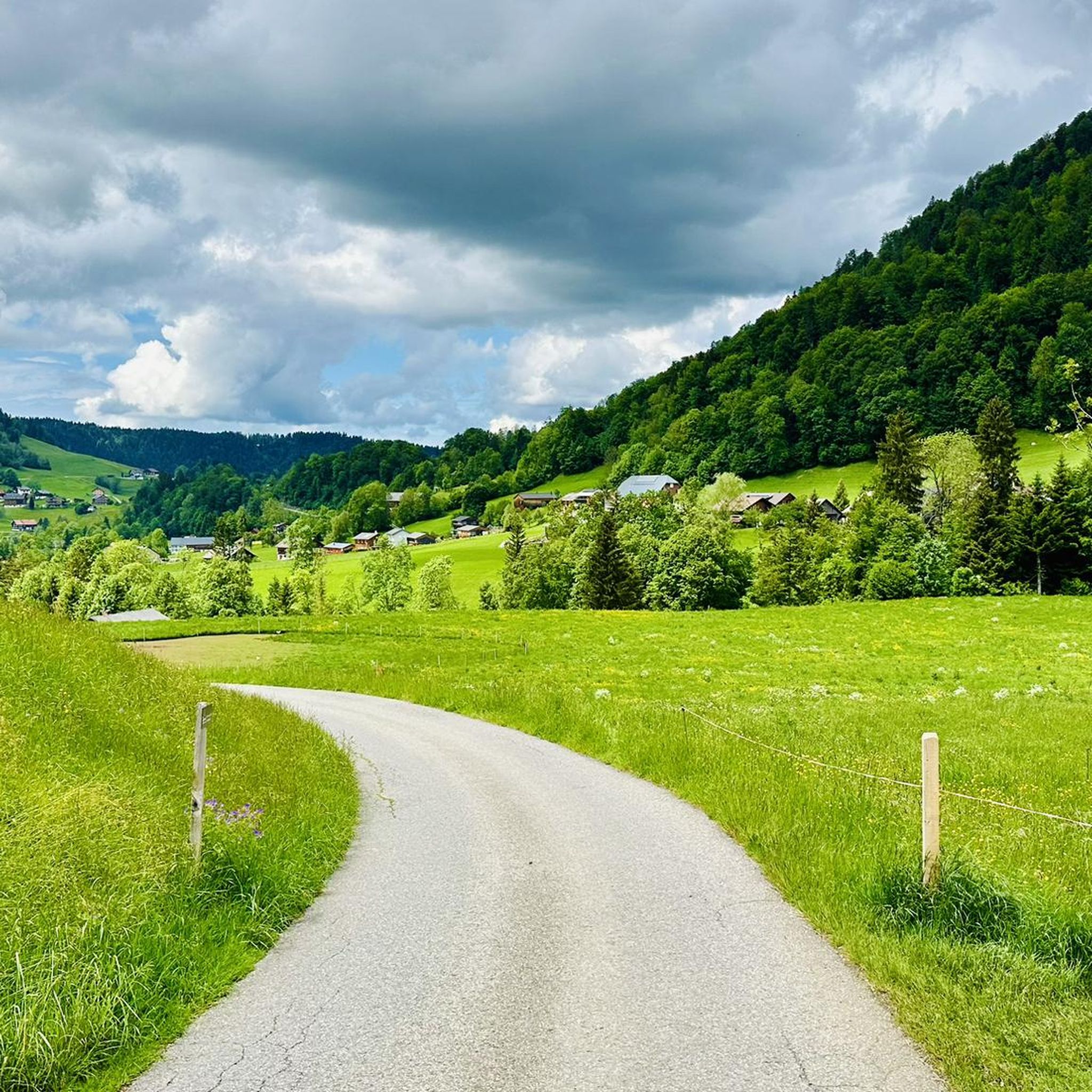
Hiking around Langenegg offers diverse landscapes, including rolling hills, lush meadows, and dense forests, situated at an elevation of 700 meters. The region is characterized by the scenic Bregenzerache Valley, with many trails leading into or along the river. Langenegg is also home to well-preserved moorlands within the "Nord" nature reserve and is part of the Nagelfluhkette Nature Park, known for its alpine meadows and unique geological formations.
Best hiking trails in Langenegg
- The most popular hiking route is Barefoot…
Last updated: May 20, 2026
4.7
(20)
101
hikers
Easy hike. Great for any fitness level. Easily-accessible paths. Suitable for all skill levels.
4.9
(8)
30
hikers
7.13km
01:59
140m
140m
Easy hike. Great for any fitness level. Easily-accessible paths. Suitable for all skill levels.

Sign up for free
4.7
(15)
61
hikers
17.1km
05:23
590m
590m
Hard hike. Very good fitness required. Mostly accessible paths. Sure-footedness required.
3.7
(6)
34
hikers
7.31km
02:13
230m
230m
Moderate hike. Good fitness required. Easily-accessible paths. Suitable for all skill levels.
7
hikers
2.70km
00:44
40m
40m
Easy hike. Great for any fitness level. Easily-accessible paths. Suitable for all skill levels.
Get access to more routes and recommendations from other explorers.
Sign up for free
Already have an account?
Our route recommendations are based on thousands of hikes, rides, and runs completed by other people on komoot.
Start today with a free account
Your next adventure awaits.
Login or Signup

Tips from the Community

The Baroque church, a listed historical monument, dates back to 1722 according to its keystone. The builder is believed to have been one of the masters of the Bregenzerwald school of architecture. Constructed from tufa stone, the chapel, with its Greek cross shape, is a unique structure in the entire region and has undergone several thorough renovations, most recently in 1968 and 1990. The ceiling frescoes, created in 1968 by the Schruns artist Konrad Honold, depict individuals who were either born in Vorarlberg or who worked there. Among them was Vorarlberg's first diocesan bishop, Bruno Wechner. The altarpiece portrays Saint Anne.
3
0
A particularly beautiful natural monument is the tufa slope in Lingenau. It is one of the most magnificent travertine formations in Europe north of the Alps and thus one of the most outstanding geological features in Vorarlberg. Here, spring water plunges over a roughly 40-meter-high escarpment, approximately 30 meters wide, into the Subersach Gorge. The conglomerate rock outcrop, visible in some places, is partially covered by several meters of travertine and spring tufa. On the overhangs, mushroom-shaped layers of travertine have developed into stalactite-like canopies. At the base of the rock face, the water collects in several travertine pools. Beneath the waterfall, the calcareous water encrustes the slope down to the Subersach River. Plant and animal remains are covered and encrusted by the lime. After the organic matter dissolves, an exact imprint (fossils) remains. The resulting porous, sponge-like rock is called travertine, the denser form being travertine.
6
0
A rather small statue of Mary, standing in a rock hollow in the tufa spring.
5
0
A particularly beautiful natural monument is the tufa slope in Lingenau. It is one of the most magnificent travertine formations in Europe north of the Alps and thus one of the most outstanding geological features in Vorarlberg. Here, spring water plunges over a roughly 40-meter-high escarpment, approximately 30 meters wide, into the Subersach Gorge. The conglomerate outcrop, visible in some places, is partially covered by several meters of travertine and spring tufa. On the overhangs, mushroom-shaped layers of deposits have developed into stalactite-like canopies. At the base of the rock face, the water collects in several travertine pools. Beneath the waterfall, the calcareous water encrustes the slope down to the Subersach River. Plant and animal remains are covered and encrusted by the lime. After the organic matter dissolves, an exact imprint (fossils) remains. The resulting porous, sponge-like rock is called travertine, the denser form being travertine.
8
0
Long wooden stairs provide access to the tufa spring. The steps can be a bit slippery after rainfall.
8
0
Well-located hiking parking lot for hikes to the nearby tuff spring.
4
0
A particularly beautiful natural monument is the tufa slope in Lingenau. It is one of the most magnificent travertine formations in Europe north of the Alps and thus one of the most outstanding geological features in Vorarlberg. Here, spring water plunges over a roughly 40-meter-high escarpment, approximately 30 meters wide, into the Subersach Gorge. The conglomerate outcrop, visible in some places, is partially covered by several meters of travertine and spring tufa. On the overhangs, mushroom-shaped layers of deposits have developed into stalactite-like canopies. At the base of the rock face, the water collects in several travertine pools. Beneath the waterfall, the calcareous water encrustes the slope down to the Subersach River. Plant and animal remains are covered and encrusted by the lime. After the organic matter dissolves, an exact imprint (fossils) remains. The resulting porous, sponge-like rock is called travertine, the denser form being travertine. Tufa is a light, porous rock that is easy to work. It has proven itself in the past as a building material – especially for stables and vaulted structures. Tufa was used in the construction of the nearby Baroque St. Anna Chapel, which dates from 1722.
6
0

Frequently Asked Questions
How many hiking trails are available around Langenegg?
Langenegg offers a comprehensive network of trails, with over 18 hiking routes available for exploration. These range from easy strolls to more moderate excursions, catering to various fitness levels.
What makes hiking in Langenegg unique?
Langenegg is characterized by its diverse landscapes, including rolling hills, lush meadows, and dense forests. It's also home to the unique 'Nord' nature reserve with its well-preserved moorlands and is part of the Nagelfluhkette Nature Park, the first transnational nature park between Austria and Germany. Hikers can enjoy impressive cultural landscapes, alpine meadows, and breathtaking panoramic views.
Are there any family-friendly hiking trails in Langenegg?
Yes, Langenegg is great for families. The Lausbubenweg (Little Rascal Trail) is a popular family-friendly themed trail, approximately 3.5 km long, featuring interactive play stations in the forest for children to enjoy.
Are there any circular hiking routes in Langenegg?
Many of the trails around Langenegg are circular. For example, the Barefoot Spiral Labyrinth – View of Langenegg Village loop from Langenegg is an easy 3.9 km circular route, and the View of Langenegg Village – Barefoot Spiral Labyrinth loop from Langenegg offers a longer 7.1 km option.
What kind of natural attractions can I see while hiking in Langenegg?
Hikers can explore the scenic Bregenzerache Valley, the unique moorlands of the 'Nord' nature reserve, and the diverse landscapes of the Nagelfluhkette Nature Park. You might also encounter artistic 'energy portals' along trails like the Energy Trail, with one offering a wonderful 360° panoramic view at 'Am Kapf'.
What is the best time of year to go hiking in Langenegg?
Spring and summer are ideal seasons for hiking in Langenegg, offering pleasant weather and vibrant scenery. Autumn also provides a beautiful experience with its rich, colorful foliage.
Are there any trails that offer panoramic views?
Absolutely. The region is known for its panoramic vistas. You can enjoy a wonderful 360° view from the 'Am Kapf' energy portal. Additionally, a hike to the summit of Hochhäderich, which majestically rises above the village, rewards hikers with extensive views of the surrounding landscape.
Are there any easy hiking routes for beginners?
Yes, Langenegg has 14 easy routes. An excellent option for beginners is the Barefoot Spiral Labyrinth – View of Langenegg Village loop from Langenegg, which is an easy 3.9 km trail that takes about 1 hour 7 minutes to complete.
What do other hikers enjoy most about hiking in Langenegg?
The hiking routes in Langenegg are highly rated by the komoot community, with an average score of 4.5 stars from over 500 reviews. Hikers often praise the diverse landscapes, the well-maintained trails, and the stunning panoramic views, especially from points like 'Am Kapf'.
Are there any trails that follow rivers or lead through valleys?
Yes, several trails lead into the scenic Bregenzerache Valley. A good example is the Bridge over the Weißach – Alberschwende Power Plant loop from Langenegg, a moderate 12.1 km path that leads through varied terrain along the river.
Can I find any interesting landmarks or points of interest near Langenegg?
Beyond the hiking trails, you can explore several interesting points. For example, the Bregenz lakeside promenade offers beautiful views, or you could visit the Mili — Historic Lakeside Bath, Bregenz. There are also mountain passes like Lorenapass nearby.
Are there any moderate hiking trails for more experienced hikers?
Yes, Langenegg offers 4 moderate routes. The Bridge over the Weißach – Alberschwende Power Plant loop from Langenegg is a popular moderate 12.1 km trail, and the Quelltuff Lingenau – Quelltuff Lingenau loop from Langenegg is another moderate option covering 7.2 km.
Most popular routes around Langenegg
Most popular attractions around Langenegg

Get inspired with the komoot mobile app


Explore more
Browse the best Hikes in other regions.
