Top 20 Natural Monuments in South Korea
Best natural monuments in South Korea showcase diverse geological features and significant ecosystems across the peninsula. The country's landscape includes volcanic islands, towering mountain ranges, and ancient forests. These sites offer a variety of natural formations, from dramatic peaks to extensive cave systems. Many natural monuments in South Korea also hold cultural importance, reflecting the nation's deep connection to its environment.
Best natural monuments in South Korea
- The most popular natural monuments is Baegundae Peak, Bukhansan National Park, a summit that offers challenging hikes with impressive views of Seoul. This 80 square kilometer national park provides a range of trails for all fitness levels.
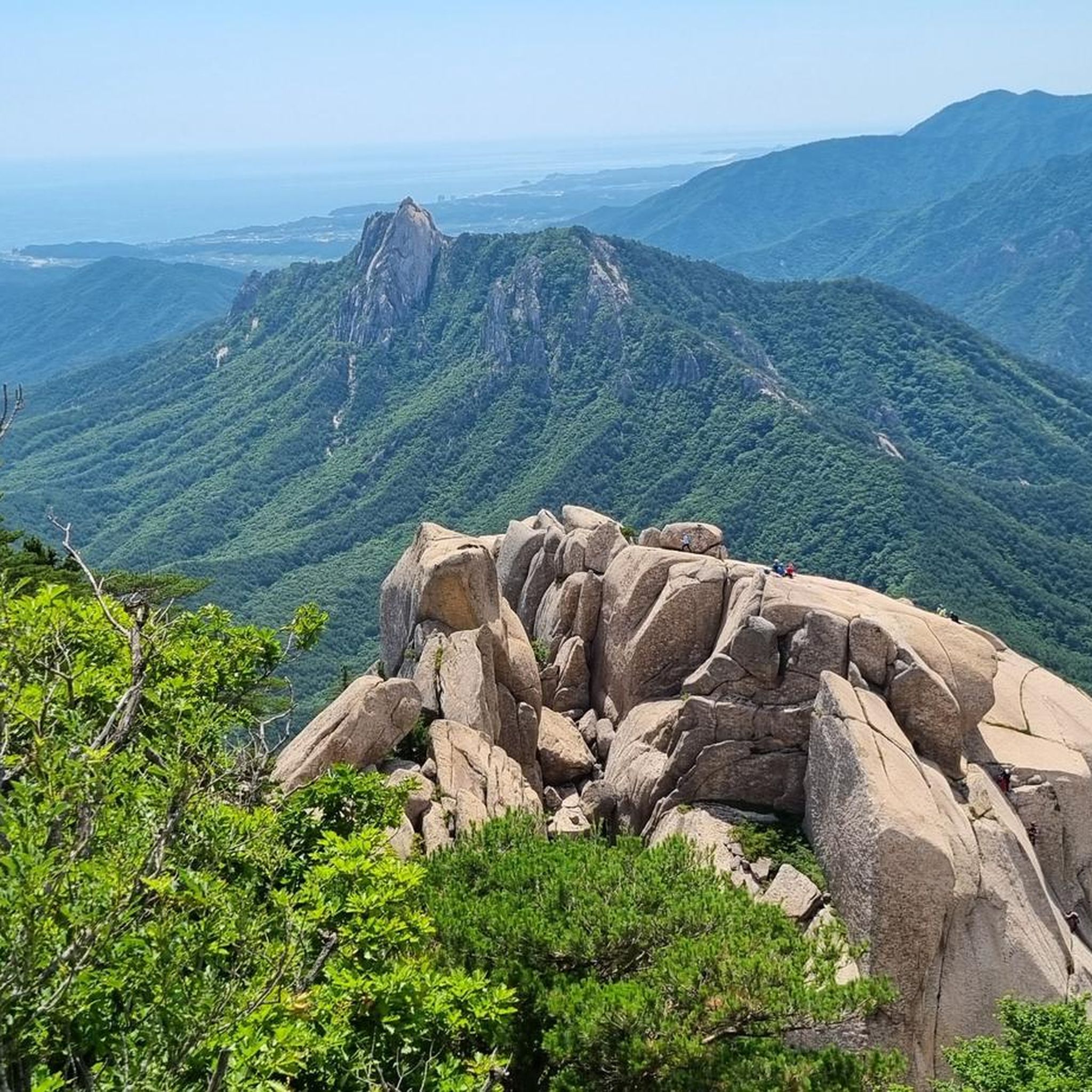
- Another must-see spot is Ulsanbawi Peak, Seoraksan National Park, a rock formation with 6 peaks. The ascent to this 873 m high summit is strenuous but offers incredible views throughout the climb and at the top.
- Visitors also love Baengnokdam Crater, Hallasan Summit, a volcanic crater lake. This natural monument provides great views and is part of a beautiful, challenging ascent to South Korea's highest peak.
- South Korea is known for its majestic mountains, volcanic landscapes, and impressive waterfalls. Visitors can explore a variety of natural monuments, including summits, crater lakes, and extensive national parks.
- The natural monuments in South Korea are appreciated by the komoot community. There are 89 highlights with more than 250 photos and over 240 upvotes from users.
Last updated: August 17, 2026
Baegundae Peak, Bukhansan National Park
Highlight • Summit
A hike to Mount Bukhansan is strenuous, but worth seeing, especially when the weather is better with a view of Seoul.
Translated by Google •
Tip by

Seoraksan National Park
Highlight • Natural Monument
For those who don't want to walk: There is also a cable car that takes you to one of the peaks.
The entrance fee for the park was 3000 won for an adult. The cable car costs 7000 won per person.
Translated by Google •
Tip by
Sign up now to discover places like this
Get recommendations on the best single tracks, peaks, & plenty of other exciting outdoor places.
Sign up for free
Ulsanbawi Peak, Seoraksan National Park
Highlight • Summit
Translated by Google •
Tip by

Baengnokdam Crater, Hallasan Summit
Highlight • Summit
Tip by

Bukhansan National Park
Highlight • Natural Monument
The national park has a total area of 78.45 km². Nevertheless, it can get very, very crowded on weekends in certain regions - hiking is a national sport in South Korea! Better to plan for tours during the week and early in the morning. Decent hiking equipment is a must here.
Translated by Google •
Tip by

Namsan Park
Highlight • Monument
Translated by Google •
Tip by
Sorae Ecology Park
Highlight • Natural Monument
Some information:
The Sorae Ecology Park was once a facility used to produce salt until 1999 when it was coverted into a park, restoring the mud flat, tidal channel, and making the closed salt field a ecological habitat for various marine life and migratory birds. The Sorae Ecology Park also provides a history to the facility and houses a Nature Learning Center, where visitors can experience sea salt production and learn more about the various wildlife and plants living in the marsh.
From Imagine Your Korea english.visitkorea.or.kr/enu/ATR/SI_EN_3_1_1_1.jsp?cid=1751275
Official Park Website (KR/EN/JP/CN): park.incheon.go.kr/index.do
Tip by

Cheonjiyeon Waterfall
Highlight • Waterfall
Jeongbang Waterfall - here the water falls directly into the sea
Sojeongbang Waterfall - tucked away behind the Castle of Shell. Very charming and idyllic. Less frequented than the other two cases.
Cheonjiyeon Waterfall - with a very beautiful and extensive park all around.
Best use the 600 bus for arrival and departure. So it drives about every 20 minutes.
Translated by Google •
Tip by
Jeongbang Waterfall
Highlight • Waterfall
Jeongbang Waterfall - here the water falls directly into the sea
Sojeongbang Waterfall - tucked away behind the Castle of Shell. Very charming and idyllic. Less frequented than the other two cases.
Cheonjiyeon Waterfall - with a very beautiful and extensive park all around.
Best use the 600 bus for arrival and departure. So it drives about every 20 minutes.
Translated by Google •
Tip by
Cheonwangbong Peak, Jirisan National Park
Highlight • Summit
Translated by Google •
Tip by

Sign up for free to discover even more natural monuments in South Korea.
Sign up for free
Already have an account?
Start today with a free account
Your next adventure awaits.
Login or Signup

Tips from the Community

A stunning view from the summit of the highest mountain on the Korean Peninsula. Despite the cold November weather, the summit was quite busy.
0
0
The highest mountain on the Korean Peninsula, offering correspondingly good views. The climb shouldn't be underestimated, and the temperature is quite cold and windy due to the high altitude. Snow can also linger at the summit for a long time.
0
0

Beautiful views up there. Easy to reach, just take bus 7 or 7-1 from Sokcho and disembark on the very last stop. The route does not require any special equipment as it's mostly gravel and stairs (with handrail). Leave your poles at home, even sturdy mountain shoes are not particularly necessary. The last part is quite steep, so bring decent fitness. I did this trail in summer which can be very warm. We came early (the first bus from Sokcho runs at ~6.30) and the ascent was in the shadow mostly. Would not recommend to come later in the day as the sun will roast you. As everywhere in Korea, there's an abundance of toilets, the last one before the ascent is clearly marked as such.
0
0

The Baekmudong to Cheonwangbong section has many stone steps, so shoes with good grip are essential.
0
0

You can only see it when the weather is good. If it's windy and rainy, you can't see anything because of the clouds and fog.
0
0

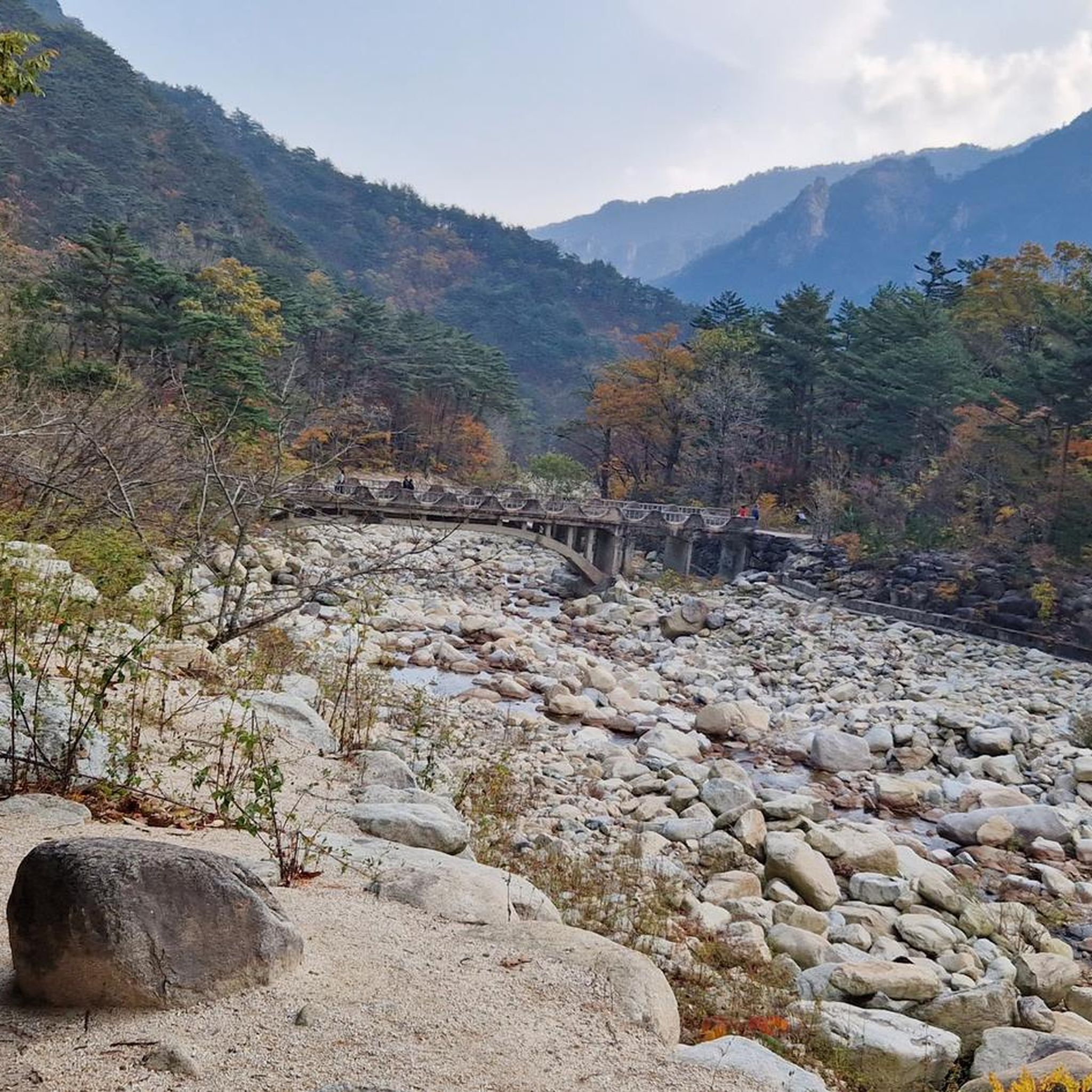
What you should know about Seoraksan National Park is that the hike to Geumgangul Cave is really beautiful and challenging, as it goes very steeply uphill on rocks and stone steps. Shortly before the end, however, you can only reach the cave via a staircase mounted on the outside of the rock. Unfortunately, I had to pass on that. You do have to be able to handle a bit of height here. The same applies to the hike to Ulsanbawi Rock. On weekends and in autumn, it is more than full. Today, Sunday 10/20/24, we hiked to Ulsanbawi Rock in single file, which somewhat spoils the fun. But Seoraksan National Park is great and if you hike the main routes, you have to be prepared for there to be a lot of other hikers with you at peak times. But this is a good opportunity to immerse yourself in Korean hiking culture.
0
1

A reservation is required for the hiking tour.
0
0
Registration/reservation is mandatory.
0
0
Frequently Asked Questions
What are some of the most popular natural monuments in South Korea?
Visitors frequently enjoy the dramatic landscapes of South Korea. Highly rated natural monuments include Baegundae Peak in Bukhansan National Park, offering challenging hikes and impressive views of Seoul, and Ulsanbawi Peak in Seoraksan National Park, known for its six distinctive peaks and strenuous but rewarding ascent.
Are there family-friendly natural monuments in South Korea?
Yes, South Korea offers several natural monuments suitable for families. Seoraksan National Park, for instance, has various trails with different difficulty levels, and a cable car option for those who prefer a less strenuous experience. Another great option is Sorae Ecology Park, which features accessible paths and natural areas for exploration.
What kind of natural features can I expect to see at these monuments?
South Korea's natural monuments showcase a diverse range of features. You can explore volcanic landscapes, such as the Baengnokdam Crater at Hallasan Summit on Jeju Island. There are also stunning waterfalls like Cheonjiyeon Waterfall and Jeongbang Waterfall, both on Jeju. Additionally, many sites feature dense forests, dramatic rock formations, and panoramic viewpoints.
What outdoor activities can I do near these natural monuments?
The natural monuments in South Korea are excellent starting points for various outdoor activities. You can find numerous hiking opportunities, from moderate to difficult, in areas like Bukhansan and Seoraksan National Parks. For example, explore routes like the 'Great Buddha of Sinheungsa – Seoraksan National Park loop' or the 'Sokbat Shelter – Baengnokdam Crater Lake loop'. You can find more details on these and other routes in the Hiking in South Korea guide. There are also mountain biking and cycling routes available, such as those detailed in the Cycling in South Korea guide.
Are there any natural monuments with historical or cultural significance?
Many natural monuments in South Korea hold deep cultural and historical importance. For instance, Bukhansan National Park, while known for its natural beauty, also contains historical sites within its boundaries. Taebaeksan Mountain is revered as a 'holy mountain' and features temples and shrines. The Bangudae Petroglyphs in Ulsan are ancient rock carvings that blend natural wonder with prehistoric human history.
What is the best time of year to visit South Korea's natural monuments?
The best time to visit often depends on the specific monument and desired experience. Autumn (September to November) is particularly stunning for mountain parks like Seoraksan, when the foliage transforms into vibrant colors. Spring (April to May) offers pleasant weather and blooming azaleas in areas like Taebaeksan. Winter can be beautiful for snow-covered landscapes, but some trails may be more challenging due to ice and snow.
Are there any unique or less crowded natural monuments worth visiting?
Beyond the well-known sites, South Korea has hidden gems. The Dodam Three Peaks in Danyang offer a picturesque river landscape with distinctive rock formations. For a truly ancient natural wonder, consider visiting the Ginkgo Tree of Yongmunsa Temple, estimated to be over 1000 years old and standing at 135 feet tall, turning a striking golden color in autumn.
Can I find natural monuments near major cities like Seoul?
Absolutely. Bukhansan National Park is conveniently located near Seoul, offering an easily accessible natural haven with a wide range of hiking trails and impressive city views from peaks like Baegundae. Additionally, Namsan Park, Seoul's largest park, provides walking trails and panoramic city views from N Seoul Tower.
What are some notable cave systems designated as natural monuments?
South Korea is home to several significant cave systems recognized as natural monuments. On Jeju Island, Manjanggul Cave is an extensive lava tunnel and one of the longest in the world. Other notable caves include Danyang Gosu Cave, Pyeongchang Baekryong Cave, and Danyang Ondal Cave, each offering unique geological formations and underground experiences.
What do visitors enjoy most about the natural monuments in South Korea?
Visitors consistently praise the breathtaking views and the rewarding challenge of the hikes. Many highlight the incredible scenery encountered during ascents, even before reaching the summit. The opportunity to escape urban life and immerse oneself in diverse natural environments, from volcanic craters to dense forests, is a major draw. The komoot community has contributed over 250 photos and more than 240 upvotes, reflecting widespread appreciation for these sites.
Are there any natural monuments specifically known for their unique rock formations?
Yes, South Korea features several natural monuments with distinctive rock formations. Besides the prominent Ulsanbawi Peak, the Turtle Rocks of Unpyeongri are unique natural formations resembling turtle shells. The Dodam Three Peaks also stand out with their picturesque rock formations in a river setting.
What should I bring for a trip to South Korea's natural monuments?
For most natural monuments, especially those involving hiking, sturdy shoes are essential. Depending on the season, layers of clothing are recommended, as weather conditions can change, particularly at higher elevations. If visiting in winter, consider bringing spikes for your shoes, as trails can become icy. Always carry water, snacks, and a camera to capture the stunning landscapes.
Most popular routes in South Korea
Most popular attractions in South Korea

Get inspired with the komoot mobile app


Didn’t find what you were looking for?
Find even more amazing natural monuments in South Korea by checking out the top Highlights region by region:
Explore more
Extend your search for the best caves by checking out these guides of the top ones in South Korea:
