Top 20 Natural Monuments around gmina Nowa Sól
Best natural monuments around gmina Nowa Sól primarily consist of individual venerable trees and groups of trees, recognized for their age, size, or historical significance. The region's landscape offers opportunities to connect with nature and local history. These protected sites provide insight into the area's ecological past and arboreal heritage. Exploring these locations allows for appreciation of impressive natural specimens and tranquil riparian landscapes.
Best natural monuments around gmina Nowa Sól
- The most popular natural monuments is Bukowa Góra Nature…
Last updated: June 29, 2026
Railway Oaks by the Żagań–Wolsztyn Line
Highlight • Natural Monument
Translated by Google •
Tip by

Three Oaks
Highlight • Natural Monument
Translated by Google •
Tip by
Sign up now to discover places like this
Get recommendations on the best single tracks, peaks, & plenty of other exciting outdoor places.
Sign up for free
Sława Palace Park
Highlight • Natural Monument
Translated by Google •
Tip by

Napoleon Oak
Highlight • Natural Monument
Translated by Google •
Tip by

Bukowa Góra Nature Reserve
Highlight • Forest
Translated by Google •
Tip by

Sign up for free to discover even more natural monuments around gmina Nowa Sól.
Sign up for free
Already have an account?
Start today with a free account
Your next adventure awaits.
Login or Signup

Tips from the Community

The Napoleon Oak (Dąb Napoleona) – a now-defunct natural monument, this English oak growing in Zabór was the thickest tree of its species in Poland. It burned down on November 15, 2010, most likely set on fire by vandals. Its circumference was 1,052 cm (at a height of 1.3 meters from the highest point of the tree's base). At 22 meters high, the oak is estimated to have been an acorn tree around 1300 (its age is 660-700 years). The tree had a large hollow inside that could accommodate a dozen people at once. The tree's habit was typical of trees growing in open spaces (a massive trunk and spreading crown) – different from, for example, the Białowieża oaks, such as the Car Oak or the Jagiełło Oak. Before the war, it was listed among 78 natural monuments in the Zielona Góra district. In 1920, the then Princess Hermine von Schönaich-Carolath of the Reuss family personally named the tree after Professor Theodor Schube (a German botanist and nature conservationist who studied Silesian natural monuments and authored, among other works, the Waldbuch von Schlesien). After her husband's death, the Princess became the second wife of former Emperor Wilhelm II in 1922, receiving the title of Empress. This brought the oak fame both locally and throughout Silesia. In 1936, the tree was listed in the "Book of Nature Conservation" kept by the starost of Zielona Góra. The tree's Polish name comes from a legend that Napoleon Bonaparte rested under its branches after crossing the Oder River during his expedition to Russia in 1812. Before it finally burned down, the oak was set on fire several times by vandals.
0
0

Bukowa Góra Reserve is the oldest post-war forest reserve in the former Zielona Góra Voivodeship, currently in the Lubuskie Voivodeship. It was established on November 30, 1954.
3
0

Along the former railway line, currently by the "Kolej na rower" bicycle path, there are 4 English oaks of outstanding size. The most impressive of them measures 320 cm at breast height. This thickness qualifies it for recognition as a natural monument. The others are not much worse. They were planted about 120 years ago. It is very likely that they are the same age as the railway line no. 371 Żagań - Wolsztyn. It is worth paying attention to them during a bicycle ride.
2
1
During the Silesian foresters' congress in 1895, 3 oaks were planted near the former forester's lodge of the Przyborów Forest District: Katarzyna, Matylda and Mikołaj. "Katarzyna" commemorated Katharina Emma Jenny Helena von Reichenbach-Goschuetz, (1861-1941) the second wife of Karol Ludwik Erdmann Ferdinand V, Prince of Siedlisko and Bytom. "Matylda" commemorated Matylda Gruchwitz-Lilliendahl (1825-1909), wife of Aleksander Gruchwitz - a famous factory owner from Nowa Sól. The person of Matylda Gruschwitz is associated with the large-scale, famous donations of the Gruschwitz family for social purposes. "Nicholas" was dedicated to Nikolaus Prince von Handjery (1836-1900), doctor of law, president of Legnica until 1894, whom the German emperor entrusted with delivering congratulations on the occasion of the 150th anniversary of the founding of Nowa Sól. Currently, only two are still standing. Due to the risk of falling onto the roadway, it was necessary to cut down one of them.
1
0

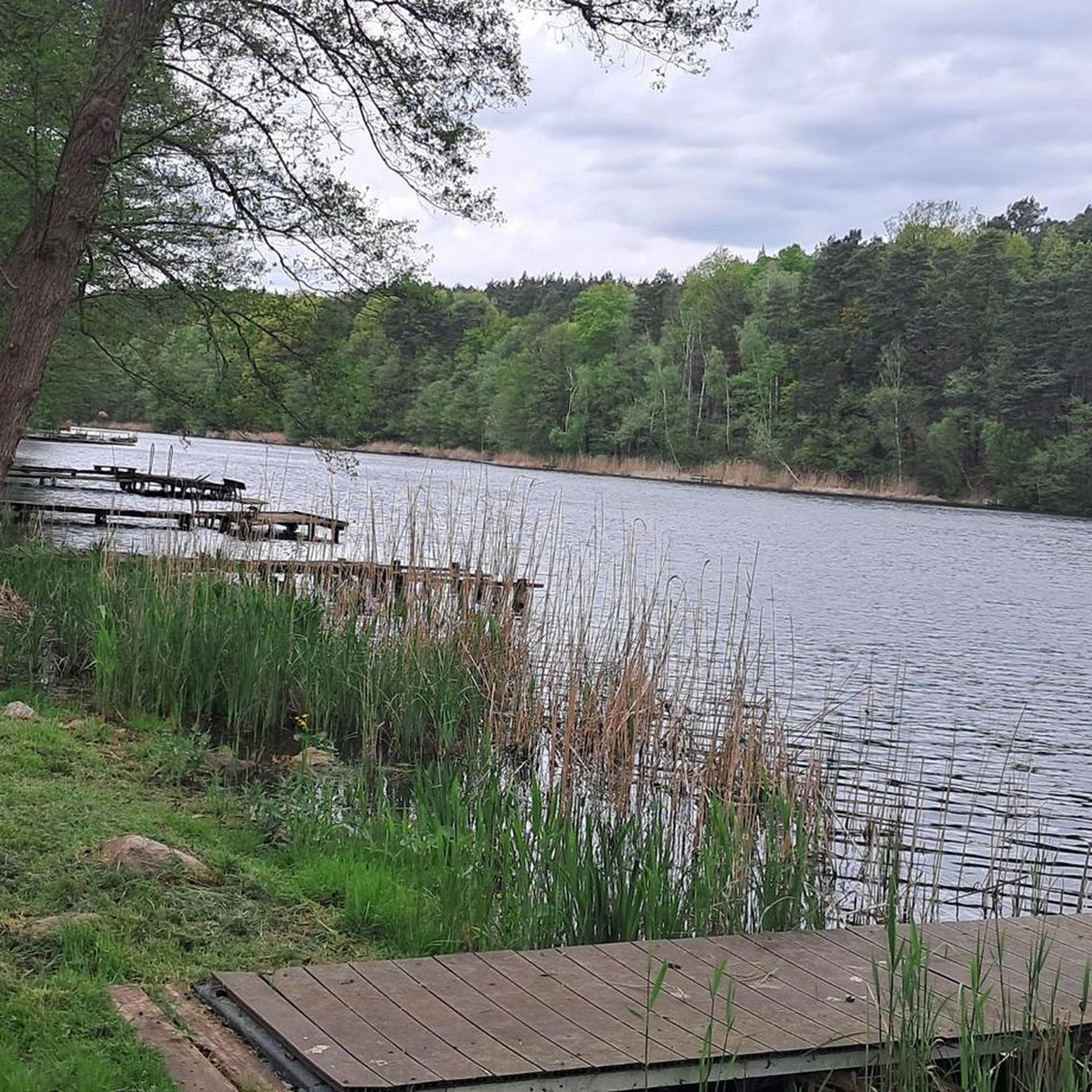
Former palace park. Currently a nicely maintained city park.
0
0

The park stretches from the village to the beach at Jez. Sławskie.
0
0
Frequently Asked Questions
What types of natural monuments can I find around gmina Nowa Sól?
The natural monuments in this region primarily consist of venerable individual trees and groups of trees, recognized for their age, size, or historical significance. You'll also find nature reserves like Bukowa Góra Nature Reserve, which is the oldest post-war forest reserve in the Lubuskie Voivodeship.
Are there any natural monuments with historical significance?
Yes, many natural monuments here have historical connections. For example, the Three Oaks were planted in 1895 to commemorate historical figures. The Gaj Wandy Nature and Landscape Complex is also considered a symbolic place of natural and historical importance for the local community. Even the now-defunct Napoleon Oak, though no longer standing, held a legend about Napoleon Bonaparte resting under its branches.
Which natural monuments are suitable for families?
Several natural monuments are family-friendly. The Railway Oaks by the Żagań–Wolsztyn Line are located along a bicycle path, making them accessible for a family outing. The Three Oaks and the Gaj Wandy Nature and Landscape Complex are also good choices for families looking to enjoy nature and history together.
What outdoor activities can I do near the natural monuments?
The area around gmina Nowa Sól offers various outdoor activities. You can find numerous hiking trails, such as the easy 'Former Szczeciniarnia Factory loop from Nowa Sól' or the 'Joanna Observation Tower loop from Lubiatów'. For cyclists, there are routes like the 'Stany Railway Bridge – Kolej na Rower Bike Path loop from Stany'. You can explore more options in the hiking guide, running guide, and cycling guide for gmina Nowa Sól.
Are there any natural monuments that are good for cycling?
Yes, the Railway Oaks by the Żagań–Wolsztyn Line are particularly well-suited for cyclists as they are located along the 'Kolej na rower' bicycle path. This makes it easy to visit them as part of a bike ride.
What is the Nadodrzańskie Dęby (Oder Oaks)?
The Nadodrzańskie Dęby, or Oder Oaks, are a significant natural monument located within Gmina Nowa Sól in the Odra Forest District. This site is classified as a 'surface monument,' encompassing a group of historically and ecologically important oak trees along the Oder River. It offers scenic walks amidst impressive natural specimens and the tranquility of the riparian landscape.
What is the best time to visit the natural monuments in gmina Nowa Sól?
The natural monuments, primarily trees and forest reserves, can be enjoyed throughout the year. Spring offers fresh greenery and blossoms, summer provides lush shade, while autumn showcases vibrant foliage. Even in winter, the bare trees reveal their impressive structures. The best time depends on your preferred outdoor activity and scenery.
Are there any challenging trails or natural monuments for experienced hikers?
While many natural monuments are easily accessible, the Bukowa Góra Nature Reserve is categorized as intermediate difficulty, suggesting a more engaging experience for hikers. For longer, more challenging hikes in the broader region, you might consider routes like the 'Graduation Tower – Palace in Sława loop from Lubiatów', which is rated as difficult and covers over 24 km.
What do visitors appreciate most about the natural monuments here?
Visitors appreciate the opportunity to connect with nature and local history. The impressive size and age of the trees, such as the 120-year-old English oaks at the Railway Oaks by the Żagań–Wolsztyn Line, are often highlighted. The tranquility of places like the Oder Oaks and the historical significance of sites like Gaj Wandy Nature and Landscape Complex also receive positive feedback.
Can I find unique geological features among the natural monuments?
The natural monuments around gmina Nowa Sól are predominantly focused on arboreal heritage, featuring ancient and significant trees or forest reserves. While the region's landscape is generally shaped by the Oder River, the primary focus of these designated monuments is on botanical and historical value rather than unique geological formations.
Are there any natural monuments that are easily accessible by public transport?
While specific public transport routes to individual natural monuments are not detailed, the region's commitment to preserving its arboreal heritage suggests that many sites are within reasonable proximity to local infrastructure. For detailed public transport information, it's advisable to check local transport schedules for routes connecting to the nearest towns or villages to your chosen monument.
What should I wear when visiting the natural monuments?
Given that most natural monuments are outdoor sites, often involving walks through forests or along riverbanks, comfortable walking shoes are recommended. Dress in layers suitable for the weather conditions, and consider bringing insect repellent, especially during warmer months. If you plan to cycle, appropriate cycling gear is advised.
Most popular routes around gmina Nowa Sól
Most popular attractions around gmina Nowa Sól

Get inspired with the komoot mobile app


Explore more
Extend your search for the best caves by checking out these guides of the top ones around gmina Nowa Sól:
