Top 19 Natural Monuments around Lanuéjols
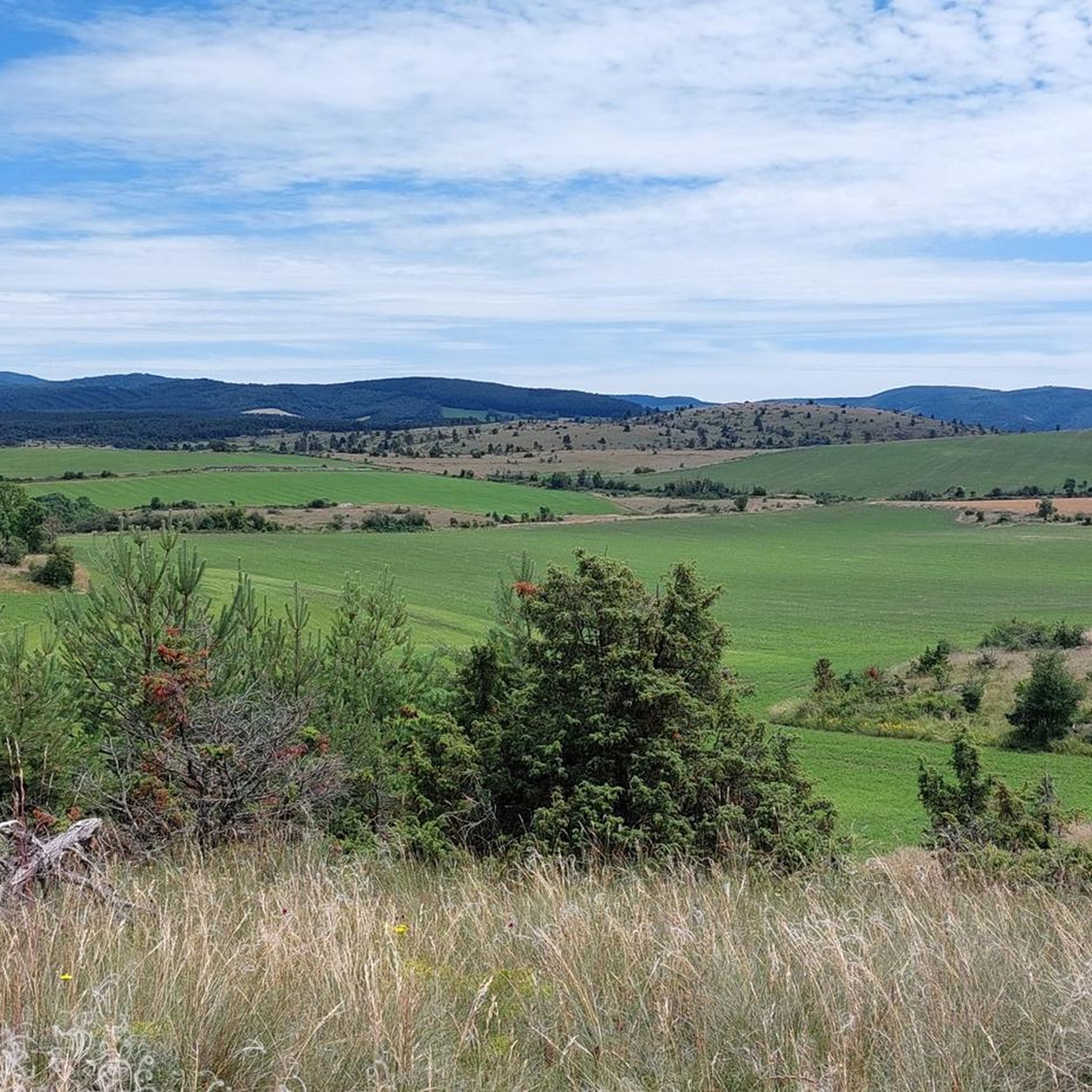
Best natural monuments around Lanuéjols are found in a region situated on the Causse Noir limestone plateau, at the crossroads of three departments. This area is within proximity to the UNESCO World Heritage-listed Cévennes National Park and Grands Causses Regional Nature Park. The landscape is characterized by natural formations carved by rivers and gorges, offering diverse geological features. This location provides a wealth of natural monuments, each with distinct characteristics.
Best natural monuments around Lanuéjols
- The most popular natural monuments…
Last updated: May 6, 2026
Vase de Sèvres and Vase de Chine
Highlight • Natural Monument
In addition to …
Translated by Google •
Tip by

The Prehistoric Mushroom
Highlight • Viewpoint
Translated by Google •
Tip by

Sign up now to discover places like this
Get recommendations on the best single tracks, peaks, & plenty of other exciting outdoor places.
Sign up for free
Arcs de Saint-Pierre
Highlight • Natural Monument
Between …
Translated by Google •
Tip by
Vertigo Viewpoint
Highlight • Viewpoint
Translated by Google •
Tip by
Aven Armand
Highlight • Cave
Indeed, the Aven Armand is an underground spectacle! Cave among caves, it …
Translated by Google •
Tip by
Sign up for free to discover even more natural monuments around Lanuéjols.
Sign up for free
Already have an account?
Start today with a free account
Your next adventure awaits.
Login or Signup

Tips from the Community

Titled "France's Wild South," an episode of the British television series "National Parks - Protected Natural Wonders" on 3sat introduces the Cévennes. The accompanying text on the website states: "Lush green mountains, barren plateaus, and deep gorges characterize this landscape, which, unlike France's coasts, has not yet been discovered by mass tourism. Yet, it is home to arguably the most spectacular river landscapes in the country." The worthwhile film in German is available in the media library at the following link =>> https://www.3sat.de/dokumentation/nationalparks-geschuetzte-naturwunder/nationalparks-geschuetzte-naturwunder-cevennen-frankreichs-wilder-sueden-102.html
0
0

A geological curiosity, nice to see. If you're not passing too far, it's worth a little detour.
0
0

Great vantage point over the Jonte Gorge. Both vultures and rock climbers can be observed from here. But don't lean too far out!
0
0

The Prehistoric Mushroom is a remarkable geological formation located in the Lozère department, in the Occitanie region, near the village of Sainte-Enimie, in the Gorges du Tarn. It is a natural rock formation that has the particularity of resembling a giant mushroom. Points of Interest: Geological Formation: Unique Appearance: The Prehistoric Mushroom is made of eroded limestone, forming a structure that evokes the shape of a mushroom with a wide cap and a narrow stem. This formation is the result of the natural erosion of rock layers over the centuries. Height and Size: The mushroom is several meters high, and its "cap" can reach an impressive diameter, making it a spectacular and photogenic geological feature. Why visit the Prehistoric Mushroom? Natural Beauty: The Prehistoric Mushroom is an impressive geological formation that offers unique and picturesque views, perfect for nature and photography enthusiasts. Exploration: It is an excellent opportunity to explore the Gorges du Tarn, a place rich in varied geological formations and impressive landscapes. Hiking: The visit can be integrated into a longer hike, allowing you to discover the geological and natural diversity of the Gorges du Tarn. In short, the Champignon Préhistorique is a fascinating destination for those interested in geology, natural landscapes, and the discovery of unique rock formations in a spectacular setting.
1
0

What a beautiful hidden world! I was thrilled when I made my first hike here and came across the two stone blocks above the Causse Méjean. These two monoliths are commonly called the "Vase de Sèvre" and the "Vase de Chine," in reference to their striking shapes.
7
0

This improbable rock formation overlooks the Jonte valley. The origin of its name comes from the 19th century when a walker saw it from afar, the appearance of the rock inspired the shape of a petrified mushroom.
0
0

The prehistoric Mushroom Rock overlooks the Jonte gorges and the village of Rozier. Its very evocative name dates from the 19th century and is the inspiration of a walker who saw it from afar. Immediately, the silhouette of the rock inspires him with the shape of a petrified mushroom.
1
0

The Sèvres and China vases are two impressive rock blocks sculpted by erosion and balancing on the cliff above the Jonte gorges.
0
0
Frequently Asked Questions
What unique geological features can I explore around Lanuéjols?
The region around Lanuéjols, situated on the Causse Noir limestone plateau, is rich in diverse geological formations. You can explore expansive limestone plateaus with dolines (sinkholes) and clapas (stone mounds), dramatic gorges carved by rivers like the Trévezel, Dourbie, Jonte, and Tarn, featuring towering cliffs and impressive rock formations. Notable examples include the Vase de Sèvres and Vase de Chine, unique monoliths on the Causse Méjean, and the naturally sculpted arches at Arcs de Saint-Pierre.
Are there any family-friendly natural monuments or activities near Lanuéjols?
Yes, several natural monuments offer family-friendly experiences. The Gorges de la Dourbie, for instance, feature the 'Cité des Pierres' (City of Stones) where erosion has sculpted rocks into various shapes, sparking imagination for all ages. The Dourbie river itself is excellent for bathing. For an underground adventure, the Aven Armand cave offers a spectacular guided tour through a 'forest' of stalagmites, which can be a captivating experience for families.
What outdoor activities are available near the natural monuments around Lanuéjols?
The area provides a wide range of outdoor activities. The Gorges du Tarn and Gorges de la Dourbie are ideal for water sports like canoeing, kayaking, and swimming. Hiking and rock climbing are popular in the rugged settings of the Gorges de la Jonte and Gorges du Tarn. For those interested in running, cycling, or hiking, you can find numerous routes. For example, explore running trails like the 'View of the Cévennes Landscape – Path on the Causse Noir loop from Lanuéjols,' or embark on hiking routes such as the 'Lanuéjols – Pradines Estate loop from Lanuéjols.' Cyclists can enjoy road cycling routes like the 'Meyrueis loop from Lanuéjols'.
Where can I observe wildlife, especially birds, in the natural monuments area?
The Gorges de la Jonte are particularly renowned for their successful reintroduction program for vultures. The Vertigo Viewpoint offers a privileged view to appreciate the spectacle given by large birds of prey in full flight. This makes it a prime location for birdwatching enthusiasts to observe various vulture species in their natural habitat from viewpoints like the Belvédère des Vautours.
What is the best time of year to visit the natural monuments around Lanuéjols?
The region's natural monuments are generally best visited from spring through autumn. During these seasons, the weather is pleasant for outdoor activities like hiking, cycling, and water sports. Spring brings lush greenery and blooming flora, while autumn offers beautiful foliage. Summer is ideal for swimming in the rivers of the gorges. Winter can be cold, and some higher-altitude areas or specific attractions might have limited access.
Are there any historical or cultural sites associated with the natural monuments?
Yes, the region has a rich historical context. The Causse Noir, part of the 'Causses and Cévennes' UNESCO World Heritage site, bears witness to prehistoric human presence with menhirs and dolmens, reflecting its traditional agro-pastoral cultural landscape. The Arcs de Saint-Pierre are geological curiosities located near the former Gallo-Roman village of resin workers, and a nearby cave-burial site indicates ancient human activity.
What are the Gorges du Trévezel known for?
The Gorges du Trévezel, marking a boundary between the Causse Noir and Causse Bégon, are known for their impressive dolomitic cliffs, caves, and avens (natural shafts). The Trévezel river offers opportunities for swimming and trout fishing, making it an ideal spot for outdoor enthusiasts seeking activities like speleology or enjoying the clear waters.
Can I find viewpoints offering panoramic vistas of the natural monuments?
Absolutely. The region is dotted with spectacular viewpoints. The Vertigo Viewpoint, at 770 meters, offers one of the most beautiful perspectives of the Jonte gorges and the surrounding landscape. The Gorges du Tarn also feature famous viewpoints like Point Sublime, providing breathtaking vistas of the canyon. Additionally, The Prehistoric Mushroom offers a unique perspective overlooking the Jonte gorges.
What makes the Gorges de la Dourbie a significant natural monument?
The Gorges de la Dourbie are a significant canyon, comparable in scale to the Jonte and Tarn Gorges, with vertical drops exceeding 400 meters. They are characterized by wild and spectacular landscapes, steep, wooded slopes, and impressive rock formations. The 'Cité des Pierres' (City of Stones) is a notable feature where erosion has sculpted rocks into various shapes. The Dourbie river is excellent for trout fishing and bathing, and the gorges offer scenic drives and photographic opportunities.
Is parking available at the natural monument sites?
While specific parking details vary by site, many popular natural monuments and trailheads in the region, especially those with established visitor access, typically offer designated parking areas. It is advisable to check local signage or specific monument information for the most accurate parking details when planning your visit.
What should I wear when visiting the natural monuments around Lanuéjols?
Given the diverse terrain and activities, it's recommended to wear comfortable, sturdy footwear suitable for hiking or walking on uneven surfaces. Layered clothing is advisable as temperatures can vary, especially in the gorges or at higher elevations. Sun protection (hat, sunscreen) is important, and if you plan on water activities, bring appropriate swimwear and towels. For cave visits like Aven Armand, a light jacket might be useful as underground temperatures are consistently cool.
Are there any hidden natural gems worth discovering near Lanuéjols?
Beyond the well-known gorges, the vast expanse of the Causse Noir itself can be considered a hidden gem for those seeking tranquility and unique landscapes. Its open spaces, unique flora, and ancient megalithic structures offer a sense of discovery away from more crowded spots. Exploring its lesser-known trails can reveal serene vistas and a deeper connection to the region's natural and historical essence.
Most popular routes around Lanuéjols
Most popular attractions around Lanuéjols

Get inspired with the komoot mobile app


Explore more
Extend your search for the best caves by checking out these guides of the top ones around Lanuéjols:
