Top 20 Natural Monuments around Mont-Ras
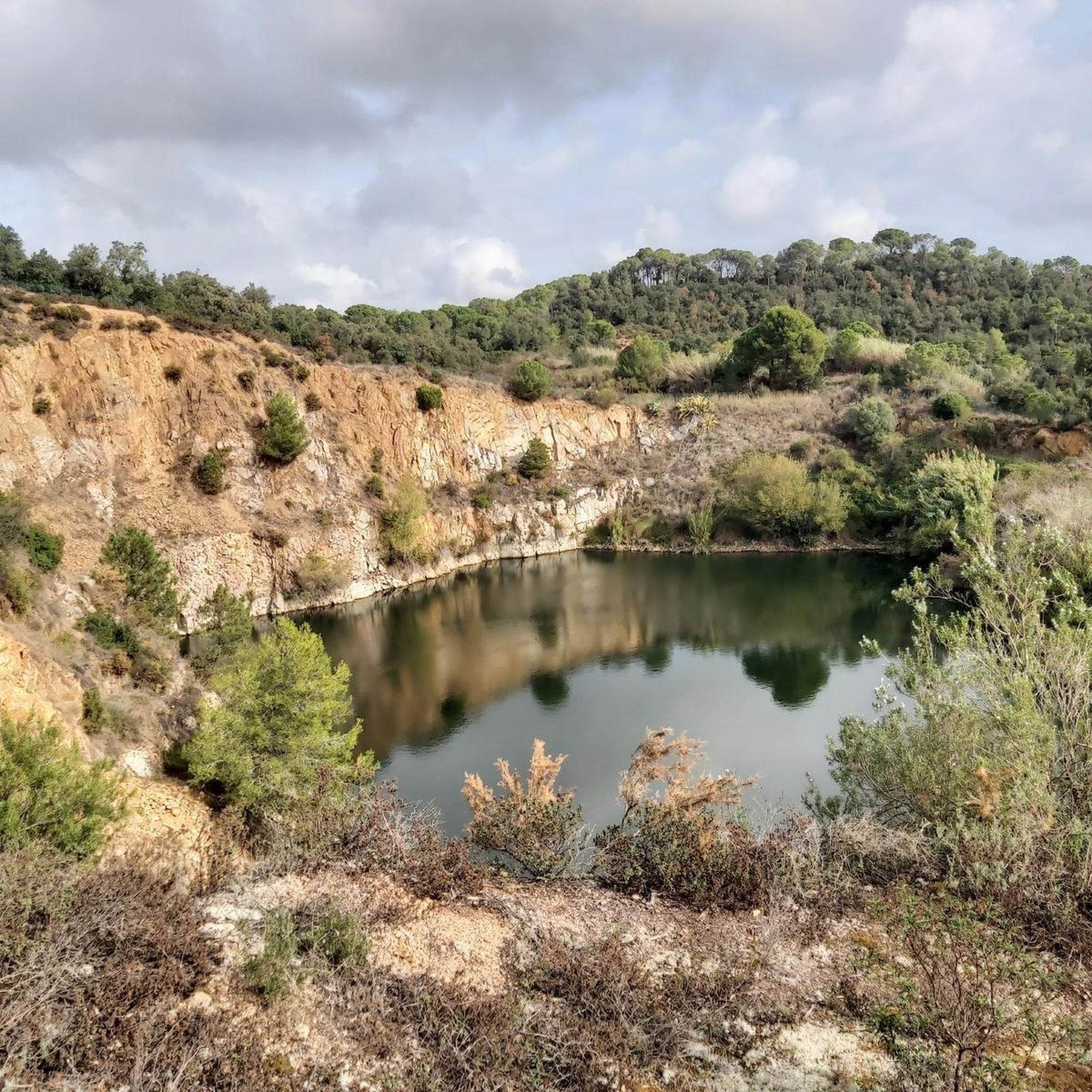
Best natural monuments around Mont-Ras are found in the Costa Brava region of Catalonia, offering a diverse landscape. The area features a coastline with coves and the Gavarres Massif, providing varied natural attractions. Mont-ras stretches from the foothills of the Gavarres Massif to the Mediterranean Sea. These natural features offer opportunities for outdoor activities and exploration.
Best natural monuments around Mont-Ras
- The most popular natural monuments is Cap Roig Cove, a beach that takes its name from a reddish…
Last updated: July 1, 2026
Castell Beach
Highlight • Beach
Translated by Google •
Tip by

The Dark Rock of La Fosca Beach
Highlight • Natural Monument
Translated by Google •
Tip by
Sign up now to discover places like this
Get recommendations on the best single tracks, peaks, & plenty of other exciting outdoor places.
Sign up for free
El Morro del Vedell
Highlight • Natural Monument
A narrow passage between the rock and the cliff allows you to pass …
Translated by Google •
Tip by
Cap Roig Cove
Highlight • Beach
Translated by Google •
Tip by

Dolmen dels Tres Caires
Highlight • Historical Site
Translated by Google •
Tip by

Sign up for free to discover even more natural monuments around Mont-Ras.
Sign up for free
Already have an account?
Start today with a free account
Your next adventure awaits.
Login or Signup
Tips from the Community

Cala Cap Roig is a beautiful natural area that takes its name from the reddish rock formation that divides the beach in two.
7
0

It served as a collective tomb, where burials and funeral rituals of the first agricultural and livestock communities of the region were carried out. It is a covered gallery dolmen, typical of the Neolithic period (approximately between 2700-2200 BC). It is made up of large stone slabs (orthostats) that delimit the burial chamber. Although it is currently in a state of partial deterioration, three of its main slabs are still preserved, which gives it the name of "Tres Caires" (Three Sides). The slabs are made of slate, a material abundant in the Gavarres area.
3
0

This branch takes you to Castell beach, one of the few virgin beaches on the Costa Brava, surrounded by pine trees and dunes. A spectacular place, worth visiting.
0
0

This and other dolmens in the area are clear testimony to the importance of the Fitor megalithic area, dating from the late Neolithic to the Chalcolithic (2500 BC to 1800 BC). Specifically, the Tres Caires dolmen is made up of slate slabs arranged horizontally and vertically, and it preserves six of these slabs, including the roof. In addition to this dolmen, you can find within a radius of less than 500 meters the dolmens of Tres Peus and Serra de Calç or the dolmen of Las Maries.
4
0

Costa Brava beach whose name comes from the islet of Cap Roig that separates the beach into two coves. The rock formation has very characteristic reddish tones, basically due to the feldspar crystals that make up a large part of it. It is an ideal location for snorkeling.
3
1
Neolithic megalithic construction datat between 2500aA/1800aC. Building made of slate that preserves the chamber and the beginning of the corridor, 6 slabs and the roof in place. Close to lifting slabs possible fallen corridor cover. Further south, possible corridor slab.
2
0

This cove of thick, golden sand is located behind the marina of the Marina de Palamós marina, it is limited to the south by the port and to the north by islets known as Esculls d’En Roca. The cove has a length of 60 meters. by 25 wide, it is possible to arrive by car almost to the sand, and park either in the parking lot of the marina, or in an authorized area, before entering the beach itself. It does not have services, but due to the proximity of the Palamós Marina facilities, we will be able to access the services they offer, such as toilets, bars, nautical goods stores, etc. There are several diving centers that come to this point to start classes for new divers, or the boats that leave in the direction of the "Borees", a sunken ship a mile in front of the port, which is quite an attraction for those who they enter between the walls of his helmet.
0
1
Rock 18.24 m above sea level. that separates the Cales del Morro del Vedell and the Ports. A narrow passage between the rock and the cliff allows you to pass from one to the other, but you have to pay attention because there is a risk of falling stones.
0
1
Frequently Asked Questions
What are some of the most popular natural monuments to visit around Mont-Ras?
Among the most popular natural monuments, visitors frequently enjoy Cap Roig Cove, known for its reddish rock formation and excellent snorkeling. Another favorite is Castell Beach, a long sandy beach with pine trees, located near an Iberian settlement. The unique Dark Rock of La Fosca Beach, which divides the beach, is also a significant natural feature.
Are there family-friendly natural monuments or activities in the Mont-Ras area?
Yes, several natural monuments around Mont-Ras are suitable for families. Castell Beach, The Dark Rock of La Fosca Beach, and Cap Roig Cove are all categorized as family-friendly. Castell Beach, for instance, offers fine sand and services like a kayak school, making it ideal for a day out with children.
What kind of natural features can I expect to see around Mont-Ras?
The Mont-Ras region offers a diverse range of natural features. You'll find picturesque coastal coves like Cala Pedrosa, Cala Estreta, and Cala del Crit, known for their turquoise waters and rocky landscapes. Inland, the Gavarres Massif provides hilly terrain with opportunities to explore forests, disused mines, and cork trees, showcasing a different natural environment.
What outdoor activities can I do near the natural monuments in Mont-Ras?
The area around Mont-Ras is excellent for outdoor activities. You can enjoy hiking along coastal paths or through the Gavarres Massif. Cycling is also popular, with routes ranging from easy to difficult. For runners, there are dedicated trails that explore coves and beaches. Find more details on routes for hiking, cycling, and running.
Are there easy walking routes to natural monuments around Mont-Ras?
Yes, there are several easy walking routes. For example, the 'Camí de Ronda: Platja de Castell to Cap Roig Loop' is an easy hiking route that takes you along the coast. Many of the coves and beaches, like Castell Beach, are easily accessible for a leisurely stroll. You can explore more easy hiking options in the hiking guide.
What is the best time to visit the natural monuments around Mont-Ras?
The Mont-Ras region, being part of the Costa Brava, is pleasant to visit during spring (April-May) and early autumn (September-October) when the weather is mild and the crowds are smaller. Summer (June-August) is ideal for swimming and beach activities, but popular spots can be busy. Winters are generally mild, offering a quieter experience for hiking.
Are there any dog-friendly natural monuments or trails in Mont-Ras?
While specific rules for dogs at each natural monument can vary, many outdoor areas and trails in the broader Mont-Ras region and the Gavarres Massif are generally dog-friendly, especially outside peak season. It's always recommended to keep dogs on a leash and clean up after them. Check local signage for specific restrictions at beaches or protected areas.
What are some lesser-known or 'hidden' natural monuments worth exploring near Mont-Ras?
Beyond the more popular spots, consider exploring tranquil coves like Cala Pedrosa, Cala Estreta, Cala Fontmorisca, and Cala del Vedell. These offer unspoiled beauty and a more serene experience away from larger crowds. Cala del Crit, with its stunning views of the Formigues islands and local legend, also provides a unique natural and cultural experience.
What kind of wildlife can be observed in the natural areas around Mont-Ras, particularly in the Gavarres Massif?
The Gavarres Massif and coastal areas around Mont-Ras are home to diverse wildlife. In the forests of the Gavarres, you might spot wild boars, various bird species, and smaller mammals. Along the coast and in the coves, marine life is present, and seabirds are common. The region's flora includes Mediterranean scrub, pine forests, and cork oak trees.
Is public transport available to reach natural monuments or trailheads near Mont-Ras?
While Mont-Ras itself is a village, public transport options to some natural monuments and trailheads might be limited. Buses connect Mont-Ras to larger towns like Palafrugell, from where local services or taxis might be available to reach specific coves or the Gavarres Massif. For places like Castell Beach, there's often a car park nearby, which can be paid during summer.
Are there any cultural or historical landmarks near the natural monuments of Mont-Ras?
Yes, the region blends natural beauty with history. Near Castell Beach, you can find the Iberian town of Castell, an archaeological site offering a glimpse into ancient history. Additionally, the picturesque fishing village of Cala S'Alguer provides a living historical experience, showcasing traditional coastal life amidst a beautiful natural backdrop.
Most popular routes around Mont-Ras
Most popular attractions around Mont-Ras

Get inspired with the komoot mobile app


Explore more
Extend your search for the best caves by checking out these guides of the top ones around Mont-Ras:
