Top 8 Natural Monuments around Ufton CP
Best natural monuments around Ufton CP offer diverse natural features and historical significance. The area is characterized by its ancient woodland, veteran trees, and medieval ponds, providing a rich habitat and a setting for various outdoor activities. These natural monuments contribute to a historically rich landscape, with the land having a history stretching back to the Domesday Book. Visitors can explore popular trails Ufton CP and engage with the local flora and fauna, fostering a deeper connection to the natural world.
Best natural monuments around Ufton CP
- The most popular natural monuments is Draycote Water, a lake that functions as a water reserve and leisure park. This site is known for its rich bird life and offers opportunities for observation.
- Another must-see spot is Sand Martin Nesting Wall, Ryton Pools Country Park, an other natural monument. This purpose-built nesting site provides a habitat for Sand Martins and other wildlife, with an information board for visitors.
- Visitors also love Bishops Bowl Lakes, a natural monument formed from a former limestone quarry. The site is recorded as a site of scientific interest due to its rich marine fossils.
- Ufton CP is known for its lakes, historical wells, and unique wildlife habitats. The region offers a variety of natural monuments to see and explore, from water features to geological formations.
- The natural monuments around Ufton CP are appreciated by the komoot community, with more than 200 upvotes and over 60 photos shared by visitors.
Last updated: November 13, 2026
Draycote Water
Highlight • Lake
Translated by Google •
Tip by

Sand Martin Nesting Wall, Ryton Pools Country Park
Highlight • Natural
As well as providing a large and safe nesting habitat, the 15m long structure also has a number of pre-formed swallow nest sites and a rear door inspection hatch so that the rangers can keep an eye on the nesting progress and carry out any necessary maintenance. To prevent predation by other wildlife such as stoats, an anti-predator baffle has been installed below the tunnels which have been constructed of plastic pipes. We also helped create the new information board which has been installed opposite the nesting wall to inform the local visitors to the country park about the new nesting site. It’s hoped that grizzled skipper butterflies will also benefit from the new structure as one of the food plants of the larvae stage – strawberries – are to be planted on the aggregate roof in the near future!
Sand Martins are gregarious and therefore tend to nest in large colonies. They are Europe’s smallest hirundine (martins and swallows) and the insectivorous birds are summer visitors to the UK, over-wintering in Africa.
Tip by

Sign up now to discover places like this
Get recommendations on the best single tracks, peaks, & plenty of other exciting outdoor places.
Holy Well, Southam
Highlight • Natural Monument
Tip by

Barbed Poppies Memorial, Jephson Gardens
Highlight • Natural Monument
The Leamington History Group applied for the grant for the memorial and worked with Warwick District Council and Leamington Town Council to commission the sculpture.
The memorial was designed by Tim Tolkien and the central feature consists of two poppies in flower and one stem with a seed-head at the top.
All the poppies are entwined with barbed wire and this extends to wrap around some adjoining fencing. The tablet in front states simply “The Poppies; Lest We Forget”. The plaque naming the sculptor calls it “Barbed Poppies”.
It is a subtle design which is not quite as immediate in effect as the sea of poppies surrounding the Tower of London in November 2014 but many people we have spoken to agreed that it evoked a strong emotional response.
Tip by
Bishops Bowl Lakes
Highlight • Natural Monument
As at Lyme Regis, the Blue Lias at Harbury is rich in marine fossils. In 1927 and 1928 the skeletons of two marine reptiles were found in Harbury quarry. They are an ichthyosaur and a plesiosaur, and both fossils are now in the Natural History Museum, London. The plesiosaur is the unique example of the early Jurassic species Macroplata tenuiceps.
Tip by
Sign up for free to discover even more natural monuments around Ufton CP.
Already have an account?
Start today with a free account
Your next adventure awaits.
Tips from the Community

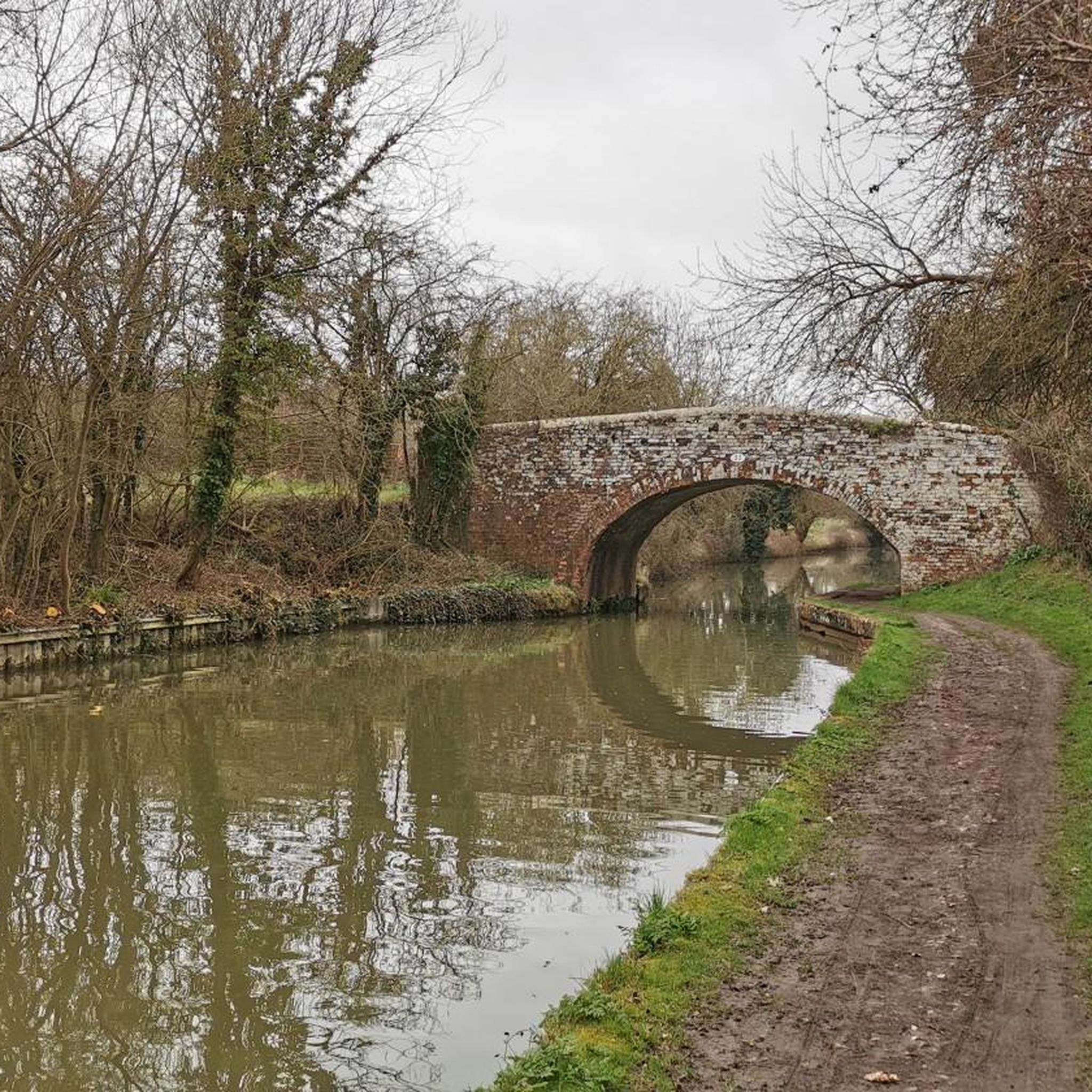
It is an unusual half-moon stone structure holding the water, with three strange heads out of whose mouths the water flows down to the river.
0
0

We had to double back on ourselves slightly to see the lakes, as they were hidden behind a hedge
0
1

If you follow the beautiful trail that departs from Southam heading east and runs alongside the River Stowe, you will come across The Holy Well, believed to be the oldest recorded Holy Well in England. It has been there for over a thousand years, with its most recent renovation taking place almost twenty years ago.
1
0

Draycote Water is an artificial reservoir (23 million m3), which was completed in 1969. In addition to its function as a water reserve, it is a leisure park u.a. for anglers, sailors, hikers. The rich bird life invites also to observations. Swimming is not allowed in the lake.
1
0


As part of the creation of a new UK Mail facility at the Prologis Park Ryton, our client Prologis had created a temporary borrow pit as part of the works and inadvertently, created the perfect new home for a colony of Sand Martins Riparia riparia which moved in and successfully bred (2015). The birds were left to nest in peace after a wide exclusion zone was implemented but realising that the site was on the birds’ migration route together with the fact that the borrow pit couldn’t stay on site long-term, we worked with Prologis, Whiting Landscapes and the park rangers at nearby Ryton Pools Country Park to create a brand new permanent and purpose-built nesting site in this 100 acre site managed jointly between Warwickshire County Council and Warwickshire Wildlife Trust. The Sand Martin nesting wall was completed in March 2016 and this year has already had a couple of pairs taking an interest. As well as providing a large and safe nesting habitat, the 15m long structure also has a number of pre-formed swallow nest sites and a rear door inspection hatch so that the rangers can keep an eye on the nesting progress and carry out any necessary maintenance. To prevent predation by other wildlife such as stoats, an anti-predator baffle has been installed below the tunnels which have been constructed of plastic pipes. We also helped create the new information board which has been installed opposite the nesting wall to inform the local visitors to the country park about the new nesting site. It’s hoped that grizzled skipper butterflies will also benefit from the new structure as one of the food plants of the larvae stage – strawberries – are to be planted on the aggregate roof in the near future! Sand Martins are gregarious and therefore tend to nest in large colonies. They are Europe’s smallest hirundine (martins and swallows) and the insectivorous birds are summer visitors to the UK, over-wintering in Africa.
0
0
On 11th November 2014 a memorial was unveiled in the Jephson Gardens, between the Aviary and Willes Road entrance. The memorial will remember all those who played any part in World War One, including the widows and orphans and those who served at home. The Leamington History Group applied for the grant for the memorial and worked with Warwick District Council and Leamington Town Council to commission the sculpture. The memorial was designed by Tim Tolkien and the central feature consists of two poppies in flower and one stem with a seed-head at the top. All the poppies are entwined with barbed wire and this extends to wrap around some adjoining fencing. The tablet in front states simply “The Poppies; Lest We Forget”. The plaque naming the sculptor calls it “Barbed Poppies”. It is a subtle design which is not quite as immediate in effect as the sea of poppies surrounding the Tower of London in November 2014 but many people we have spoken to agreed that it evoked a strong emotional response.
0
0
The site of a holy well which dates to the Medieval period, though the stone work surrounding the well dates to the Imperial period. Further restoration has taken place in the 20th century. It is situated 800m west of the church, Southam. Oldest recorded holy well in England? The first mention of the well is apparently 998, when it is mentioned in a charter to Leofwine by King Ethelred the Unready as a consequence as the term holy well per se derives from Old English halig this is probably the oldest recorded. However, it does not appear to be specifically mentioned as such. However in a Feet of Fines there is a notice in 1206 of a: “half acre land at Hallewellcul to the north” Over the next 800 years there then appear to be regular references to the well. By the 18th century there is reference to some sort of protective structure, although the date of the current structure cannot perhaps be gauged from these references. By 1701 a record notes that the Rector was exempted from keeping the well and fencing in repair: “one footway of the breadth of three feet leading from a certain stile at the bottom of an ancient enclosed ground called Bury Orchard towards Ufton by the Brook to the said well called Holy Well.” By 1760, a public footpath to the well was made permanent in an Act of Parliament and the enclosures act noting: “it is hereby further enacted and declared, That the said Well, called Holy Well, in the said Open Fields of Southam aforesaid, shall not be allotted to any of the said Proprietors, but shall be inclosed round with Posts and Rails, Three Yards at least distant from the Stone-work of the said Well, by, and at, the Expence of all the said Proprietors, and shall be kept for the Benefit of all the Inhabitants of the Parish of Southam aforesaid; and which said Posts and Rails shall, forever thereafter, be repaired and kept in Repair by, and at, the Expence of the Inhabitants of Southam aforesaid; and that the said Commissioners, or their Successors, or any three or more of them, shall assign, or lay out, a Footway from the Town of Southam aforesaid, to the said Well..” Healing eye water The main two properties, other than a possibly being better than beer, is that it was very cold but never froze and that it was good for eyes. Indeed, its powers in restoring eyes lead to a Henry Lilley-Smith establishing in 1818 an eye and ear hospital not far. Local remedies also recall how to make a tincture with the well water for eyes. The well of St Fremund? One of the possible reasons for the site being a holy well is that it was associated with the Mercian saint Fremund. The Life and Death of the Most Holy Fremund, King and Martyr by Burghard, 12th century (tr. from text in Nova Legenda Anglie ) tells how St Fremund, having been beheaded: “stood up as if nothing had happened, picked his head up off the ground, and set out with the head in his hands. The crowd were amazed at this miracle and followed in his tracks, praising God. He made his way to a spot between Itchington and Harbury, and when he got there he took a stand and thrust the point of his sword in the ground. He prayed to God for a little water to wash his head and body, and what he sought, he gained. For a spring welled up at this very spot, flowing in an unfailing stream and proving the merits of this famous martyr before all the world. He drank of its waters, he washed his wounds, he gave honour to that God in whom all live and have their being. Then turning his head to the east, he sank dead to the ground”. The Metrical Life of St Fremund by William of Ramsay, 1194×1220 (tr. from text in Pinchbeck Register 1925) repeats the story from Burghard, detailing how ‘No sooner had he wished for water than a spring appeared/ Purer than dew, clearer than crystal, finer/ Than gold, and scattering silver sands’. Later, the Life of Sts. Edmund and Fremund by John Lydgate, 1434 tells how “there sprong up a welle/ With crystal watrys the stremys gan up welle;/ And wessh away the blood that was so red,/ Which doun disttillyd from his hooly hed”. egend has it that Fremund was a son of Kind Offa of Mercia. After his death, a great battle ensued at Radford Semele against the invading Vikings in which Fremund was completely victorious. However as Fremund knelt in prayer of thanksgiving one of his own men envious of his success struck off his head. However the legend suggests that the well was not at Southam. For when his corpse stood up, picking up his head and walking away; he stopped somewhere between Harbury and Whitton, possibly Whitnash and there a miraculous well sprung up at his feet, in the water of which he washed his head then lay down and died. This would go against the view that the Southam well is the same. Well preserved fabric The first description of the site is Carlisle (1812) ‘Observations on the positions of the alien cell of Begare, and of Halywell upon Watling Street’ who describes: “a well of very fine clear water, called Holywell, or Halywell, which has always been reputed salubrious. It is… perpetually overflowing, without much variation from the seasons. It is a basin on the declivity of a rising ground. Its form is the larger section of a circle; the bottom is paved with smooth stones; and the sides are walled with the same, a little higher than the water stands, which is about two feet deep. It was formerly nearly encompassed with another wall, and upon a stone, at the mouth of the well, the words Utere, sed non abutere were inscribed.” However it was apparently in decline by the 1850s as an article written on the 6th October 1855 in the Warwickshire Advertiser describes: “on the foot road from Southam to Stoney-Thorpe, the residence of H T Chamberlain Esq., is an Ancient Well called ‘Holy Well’ now in a dilapidated condition; but even in its present state, the massive stone work, with curious and not very elegant carved head shews it to have been at one time an object of interest. Its earlier history is not clear, some asserting that it was the source from which Stoney Thorpe was supplied with water when used as a Priory ……it is a large semi-circular well about five feet deep embanked with massive stone masonry, and is supplied by a powerful spring of the Purest Water. It lies at a lower level than the Town, otherwise it might without much expense, be made most valuable for domestic and sanitary purposes. Tradition says it formally had a stone seat placed round it; was furnished with drinking vessels, and covered by an Arched Stone Roof; thus affording refreshment to the Traveller, and a pleasant resort to the health seeker. It is now proposed to restore by a public subscription, this beautiful relic of antiquity, and a considerable sum has already been promised.” This restoration is described by Freton (1890) in his The Warwickshire Feldon: a sketch of its hills and valleys, waters, famous trees, and other physical features in the Proceedings of Warwickshire Naturalists’ & Archaeologists’ Field Club, states that around 40 years ago: “I and a few enthusiastic friends undertook to clear out this old well, in the hopes that it might lead to its ultimate restoration. Our efforts as amateur navvies excited little sympathy among the rough labouring lads of the neighbourhood, who seemed to look upon us as having a slate off, and we invariably found our labour of one evening fruitless the next, so after a week’s hard work we gave it in.” Certainly when Richardson (1928) found it as: “a semicircular recess in the bank. A low retaining wall – recently renovated – prevents the bank from slipping down into it. At its foot is a flagged path along the curved margin of the semicircular well. Impounding the water in the well… is low two buttressed stonework. The stonework is much mutilated, the water flowing over the two broken and worn ends; but the central portion is higher and has three faces sculptured on it from orifices below which the water spouts out. Two flights of steps– that on the left with three steps, that on the right with four – lead down to a “trough” below the stonework”. The most curious facet of the well are the well worn, and hence presumably ancient carved heads. What is their origin? Thoughts have ranged from effigies of sun gods to the recycled remains from a priory or church. I certainly favour the later and they were probably gargoyles and incorporated in the fabric in the 18th century. This may explain why they look more worn than would be expected if was last constructed in that century. However, it seems odd to have incorporated them and it may have been an attempt to produce a folly for a local lord. Well restored However, despite Richardson’s favourable visit, not everything was positive. In 1925 the water was diverted into a reservoir and the provision of mains water artesian wells in the 1930s took their toll on the flow, an article in a local newspaper noting that: “the Holy Well itself a few yards away has been partly emptied, and no water now flows into its basin in dry weather.” By 1981, Brian Townsend noted in Southam Through the Centuries III notes it was little more than a trickle but a year after clearing out and restoration by the Community Enterprise Programme restored the flow through the heads. Yet by 1991 it was dry again, possibly as the result of quarrying and work on a by-pass. This is what it was like when I first visited…filled with rain water and polluted by crab apples. Through the 1990s restoration was planned but due to various reasons it was never attempted until the early 2000s. By 2005 the water supply was relocated and it could be restored, a Holy Well community was established an Heritage Lottery Fund money of £102,500 was successfully obtained. By 2005-7 the site was splendidly restored with seats and a palisade fence with delightful well related carvings on the posts…a fantastic return to the glory..the crowning of that glory the fact the water flows as profusely as ever. A delightful site and a holy well must.
0
0
Frequently Asked Questions
What kind of wildlife can I expect to see around Ufton CP's natural monuments?
The ancient woodland around Ufton CP is a rich habitat for diverse wildlife. You can observe local flora and fauna, identify animal tracks and trails, and discover mini beasts and pond creatures. Draycote Water is particularly known for its rich bird life, offering excellent observation opportunities. Additionally, the Sand Martin Nesting Wall at Ryton Pools Country Park provides a dedicated habitat for Sand Martins and other species.
Are there any unique geological features among the natural monuments near Ufton CP?
Yes, Bishops Bowl Lakes, formed from a former limestone quarry, is a site of scientific interest due to its rich marine fossils, including ichthyosaur and plesiosaur skeletons found in the Blue Lias. The area's historical landscape also features medieval ponds and veteran trees.
What historical natural monuments can I explore near Ufton CP?
The region boasts several historically significant natural monuments. The Holy Well in Southam is believed to be the oldest recorded Holy Well in England, with a history stretching back over a thousand years and notable stonework. The Barbed Poppies Memorial in Jephson Gardens, while a man-made monument, is also a significant historical site commemorating those who played a part in World War One.
Are there family-friendly natural monuments around Ufton CP?
Many natural monuments in the Ufton CP area are suitable for families. The ancient woodland offers opportunities for outdoor learning, hands-on activities like identifying animal tracks, and imaginative play. Draycote Water has a children's playground and BBQ facilities, making it ideal for a family day out. The Sand Martin Nesting Wall and Holy Well are also accessible and offer educational insights into nature and history.
Are there any wheelchair-accessible natural monuments or paths in the Ufton CP area?
The Barbed Poppies Memorial in Jephson Gardens is noted as wheelchair accessible. While specific details for all natural monuments are not available, many country parks and managed sites often provide accessible paths. It's always recommended to check specific site information for the most up-to-date accessibility details.
What outdoor activities can I do near the natural monuments around Ufton CP?
The area around Ufton CP offers a variety of outdoor activities. You can find numerous routes for running, mountain biking, and road cycling. For running, explore trails like the 'View of Wheat Fields loop from Harbury' or 'St James' Church, Southam loop from Southam CP'. Mountain bikers can enjoy routes such as the 'Southam loop' or 'HS2 Construction Site – Ufton Village Stocks loop'. Road cyclists have options like the 'Burton Dassett Country Park loop from Harbury'. You can find more details on these activities in the Running Trails around Ufton CP, MTB Trails around Ufton CP, and Road Cycling Routes around Ufton CP guides.
Are there good walking or hiking routes near Ufton CP's natural monuments?
Yes, the ancient woodland and surrounding areas provide excellent opportunities for walking and hiking. You can explore popular trails around Ufton CP that allow you to engage with the local flora and fauna. While specific hiking routes are not detailed in the provided data, the nearby running guides, such as Running Trails around Ufton CP, often feature paths suitable for walking.
What do visitors enjoy most about the natural monuments around Ufton CP?
Visitors appreciate the diverse natural features and historical significance of the area. The rich bird life and observation opportunities at Draycote Water are highly valued. The historical context of sites like the Holy Well and the unique geological interest of Bishops Bowl Lakes also draw significant interest. The komoot community has shown strong engagement, with over 200 upvotes and more than 60 photos shared, highlighting the area's appeal.
Is there parking available for natural monuments in the Ufton CP area?
While specific parking details for every natural monument are not provided, popular sites like Draycote Water, being a leisure park, typically offer dedicated parking facilities. For other locations, it's advisable to check local signage or specific site information upon arrival.
Are dogs allowed on walks around the natural monuments near Ufton CP?
Many outdoor areas in the UK are dog-friendly, especially public footpaths and woodlands. However, specific rules can vary by location, particularly in nature reserves or protected sites like the Sand Martin Nesting Wall at Ryton Pools Country Park, where wildlife protection is paramount. It's generally recommended to keep dogs on a lead and clean up after them. Always check local signage for specific regulations at each natural monument.
What is the best time to visit the natural monuments around Ufton CP?
The ancient woodland and natural features around Ufton CP can be enjoyed year-round. Spring and summer offer lush greenery, active wildlife, and pleasant weather for outdoor activities. Autumn brings beautiful foliage, while winter provides a different, often serene, landscape. The choice depends on your preferred activities and the natural beauty you wish to experience.
Are there cafes or pubs near the natural monuments for refreshments?
While specific cafes or pubs directly adjacent to every natural monument are not listed, larger sites like Draycote Water often have facilities available. The surrounding villages and towns, such as Southam, will offer various options for refreshments. For example, the 'Gusto Ricco Café' is mentioned in some nearby cycling routes, indicating options are available in the wider region.
Most popular routes around Ufton CP
Most popular attractions around Ufton CP

Get inspired with the komoot mobile app


Explore more
Extend your search for the best caves by checking out these guides of the top ones around Ufton CP:
