Top 18 Natural Monuments around Unterramsern
Best natural monuments around Unterramsern are characterized by a diverse landscape, including riverine areas and natural reserves. The region is situated near the Aareebene, offering opportunities to observe local wildlife and explore unique ecosystems. This area provides a variety of natural attractions for visitors seeking outdoor experiences.
Best natural monuments around Unterramsern
- The most popular natural monuments is Stork colony in Altreu, a natural monument that offers visitors the opportunity to observe storks in their natural environment. An information…
Last updated: November 23, 2026
Stork colony in Altreu
Highlight • Natural Monument
Translated by Google •
Tip by

Observation Tower at the Aare Nature Reserve
Highlight • Viewpoint
There is free parking at the swimming pool in Solothurn, from there the hike begins, initially on an asphalt road, …
Translated by Google •
Tip by

Sign up now to discover places like this
Get recommendations on the best single tracks, peaks, & plenty of other exciting outdoor places.
Grenchner Witi
Highlight • Natural Monument
Translated by Google •
Tip by

Alte Aare Nature Reserve
Highlight (Segment) • Natural Monument
Sandstone Quarry Ober Bockstein
Highlight • Cave
There is also a barbecue area in the pit.
Translated by Google •
Tip by

Sign up for free to discover even more natural monuments around Unterramsern.
Already have an account?
Start today with a free account
Your next adventure awaits.
Tips from the Community

very beautiful and all along the Aare
0
0

Storks have settled and built nests on a number of houses in Altreu. Stork chicks can also be observed here in mid- to late June.
0
0

The Old Aare – a fascinating river landscape between Aarberg and Büren. It is a valuable habitat for numerous animals and plants. People from near and far love and appreciate it as an attractive relaxation area. This unique idyll was created as a result of the first Jura water correction in the 19th century. The Alte Aare Hydraulic Engineering Association, together with private and public partners, ensures that this landscape is preserved. Source https://www.alte-aare.ch/
0
0

If you are there in the right season, you will see the storks.
1
0

We hiked from the swimming pool in Büren a.A. over the footbridge on the "inside" of the loop. You can hardly see anything from the Aare. That's why we stopped halfway. Then try the part from Meienried or around the outside again. But we were welcomed in Büren an der Aare with a "holiday feeling" and enough time to stop!
0
1

At this point there is a sandstone pit, which can be accessed from the back through a tunnel. In the pit there is a fireplace and various wooden chairs made from tree trunks. In the summer a shady place to grill. "You enter the pit through a tunnel that the users once excavated. Mining began in the 16th century. At that time, a lot of millstones were needed, a pit near Oberramsern could no longer meet the demand. This was the decision of the Great Council of Solothurn In 1527 a local miller was commissioned to quarry stone near Ober Bockstein on its land. After a few years, however, the miller gave up, as it turned out that his sandstone was too soft for millstones. In 1777, operations resumed in the Upper Bockstein Bockstein-Grube. Above all stove plates were now made from the sandstone. The last stone carver, the "Grubendurs", lived with his wife, the "Grubenänni" until 1890 on site, where the two had set up makeshift in a cave-like niche, as stated on the information board." Source: web.
0
0

Lookout tower on the banks of the Aare in Selzach. There is free parking at the swimming pool in Solothurn, from there the hike begins, initially on an asphalt road, and after approx. 2 km, directly following the course of the Aare. From now on you hike on an agricultural path and then on a natural path further west. The wooden tower, which is freely accessible, is located at the level of the municipality of Selzach. A spiral staircase leads to the viewing platform, from where a good overview of the Aare nature reserve and the Jura in the north, with the municipality of Selzach, is possible. After this detour, the path continues to the hamlet of Altreu. Directly on the Aare is the restaurant "zum Grüne Aff" which has a beautiful garden restaurant that invites you to stop by. If you don't want to make the way back on foot, you can also take the Bielersee Schifffahrtsgesellschaft (BSG) ship to Solothurn from the restaurant. The landing stage in Solothurn is located at the Krummen Turm, which is one of the landmarks of Solothurn.
0
0
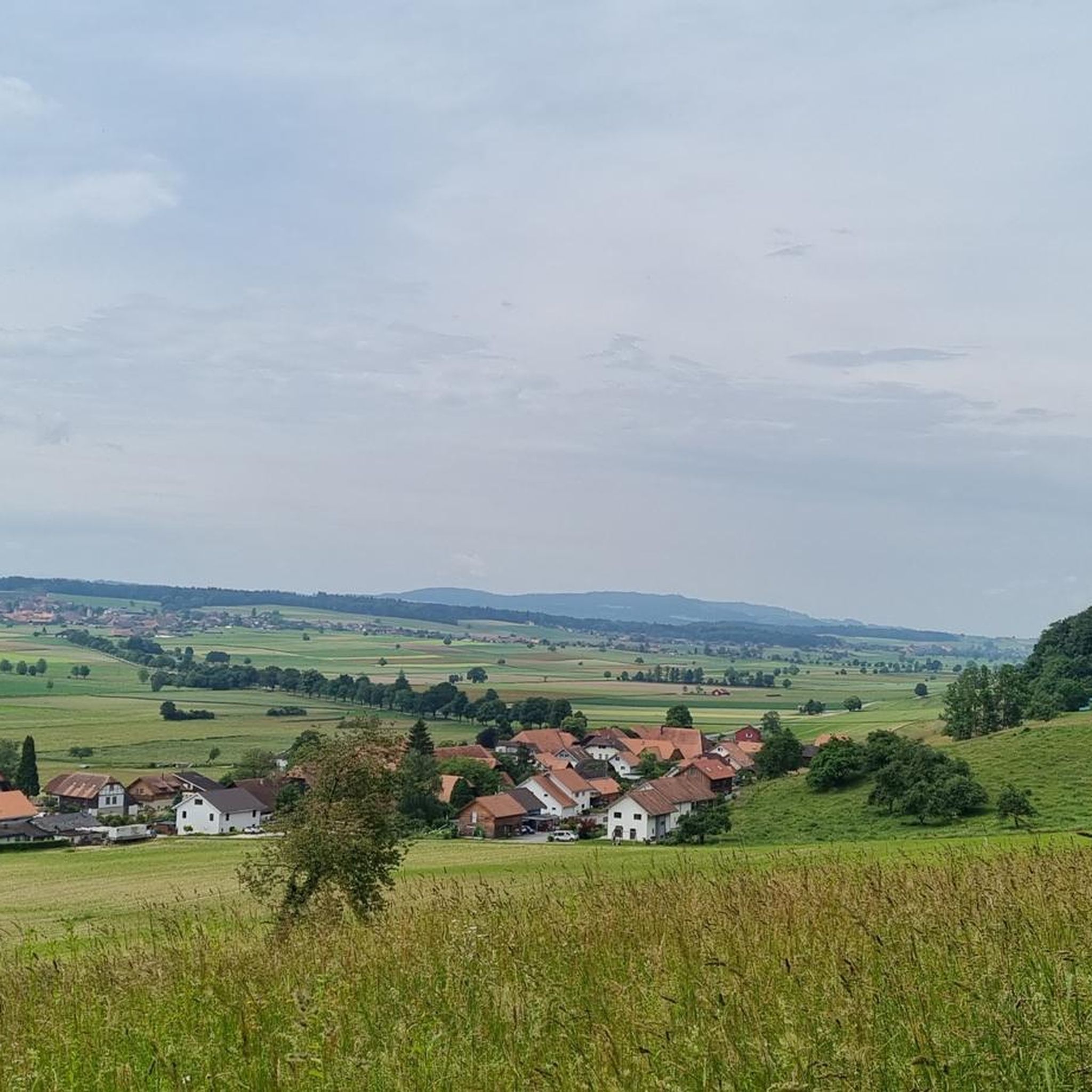
The Witi protection zone is a cantonal agricultural and conservation zone north of the Aare river between Grenchen and Solothurn in the Swiss canton of Solothurn. "Witi" is the Solothurn dialect and means "wideness". The zone was established by law in 1994. It is located in an area of scenic beauty, is a migratory bird and waterfowl reserve of international importance and is home to Switzerland's hare chamber, an above-average population of hares. The largest area of this is the Grenchenwiti. The protection zone may only be used extensively for agricultural purposes. There are also conflicts of use in the area of recreational activities, which are being attempted to be resolved through regulation in the sense of a compromise (concentration of recreational use). In certain areas, the protection of nature takes priority, and attempts are being made to consistently enforce this. The Witi landscape is originally a product of the last ice age, when the entire area was covered in ice by the Rhone glacier. When the lake receded due to warming, Lake Solothurn was formed around 12,000 years ago, the level of which was around 20 metres above today's Witi. When Lake Solothurn retreated, the Witi remained as the lake bed alongside the Aare. Until the Jura water correction, the area was a frequently flooded floodplain and swamp landscape where agriculture was only possible under difficult conditions. Between 1980 and 1995, 97 breeding bird species were observed in the Witi, 37 of which were on the Swiss Red List of endangered species, as well as 150 migratory and winter guest species. Due to the frequent pools of water in the cultivated land, the Witi developed into the third most important wader resting place in Switzerland. It is noteworthy that the majestic osprey is also observed relatively frequently, preferably in spring, as a migrant; some of the birds even spend the night in trees along the banks of the Aare. The black stork is also an irregular migrant, although the animals occasionally and temporarily stay in the white stork enclosure of the Altreu stork settlement. The nightingale, which is notable for its beautiful song, is also a frequent breeding bird in the Altreuer Witi. Source: Wikipedia
0
0
Frequently Asked Questions
What are the most popular natural monuments around Unterramsern?
Visitors frequently enjoy the Stork colony in Altreu, where you can observe storks and learn about their reintroduction. Another favorite is the Alte Aare Nature Reserve, known for its valuable habitat and serene river landscape. The Observation Tower at the Aare Nature Reserve also offers excellent views of the area and the Jura mountains.
Are there family-friendly natural monuments in the area?
Yes, several natural monuments around Unterramsern are suitable for families. The Stork colony in Altreu is very family-friendly, offering an information center and a playground. The Observation Tower at the Aare Nature Reserve and the Alte Aare Nature Reserve are also great for families to explore nature. Additionally, Meienriedseeli provides a wonderful natural recreation area with shade and gravel bays.
What kind of wildlife can I observe at these natural monuments?
The region is rich in wildlife, particularly birds. At the Stork colony in Altreu, you can observe storks in their natural environment. The Alte Aare Nature Reserve is a valuable habitat for numerous animals and plants. The Erlimoos Pond (Haag Pond) is a small nature reserve where beavers are sedentary, and you might also spot birds of prey, water birds, and occasionally snakes.
What are the best natural features to see around Unterramsern?
The area is characterized by diverse natural features. You can explore riverine areas like the Alte Aare Nature Reserve, which is a fascinating river landscape. There are also beautiful lakes such as Meienriedseeli and Erlimoos Pond (Haag Pond). For panoramic views, the Observation Tower at the Aare Nature Reserve offers a great overview of the Aare nature reserve and the Jura mountains.
Are there any information centers or facilities available at the natural monuments?
Yes, at the Stork colony in Altreu, there is an information center that provides an overview of the nature and landscape of the Aareebene, as well as details about the storks and their reintroduction. Guided tours of the Witi area are also available upon registration.
What outdoor activities can I do near these natural monuments?
The region around Unterramsern offers various outdoor activities. You can find numerous running trails, including moderate loops from Messen or Buchegg. For cyclists, there are road cycling routes like the Grenchenberg loop, and MTB trails such as the Waldhaus Trail or the Emme River singletrails.
What do visitors enjoy most about the natural monuments around Unterramsern?
Visitors particularly appreciate the unique opportunity to observe storks at the Stork colony in Altreu and the peaceful, natural recreation areas like Meienriedseeli. The scenic views from the Observation Tower at the Aare Nature Reserve and the valuable habitats of the Alte Aare Nature Reserve are also highly valued by the komoot community.
Are there any natural monuments that are good for a quiet, peaceful visit?
Yes, Meienriedseeli is described as a wonderful natural recreation area, ideal for finding peace and quiet, especially during winter. The Alte Aare Nature Reserve also offers a serene river landscape, appreciated as an attractive relaxation area.
Can I take guided tours of the natural areas?
Yes, guided tours of the Witi area are available from the information center at the Stork colony in Altreu. These tours provide deeper insights into the nature and landscape of the Aareebene and the storks.
Is there an entrance fee for the natural monuments?
Admission to the Stork colony in Altreu is free, though donations are welcome to support their conservation efforts. Most natural monuments in the region are freely accessible.
What is the significance of the Alte Aare in the region?
The Alte Aare is a fascinating river landscape between Aarberg and Büren, created as a result of the first Jura water correction in the 19th century. It is a valuable habitat for numerous animals and plants and is cherished by locals and visitors as an attractive relaxation area. The Alte Aare Nature Reserve preserves this unique idyll.
Most popular routes around Unterramsern
Most popular attractions around Unterramsern

Get inspired with the komoot mobile app


Explore more
Extend your search for the best caves by checking out these guides of the top ones around Unterramsern:
