The best cycling routes around El Cerro De Andévalo
14
riders
5
rides
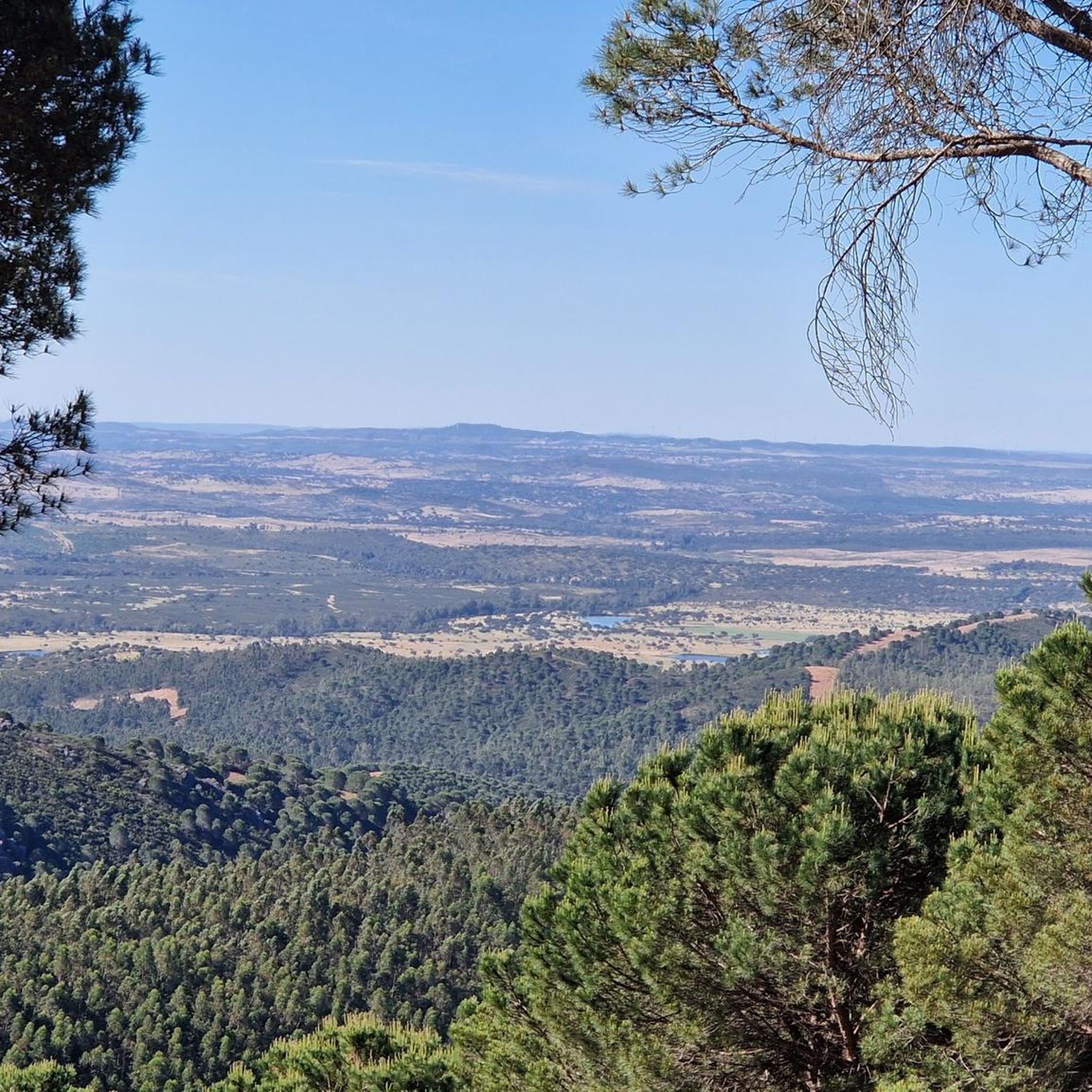
Touring cycling around El Cerro De Andévalo offers diverse terrain, from rolling hills and extensive Mediterranean meadows to unique mining heritage landscapes. The region features vast dehesas with holm and cork oaks, alongside pine and riverside forests, providing shaded routes. Its hilly topography, situated within the Iberian Pyrite Belt and near the Sierra Morena, presents both challenging climbs and scenic views. Rivers and reservoirs, including the Odiel and Guadiana, add to the picturesque routes.
Best touring cycling routes around El…
Last updated: May 23, 2026
3
riders
17.0km
01:32
140m
140m
Easy bike ride. Great for any fitness level. Mostly paved surfaces. Suitable for all skill levels.
2
riders
15.8km
01:14
280m
280m
Moderate bike ride. Good fitness required. Mostly paved surfaces. Suitable for all skill levels.

Sign up for free
3
riders
51.9km
03:31
880m
880m
Hard bike ride. Very good fitness required. Mostly paved surfaces. Suitable for all skill levels.
3
riders
Hard bike ride. Very good fitness required. Mostly paved surfaces. Suitable for all skill levels.
Our route recommendations are based on thousands of hikes, rides, and runs completed by other people on komoot.
Start today with a free account
Your next adventure awaits.
Login or Signup
Popular around El Cerro De Andévalo

Tips from the Community

Places of Interest Church of Santa María de Gracia: Late Gothic with Renaissance elements (16th–17th centuries). Hermitage of Nuestra Señora de la Coronada: Built on a Roman necropolis, a center of local devotion. El Morante: A natural viewpoint with Roman remains. Odiel Mills Route: Hiking trails among old flour mills and riverside landscapes. Paseo El Real: A green area along the Odiel River, ideal for relaxing. Fuente García and La Torerera: Charming and refreshing spots.
1
0
Calañas, in the province of Huelva, is a town with a rich mining history, a privileged natural environment, and a deeply rooted culture. Ancient Origins: It was a mining enclave from the Tartessian and Roman periods, with finds at "El Morante" including amphorae, tombstones, and coins. Middle Ages: Under Muslim, then Christian, rule, it passed to the Guzmán family. Livestock farming was the main activity. 19th Century: Mining revived (pyrite, copper, iron, manganese), and the railway arrived in 1886. Calañas reached 12,000 inhabitants in 1910. 20th Century: The closure of mines and subsistence farming led to depopulation. Today, it seeks to revitalize itself through tourism and culture.
1
0
The Roman bridge over the Odiel River in Calañas is a historic structure that is part of the region's rich heritage. This bridge is a point of interest on several hiking trails that run through the area, allowing visitors to enjoy the natural beauty and cultural heritage of the area.
8
0
Its history dates back to the 16th century, and some original parts, such as the ribbed vaults and the doorway at the foot, date back to the time of the Catholic Monarchs. Over the years, extensions and modifications were made, including the replacement of the roof in the 19th century. During the Civil War, the church suffered damage to its artistic heritage. I hope you enjoy exploring this beautiful place of worship! 🙏⛪
7
0

One of the emblems of the town of Calañas dating from the 20th century and located in the center of town.
1
0
Catholic church in the town of Calañas, dating from the 16th century although it has been reformed over the centuries. During the Spanish civil war it was assaulted, losing a large part of its artistic heritage.
2
0

It is a 16th century church with a sober and compact appearance, located in the center of town next to the town hall. It is well preserved and cared for.
0
0
The bridge was built in the 18th century to cross the avenues of the Odiel River as it passes through the village of Sotiel Coronada (Calañas, Huelva). Nearby there is an old mill and a viewpoint. It is worth visiting this historical space.
1
0
Frequently Asked Questions
How many touring cycling routes are available in El Cerro De Andévalo?
There are several touring cycling routes around El Cerro De Andévalo, offering diverse experiences. komoot currently lists 5 routes, ranging from easy loops to more challenging trails through hilly terrain.
What kind of terrain can I expect on touring cycling routes in El Cerro De Andévalo?
The region features diverse terrain, from rolling hills and extensive Mediterranean meadows to unique mining heritage landscapes. You'll encounter vast dehesas with holm and cork oaks, scrubland with cistus and rosemary, and pine and riverside forests. The hilly topography, part of the Iberian Pyrite Belt, presents both challenging climbs and scenic views, with riverbeds often displaying an orange hue from historical mineral exploitation.
Are there any easy touring cycling routes suitable for beginners in El Cerro De Andévalo?
Yes, there are easy routes perfect for beginners. For instance, the Bike loop from Alosno is an 8.3-mile (13.4 km) easy trail that explores the local countryside and takes about 1 hour 13 minutes to complete.
What are some notable natural features or landmarks to see along the cycling routes?
Cyclists can explore the unique mining heritage, including the "Ruta en bici vía férrea" which follows the former San Miguel railway line, featuring bridges over the Fresnera and Pelada rivers. The landscape is also characterized by meadows of oaks and scrubland. You might also encounter the Valdelamusa Water-Filled Quarry, a striking reminder of the region's mining past.
Are there any cultural or historical attractions accessible by bike?
Yes, the region offers cultural and historical attractions. You can visit the 16th-century Iglesia de Santa María de Gracia, or explore several historic hermitages like Ermita de la Trinidad, Ermita de San Benito, and Ermita de la Virgen de los Dolores, all dating back to the 15th-16th centuries. These add a rich historical layer to your cycling experience.
What is the best time of year for touring cycling in El Cerro De Andévalo?
While specific seasonal advice isn't provided, the Mediterranean climate suggests spring and autumn would be ideal. These seasons typically offer milder temperatures, making for more comfortable cycling than the heat of summer or the cooler, potentially wetter, winter months. The diverse flora, including cistus, rosemary, and rock rose, would be particularly vibrant in spring.
Are there any longer or more challenging touring routes for experienced cyclists?
Yes, for more experienced cyclists, the region offers challenging options. The Embalse Monte Félix-Toril – Puerto del Nogalito loop from Rivera Olivargas is a 32.3-mile (51.9 km) trail leading through hilly terrain and past reservoirs, typically completed in about 3 hours 31 minutes.
Can I find circular touring cycling routes in El Cerro De Andévalo?
Yes, several routes are designed as loops. Examples include the Bike loop from Alosno and the Calañas Market Hall – Calañas loop from Calañas, which offer convenient starting and ending points in the same location.
What are the typical durations for touring cycling routes in this area?
Route durations vary depending on difficulty and length. Easy routes like the Bike loop from Alosno can be completed in just over an hour, while more challenging and longer routes such as the Embalse Monte Félix-Toril – Puerto del Nogalito loop from Rivera Olivargas can take around 3.5 hours.
What do other touring cyclists enjoy most about cycling in El Cerro De Andévalo?
Touring cyclists appreciate the region's diverse landscapes, which combine rolling hills, extensive Mediterranean meadows, and unique mining heritage. The network offers options for different ability levels, from easy loops to more challenging routes with significant elevation gain, showcasing the best of the region's scenery.
Most popular routes around El Cerro De Andévalo
Most popular attractions around El Cerro De Andévalo

Get inspired with the komoot mobile app


Explore more
Browse the best Cycling routes in other regions.
