The best MTB trails around El Cerro De Andévalo
4
riders
4
rides
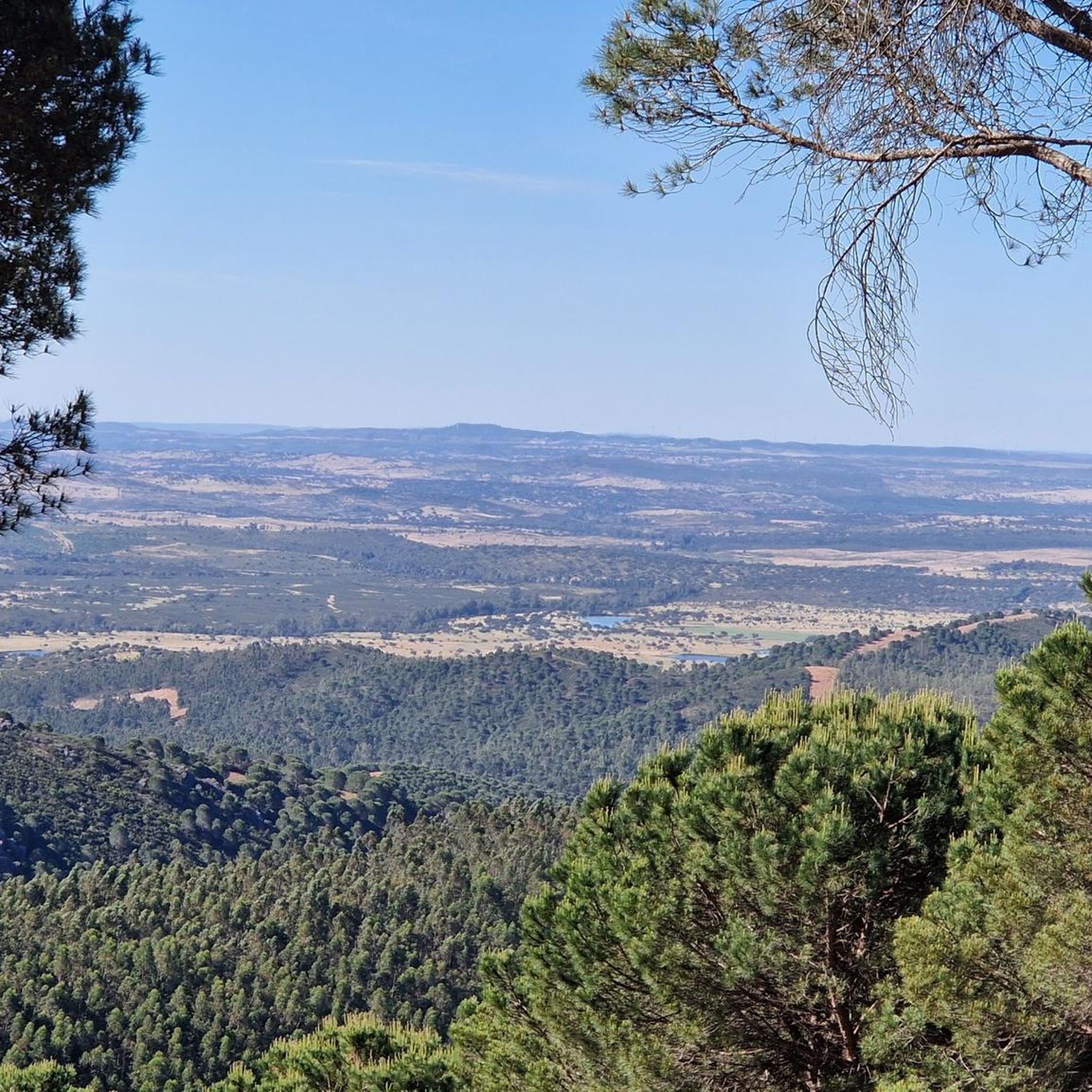
Mountain bike trails around El Cerro De Andévalo traverse a landscape characterized by its "Andévalo profundo," featuring extensive dehesas of oaks and cork oaks, interspersed with aromatic scrubland. The region's hilly terrain, marked by numerous "cerros," provides varied gradients suitable for mountain biking. Riders can explore areas shaped by a rich mining history, with traces of ancient enclaves, and enjoy picturesque riverside landscapes along the Odiel River. This blend of natural and historical features creates a diverse environment for outdoor…
Last updated: May 18, 2026
35.8km
02:58
480m
480m
Moderate mountain bike ride. Good fitness required. Advanced riding skills necessary.
35.0km
02:52
420m
420m
Moderate mountain bike ride. Good fitness required. Suitable for all skill levels.

Sign up for free
2
riders
29.0km
02:31
430m
430m
Moderate mountain bike ride. Good fitness required. Suitable for all skill levels.
2
riders
Moderate mountain bike ride. Good fitness required. Suitable for all skill levels.
Our route recommendations are based on thousands of hikes, rides, and runs completed by other people on komoot.
Start today with a free account
Your next adventure awaits.
Login or Signup
Popular around El Cerro De Andévalo

Tips from the Community

Places of Interest Church of Santa María de Gracia: Late Gothic with Renaissance elements (16th–17th centuries). Hermitage of Nuestra Señora de la Coronada: Built on a Roman necropolis, a center of local devotion. El Morante: A natural viewpoint with Roman remains. Odiel Mills Route: Hiking trails among old flour mills and riverside landscapes. Paseo El Real: A green area along the Odiel River, ideal for relaxing. Fuente García and La Torerera: Charming and refreshing spots.
1
0
Calañas, in the province of Huelva, is a town with a rich mining history, a privileged natural environment, and a deeply rooted culture. Ancient Origins: It was a mining enclave from the Tartessian and Roman periods, with finds at "El Morante" including amphorae, tombstones, and coins. Middle Ages: Under Muslim, then Christian, rule, it passed to the Guzmán family. Livestock farming was the main activity. 19th Century: Mining revived (pyrite, copper, iron, manganese), and the railway arrived in 1886. Calañas reached 12,000 inhabitants in 1910. 20th Century: The closure of mines and subsistence farming led to depopulation. Today, it seeks to revitalize itself through tourism and culture.
1
0
Eagle Hill offers spectacular views of the Andévalo region, the Sierra de Aracena, the Huelva coast, and even Portugal. The natural surroundings and the hill's altitude make the hermitage a privileged viewpoint.
1
0
The Hermitage of Our Lady of La Peña in Puebla de Guzmán (Huelva) is one of the most emblematic sites in the Andévalo region, both for its religious significance and its cultural and scenic importance. It is located on Cerro del Águila (Eagle Hill), about 4 km from the town center of Puebla de Guzmán. Origin: Probably built in the 16th century, although the most significant works were carried out in the 17th century. Style: Latin cross floor plan, with a single nave covered by a wooden truss roof. The crossing is crowned by a hemispherical dome on pendentives.
1
0
The Hermitage of Our Lady of La Peña in Puebla de Guzmán (Huelva) is one of the most emblematic sanctuaries in the Andévalo region of Huelva province, with a deep spiritual, artistic, and cultural tradition. Location: On Cerro del Águila (Eagle Hill), about 4 km from the town center. Origin: Probably built in the 16th century, with significant renovations in the 17th century, 1960, and 1992. Founding legend: According to tradition, the Virgin Mary appeared to the shepherd Alonso Gómez in the 15th century, who was instructed to build a hermitage on that site.
4
0
The Church of the Holy Cross in Puebla de Guzmán (province of Huelva, Andalusia) is a temple of great historical, artistic, and spiritual value. Original construction: Late 16th and early 17th centuries. It was praised in 1645 by Francisco de Rada. Between 1748 and 1757, significant renovations were carried out, including a new main chapel whose roof was converted into a watchtower. It suffered severe damage during a fire in July 1936, at the beginning of the Spanish Civil War. It was rebuilt by the architect José María Pérez Carasa.
4
0

It is not a border town, since the urban centre is 20 km from the border line, although the municipal area is a border town.
0
1
Its history dates back to the 16th century, and some original parts, such as the ribbed vaults and the doorway at the foot, date back to the time of the Catholic Monarchs. Over the years, extensions and modifications were made, including the replacement of the roof in the 19th century. During the Civil War, the church suffered damage to its artistic heritage. I hope you enjoy exploring this beautiful place of worship! 🙏⛪
7
0
Frequently Asked Questions
How many mountain bike trails are available in El Cerro de Andévalo?
There are 5 mountain bike trails available around El Cerro de Andévalo, all offering a moderate challenge. These routes traverse diverse landscapes, from extensive dehesas to areas marked by the region's mining history.
What kind of terrain can I expect on mountain bike trails in El Cerro de Andévalo?
You can expect varied terrain characterized by extensive dehesas of oaks and cork oaks, interspersed with aromatic scrubland. The region's hilly topography, with numerous 'cerros,' provides undulating gradients. Some routes also feature picturesque riverside landscapes along the Odiel River and areas with traces of ancient mining enclaves.
Are there mountain bike trails suitable for beginners or families in El Cerro de Andévalo?
All the mountain bike routes listed for El Cerro de Andévalo are rated as moderate difficulty. While they offer a good workout, they might be suitable for families or beginners with some prior mountain biking experience. For example, the El Cerro de Andévalo Old Town loop from El Cerro de Andévalo is a 22.5 km route that takes about 1 hour 40 minutes, offering a manageable distance.
Can I find circular mountain bike routes in El Cerro de Andévalo?
Yes, several circular mountain bike routes are available. Popular options include Tharsis, Ermita de la Virgen de la Peña, Puebla de Guzmán – ruta circular and Calañas, El Cerro de Andévalo – ruta circular, both offering scenic loops through the region's characteristic landscapes.
What are some notable landmarks or viewpoints I can see while mountain biking?
You can encounter several interesting landmarks and viewpoints. The Tharsis, Ermita de la Virgen de la Peña, Puebla de Guzmán – ruta circular offers views of the Hermitage of La Peña of Puebla de Guzmán. The region also features natural viewpoints like El Morante, offering panoramic views, and historical mining sites such as the La Zarza Mine and Tharsis Open-Pit Mine.
Are there any trails that showcase the region's mining heritage?
Yes, the region's rich mining history is evident on several routes. The Tharsis Open-Pit Mine loop from Alosno is a great option to explore this aspect, passing by the Tharsis Open-Pit Mine. You might also encounter traces of ancient mining enclaves like El Morante, which adds a unique historical dimension to your ride.
What is the best time of year to go mountain biking in El Cerro de Andévalo?
The best time to go mountain biking in El Cerro de Andévalo is generally during the cooler months, such as spring (March to May) and autumn (September to November). During these seasons, the weather is more temperate, making for more comfortable rides. Summers can be very hot, and winters can be cooler and wetter, though still rideable on many days.
Are dogs allowed on the mountain bike trails in El Cerro de Andévalo?
While specific regulations for dogs on mountain bike trails are not always explicitly stated, the dehesa landscapes are often used for traditional livestock farming. It's advisable to keep dogs on a leash, especially in areas with livestock or wildlife, and always clean up after them. Respect local signage and private property.
What are the typical lengths of mountain bike trails in this region?
The mountain bike trails in El Cerro de Andévalo vary in length, generally ranging from moderate distances. For example, the El Cerro de Andévalo Old Town loop from El Cerro de Andévalo is 22.5 km, while the Tharsis Open-Pit Mine – Hermitage of the Virgin of the Rock loop from Tharsis is a longer option at 59.3 km.
Where can I find parking for mountain bike trails in El Cerro de Andévalo?
Parking is typically available in or near the towns and villages where the routes begin. For routes starting from El Cerro de Andévalo itself, you can usually find parking within the town. For trails like the Tharsis, Ermita de la Virgen de la Peña, Puebla de Guzmán – ruta circular, parking would be accessible in Tharsis or Puebla de Guzmán.
Are there any longer, more challenging routes for experienced mountain bikers?
While all listed routes are rated as moderate, the Tharsis Open-Pit Mine – Hermitage of the Virgin of the Rock loop from Tharsis is the longest at 59.3 km with 718 meters of elevation gain, offering a more extensive challenge for experienced riders. The undulating hilly terrain across the region ensures a consistent workout on most trails.
What should I bring for a mountain biking trip in El Cerro de Andévalo?
For a mountain biking trip in El Cerro de Andévalo, it's essential to bring plenty of water, especially during warmer months, as well as snacks. A helmet, appropriate cycling gear, and a basic repair kit for your bike are also crucial. Sunscreen, sunglasses, and a map or GPS device (like komoot) are highly recommended for navigation and sun protection.
Are there any riverside trails for mountain biking?
Yes, the Odiel River enriches the area, offering picturesque riverside landscapes. While not explicitly listed as mountain biking routes in the guide, the 'Camino de los Molinos' (Mills' Path) is known for exploring old flour mills and enjoying the riverside scenery, and some sections may be suitable for mountain biking or connect to other trails.
What do other mountain bikers say about the trails in El Cerro de Andévalo?
Mountain bikers who have explored El Cerro de Andévalo often praise the region's diverse terrain, which combines extensive dehesas with undulating hills and historical mining areas. The routes offer a good balance of natural beauty and physical challenge, making it a rewarding destination for outdoor exploration.
Most popular routes around El Cerro De Andévalo
Most popular attractions around El Cerro De Andévalo

Get inspired with the komoot mobile app


Explore more
Browse the best MTB trails in other regions.
