Top 4 Castles around Montirat
Castles around Montirat France reveal a region rich in history, centered on Montirat's own origins as an old fortified village dating back to the 9th or 10th century. This historical character is evident in its preserved structures, including the Saint Jacques parish church and 16th-century chapels. The village's past is deeply inscribed in the rock on which it sits. For those interested in Montirat tourism, the broader Occitanie region offers numerous significant castles within a reasonable distance.
Best castles around…
Last updated: May 12, 2026
Carcassonne Citadel
Highlight • Castle
Translated by Google •
Tip by

Count's Castle
Highlight • Castle
Translated by Google •
Tip by

Sign up now to discover places like this
Get recommendations on the best single tracks, peaks, & plenty of other exciting outdoor places.
Sign up for free
Aude Gate
Highlight • Historical Site
Translated by Google •
Tip by

Château de Miramont
Highlight • Castle
Translated by Google •
Tip by

Château des Saptes
Highlight • Castle
Translated by Google •
Tip by
Start today with a free account
Your next adventure awaits.
Login or Signup
Tips from the Community

Known for being in 1185 the birthplace of the most famous lord of the place, Chabert de Barbeira, an Occitan knight loyal to the Cathar cause. Besieged in 1210 during the Albigensian Crusade, Pierre des Vaux de Cernay cites this siege in his chronicle of the crusade as a failure of the crusaders, due to poor weather conditions. The stronghold could date back to the Carolingian or even Visigothic era, but no historical study has yet been conducted on this castle. The building was listed as a historical monument in 19261. The "ruins of the castle" have been listed as natural sites since 19422 (Wikipedia)
0
0

It is an absolute must to visit the castle during the blue hour.
1
0

Commonly called Château des Saptes, the building is in fact, in its functions, a mill. The set was bought at the beginning of the 16th century by the Saptes brothers, drapers. They want to take advantage of its location on a bend in the River Orb to concentrate their activity: preparation of raw wool, washing, fulling, dyeing, weaving, trimming, everything could then be done in the same place. We find around the castle a set of houses which made it possible to gather around them other related professions. Thus twisters, weavers, re-entryers, masons in charge of building maintenance settled nearby.
2
0
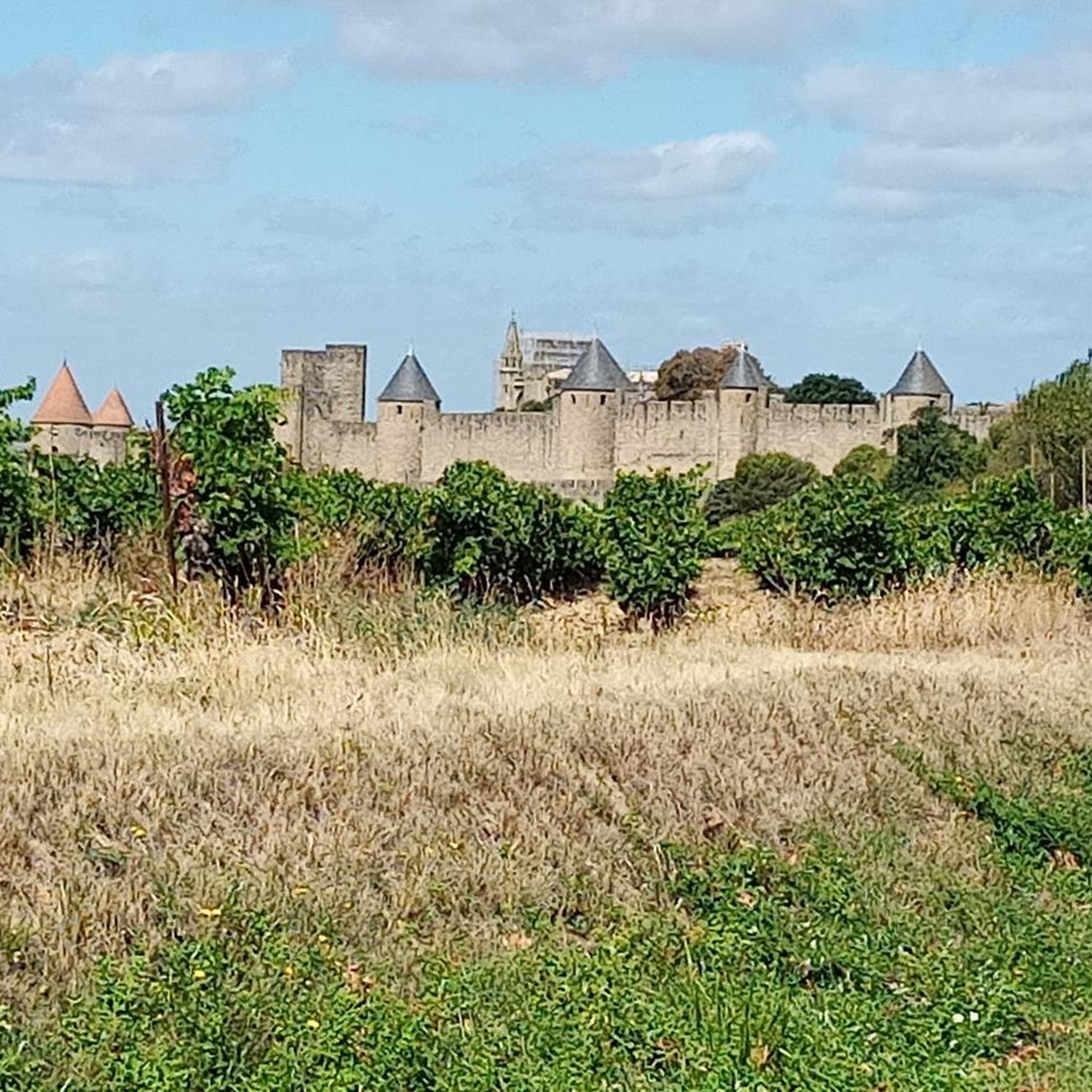
You haven't visited Carcassonne if you haven't visited the Cité. This fortress, listed as a UNESCO World Heritage Site, lines up three kilometers of double surrounding walls and 52 defense towers that protected the historic old town. But during the Peace of the Pyrenees in 1659, these ramparts lost their military importance and the town developed around them.
9
0
From the top of this promontory, the view embraces a superb landscape formed by the Aude valley, the reliefs of the Minervois up to the bar of the Montagne Noire. The remains that still remain were built on the foundations of the castle of the Visigoth king, Alaric II. Erected on a strategic point, the building was probably built by the lords of Capendu at the beginning of the Middle Ages. The remains of the Château de Miramont lean against the northern flank of the Alaric mountain, 4 km south-west of the town of Barbaira. Standing on the isolated plateau, at an altitude of more than 300m, this site constitutes a protected perimeter.
0
0

Huge complex with several wall rings and many towers
21
0
From here it costs money. It is worth it ..
28
2
Frequently Asked Questions
What historical sites can I explore in Montirat itself?
Montirat is an old fortified village with origins dating back to the 9th or 10th century. You can explore its historical character, including the Saint Jacques parish church, 16th-century chapels, and a 19th-century fresco. The village's history is deeply inscribed in the rock on which it sits.
Which are the most impressive castles to visit near Montirat?
The most popular castle is the Carcassonne Citadel, a UNESCO World Heritage Site with 3 kilometers of double walls and 52 defense towers. Within Carcassonne, the Count's Castle is also a magnificent and impressive site. Beyond Carcassonne, the region offers other significant castles like the four ruined Cathar Châteaux de Lastours and the important Cathar Château de Termes.
Are there any lesser-known or 'hidden gem' castles in the Montirat region?
Yes, for a less crowded experience, consider visiting the ruins of Château de Miramont. Erected on a strategic point with Visigoth foundations, it offers superb views of the Aude valley and the Minervois. Another unique site is Château des Saptes, which was originally a 16th-century mill complex that processed wool, showcasing a different aspect of regional history.
What outdoor activities can I do near these castles?
The region around Montirat offers various outdoor activities. You can find numerous hiking trails, including easy loops around Lac de la Cavayère. For cyclists, there are many road cycling routes, such as the 'Winery in the castle' loop. Runners can also explore running trails, like the Tour of Lake Cavayère Trail.
Are there family-friendly castles or activities near Montirat?
Absolutely. The Carcassonne Citadel and the Count's Castle within it are highly recommended for families, offering an immersive medieval experience. The Aude Gate also provides picturesque trails and views that can be enjoyed by all ages. Many nearby hiking and running trails, especially around Lake Cavayère, are rated as easy and suitable for families.
What is the best time of year to visit the castles around Montirat?
While specific weather conditions vary, generally spring (April-June) and autumn (September-October) offer pleasant temperatures for exploring the castles and engaging in outdoor activities without the intense heat of summer or the chill of winter. These seasons also tend to be less crowded.
How long should I plan for a visit to the major castles?
For a comprehensive visit to the Carcassonne Citadel and its Count's Castle, you should plan at least half a day, if not a full day, to explore the walls, towers, and the historic town within. Other castles like the Châteaux de Lastours or Château de Termes might require 2-3 hours each, depending on your interest in ruins and hiking.
Are there any specific natural features or viewpoints near the castles?
Yes, the Aude Gate in Carcassonne offers beautiful views of the ramparts. The ruins of Château de Miramont are situated on a promontory, providing panoramic views of the Aude valley, the Minervois, and the Montagne Noire. The region is also characterized by its rocky landscapes, which have shaped the fortified villages and castle locations.
What do visitors enjoy most about the castles around Montirat?
Visitors frequently praise the historical depth and architectural grandeur of sites like the Carcassonne Citadel, often highlighting its UNESCO status and well-preserved medieval character. The scenic views from various castle locations and the opportunity to explore ancient ruins are also highly appreciated. The komoot community has shared over 330 photos and given more than 320 upvotes for the castles in this region.
Where can I find information about public transport or parking for these castles?
For major sites like Carcassonne, there are usually designated parking areas outside the medieval city walls. Specific public transport options to individual castles can vary. For detailed information on accessing Carcassonne, you can consult the official tourism website for the Aude department or Wikipedia for general transport links to the city.
Are there any cafes or restaurants near the castles?
Yes, especially around the highly visited Carcassonne Citadel, you will find numerous cafes, restaurants, and shops both within the medieval city and in the surrounding modern town. For more remote castle sites, amenities might be limited, so it's advisable to check in advance or bring your own refreshments.
Can I find dog-friendly walks or areas near the castles?
While dogs may have restrictions inside some castle interiors, many outdoor areas and walking trails around the castles are dog-friendly. For instance, the hiking trails around Montirat, including those near Lake Cavayère, often welcome dogs on a leash. Always check specific site regulations before visiting.
Most popular routes around Montirat
Most popular attractions around Montirat

Get inspired with the komoot mobile app


Explore more
Looking for the best castles somewhere else? Discover other guides around Montirat:
