Attractions and Places To See around Tröstauer Forst-Ost - Top 20
Best attractions and places to see around Tröstauer Forst-Ost are found within this 9.71 km² forest area in the Fichtelgebirge. The region is characterized by notable natural landmarks, significant geological features, and historical points of interest. Visitors can explore a variety of landscapes, from prominent summits with observation towers to unique rock formations and historical springs. The area offers numerous trails for hiking and cycling, making it suitable for outdoor exploration.
Best attractions and places to see around Tröstauer Forst-Ost
…Last updated: June 23, 2026
Kösseine Summit and Observation Tower
Highlight • Summit
Translated by Google •
Tip by

Great Haberstein Viewpoint
Highlight • Viewpoint
Translated by Google •
Tip by

Sign up now to discover places like this
Get recommendations on the best single tracks, peaks, & plenty of other exciting outdoor places.
Sign up for free
Little Haberstein
Highlight • Natural Monument
Translated by Google •
Tip by

Marienquelle
Highlight • Natural Monument
Translated by Google •
Tip by

Kösseine Cross in the Fichtel Mountains
Highlight • Monument
Translated by Google •
Tip by
Sign up for free to discover even more attractions around Tröstauer Forst-Ost.
Sign up for free
Already have an account?
Start today with a free account
Your next adventure awaits.
Login or Signup
Popular around Tröstauer Forest-Ost
Tips from the Community

For decades, the Marienquelle and the associated fountain stone lay at 865 meters away from the marked hiking trails. Hikers who started the final sprint on the high trail from Hohenbrand to reach the summit of the Kösseine did not notice the historically significant place they were marching past. In recent years, the Nagel local group of the Fichtelgebirgsverein has taken on the task of restoring the important fountain system. A new water pipe was laid from the fountain room to the mountain path. The original fountain stone with the year 1852 carved on the back was then attached to a base plate. FGV member Hans Hütter donated the fountain trough.
15
0
On this rock formation, the "Wollsackverwitterung" (sack weathering) is particularly pronounced. Unlike the Großer Haberstein, there is no climbing facility.
14
0

Church services are also held here. Opposite is the mountain rescue hut.
5
1

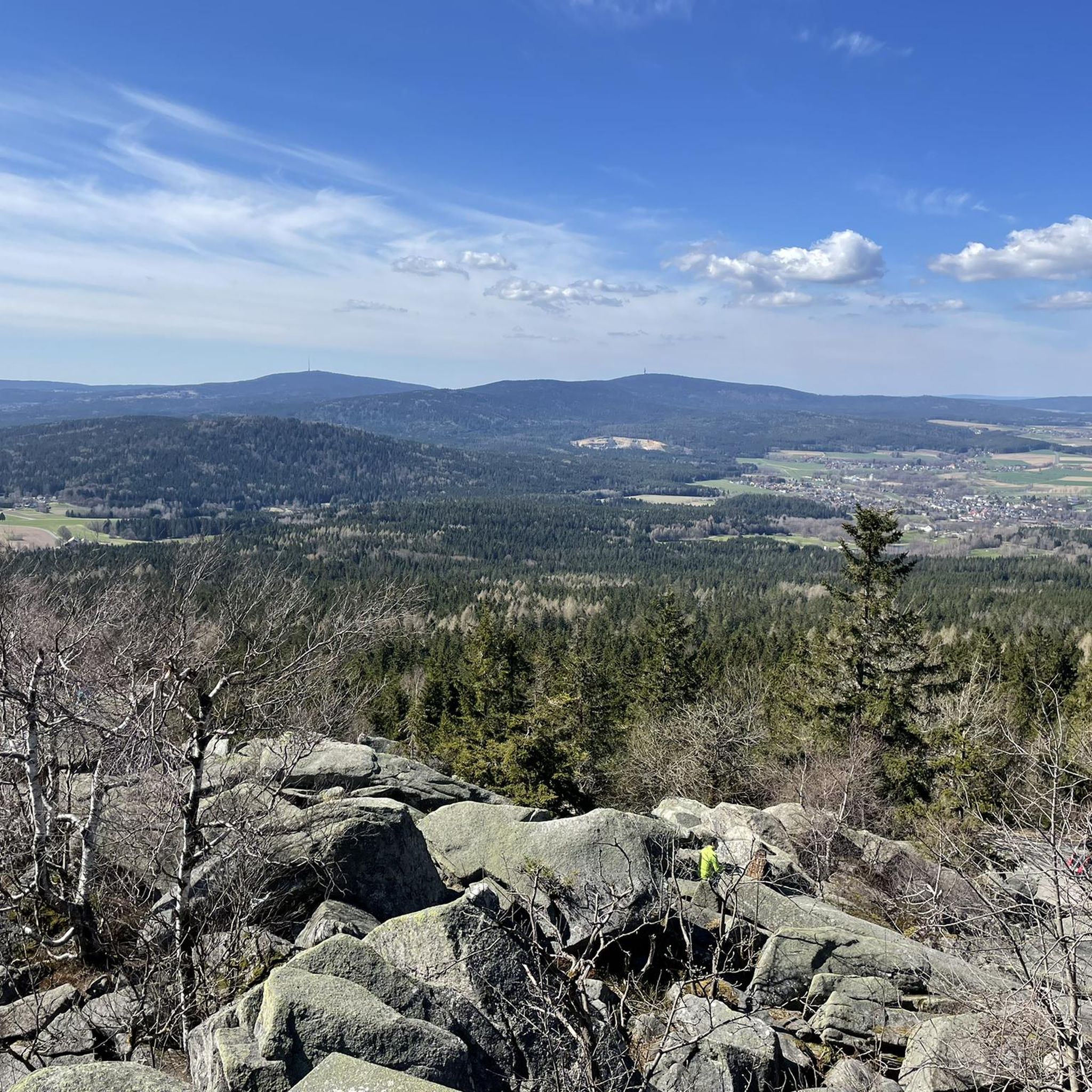
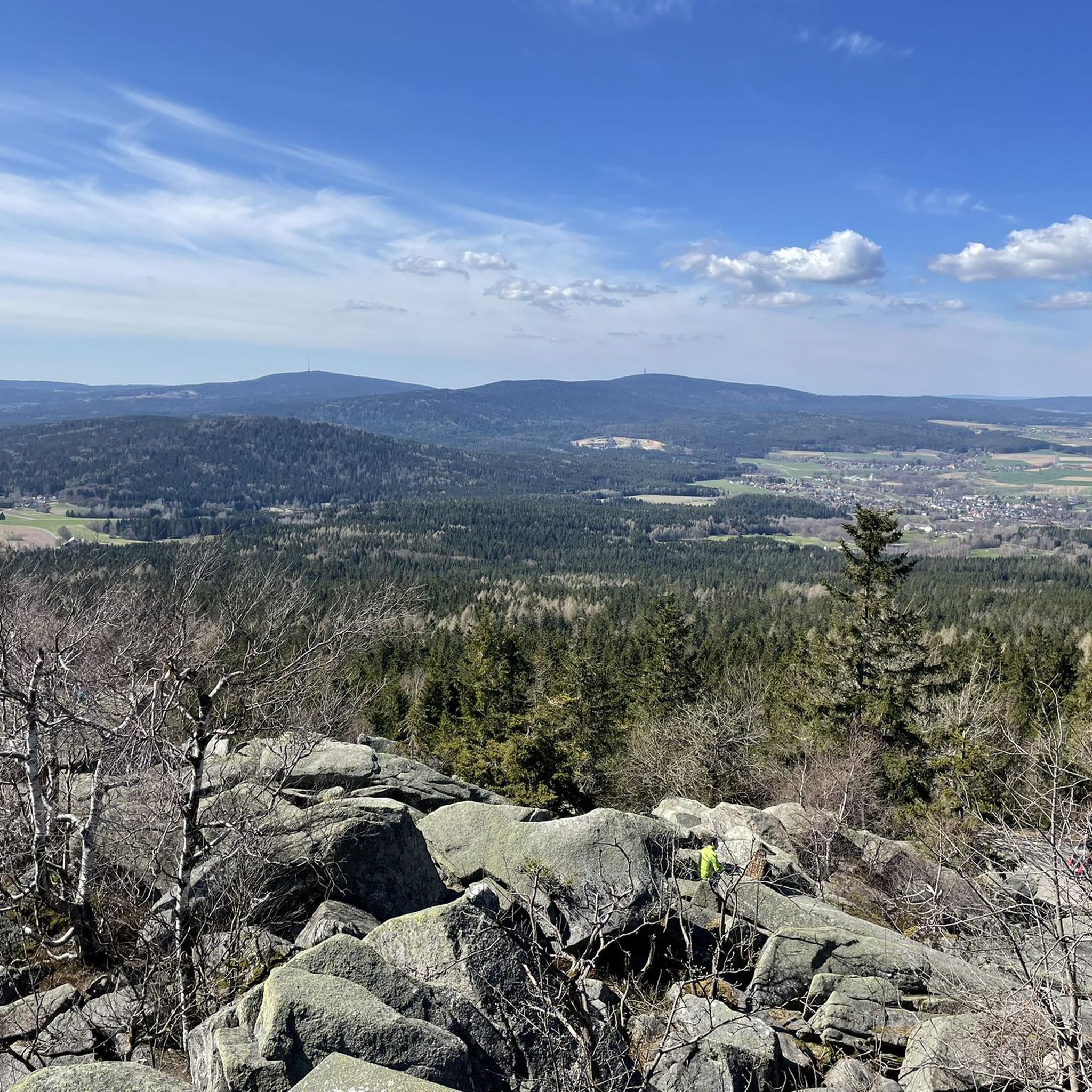
Beautiful all-round view and in good weather you can see as far as the Fichtelberg and the Czech Republic, the Arber or the Rauhen Kulm.
7
0

Kösseine Cross in the Fichtelgebirge. “Built by hope”
4
1
Because of the clear, wide view in all directions (Bavarian Forest, Rhön, Thuringian Forest, Ore Mountains), the Kösseine was a popular destination from an early stage. The level of awareness was significantly increased in 1805 by visiting the then Prussian sovereignty. Opened to tourists since 1878, the mountain still attracts many hikers and cyclists today. There is no public road to the summit. The stone observation tower and the “Kösseinehaus” accommodation house of the Fichtelgebirge association invite you to take a look and stop for a bite to eat.
19
2

At 848 m, the large Haberstein is not exactly low, even if it is of course not one of the highest peaks in the Fichtelgebirge. At the top of the massive rock castle, a viewing platform awaits you, giving you, among other things, a fantastic view of the neighboring Kösseine, the Seehaus and Wunsiedel in the valley. Source and further information: https://fichtelguide.de/wandern-zum-haberstein-im-fichtelgebirge/
11
1
Rocks with weathered wool sacks, a short visit is worthwhile. Unlike its big brother, it cannot be climbed.
10
0
Frequently Asked Questions
What natural landmarks and viewpoints can I explore in Tröstauer Forst-Ost?
The region is rich in natural landmarks and offers several impressive viewpoints. Key highlights include the Kösseine Summit and Observation Tower, which provides extensive panoramic views across the Fichtelgebirge. You can also visit the Great Haberstein Viewpoint, a protected natural monument offering beautiful vistas over the Fichtelgebirge and into the Röslautal valley. Nearby, the Little Haberstein presents another unique rock formation.
Are there any unique geological features to see in Tröstauer Forst-Ost?
Yes, Tröstauer Forst-Ost is known for its significant geological sites. Besides the granite formations of the Kösseine massif, you can explore the Little Haberstein, which features hollows from granite weathering. Other notable geotopes in the area include the former Schauerberg Granite Quarry, the Blockstrom Mühlsteine von Kleinwendern, and the Felsburg Püttnersfels von Kleinwendern.
What kind of hiking trails are available in Tröstauer Forst-Ost?
The area is well-suited for hiking, offering a variety of trails. You can find routes like the 'Great Haberstein Viewpoint – Kösseinehaus loop' or the 'Püttnerfels – Great Haberstein Viewpoint loop' which are generally moderate. For more options, explore the hiking guide for Tröstauer Forst-Ost.
Are there easy hiking options suitable for beginners or families?
Yes, there are several easy hiking trails. For instance, the 'Kösseine Spring loop' is an easy option. You can find more family-friendly and easy routes in the easy hikes guide around Tröstauer Forst-Ost, including shorter loops like the 'Luisenburg Rock Labyrinth – Diana Grotto and Spring loop'.
Can I find more challenging hikes in the area?
For those seeking more challenging routes, the region offers options like the 'Luisenburg Open-Air Theatre – Burgsteinfelsen Viewpoint loop' or the 'Weißmain Spring – Haberstein Rock Formation loop'. These and other routes are detailed in the mountain hikes guide around Tröstauer Forst-Ost.
Are there cycling routes in Tröstauer Forst-Ost?
Yes, the Brückenradweg Bayern-Böhmen (Bridge Cycle Path Bavaria-Bohemia) passes through the region. This family-friendly route utilizes former railway lines, offering gentle inclines between Tröstau and Selb, and features numerous listed bridges and industrial cultural monuments.
What historical or cultural sites can I visit?
Beyond natural beauty, you can explore the Marienquelle, a historically significant spring on the Kösseine massif that has been restored. Additionally, the Brückenradweg Bayern-Böhmen cycle path showcases various industrial cultural monuments along its route, providing a glimpse into the region's past.
What do visitors particularly enjoy about Tröstauer Forst-Ost?
Visitors frequently praise the stunning panoramic views from spots like the Kösseine Summit and Observation Tower and the Great Haberstein Viewpoint. The unique rock formations, such as the Little Haberstein, are also highly appreciated for their impressive appearance and geological interest. The opportunity for diverse outdoor activities, especially hiking, is a major draw.
Are there any lesser-known spots or 'hidden gems' worth exploring?
While popular spots like Kösseine and Haberstein are well-known, the Marienquelle is a historically significant spring that was off marked trails for decades before its restoration, offering a peaceful and meaningful stop. The Püttnersfels, a granite rock formation and protected natural monument, is another less-frequented but impressive site, often part of circular hiking trails.
Are the trails in Tröstauer Forst-Ost dog-friendly?
Many of the natural trails and forest paths in Tröstauer Forst-Ost are suitable for dogs, making it a great area for walks with your canine companion. However, it's always advisable to keep dogs on a leash, especially near wildlife or in more frequented areas, and to respect local regulations.
When is the best time to visit Tröstauer Forst-Ost for outdoor activities?
The Fichtelgebirge region, including Tröstauer Forst-Ost, is beautiful throughout the warmer months, typically from spring to autumn. Spring offers blooming nature, while summer provides pleasant temperatures for hiking and cycling. Autumn is particularly scenic with vibrant fall foliage. Winter can also be appealing for snowshoeing or winter hikes, though some paths might be less accessible.
Most popular routes around Tröstauer Forst-Ost
Most popular attractions around Tröstauer Forst-Ost

Get inspired with the komoot mobile app


Explore more
Still not found the Highlight you’re looking for? See guides of the top attractions in other regions:
