Top 6 Castles around Les Llosses
Castles around Les Llosses are situated within the Ripollès region, characterized by its Pyrenean landscape and historical significance. This area features medieval fortifications that once served as frontier defenses. The mountainous terrain offers exceptional views of the surrounding natural environment. Visitors can explore a blend of historical sites and natural beauty in this region.
Best castles around Les Llosses
- The most popular castles is Castellar de n'Hug, a settlement that features a castle, church, and plaza. It is known…
Last updated: June 20, 2026
Castellar de n'Hug
Highlight • Settlement
Tip by

Montesquiu Castle
Highlight • Castle
Translated by Google •
Tip by

Sign up now to discover places like this
Get recommendations on the best single tracks, peaks, & plenty of other exciting outdoor places.
Sign up for free
Besora Castle
Highlight • Castle
Translated by Google •
Tip by

Castle of Torelló
Highlight • Castle
Translated by Google •
Tip by

Castillo de Milany
Highlight • Castle
Translated by Google •
Tip by

Sign up for free to discover even more castles around Les Llosses.
Sign up for free
Already have an account?
Start today with a free account
Your next adventure awaits.
Login or Signup
Other adventures around Les Llosses

Tips from the Community

A beautiful village located in the Cadí-Moixeró Natural Park. A stroll through it, visiting the Llobregat springs, and buying something from its bakeries are highly recommended.
0
0

The ruins of the Besora castle and the Romanesque church of Santa María are located on a hill at more than 1000 meters above sea level. It is worth calmly exploring each of its corners and enjoying the beautiful views.
2
0


Small mountain village of Berguedà, halfway to Coll de la Creueta and also the end of Montgrony from Gombrèn. It is known for the Llobregat River Springs, but also for its beauty. A good point to rest and refuel.
0
0

My first visit to this beautiful high mountain town was in 1992, when I was barely 11 years old, in the middle of June. I remember it rained a lot and it was very cold. It coincided with the Monte Bondone stage of that year's Giro d'Italia. From then on I knew that I would pass by there on a bicycle. Castellar de N'Hug is a beautiful town that is characterized by: - birth of the Llobregat river (its sources are very pleasant) - gigantic ham and cheese croissants and other tastes.
0
0

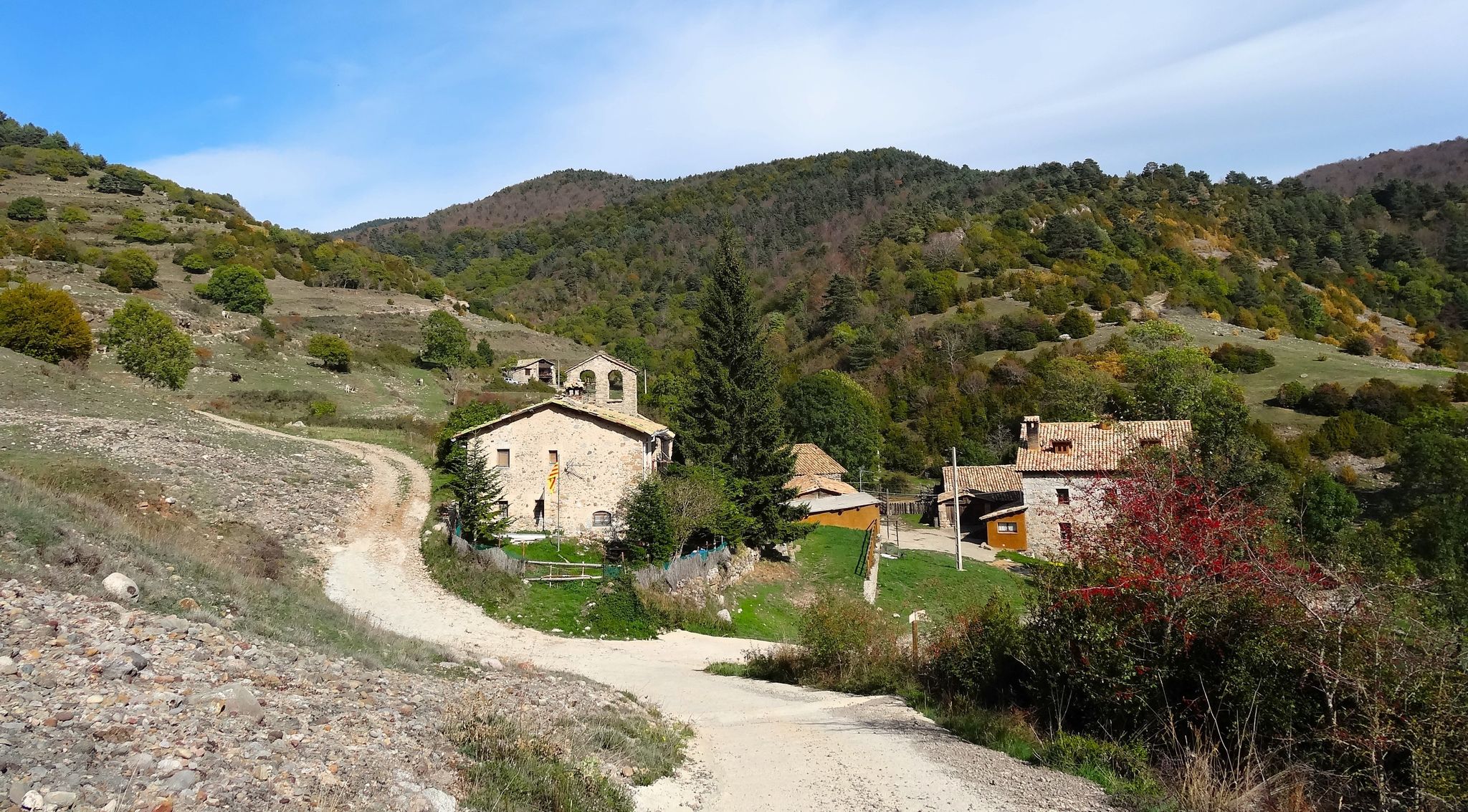
Castellar de n'Hug is a town located at 1,450 meters above sea level, within the Cadí-Moixeró natural park, on the south side of the Pyrenees. It appears for the first time documented in the year 839, in the act of consecration of the cathedral of Urgell. Most likely the first building was the parish church of Santa Maria, replaced in the 11th century by the Romanesque church that has been partially preserved to this day. The castle that gave rise to the place name has already disappeared, although some remains can be seen. The town has traditionally lived off livestock farming, and also on smuggling, especially in times of war and post-war. The area has always been a transit area for refugees and fugitives. At the beginning of the 20th century, with the opening of the Portland cement factory, one of the best examples of industrial architecture in Catalonia, its economic activity was revitalized. Currently, and thanks to the fact that the popular architecture of the area has been preserved, based on the use of stone, wood and tiles, the municipality is a tourist attraction, and has been declared by the Ministry of Tourism as one of the most beautiful towns in Spain.
1
0

A few months ago I covered the route from the R 3 train station, from Farga de Bebié to Montesquiu Castle and back to Sant Quirze de Besora Pueblo de la Ratafía: It is approximately 5 km. It is worth it, it is a very beautiful route.
2
0

The Montesquiu castle, in the Osona region, is a beautiful example of a recently restored medieval fortification. Built, surely, during the 13th century, it formed a defensive triangle together with the castles of Besora and Saderra.
3
0
Frequently Asked Questions
What are some notable castles to visit around Les Llosses, beyond the most popular ones?
While the guide highlights popular spots like Castellar de n'Hug and Besora Castle, the region also features the historically significant Castell de Llaés. This 10th-century fortress, located atop Sant Bartomeu mountain, offers panoramic views and a deep dive into Catalonia's frontier defenses. Additionally, the settlement of Lluçà boasts medieval heritage including castle ruins and a monastery.
Are there any castles around Les Llosses that offer unique accommodation?
Yes, the Castell de Llaés, a 10th-century medieval fortress, has been extensively restored and converted into a rural house and Airbnb rental. This offers a distinctive opportunity to stay in a historical castle, providing an immersive experience of the region's past.
What kind of views can I expect from the castles in the Les Llosses area?
Many castles in the Les Llosses area are situated on elevated positions, offering exceptional panoramic views. For instance, Besora Castle provides 360º views from its hill at over 1000 meters. Similarly, Castillo de Milany, one of Catalonia's highest-built castles at 1,529 meters, offers extensive views over the valley connecting Vallfogona with the Vic plain. Castell de Llaés also boasts stunning Pyrenean landscape views.
What outdoor activities can I do near these castles?
The area around Les Llosses is ideal for various outdoor activities. You can find numerous hiking routes, including those leading to forests, fossil hills, and natural streams near Castell de Llaés. For cycling enthusiasts, there are many MTB Trails, Road Cycling Routes, and Gravel biking routes available, allowing you to explore the natural beauty of the Ripollès region.
Are there hiking trails near the castles around Les Llosses?
Yes, the region offers a variety of hiking trails. For example, the area surrounding Castell de Llaés is perfect for hiking, with paths exploring forests and natural streams. You can find detailed information on various routes, including those for MTB and Gravel biking, which often pass by historical sites and offer scenic views.
What is the best time of year to visit the castles around Les Llosses?
The mountainous terrain of the Ripollès region makes spring and autumn particularly pleasant for visiting castles and engaging in outdoor activities. The weather is generally milder, and the natural landscapes are vibrant with spring blooms or autumn colors, enhancing the experience of exploring historical sites like Castell de Llaés and the ruins of Besora Castle.
Are there family-friendly options when visiting castles in this region?
While specific family-friendly trails directly to castles are not detailed, the settlement of Castellar de n'Hug, which features a castle, church, and plaza, is categorized as family-friendly. The general area offers opportunities for gentle walks and exploring historical sites, making it suitable for families who enjoy history and nature.
What historical significance do the castles around Les Llosses hold?
The castles in the Les Llosses area, such as the 10th-century Castell de Llaés, played a crucial role as frontier defenses during the Reconquista. They are tangible pieces of Catalonia's medieval history, showcasing the strategic importance of the Ripollès region. Even ruins like Besora Castle and Castillo de Milany offer insights into the architectural and defensive strategies of the past.
What amenities like cafes or restaurants are available near the castles?
While specific cafes or restaurants directly adjacent to every castle ruin are not common, the wider Les Llosses municipality and nearby settlements like Castellar de n'Hug and Lluçà offer local establishments. For a unique experience, Castell de Llaés itself is now a rural accommodation, providing facilities for guests.
How long should I plan for a visit to the castles around Les Llosses?
The duration of your visit depends on the castle and your interest. For castle ruins like Besora Castle or Castillo de Milany, you might spend 1-2 hours exploring the site and enjoying the views. If you plan to hike to these locations or visit a settlement like Castellar de n'Hug, allow for a half-day or full-day excursion, especially if combining with other activities or a meal.
Are there any Romanesque architectural sites near the castles?
Yes, the region is rich in Romanesque architecture. Within the religious enclosure of Castell de Llaés, you'll find the Romanesque Sant Bartomeu church. Similarly, the ruins of Besora Castle include the Romanesque church of Santa María. The municipality of Les Llosses also features other Romanesque churches such as Santa Maria de les Llosses, Santa Maria de Matamala, and Sant Esteve de la Riba.
What do visitors enjoy most about the castles and surrounding area?
Visitors appreciate the blend of historical significance and natural beauty. The opportunity to explore medieval fortifications, often with stunning panoramic views, is a major draw. The tranquility of the Pyrenean landscape, combined with the chance to engage in outdoor activities like hiking and cycling, makes the region a rewarding destination for those seeking both history and nature.
Most popular routes around Les Llosses
Most popular attractions around Les Llosses

Get inspired with the komoot mobile app


Explore more
Looking for the best castles somewhere else? Discover other guides around Les Llosses:
