Top 3 Castles around Chiusi
Castles around Chiusi are situated in the province of Siena, Italy, an area known for its rich history and diverse landscapes. While Chiusi itself integrates historical defensive structures into its urban fabric, the broader region offers several notable castles. The area is characterized by its position between the Val d'Orcia and Val di Chiana, featuring rolling hills and strategic historical locations. This region provides a blend of Etruscan heritage and medieval fortifications.
Best castles around Chiusi
- The most popular castles is Rocca del Leone, Castiglione del Lago, a castle that is the main monument of Castiglione del Lago. This medieval fortress features an irregular pentagonal structure built starting from the 13th century.
- Another must-see spot is Sarteano Castle, a medieval castle. Visitors can explore this historical and naturalistic site, which is a prominent architectural feature of the town.
- Visitors also love Castello di Trequanda, a castle built in the 13th century. It was fortified in the 14th century with two corner towers that remain intact today.
- Chiusi is known for its medieval fortresses, defensive structures, and historical castles. The area offers a variety of castles to see and explore, ranging from well-preserved fortresses to ancient ruins.
- The castles around Chiusi are appreciated by the komoot community, with more than 50 upvotes and 19 photos shared by visitors.
Last updated: June 30, 2026
Rocca del Leone, Castiglione del Lago
Highlight • Castle
This is the main monument of Castiglione del Lago and is definitely worth a visit.
Translated by Google •
Tip by

Sarteano Castle
Highlight • Castle
It is a town of historical and naturalistic importance, located on the foothills of the Val d'Orcia on a plateau bordering the Val di Chiana. The medieval past of the town is evidenced by the castle, the main element of the architectural landscape, and by a large number of churches. Sarteano's economy is diversified, but fundamentally based on agriculture and tourism.
Showing Translation
Tip by

Sign up now to discover places like this
Get recommendations on the best single tracks, peaks, & plenty of other exciting outdoor places.
Sign up for free
Castelluccio
Highlight • Castle
Translated by Google •
Tip by

Tarugi Tower – La Torraccia
Highlight • Castle
Although the name "Tarugi" recalls the famous palace in Montepulciano, this tower has its own history linked to the control of the territory and the subsequent reclamation of the area.
History and Architecture
• Medieval Origins: The tower presumably dates back to the 12th century. Initially, it was not a dwelling, but a strategic watchtower and defense structure. Its elevated position allowed it to monitor movements between Val d'Orcia and Val di Chiana, being not far from the Via Francigena.
• Transformation into a Farmhouse: Starting from the 18th century, with the decline of its military function, the tower was integrated into an agricultural structure and transformed into a farmhouse (podere). It became a reference point for the sharecropper families who worked the surrounding lands.
Showing Translation
Tip by

View over Sarteano
Highlight • Viewpoint
Showing Translation
Tip by

Start today with a free account
Your next adventure awaits.
Login or Signup



Tips from the Community

The complex is located a short distance from the famous La Foce estate, which was purchased in 1924 by Iris and Antonio Origo. Land Reclamation: When the Marquis and Marchioness Origo arrived, the area surrounding the Tarugi Tower was extremely arid and impoverished. The Casella farm was part of that vast system of farmsteads that were reclaimed and modernized thanks to the social and agricultural commitment of Iris Origo—an effort also chronicled in her celebrated book, War in Val d'Orcia.
0
0
The Tarugi Tower (Torre Tarugi) is a medieval structure located in the Val d'Orcia, within the municipality of Pienza. Today, it is part of a rural complex known as Podere Casella Tarugi. While the name "Tarugi" may call to mind the famous palace in Montepulciano, this tower has its own distinct history tied to territorial surveillance and the subsequent land reclamation of the area. History and Architecture Medieval Origins: The tower presumably dates back to the 12th century. Originally, it was not intended as a residence, but as a strategic watchtower and defensive outpost. Its elevated position allowed for the monitoring of movements between the Val d'Orcia and the Val di Chiana, situated not far from the historic Via Francigena. Transformation into a Farmhouse: Starting in the 18th century, as its military function became obsolete, the tower was integrated into an agricultural structure and converted into a farmhouse (podere). It became a central hub for the families of sharec
0
0
The complex is located a short distance from the famous Tenuta de La Foce, purchased in 1924 by Iris and Antonio Origo. • La Bonifica: When the Origo marquises arrived, the area around Torre Tarugi was extremely arid and poor. The Casella estate was part of that vast system of farms that were recovered and modernized thanks to the social and agricultural commitment of Iris Origo, also described in her famous book "Guerra in Val d'Orcia".
0
0
La Torre Tarugi is a medieval structure located in Val d'Orcia, in the municipality of Pienza, and is part of a rural complex now known as Podere Casella Tarugi. Although the name "Tarugi" recalls the famous palace in Montepulciano, this tower has its own history linked to the control of the territory and the subsequent reclamation of the area. History and Architecture • Medieval Origins: The tower presumably dates back to the 12th century. Initially, it was not a dwelling, but a strategic watchtower and defense structure. Its elevated position allowed it to monitor movements between Val d'Orcia and Val di Chiana, being not far from the Via Francigena. • Transformation into a Farmhouse: Starting from the 18th century, with the decline of its military function, the tower was integrated into an agricultural structure and transformed into a farmhouse (podere). It became a reference point for the sharecropper families who worked the surrounding lands.
0
0

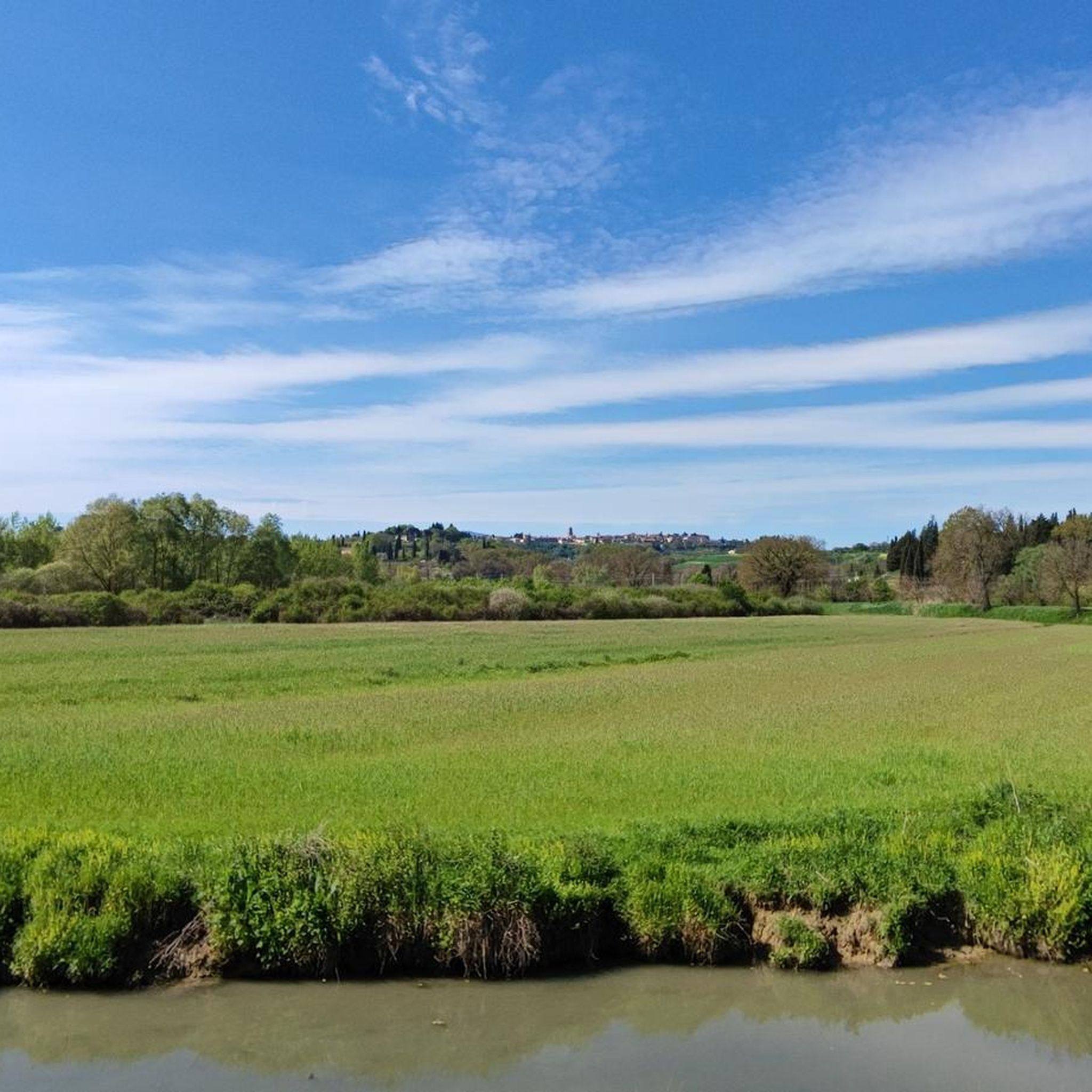
From this point on the road, you have a privileged view of Sarteano. The village is located on a hill and is dominated by the castle tower, clearly visible in the distance.
0
0

Very interesting and magical place. To visit and immerse yourself in the history of the place
0
0

The Rocca del Leone is the medieval fortress with an irregular pentagonal structure built starting from the thirteenth century. This is the main monument of Castiglione del Lago and is definitely worth a visit.
1
0

Built in the 13th century, Castelluccio di PIenza is located about ten km from the town and is also called Castelluccio Bifolchi after the name of the first owners. It was fortified in the 14th century with two corner towers still intact today. Today it is privately owned.
0
0
Frequently Asked Questions
Which castles offer the best panoramic views around Chiusi?
For breathtaking panoramic views, the Fortezza di Radicofani is highly recommended. Perched atop a mountain, it offers expansive vistas of the Val d'Orcia and the Tuscan hills, including Monte Amiata. You can ascend the main tower for the best perspective. Similarly, Sarteano Castle provides stunning views of the Valdichiana, Mount Cetona, and the lakes of Chiusi and Montepulciano from its keep. The village of Monteleone d'Orvieto also features a tower, 'Il Torrione', with magnificent views across Umbria, Tuscany, and Lazio.
Are there any family-friendly castles to visit near Chiusi?
While specific 'family-friendly' designations aren't always available, castles like the Fortezza di Radicofani offer engaging experiences for families. It features explorable structures like underground passageways, shooting platforms, and even a working medieval catapult, which can be exciting for children. The fortress also houses the Museo del Cassero with archaeological finds. Sarteano Castle, with its well-preserved walls and secret spiral staircase, can also spark imagination and provide an interesting historical outing for families.
What historical insights can I gain from visiting these castles?
The castles around Chiusi offer deep dives into regional history. The Fortezza di Radicofani, dating back to the 9th century, was a crucial stronghold controlling the Via Francigena and was famously occupied by the brigand Ghino di Tacco. Sarteano Castle, established in 1038, withstood numerous sieges, including those by Cesare Borgia, and its architecture reflects centuries of defensive strategies. Monteleone d'Orvieto Castle, built by Orvieto in the 11th century, served as a vital defensive point on its northern borders. Even the ancient Castle of Count Cattani, though partially ruined, speaks to early medieval power struggles and its connection to St. Francis of Assisi.
Can I explore the grounds and interiors of these castles?
Yes, many of the castles allow for extensive exploration. At the Fortezza di Radicofani, you can explore underground passageways, shooting platforms, bastions, and walkways along the walls. It also houses the Museo del Cassero. Sarteano Castle retains its keep, massive walls, and circular towers, with a fascinating spiral staircase that once served as an escape route. Monteleone d'Orvieto Castle allows visitors to explore its medieval village, fortified walls, towers, and the original North Gate.
Are there hiking or biking routes near the castles around Chiusi?
Yes, the region around Chiusi offers various outdoor activities. For hiking, you can find routes like the 'Lake Chiusi – Chiusi Beach loop' or the 'View of Montevenere loop'. If you prefer gravel biking, options include the 'Le Crocette Picnic Area – Lake Chiusi loop' or the 'Lake Chiusi – Reclamation Trail loop'. You can find more details and routes in the Hiking around Chiusi guide and the Gravel biking around Chiusi guide.
What is the best time of year to visit the castles near Chiusi?
The best time to visit the castles around Chiusi is generally during the spring (April-June) and autumn (September-October). During these seasons, the weather is pleasant for exploring, and the landscapes are particularly beautiful, with blooming flowers in spring and vibrant foliage in autumn. Summer can be hot, but early mornings or late afternoons are still enjoyable. Winter offers a quieter experience, though some facilities might have reduced hours.
Are there any 'hidden gem' castles or less-known historical sites worth visiting?
While not a traditional 'hidden gem' in terms of being completely unknown, the Castello di Trequanda is a less frequently visited castle compared to larger fortresses. Built in the 13th century and fortified in the 14th century, it retains two intact corner towers and offers a glimpse into medieval architecture. Although privately owned today, its historical significance and well-preserved elements make it an interesting stop for those seeking a quieter historical experience.
What amenities are available near these castles, such as cafes or restaurants?
Many castles are located near or within charming towns that offer amenities. For instance, the Fortezza di Radicofani includes a restaurant within its grounds. Sarteano Castle is located in the municipality of Sarteano, which has a variety of local eateries and cafes. Similarly, Monteleone d'Orvieto is recognized as 'one of the most beautiful villages in Italy' and provides a peaceful retreat with local establishments. It's always a good idea to check local listings for current operating hours.
How long should I allocate for visiting a castle?
The time needed to visit a castle varies depending on its size and your interest. For a comprehensive visit to a larger fortress like the Fortezza di Radicofani or Sarteano Castle, including exploring the grounds, towers, and any museums, you should allocate at least 2-3 hours. Smaller sites or those primarily viewed from the exterior, like Castello di Trequanda, might only require 30 minutes to an hour. If you plan to combine a castle visit with exploring the surrounding town, allow for a half-day.
Is it possible to visit castles that are not in Siena province but still close to Chiusi?
Yes, absolutely. While Chiusi is in Siena province, the region borders other provinces and even regions, offering more castle options. For example, Monteleone d'Orvieto Castle is located in Umbria (Terni Province) but is very close to the Tuscan border and historically linked to the Chiusi area. It's a charming medieval village with a castle that offers panoramic views. Another example, though further afield, is the Castle of Count Cattani in Chiusi della Verna (Arezzo Province), an ancient fortification with deep historical roots.
What makes Sarteano Castle unique among the castles in the area?
Sarteano Castle stands out for its remarkable architectural integrity and its history of successfully withstanding numerous sieges. Built on a travertine rock massif, it retains its massive walls, circular towers, and a fascinating secret spiral staircase that once served as an escape route during attacks. Following extensive restoration, it now functions as a cultural center, hosting various events, from historical re-enactments to art exhibitions, making it a vibrant historical landmark.
Most popular attractions around Chiusi

Get inspired with the komoot mobile app


Explore more
Looking for the best castles somewhere else? Discover other guides around Chiusi:
