Top 5 Caves around Colceresa
Best caves around Colceresa are found within a region characterized by its natural landscape and historical significance, particularly in the province of Vicenza. The area offers a mix of natural karstic formations and man-made historical structures. While Colceresa itself features local cave systems, the broader region, including nearby Valbrenta, is known for more extensive cave complexes. These underground sites provide insights into both geological processes and past human activities.
Best caves around Colceresa
- The most popular caves is Anguane's Cave…
Last updated: October 3, 2026
Anguane's Cave
Highlight • Cave
Translated by Google •
Tip by

Small Tunnel in the Rock
Highlight • Cave
Translated by Google •
Tip by

Sign up now to discover places like this
Get recommendations on the best single tracks, peaks, & plenty of other exciting outdoor places.
Military Shelter 1 and 2 (Laverda) WW1
Highlight • Historical Site
Translated by Google •
Tip by

Great War WW1 Tunnel
Highlight • Historical Site
Translated by Google •
Tip by
Military Gallery (Còvolo) WWI
Highlight • Cave
Translated by Google •
Tip by
Sign up for free to discover even more caves around Colceresa.
Already have an account?
Start today with a free account
Your next adventure awaits.

Tips from the Community

A dark, fifty-meter-long tunnel from the Great War: you enter from the dirt road entrance and exit on the opposite side, in the middle of the woods, through a small door and up a ladder (or vice versa). Continuing along the path, you reach a restored trench. I'm not sure if this tunnel was Italian, French, or English: the Granezza plain was an important Italian logistics base in 1916; in 1918, the British and French arrived with large numbers of men and equipment, to support the Allies and as a last resort for the southern edge of the Asiago plateau overlooking the plain.
0
0

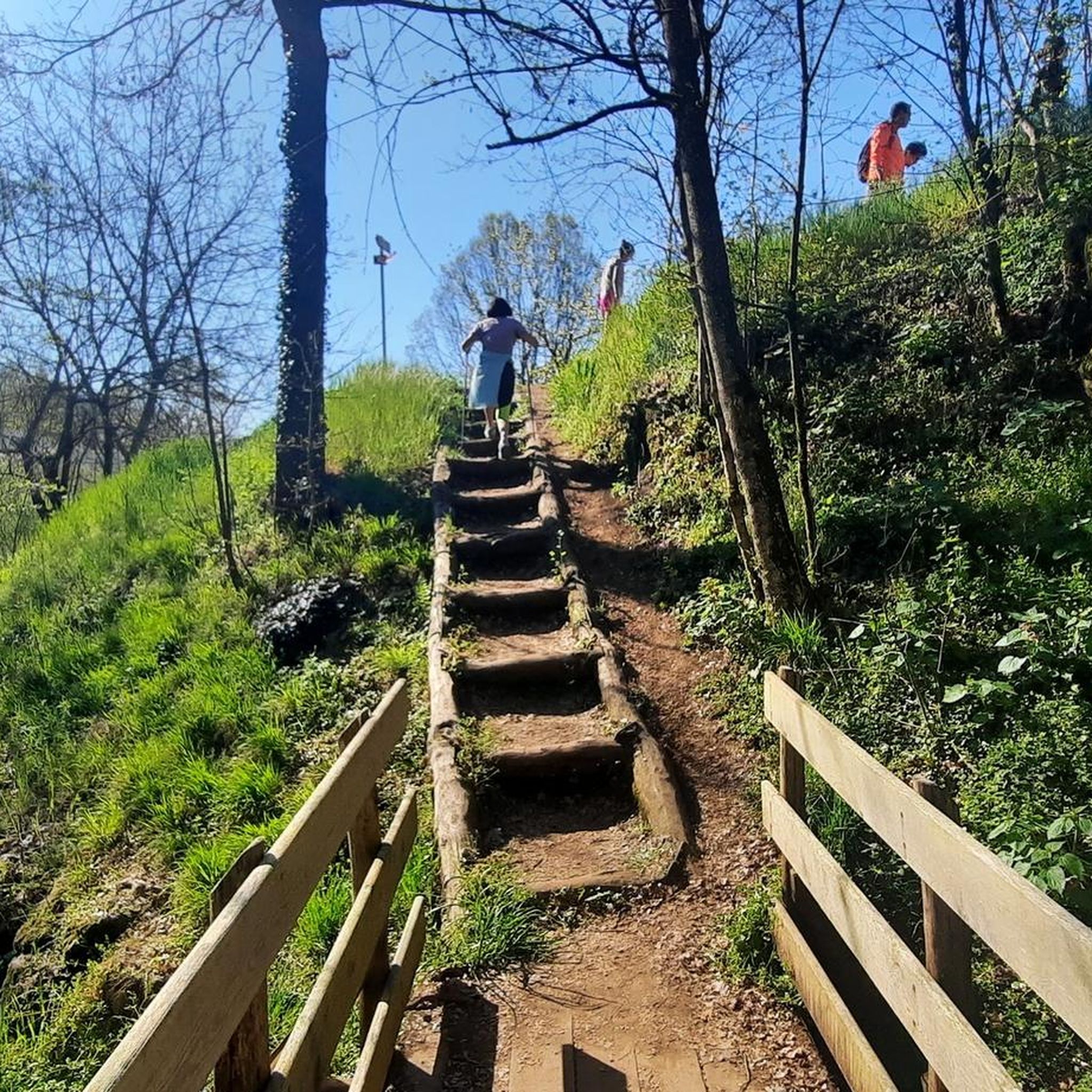
Cave with a considerable development of over 400 meters. At the entrance it immediately divides into two narrow and winding branches: the Ramo dei Ghiri, on the right, and the Ramo dee Strighe, on the left. The tunnels are twisted, very narrow (so much so that the backpack is an impediment to leave at the entrance!), in total darkness, with protruding concretions and narrow passages that at a certain point force you to advance on all fours or to crawl. Entering it is quite impressive: avoid if you are afraid of closed and narrow spaces, complete darkness, bats, cave crickets, spiders (present in the initial meters) and various creatures of the darkness! According to legend, the anguane live near a water source or a stream, inside caves or grottos: hence the toponym 'buso' = hole in Venetian dialect, to be understood as a home or refuge. https://www.ecovicentino.it/esplorare-il-vicentino/la-valle-delle-anguane-e-la-carega-del-diavolo-a-laverda/
1
0
Two small and close together Italian shelters from the Great War, dug into the rock: part of the rear defensive line of the mountain range, as an extreme barrier on the southern edge of the Asiago Plateau against a possible Austro-Hungarian invasion attempt in the Po Valley.
0
0
Italian gallery of the Great War: part of the rear defensive line of the mountain belt, as an extreme barrier of the southern edge of the Asiago plateau against a possible Austro-Hungarian invasion attempt in the Po Valley. Narrow, straight, 60 meters long, with 3 exits: total darkness / front light. In the middle of Sojo Park, with a scary art installation inside!
0
0

It's definitely worth having a small flashlight with you ;)
1
0

Here the path goes through a small tunnel in the mountain, from which a passage branches off. We didn't dare to explore it without a flashlight :)
2
0

Unique places in the midst of peace
1
0
Frequently Asked Questions
What types of caves can I explore around Colceresa?
The area around Colceresa offers a mix of natural karstic formations and historical military structures. You can find natural caves like Anguane's Cave, known for its tranquility, alongside World War I military shelters and tunnels such as Military Shelter 1 and 2 (Laverda) WW1 and the Great War WW1 Tunnel.
Are there any family-friendly caves or activities suitable for beginners?
For a unique family experience, consider the Grotte di Oliero in Valbrenta, a short drive from Colceresa. The Grotta Parolini there offers accessible boat tours through an underground river, suitable for all ages. Within Colceresa, exploring the Small Tunnel in the Rock can be a fun, easy adventure, though a flashlight is recommended.
What historical sites related to caves can I visit?
Colceresa is rich in historical cave sites, particularly from World War I. You can visit Military Shelter 1 and 2 (Laverda) WW1, which were part of the defensive line on the Asiago Plateau. Another significant site is the Military Gallery (Còvolo) WWI, a 60-meter-long tunnel with an art installation inside, also part of the Great War defenses.
What natural features can I expect to see in the caves?
In natural karstic caves like Anguane's Cave, you might encounter unique rock formations and underground streams, though water levels can vary. The Grotte di Oliero in Valbrenta are particularly notable for their impressive stalactites and stalagmites, including a fourteen-meter-high alabastrine cascade, and are home to the rare Proteus amphibian.
What should I wear or bring when visiting caves in the region?
For natural caves, comfortable walking shoes with good grip are essential. A flashlight is highly recommended for exploring darker sections, such as the Small Tunnel in the Rock or the Military Gallery (Còvolo) WWI. Caves like Grotta Parolini maintain a constant cool temperature (around 12°C), so a light jacket is advisable even in summer.
Are there any unique geological formations or wildlife to see?
The Grotte di Oliero in Valbrenta are renowned for their geological formations, featuring massive stalactites and stalagmites. They are also one of the few places where you can see the Proteus, a rare, blind amphibian. Within Colceresa, natural caves like Anguane's Cave offer insights into local karstic processes and unique natural tranquility.
What outdoor activities can I combine with a cave visit near Colceresa?
The Colceresa area is excellent for various outdoor activities. You can find numerous routes for road cycling, gravel biking, and general cycling. Many of these routes pass through scenic landscapes, allowing you to combine a cave exploration with a ride through the hills and valleys.
What do visitors enjoy most about the caves around Colceresa?
Visitors appreciate the tranquility and unique natural formations found in places like Anguane's Cave. The historical military shelters and tunnels, such as the Great War WW1 Tunnel, are valued for their historical significance and the opportunity to explore remnants of the past. The adventure of navigating through tunnels, often requiring a flashlight, is also a popular highlight.
Are there any archaeological findings in the caves of the region?
Yes, the Covol dei Assassini, one of the dry caves within the Grotte di Oliero complex in Valbrenta, has archaeological evidence confirming human presence dating back to the Stone Age. This highlights the long history of human interaction with these natural shelters.
Is there a natural park associated with any of the caves?
The Grotte di Oliero are situated within an enchanting Natural Park. This park features a 'Nature Path' that allows visitors to enjoy the lush greenery and towering rock walls, learn about local flora, fauna, and geology, and visit the Alberto Parolini Speleological and Karst Museum and the Paper Mill Museum.
How long does it typically take to explore the caves?
The duration varies by cave. Exploring individual highlights like the Small Tunnel in the Rock or the Great War WW1 Tunnel might take 15-30 minutes each. For a more extensive experience, a guided boat tour of Grotta Parolini at Grotte di Oliero typically lasts about an hour, not including time spent in the surrounding natural park.
Are there any less crowded cave options near Colceresa?
While the Grotte di Oliero can be popular, visiting during off-peak hours or weekdays can offer a more serene experience. Within Colceresa, many of the smaller natural formations and historical tunnels, such as Anguane's Cave, tend to be less crowded than major tourist attractions, offering a peaceful exploration.
Most popular routes around Colceresa
Most popular attractions around Colceresa

Get inspired with the komoot mobile app


Explore more
Extend your search for the best caves by checking out these guides of the top ones around Colceresa:
