Top 8 Caves around Gambugliano
Best caves around Gambugliano, a municipality in the Province of Vicenza, Italy, offers access to diverse subterranean experiences in its vicinity. While prominent natural caves are not directly within Gambugliano, the broader Veneto region features significant karst formations and historical underground sites. The area is characterized by its natural landscape and historical significance, particularly regarding World War I defensive structures. Visitors can explore both natural cave systems and man-made underground complexes.
Best caves around Gambugliano
- The most popular caves is…
Last updated: June 29, 2026
Buso della Rana Cave
Highlight • Cave
Translated by Google •
Tip by

Le Priare di Montecchio Underground Complex
Highlight • Cave
Translated by Google •
Tip by

Sign up now to discover places like this
Get recommendations on the best single tracks, peaks, & plenty of other exciting outdoor places.
Sign up for free

Strada delle Lore
Highlight (Segment) • Trail
Translated by Google •
Tip by

Buso del Sojo (Buco del Soglio) Cave
Highlight • Cave
Translated by Google •
Tip by
Sign up for free to discover even more caves around Gambugliano.
Sign up for free
Already have an account?
Start today with a free account
Your next adventure awaits.
Login or Signup
Tips from the Community

The Buso della Rana is the largest cave in the Veneto region and one of the most extensive in Italy, with a network of caves stretching almost 30 km in total (40 km including the Pissatèla complex above, to which it is connected). Located beneath the Faedo-Casaròn Plateau, it is an intricate karst system that collects and channels the plateau's waters into the Rio Rana, which flows at the entrance. It was formed when rainwater seeps into the permeable limestone surface layer and, encountering the underlying impermeable basalt (volcanic rock), flows laterally, eroding the rock. Over millions of years, this has created a complex labyrinth of horizontal tunnels, chambers, chimneys, siphons, and small lakes traversed by underground streams. Because it drains the plateau's waters, the cave is subject to flash floods, making exploration treacherous. Inside, the temperature remains constant between 10 and 12°C year-round. It is freely accessible through the monumental entrance and by proceeding along the Main Branch for about fifty meters, until reaching the first flooded corridor or Siphon, a horizontal constriction that requires crawling. From there, it is the preserve of speleologists or exciting and adventurous guided tours organized by associations like Biosphera (see link). The internal branches are not marked, and one must know the way. The name of the cave has nothing to do with the amphibian, but is an Italianized term from the Cimbrian word "roan," meaning "rocky wall," referring to the cliff at the entrance. https://www.busodellarana.it https://esplora.biosphaera.it/luoghi/buso-della-rana/
0
0

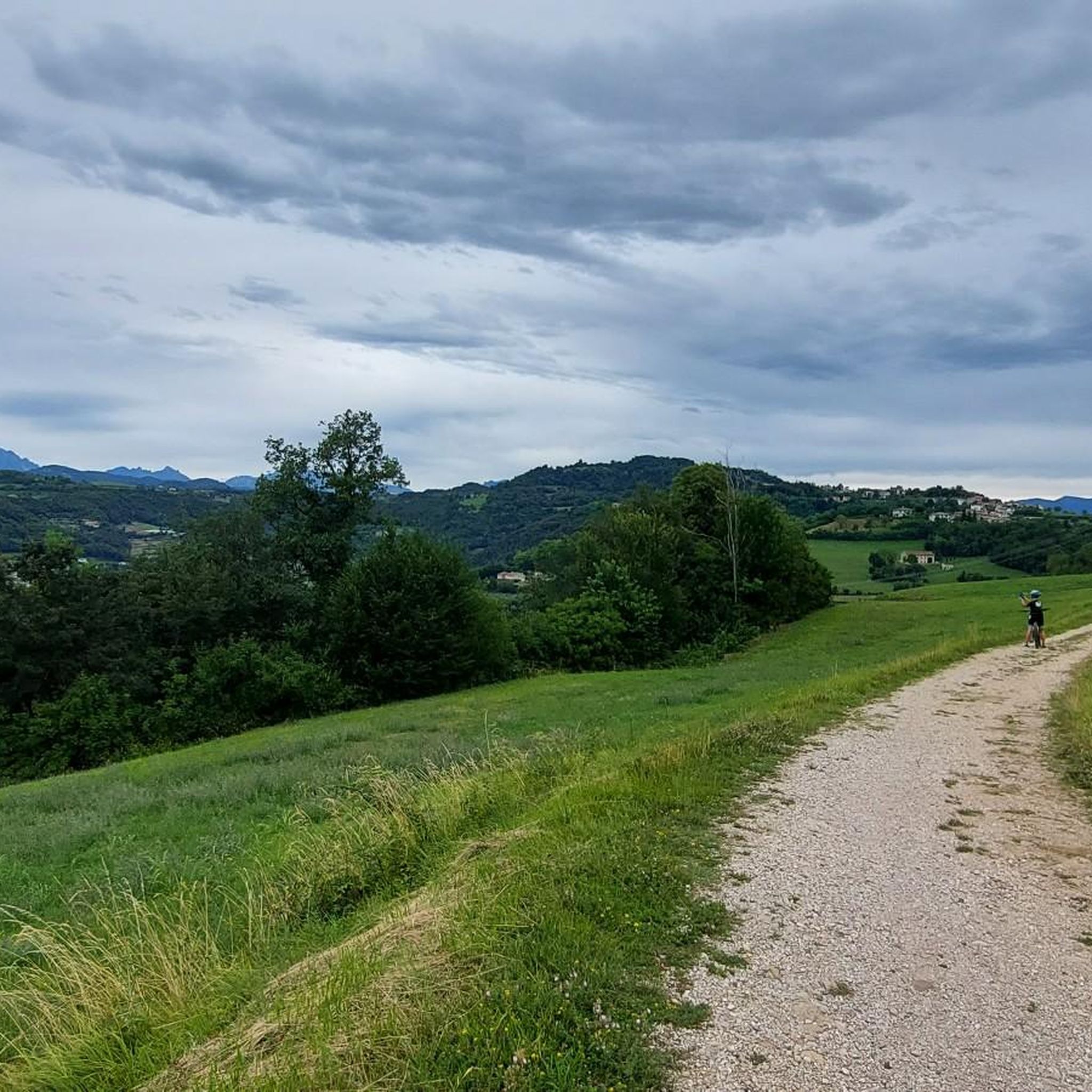
Road that leads from Faedo to Monte di Malo
0
0
The Buso del Sojo (in Venetian dialect) or Buco del Soglio (in Italian) is a spectacular cave that extends into the bowels of the mountain of the same name, piercing it from side to side, with a main branch that is almost straight and horizontal. You descend into the tunnel via a metal ladder and some steps carved into the rock: the tunnel extends for almost 500 meters, in total darkness, wide enough to be walked through standing up, until the opening on the steep opposite side of the large rocky spur. About halfway along the route, a pair of lateral branches intersect with opposite directions: one leads to a slit that looks towards Monte di Malo, the other continues towards the inside of Monte Soglio, becoming increasingly narrower. To exit, you have to retrace your steps. According to speleologists, this cave is probably connected to the famous and underlying Buso della Rana, but the passages are blocked by landslides: after all, the entire area above Monte di Malo is a Gruyere of karst cavities. During the First World War, after the Strafexpedition of 1916, the cavity was used and profoundly modified by the Italians for military needs, like many natural inlets present on the Faedo-Casaron plateau: it was part of the defensive complex of the Ortogonale 1, the long fortified line that started from Campogrosso and reached Vicenza, along the ridge watershed between the Agno and Leogra Valleys, to defend the Po Valley. The main gallery was enlarged, as evidenced by the holes of the pneumatic hammers, and several slits were opened as observation posts and positions for light weapons, to control the possible enemy advance in the lower Val Leogra. The Buso del Sojo is truly impressive and anxiety-inducing, but electrifying and fascinating! Despite the easy access and easy walkability, it is still a cave, that is, an environment to be approached with due caution and awareness. Not recommended for those who are afraid of the dark, narrow spaces and creatures of the darkness: on the walls, in the first few meters you will encounter spiders and crickets, annoyed and agitated by the light, while proceeding you will find numerous bats hanging from the ceiling. Emotional and explanatory video on the path to be taken (with the kind permission of the author Giuliano Benetti): https://youtu.be/IA9x3KVGq_A?si=pyh_3oHw8cEJGV1j
2
0
An extremely evocative and interesting site, hidden and unexpected, almost surreal: it surprises with its vastness and the slender square columns supporting the titanic ceiling... it feels like being inside a temple in ancient Mesopotamia or in the mines of Moria from Tolkien's memory! The Priàre (from 'pria', meaning stone in the Venetian dialect) are a complex of underground quarries and tunnels for the extraction of the renowned "soft Vicenza stone," active from Roman times until the mid-20th century. During the bombings of World War II, the quarries were used by the inhabitants of Montecchio as a refuge; between 1972 and 1985, they were exploited as a mushroom farm, thanks to the humidity and constant temperature throughout the year; Afterwards, they were abandoned until their redevelopment and safety measures in 2000. Vicenza Stone is a highly prized material, always highly appreciated and sought after in architecture and construction: beyond its aesthetic appeal, it is soft and malleable when freshly quarried, but upon contact with air, it "seasons," hardening and becoming extremely resistant over time. This rock was used to build the Montecchio fortresses and by Andrea Palladio for his works. It has always been quarried strictly by hand, using the same technique for millennia, in square blocks; this is why the quarries have such a geometric appearance. Open Sunday afternoon; entry is only possible with a (very interesting) guided tour lasting about 40 minutes; admission is €3. Please note that payment by POS is not possible due to the lack of signal. https://www.prolocoaltemontecchio.it/cosa-vedere/le-priare/
2
0

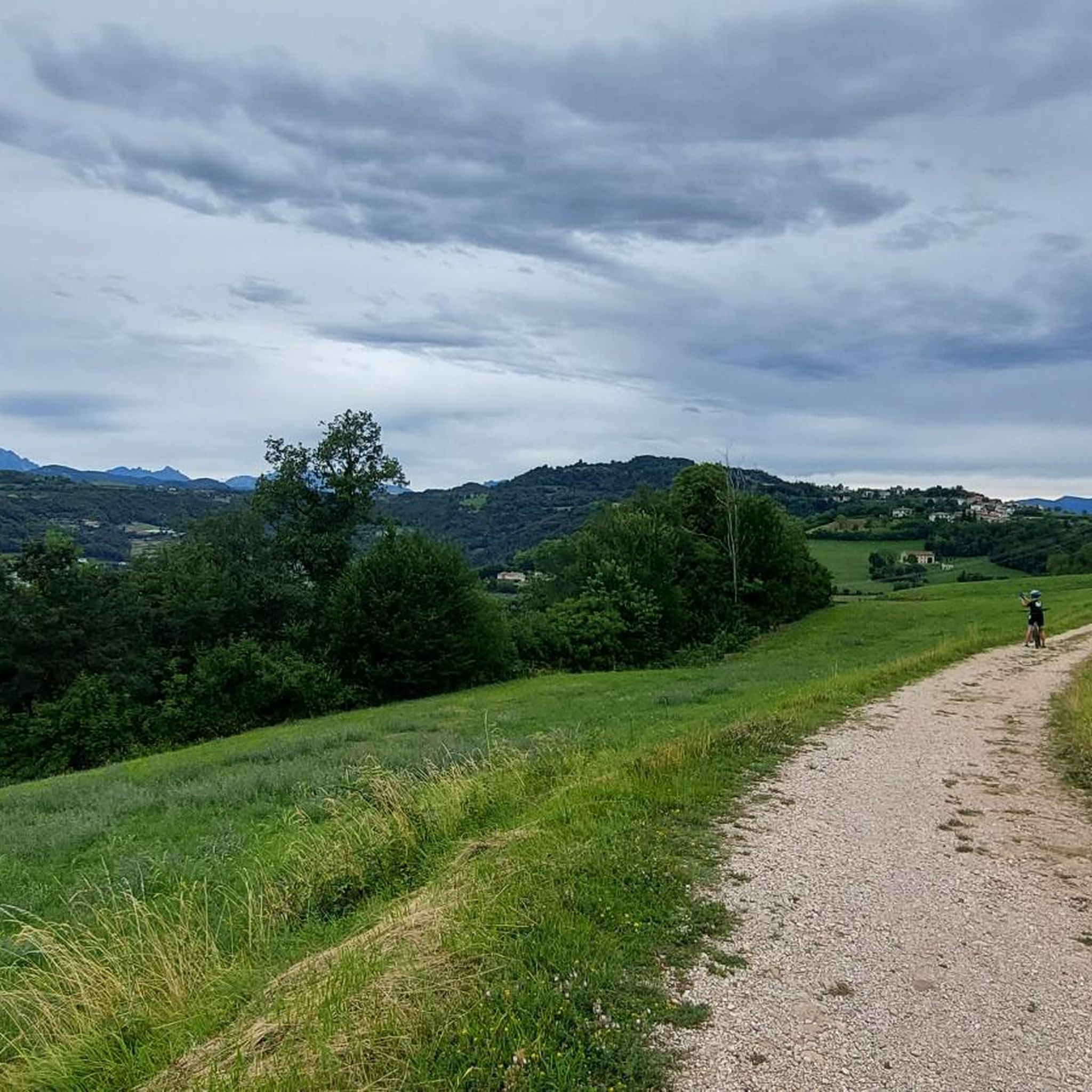
Nice circular tour with very little asphalt and many paths immersed in the nature of the small Dolomites
0
0

beautiful waterfall of the Rana stream
0
0

To admire this curious phenomenon, a detour from the main road is necessary. Once you reach the place, just look out into the well (with a diameter of about 50 cm) from which what is sometimes called "dragon's breath" seems to emerge from. It is nothing more than a karst cavity (characteristic of the Faedo-Casaron plateau) from which fresh air comes out (which varies between 7 and 13 degrees). Especially in the summer period, the typical rustle of the exchange of hot and cold air masses at the mouth of the cave is clearly audible. The cavity, commonly called "Buso del Lucio", was discovered by the Maladense speleologist Lucio Zanini. The valley that you travel along following the Campipiani-Faedo path is called “Valle dei Vischi”. The origin of this name is not known but it probably refers to the sound effects (breathing, hissing, moaning) that the blowing caves produce in particular climatic conditions.
0
0

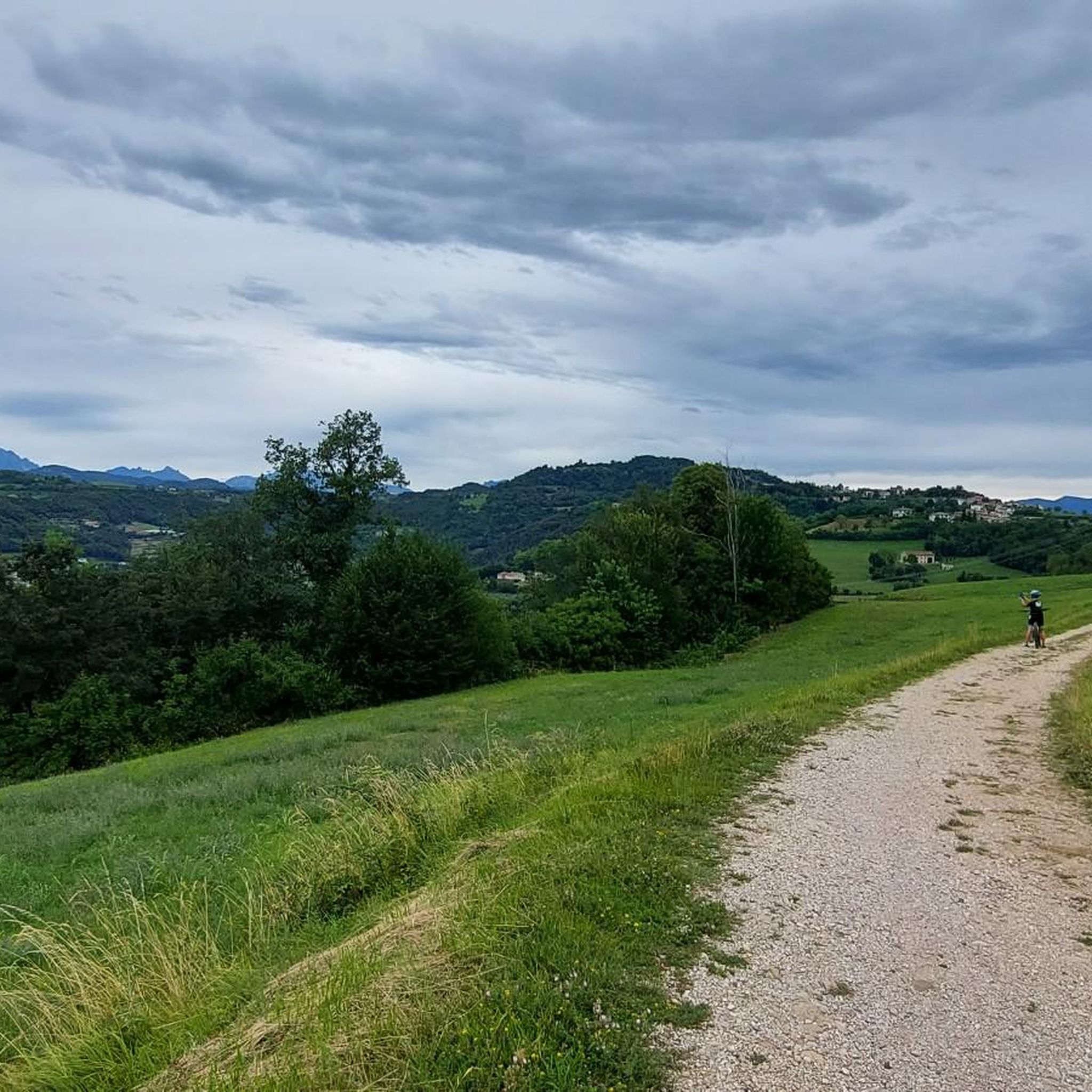
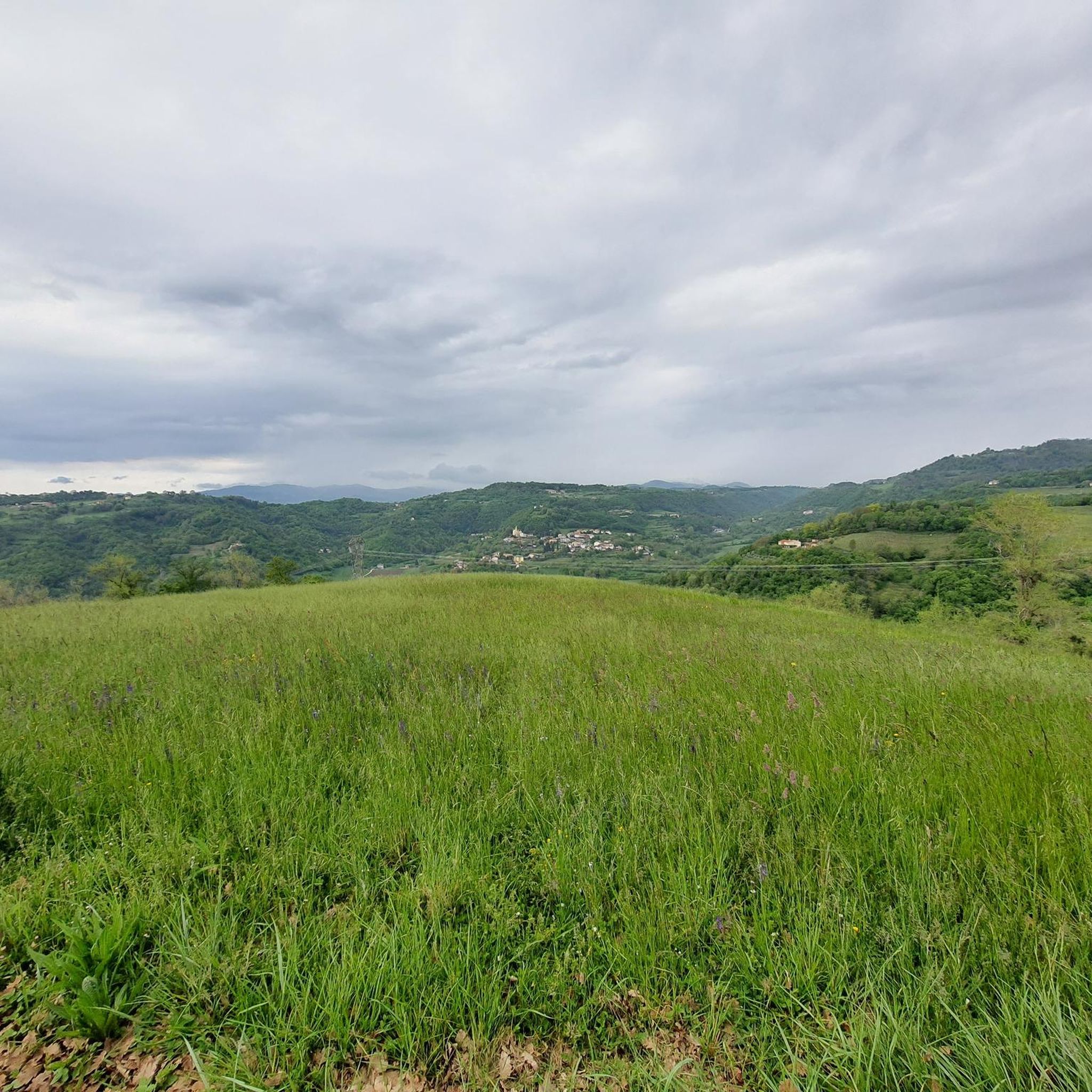
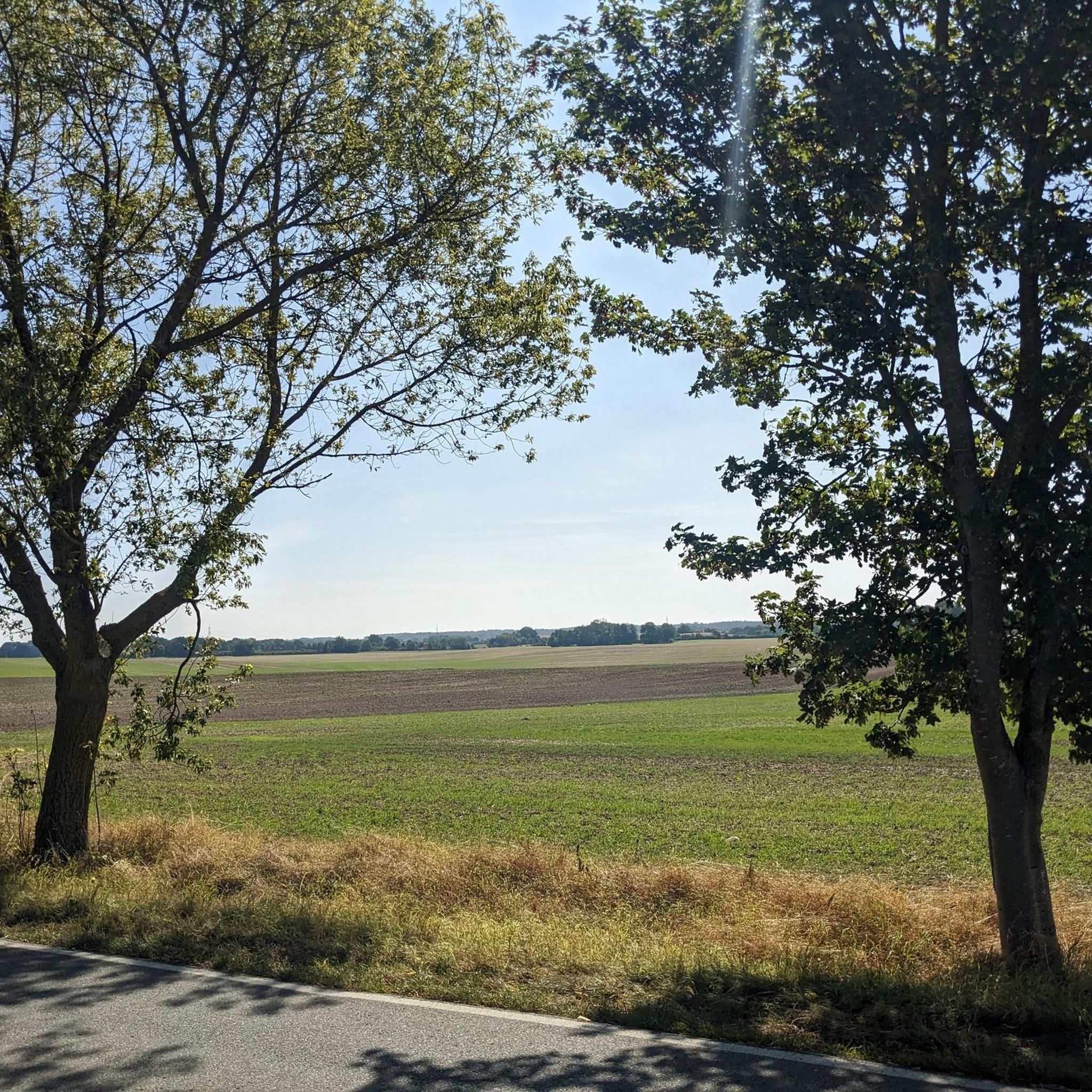
White road, without demanding climbs or descents, which intersperses meadows and woods.
0
0
Frequently Asked Questions
What types of underground sites can I explore near Gambugliano?
Near Gambugliano, you can explore a variety of underground sites, including natural karst caves, historical military tunnels from World War I, and ancient underground quarries. This offers opportunities for both speleological exploration and historical tours.
Are there any large natural caves in the Veneto region near Gambugliano?
Yes, the Buso della Rana Cave is the largest cave in the Veneto region and one of Italy's most extensive, with a network of caves stretching almost 30 km. It is an intricate karst system beneath the Faedo-Casaròn Plateau.
Can I visit historical underground sites related to World War I near Gambugliano?
Yes, areas like Breganze, relatively close to Gambugliano, feature tunnels that were part of Italy's defensive line during World War I. These man-made caves, such as the Buso del Sojo (Buco del Soglio) Cave and those along Strada delle Lore, offer a unique historical perspective.
What is the <a href="https://www.komoot.com/highlight/5148905" target="_blank" rel="noopener">Le Priare di Montecchio Underground Complex</a>?
The Le Priare di Montecchio Underground Complex consists of underground quarries and tunnels used for extracting "soft Vicenza stone" from Roman times until the mid-20th century. It served as a refuge during WWII and later as a mushroom farm. It's known for its vastness and geometric appearance.
Are there guided tours available for the underground sites?
Yes, guided tours are available for some sites. For instance, the Le Priare di Montecchio Underground Complex can only be visited with a guided tour, typically lasting about 40 minutes. For the Buso della Rana Cave, beyond the initial 50 meters, exploration is generally reserved for speleologists or exciting guided tours organized by associations like Biosphera.
What should I know before visiting the <a href="https://www.komoot.com/highlight/3325751" target="_blank" rel="noopener">Buso della Rana Cave</a>?
The Buso della Rana Cave is freely accessible through its monumental entrance for about fifty meters. Beyond this, it becomes challenging due to flooded corridors and requires specialized knowledge or guided tours. The internal temperature remains constant between 10 and 12°C year-round, and the cave is subject to flash floods, making exploration treacherous at times.
What are the operating hours and admission fees for <a href="https://www.komoot.com/highlight/5148905" target="_blank" rel="noopener">Le Priare di Montecchio Underground Complex</a>?
The Le Priare di Montecchio Underground Complex is typically open on Sunday afternoons and during the summer. Admission is €3 for a guided tour. Please note that payment by POS is not possible due to a lack of signal.
What is <a href="https://www.komoot.com/highlight/4736284" target="_blank" rel="noopener">Lucio's Hole</a>?
Lucio's Hole, also known as "Buso del Lucio," is a karst cavity where fresh air, ranging from 7 to 13 degrees Celsius, emerges. It's known for a distinctive rustling sound, sometimes called "dragon's breath," caused by the exchange of hot and cold air masses, especially audible in summer.
Are there hiking trails near these caves?
Yes, there are numerous hiking opportunities in the region. For example, you can find trails like 'Sentiero Strada False to Madonna delle Grazie Sanctuary' or 'Bosco d'Oro Mule Track – Abandoned house (Valdiezza) loop from Gambugliano'. You can explore more options on the Hiking around Gambugliano guide.
What other outdoor activities can I do near Gambugliano's caves?
Besides exploring caves and hiking, the area around Gambugliano offers various outdoor activities. You can find extensive options for mountain biking, with trails like 'Cavenete Vineyard Trail' or 'Campestrini Trail'. Running enthusiasts can also find suitable routes, such as 'View of the Colli Vicentini loop'. For more details, check the MTB Trails around Gambugliano and Running Trails around Gambugliano guides.
What is the geological significance of the caves in this region?
The caves in the region, particularly the Buso della Rana Cave, are part of an intricate karst system. They formed over millions of years as rainwater seeped into permeable limestone, then flowed laterally upon encountering impermeable basalt, eroding the rock to create complex labyrinths of tunnels, chambers, and underground streams.
What should I wear when visiting the caves?
Given that the internal temperature of caves like Buso della Rana remains constant at 10-12°C year-round, even in summer, it's advisable to wear warm layers. Sturdy, waterproof footwear is also recommended, especially for natural caves where conditions can be damp or muddy.
Are there any less crowded cave options near Gambugliano?
While popular sites like Buso della Rana and Le Priare di Montecchio attract visitors, exploring the historical military tunnels, such as those along Strada delle Lore or the Buso del Sojo, might offer a more secluded experience, especially outside peak tourist times. These sites provide a unique blend of nature and history.
Most popular routes around Gambugliano
Most popular attractions around Gambugliano

Get inspired with the komoot mobile app


Explore more
Extend your search for the best caves by checking out these guides of the top ones around Gambugliano:
