Top 10 Caves around Castel Gandolfo
Best caves around Castel Gandolfo are found within the scenic Regional Park of Castelli Romani, offering a blend of historical significance and natural beauty. The area is known for its ancient Roman nymphaea and grottoes, particularly along the shores of Lake Albano. These sites provide insights into imperial Roman engineering and leisure, often incorporating natural springs. The landscape features diverse geological formations and historical structures.
Best caves around Castel Gandolfo
- The most popular caves is Forest Path with Pond and…
Last updated: June 29, 2026
Albano Caves
Highlight • Cave
The path is traveled by many people on mountain bikes …
Translated by Google •
Tip by

Monster Grotto at Villa Aldobrandini
Highlight • Cave
Translated by Google •
Tip by

Sign up now to discover places like this
Get recommendations on the best single tracks, peaks, & plenty of other exciting outdoor places.
Sign up for free
Funerary Monument "Le Grotticelle"
Highlight • Monument
Among the various hypothesized dates, …
Translated by Google •
Tip by

The Cisternoni of Albano
Highlight • Monument
Translated by Google •
Tip by

Albano Lake Emissary 400 BC
Highlight • Historical Site
Translated by Google •
Tip by
Sign up for free to discover even more caves around Castel Gandolfo.
Sign up for free
Already have an account?
Start today with a free account
Your next adventure awaits.
Login or Signup

Other adventures around Castel Gandolfo

Tips from the Community

The entrance is subject to a fee and has opening hours for the public, the entrance costs €3 and the exact address is this: Via Aurelio Saffi, 96 - 00041 Albano Laziale RM
0
0
The cistern was built by the architects of the II Praetorian Legion to ensure the necessary water supply for the camp and surrounding dwellings. They could store 10,000 m³ of drinking water. However, their importance is not only due to this, but also because they are still perfectly functional today, being fed by Roman-era pipelines that receive water from springs located along the sides of Lake Albano.
0
0

The small iron door framed by the peperino architrave goes almost unnoticed but if it is found open it allows access to the entrance tunnel of this work of hydraulic engineering from the Roman era. The emissary of Lake Albano was presumably excavated at the beginning of the 4th century BC to regulate the level of the lake and, both for the technical difficulties encountered in the excavation and resolved with limited means and for the functionality that remained intact until the 1960s of the last century, it can be considered one of the most important hydraulic testimonies of our past. Some historical sources also speak of the emissary: Titus Livius links its construction to the final results of the war between Rome and Veii.
2
0

Mysterious Caves of Palazzolo, a short distance from Rocca di Papa and Albano, with a balcony view of Lake Castel Gandolfo. Close to a medieval convent, these cavities were used as stone mines in the Roman and medieval periods but some scholars hypothesize that they also functioned as prisons in unspecified periods. The frequenting of the area by brigand gangs in the eighteenth and nineteenth centuries is documented by reliable historical sources. In recent times, however, these mirrors have apparently hosted satanic masses and other similar rites.
0
0

The cisterns, the work of Septimius Severus, had the function of providing water for the Second Parthian legion. On some occasions it is possible to visit them, it is necessary to contact the Civic Museum of Albano.
3
0

spectacular single track .... but beware of people walking around
1
0

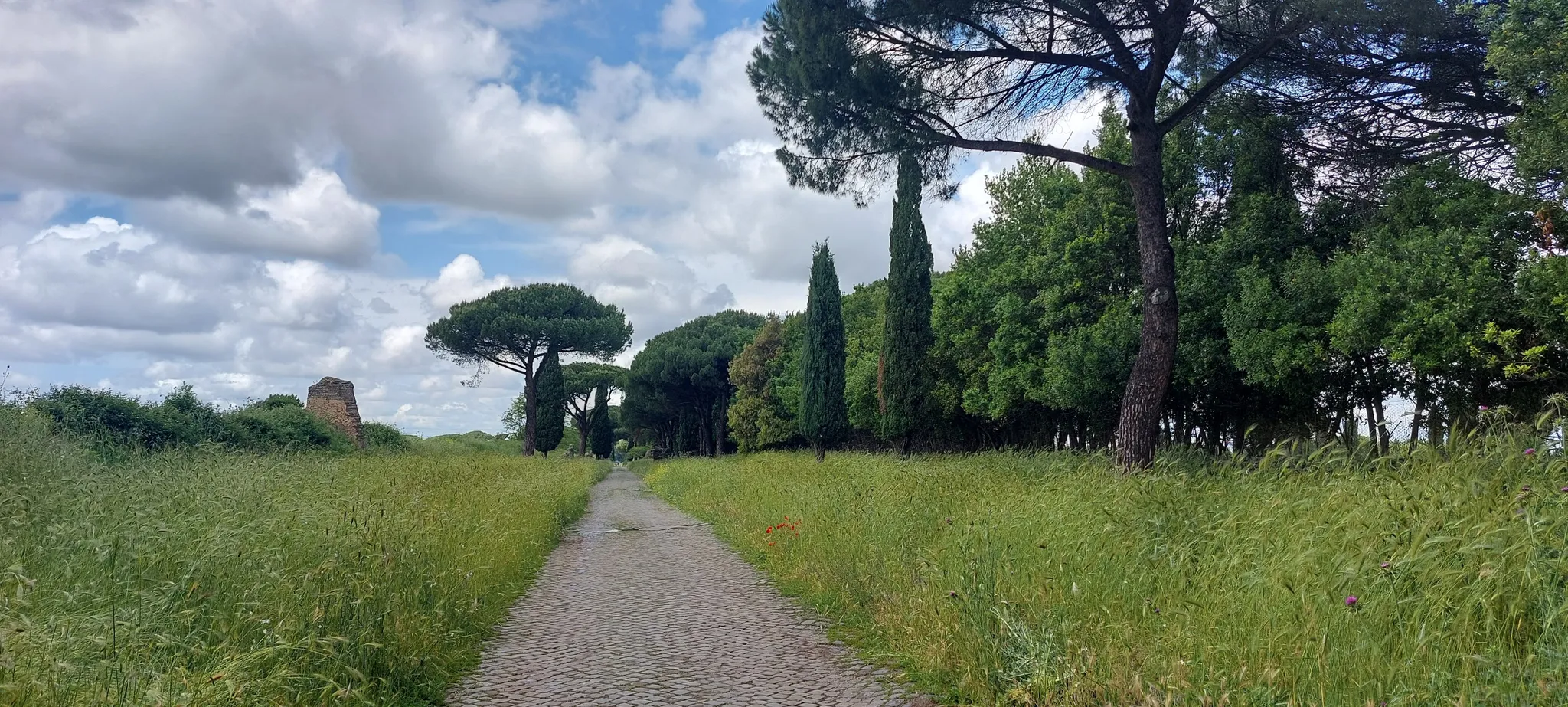
A unique monument of its kind in this area. To visit. It is not easy to get there by bike, but there are no difficulties on foot
0
0

the Caves can be visited all year round, along a path that runs along the upper part of Lake Albano. The path is traveled by many people on mountain bikes and on foot. Taking the path of the Devil keeping the path to the right, then straight. Unfortunately, beyond the caves the collapse of a wall no longer allows, as years before, to take the route of the lakes, one is forced to go back.
1
0
Frequently Asked Questions
What kind of 'caves' can I expect to find around Castel Gandolfo?
The 'caves' around Castel Gandolfo are primarily ancient Roman nymphaea, which are elaborate man-made grottoes and historical structures, rather than natural cave systems. These sites, often along Lake Albano, were designed for leisure and worship, incorporating natural springs. You'll find a blend of history, architecture, and natural beauty.
Are there any historical Roman nymphaea to visit near Lake Albano?
Yes, two significant ancient Roman nymphaea are the Ninfeo del Bergantino (also known as Bagni di Diana or Speco di Diana) and the Doric Nymphaeum. Both were part of Emperor Domitian's vast villa complex and offer a glimpse into imperial Roman engineering and leisure. The Ninfeo del Bergantino is located on the western shores of Lake Albano, and the Doric Nymphaeum is situated in a higher position along the lake.
What are some unique historical or archaeological 'cave' sites in the area?
Beyond the Roman nymphaea, you can visit the Funerary Monument "Le Grotticelle", which consists of burials dating back to around 2,500 BC, representing a unique archaeological enigma. Another notable site is the Albano Lake Emissary 400 BC, an impressive Roman hydraulic engineering tunnel designed to regulate the lake's level.
Are there any family-friendly 'cave' sites or activities around Castel Gandolfo?
While many sites are historical, the Forest Path with Pond and Cave offers a pleasant outdoor experience with very nice ups and downs, suitable for families who enjoy walking in nature. The historical nymphaea can also be interesting for older children with an interest in Roman history.
What outdoor activities can I do near these 'caves'?
The area around Castel Gandolfo and Lake Albano offers various outdoor activities. You can find numerous running trails, such as the 'Lake Albano Hiking Loop', and cycling routes, including the 'Bosco Sul Lago – Lake Albano Gravel Loop'. For mountain biking enthusiasts, there are challenging MTB trails like the 'Lake Albano Loop Trail'. You can explore more options on the dedicated guides for Running Trails around Castel Gandolfo, Cycling around Castel Gandolfo, and MTB Trails around Castel Gandolfo.
What is the best time to visit the 'caves' and historical sites?
The Regional Park of Castelli Romani, where these sites are located, is generally pleasant to visit during spring and autumn when the weather is mild. Summer can be warm, but the proximity to Lake Albano and shaded areas might offer some relief. Winter visits are possible but can be cooler and some paths might be muddy.
Is there a 'cave' with unique artistic features?
Yes, the Monster Grotto at Villa Aldobrandini is a notable site. Located inside Villa Aldobrandini, this grotto features a reproduction of a monster, similar to the famous Bomarzo monster, offering an interesting artistic and historical experience.
Are there any religious 'cave' sites in the area?
The Speco di San Michele is a religious building and historical site that incorporates a cave. The path leading to this hermitage is steep and rugged, and the gate is usually closed on weekdays, so it's advisable to check for access before planning a visit.
What should I wear when visiting these sites?
Given that many sites involve walking on trails or exploring historical structures, comfortable walking shoes are highly recommended. Layers of clothing are also advisable, especially during spring and autumn, to adapt to changing temperatures. For sites like the Speco di San Michele, sturdy footwear is essential due to the steep and rugged path.
Are there any lesser-known or 'hidden' cave-like structures?
While less formal than the nymphaea, the Grotta di Battiferro on the eastern side of Lake Albano is mentioned as a mysterious cave, possibly with Neolithic origins. It offers a picturesque setting and insights into the geological and early history of the area, though its accessibility for entry might be less clear.
Are permits required to visit the 'caves' and historical sites?
Generally, permits are not required for casual visits to the outdoor historical sites and trails. However, for specific locations like the interior of Villa Aldobrandini (where the Monster Grotto is located), access might be restricted or require prior arrangement. It's always best to check specific access requirements for individual sites, especially private properties.
How much time should I allocate for visiting these sites?
The time needed varies by site. Visiting a single nymphaeum or historical monument might take 1-2 hours. If you plan to combine visits with hiking or exploring multiple locations around Lake Albano, you could easily spend half a day or a full day. For example, the Funerary Monument "Le Grotticelle" is located slightly off the main path and requires some walking.
Most popular routes around Castel Gandolfo
Most popular attractions around Castel Gandolfo

Get inspired with the komoot mobile app


Explore more
Extend your search for the best caves by checking out these guides of the top ones around Castel Gandolfo:
