Top 11 Caves around Corigliano D'Otranto
Caves around Corigliano D'Otranto are primarily found in the surrounding Salento region, an area known for its diverse natural landscape and historical significance. While Corigliano D'Otranto itself is recognized for its castle and cultural heritage within Grecìa Salentina, the broader vicinity offers a variety of cave experiences. These range from ancient rock-cut structures with religious importance to former quarries and natural formations. The region's geology contributes to the presence of these unique subterranean sites.
Best caves around Corigliano D'Otranto
- The…
Last updated: June 29, 2026
Church of Santa Marina di Stigliano and Ruins, Serrano
Highlight • Religious Site
The church, traditionally linked to the …
Translated by Google •
Tip by

Abbey of San Nicola di Macugno
Highlight • Religious Site
Translated by Google •
Tip by

Sign up now to discover places like this
Get recommendations on the best single tracks, peaks, & plenty of other exciting outdoor places.
Sign up for free
San Giovanni Rock-Cut Crypt
Highlight • Religious Site
Translated by Google •
Tip by
Ancient Quarries of Petrore
Highlight • Cave
Translated by Google •
Tip by
Byzantine Crypt of Santa Cristina
Highlight • Religious Site
Translated by Google •
Tip by

Sign up for free to discover even more caves around Corigliano D'Otranto.
Sign up for free
Already have an account?
Start today with a free account
Your next adventure awaits.
Login or Signup
Popular around Corigliano D'Otranto



Other adventures around Corigliano D'Otranto

Tips from the Community

Ruins of a farmhouse built in ancient times next to the church of Santa Marina di Stigliano. Probably destroyed during the numerous Saracen raids
0
0

The quantity of lush greenery of the Mediterranean scrub keeps the naturalistic value of this crossed area high, so much so that you are amazed when you descend from the greenhouse on the east side, especially for the people of Tuglia who are used to peering towards the Ionian Sea. San Nicola di Macugno is its emblem, the History and the stories told that involve this place and Nature with the harmoniously integrated cultivated fields give beauty and joyfulness.
0
0
Included in the collection Salento Bizantino www.komoot.com/it-it/collection/1811756/-salento-bizantino - Underground crypt incorporated in the ruins of an 18th century baronial residence is not currently accessible but, through the gate that bars the access you can peek inside. Attention, the structure is still unstable due to degradation. https://massimonegro.wordpress.com/2011/12/06/stigliano-il-casale-abandonato-lantica-cripta-e-santa-marina/
0
0
Inserted in collection Salento Bizantino komoot.it/collection/1811756/-salento-bizantino - The crypt is isolated on the edge of a paved road, a crossroads of pilgrimages of the past, very few traces of the pre-existing frescoes are visible. It is always accessible and open to all.
0
0
Inserted in a naturalistic context of absolute value, it is also worth visiting for the presence of its hypogea that are always accessible. Here is the link passionate and beautiful story of Salogentis https://www.salogentis.it/2014/11/15/labbazia-di-san-nicola-di-macugno-neviano/
0
0
Posted in the Salento Bizantino collection komoot.it/collection/1811756/-salento-bizantino - In order to access the interior, you must refer to the plaque affixed to the external gate of the entrance to the crypt. Attached to the Highlight is the photo depicting the contact points on which to rely. https://youtu.be/cfnwc5Ojj2E
0
0

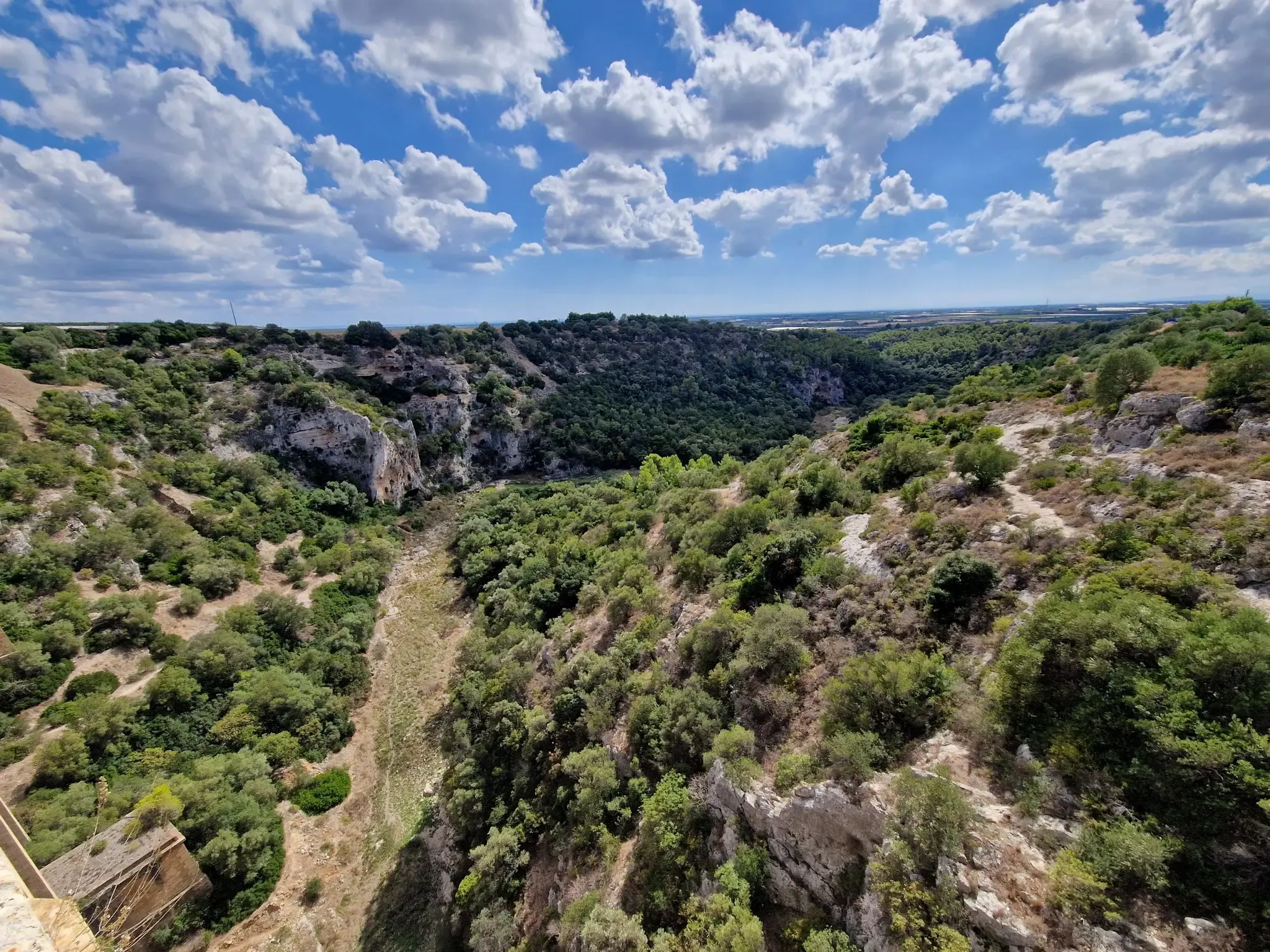
Inserted in a rural context rich in historical testimonies, 100 meters above sea level, in a dominant position on the fertile “Ruga valley”, the abbey complex probably originated in the fourteenth century. Mentioned in several documents, in 1378 and 1412, which sanction its geographical belonging to the territory of Neviano and to the jurisdiction of the Neretine curia, the small village of Macugno performed a mandatory stop function for pilgrims heading to Santa Maria di Leuca, for the traders and shepherds who periodically split the hinterland along the junction of the two ports of Gallipoli and Otranto.
2
0

I recommend everyone to go there, it is really impressive
1
0
Frequently Asked Questions
What types of caves can I explore near Corigliano D'Otranto?
The area around Corigliano D'Otranto, particularly the broader Salento region, offers a diverse range of subterranean sites. You can find ancient rock-cut crypts, religious buildings with cave elements, and former quarries, such as the Church of Santa Marina di Stigliano and Ruins, Serrano, the San Giovanni Rock-Cut Crypt, and the Ancient Quarries of Petrore. Additionally, the coastline features spectacular natural sea caves like Grotta della Zinzulusa and Grotta della Poesia.
Are there any natural sea caves to visit in the Salento region?
Yes, the Salento coastline boasts several impressive natural sea caves. Notable examples include Grotta della Zinzulusa near Castro, famous for its karst formations and crystal-clear waters, and Grotta Sfondata north of Otranto, known for its natural skylight and stunning blue waters. Grotta della Poesia, a natural pool carved into limestone cliffs, also offers a unique marine cave experience.
What historical or archaeological caves are there in the area?
The region is rich in historical and archaeological cave sites. The Church of Santa Marina di Stigliano and Ruins, Serrano, stands on the remains of a Byzantine crypt with faint traces of frescoes. The San Giovanni Rock-Cut Crypt is another well-maintained historical site. Further afield, Grotta dei Cervi near Porto Badisco is an exceptionally important archaeological site with Neolithic rock paintings, though generally not open to the public. Grotta della Poesia also has ancient Greek, Latin, and Messapic inscriptions on its walls, suggesting it was once a place of worship.
Can I visit the famous Grotta dei Cervi?
Grotta dei Cervi, often called the 'Sistine Chapel of Prehistory' due to its Neolithic rock paintings, is an extremely delicate and important archaeological site. To preserve its fragile environment and ancient artwork, it is generally not open to the public for direct entry. However, the surrounding area of Porto Badisco is beautiful for boat trips and snorkeling.
What makes Grotta della Zinzulusa a popular attraction?
Grotta della Zinzulusa is one of Salento's most famous karst caves, renowned for its spectacular stalactites and stalagmites, crystal-clear waters, and unique rock formations. Its name, meaning 'rags,' refers to the hanging formations. It also holds significant historical value, preserving testimonies and fossils from Paleolithic, Neolithic, and Roman times. Visitors can explore it on foot or by boat, enjoying the intricate formations and magical lighting. You can find more information at visit.puglia.it or visitcastro.com.
Is there a cave known for its natural swimming opportunities?
Grotta della Poesia, located in Roca Vecchia, is a natural pool carved into limestone cliffs, famous for its pristine aquamarine waters. It's often listed among the most beautiful natural pools in the world. While it was historically a popular swimming spot, regulations may vary to preserve the site, so it's advisable to check local guidelines before planning to swim.
What is the best time of year to visit the caves in Salento?
The best time to visit the caves in Salento generally depends on the type of cave and your preferred activities. For sea caves and boat excursions, the warmer months from late spring to early autumn (May to October) offer pleasant weather and calm seas. For inland crypts and quarries, visits are possible year-round, though spring and autumn provide milder temperatures for exploration.
Are there family-friendly cave options near Corigliano D'Otranto?
Many of the historical crypts and religious sites, such as the San Giovanni Rock-Cut Crypt, are generally accessible and interesting for families. For natural caves, Grotta della Zinzulusa offers guided tours that are suitable for most ages, providing an engaging experience with its unique formations. Always check specific accessibility details for younger children or strollers.
Can I go hiking near the caves around Corigliano D'Otranto?
Yes, the region offers various hiking opportunities. While Corigliano D'Otranto itself is not directly on the coast, you can find hiking trails in the broader Salento area that lead to or pass near some cave sites. For general hiking around Corigliano D'Otranto, you can explore routes like the 'Hiking loop from Maglie' or 'Mother Church loop from Maglie'. More information on hiking trails can be found in the Hiking around Corigliano D'Otranto guide.
How can I get to the major caves from Corigliano D'Otranto?
Since Corigliano D'Otranto is inland, reaching the coastal caves typically requires a car. Towns like Otranto and Castro serve as good bases for accessing Grotta della Zinzulusa, Grotta dei Cervi, Grotta Sfondata, and Grotta della Poesia. Organized boat tours often depart from these coastal towns. For the local rock-cut crypts and quarries, driving is also the most convenient option. Public transport options are limited and may require multiple connections.
Are there any entrance fees for these caves?
Yes, some of the more developed and popular cave attractions, such as Grotta della Zinzulusa, typically have an entrance fee, especially if you opt for a guided tour or boat trip. Many of the historical crypts and quarries mentioned in the guide may have varying access conditions, with some being free to visit and others requiring a small fee or donation, or even prior arrangement for access. It's always best to check the specific site's information before your visit.
What should I wear when visiting caves in the Salento region?
For inland crypts and quarries, comfortable walking shoes are generally sufficient. For natural sea caves, especially if you plan on boat tours or exploring coastal paths, wear sturdy, non-slip footwear. If you anticipate getting wet or swimming, swimwear and quick-drying clothes are advisable. Even in summer, the interior of some caves can be cooler, so a light jacket might be useful. Always prioritize safety and comfort.
Most popular routes around Corigliano D'Otranto
Most popular attractions around Corigliano D'Otranto

Get inspired with the komoot mobile app


Explore more
Extend your search for the best caves by checking out these guides of the top ones around Corigliano D'Otranto:
