Top 9 Caves around Oberegg
Best caves around Oberegg offer a range of subterranean experiences in the region. Oberegg, located in Appenzell Innerrhoden, Switzerland, provides access to several natural and historical cave sites. The area features diverse geological formations and cultural landmarks within its natural landscape. These caves present opportunities for exploration and insight into regional history.
Best caves around Oberegg
- The most popular caves is Kristallhöhle Kobelwald, a cave that features one of the largest calcite deposits in Europe. It is known for…
Last updated: June 28, 2026
Kristallhöhle Kobelwald
Highlight • Cave
Translated by Google •
Tip by

Tivoli Cave
Highlight • Cave
Source and further information: stgallen24.ch/articles/281276-st-gallens-letztes-geheimnis-die-tivolihoehle
Translated by Google •
Tip by

Sign up now to discover places like this
Get recommendations on the best single tracks, peaks, & plenty of other exciting outdoor places.
Sign up for free
Felsenkeller Cave Near Burg Hoch-Altstätten
Highlight • Cave
Translated by Google •
Tip by

Rock Cellar
Highlight • Cave
Inside a curve with a diameter of about 3m, as well as in height.
Translated by Google •
Tip by

Ramstel Cave
Highlight • Cave
A rope was attached to the …
Translated by Google •
Tip by
Start today with a free account
Your next adventure awaits.
Login or Signup

Other adventures around Oberegg

Tips from the Community

Rock cellar in which a chapel was established. :)
0
0

Great cave, definitely worth a visit.
8
0

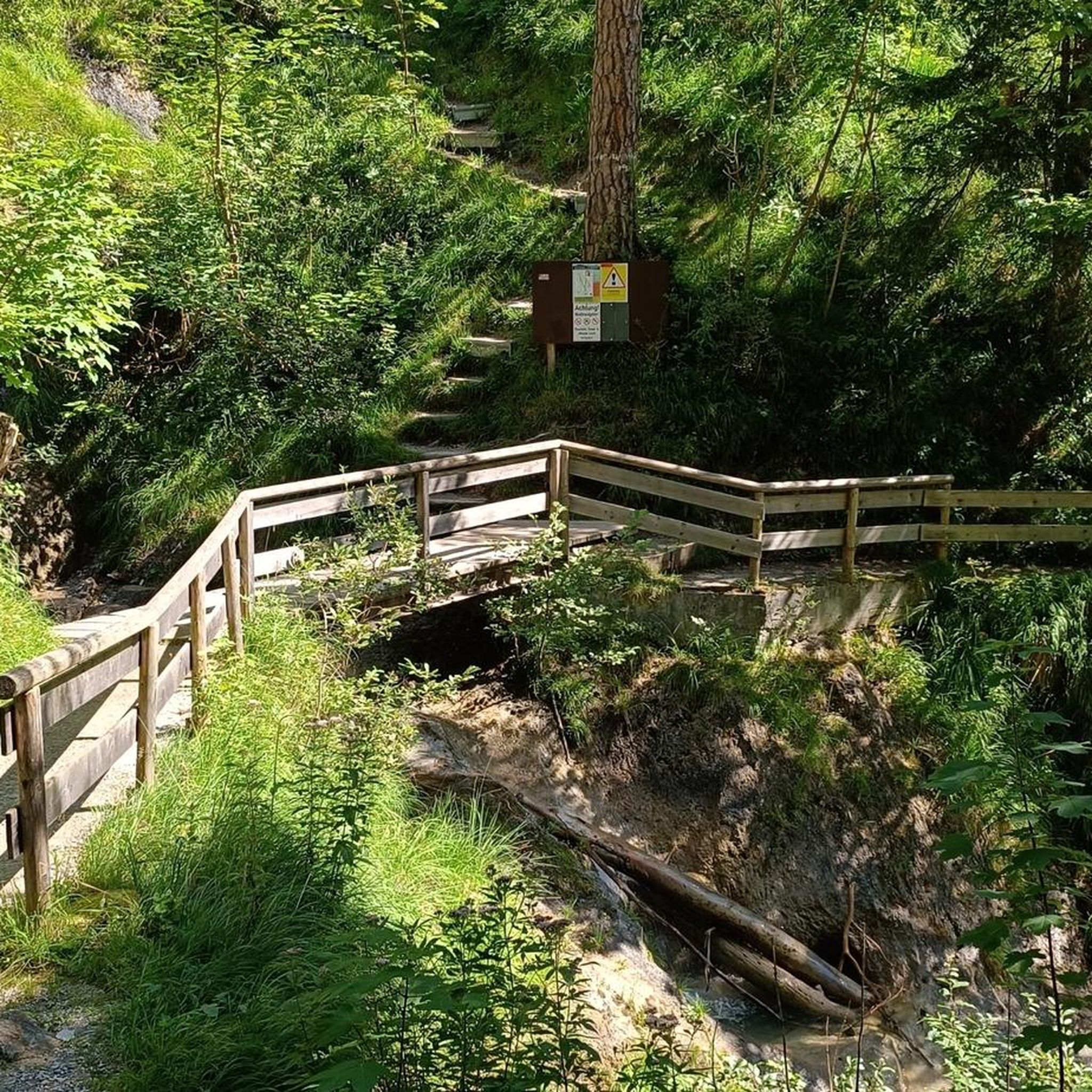
The Tivoli Cave in the city of St. Gallen is a small cave in the middle of a beautiful forest. The best way to get there is to take the bus to the "Hagenbuch" stop. Or take the wonderful panoramic path and then descend the Tivoli stairs. Please respect the privacy of the private property there! Continue directly to the right along the small path and DO NOT go left/straight across the small bridge. If you go all the way in (bring a headlamp), you won't get very far. It's almost a bit spooky there. If you look up, you'll see a shaft about 13 meters long that leads straight to the very top. This is where buckets used to be lowered to fetch water. The hole at the top was eventually sealed and covered with earth and no longer exists. Therefore, there was no escape route for the nuns. There used to be a rickety and very rotten wooden ladder here. This has since been removed for safety reasons. It is a man-made cave; clear marks made by tools have been discovered in the rock. The cave is about 17 meters long and between 6 and 7 meters wide. Source: thisismysaintgallen.com/tivolihoehle/
3
0

The Tivoli Cave was probably a man-made water reservoir. Source and further information: https://stgallen24.ch/articles/281276-st-gallens-letztes-geheimnis-die-tivolihoehle
16
0
A place worth seeing in St. Gallen, especially for little adventurers.
5
0

Nice to visit. Barbecue area in the area, children can move around freely. Only accessible on foot - that's a good thing.
2
0

Crystal cave & Montlinger sponge
2
0

The Felsenkeller is located near the Hoch-Altstätten Castle, a cave with a spherical diameter of about 3 m that was created by human hands and was probably used for storage, unfortunately there are no more doors. "Easy to reach on paths and supply roads from Altstätten, Marbach, Ober Lüchingen or St. Anton ..." also a fantastic mountain bike tour!
1
0
Frequently Asked Questions
What are some of the most unique caves to explore near Oberegg?
Near Oberegg, you can explore the Kristallhöhle Kobelwald, known for having one of Europe's largest calcite deposits. Another unique site is the Wichenstein Cave Castle Ruin, where you can see the impressive remains of a four-story castle built into a cave. The Tivoli Cave in St. Gallen offers a glimpse into a man-made historical water reservoir.
Are there any family-friendly caves around Oberegg?
Yes, the Kristallhöhle Kobelwald is considered family-friendly and is a popular excursion destination for all ages. The Tivoli Cave is also recommended for 'little adventurers' due to its accessible forest setting.
What kind of historical sites can I find among the caves near Oberegg?
The region offers several historical cave sites. The Wichenstein Cave Castle Ruin is a significant historical monument, featuring the preserved shield wall of a former castle built directly into a cave. The Tivoli Cave is a man-made historical site, likely a former water reservoir. Additionally, the Felsenkeller Cave Near Burg Hoch-Altstätten is a man-made rock cellar, probably used for storage.
What natural features can I expect to see in the caves around Oberegg?
The Kristallhöhle Kobelwald is renowned for its impressive geological formations, specifically its large calcite deposits. While not a traditional cave, the Ofenloch Gorge in Eastern Switzerland, often referred to as the 'Grand Canyon of Eastern Switzerland,' features dramatic river erosion over Nagelfluh rock, creating spectacular natural beauty.
What is the difficulty level for exploring these caves?
The difficulty varies. The Kristallhöhle Kobelwald is generally considered intermediate. The Wichenstein Cave Castle Ruin and Tivoli Cave are listed as challenging, often involving steep paths or requiring a headlamp for deeper exploration. Always check specific access details before visiting.
Are there any specific considerations for visiting the Kristallhöhle Kobelwald?
Yes, the Kristallhöhle Kobelwald is known for its large calcite deposits. It's crucial to check opening times beforehand, as the cave may be partially flooded during heavy rains. The ascent to the cave can be steep and stony.
What outdoor activities can I do near the caves around Oberegg?
The region around Oberegg offers various outdoor activities. You can find numerous running trails, cycling routes, and mountain biking trails. Many of these routes pass through scenic landscapes, offering opportunities to combine cave visits with other outdoor adventures.
What are the Wildkirchli Caves and are they near Oberegg?
The Wildkirchli Caves, including the Altar Cave, Lower Cave, and Upper Cave, are located beneath the Ebenalp in the Alpstein region of Appenzell Innerrhoden. While not directly in Oberegg, they are a prominent natural and cultural landmark in the broader Appenzell Innerrhoden region, known for prehistoric findings and St. Michael's Chapel. They are easily accessible from the Ebenalp mountain station.
What should I know about visiting the Wichenstein Cave Castle Ruin?
The Wichenstein Cave Castle Ruin is an imposing site with a preserved shield wall. Access is via a relatively steep forest path, which includes stairs. Be aware of the danger of falling rocks, especially in spring and winter. Immediately below the ruins is the nature reserve with the beautiful Wichensteiner See.
Is there public transport or parking available for these cave sites?
While specific parking details for each cave vary, many sites in the region are accessible via public transport or have nearby parking. For example, the Wildkirchli Caves are easily accessible from the Ebenalp mountain station. For the Tivoli Cave, you can take the bus to the 'Hagenbuch' stop in St. Gallen.
What is the best time of year to visit the caves around Oberegg?
The best time to visit can depend on the specific cave. Some caves, like the Kristallhöhle Kobelwald, have specific opening times and may be affected by heavy rains. For sites like the Wichenstein Cave Castle Ruin, caution is advised regarding falling rocks in spring and winter. Generally, warmer, drier months might offer more comfortable exploration, but always check individual cave conditions and opening hours.
Are there any other notable cave-like natural attractions in Eastern Switzerland?
Beyond the specific caves, the Ofenloch Gorge in Eastern Switzerland is a dramatic natural attraction. While more of a gorge than a traditional cave system, it features the Necker river falling about 100 meters over Nagelfluh rock, offering spectacular natural beauty. It can be reached via routes from Schwagalp or Mistelegg and Ampferenboden.
Most popular routes around Oberegg
Most popular attractions around Oberegg

Get inspired with the komoot mobile app


Explore more
Extend your search for the best caves by checking out these guides of the top ones around Oberegg:
