Top 10 Caves in the Lesser Caucasus
Best caves in the Lesser Caucasus are found across a region spanning parts of Armenia, Azerbaijan, and Georgia. This area features diverse subterranean sites, including ancient human settlements, monastic complexes, and natural formations. These locations offer insights into history, archaeology, and geology.
Best caves in the Lesser Caucasus
- The most popular caves is Geghard Rock Monastery, a religious building and cave complex. It is a historical monastery from the 7th or 8th century, with parts carved directly into the…
Last updated: June 28, 2026
Vardzia Cave Monastery
Highlight (Segment) • Cave
Translated by Google •
Tip by

Geghard Rock Monastery
Highlight • Religious Site
Translated by Google •
Tip by

Sign up now to discover places like this
Get recommendations on the best single tracks, peaks, & plenty of other exciting outdoor places.
Sign up for free
Uplistsikhe Historical-Architectural Museum-Reserve
Highlight • Historical Site
The Uplistsikhe cave …
Tip by

Cave city of Uplistsikhe
Highlight • Historical Site
Translated by Google •
Tip by
Lastiver Caves and Rock Carvings
Highlight • Cave
Tip by

Uplistsikhe
Highlight • Historical Site
Translated by Google •
Tip by

Areni-1 Cave
Highlight • Cave
Translated by Google •
Tip by

Vardzia
Highlight • Historical Site
Translated by Google •
Tip by
Secret Waterfall
Highlight • Waterfall
Tip by

Chgnavor Hermitage
Highlight • Religious Site
Tip by

Start today with a free account
Your next adventure awaits.
Login or Signup
Popular around Lesser Caucasus



Tips from the Community

Under main waterfall 40-50 meters bellow by river it's another one waterfall, hidden from sights. There are also cave under giant stone where river is flowing aside and view on deep gorge below.
0
0

We asked at the restaurant and were allowed to pitch our tent in the garden. The trout for dinner was delicious.
0
0

Absolutely beautiful, highly recommend. There’s a beautiful stream near the place with breathtaking nature. The church is really lovely as well.
0
0

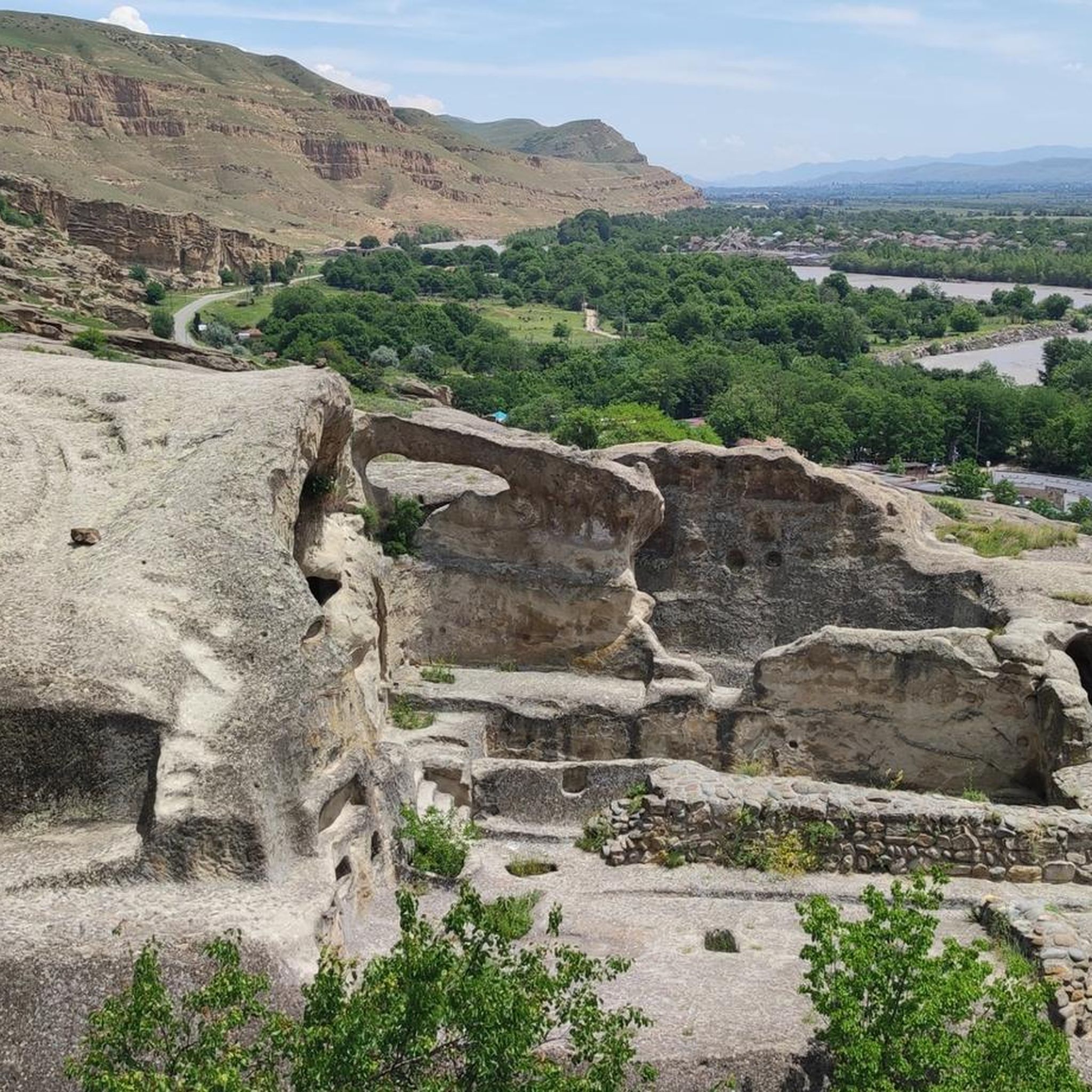
Not far from Gori lies the ancient cave city of Uplistsikhe. People settled on the plateau as early as the Bronze Age. The fortress city was founded in the 6th century BC and developed into a trading center on the Silk Road with approximately 5,000 inhabitants. The oldest surviving written reference dates back to the 1st century. Attempts to conquer Uplistsikhe repeatedly failed; it wasn't until the 13th century that the Mongol ruler Ögedei Khan succeeded in capturing and destroying the city (Wikipedia).
8
0
The founding of the monastery in the 4th century AD on the site of a pagan spring is attributed to Saint Gregory, the patron saint of the Armenian Apostolic Church (Wikipedia).
5
0

Entrance fee: €5 per person. Open from 10 a.m. to 6 p.m. Campsite available at the nearby campsite or at the top of the hill before the park entrance.
0
0

Bring change for the parking and time for the visit
0
0

Tiny chapel/hermitage, part hewn from the cliff and part built from basalt blocks. It's fun to get to as well!
1
0
Frequently Asked Questions
What historical or archaeological significance do the caves in the Lesser Caucasus hold?
The caves in the Lesser Caucasus are rich in history and archaeology. Sites like Armenia's Areni-1 Cave are famous for discoveries such as the world's oldest leather shoe and earliest winery. Georgia's Vardzia Cave Monastery and Uplistsikhe Historical-Architectural Museum-Reserve are ancient rock-hewn towns and monastic complexes, showcasing centuries of human habitation and cultural development. Azerbaijan's Azykh Cave also provides early evidence of human settlement.
Are there any ancient cave settlements or monastic complexes to visit in the Lesser Caucasus?
Yes, the region features several impressive ancient cave settlements and monastic complexes. Georgia is home to the Vardzia Cave Monastery, a 12th-century cave town carved into a rock face, and Uplistsikhe Historical-Architectural Museum-Reserve, an ancient rock-hewn town. In Armenia, you can explore the Geghard Rock Monastery, partially carved into the rock, and the unique Old Khndzoresk Cave Village, a network of man-made cave dwellings.
What kind of natural geological formations can be found in the Lesser Caucasus caves?
The natural caves in the Lesser Caucasus boast diverse geological formations. Armenia's Magel Cave is known for its numerous stalactites and stalagmites, while Mozrov Cave is celebrated for its labyrinthine chambers, dripping formations, and vibrant multi-colored speleothems. Arjer (Bear) Cave, Armenia's longest known cave system, also features impressive geology within its halls and corridors.
Are there family-friendly cave attractions in the Lesser Caucasus?
Many cave sites in the Lesser Caucasus can be enjoyed by families. The Old Khndzoresk Cave Village in Armenia offers an engaging historical experience. The hike to Armenia's Lastiver Caves through a picturesque canyon with waterfalls can also be a fun adventure, with opportunities for horseback riding and ziplining in the area.
When is the best time to visit the caves in the Lesser Caucasus?
The best time to visit the caves in the Lesser Caucasus generally depends on the specific cave and your tolerance for weather. Spring (April-May) and autumn (September-October) offer pleasant temperatures for exploring both indoor and outdoor sections of cave sites. Summer (June-August) can be hot, especially at exposed sites like Vardzia, so bringing water, a hat, and sunscreen is recommended. Winter visits might be limited by snow or colder temperatures, particularly for caves requiring outdoor access.
What outdoor activities can I do near the caves in the Lesser Caucasus?
Beyond cave exploration, the Lesser Caucasus offers various outdoor activities. You can find numerous MTB trails, running trails, and gravel biking routes throughout the region. For example, near the Lastiver Caves, the surrounding canyon offers opportunities for hiking, horseback riding, and ziplining.
What should I wear or bring when visiting caves in the Lesser Caucasus?
When visiting caves in the Lesser Caucasus, it's advisable to wear comfortable, sturdy shoes, especially for sites like Vardzia Cave Monastery or Uplistsikhe Historical-Architectural Museum-Reserve, which involve walking on uneven terrain and stairs. For natural caves, layers of clothing are recommended as temperatures inside can be cooler. If visiting during summer, bring water, a hat, and sunscreen for outdoor sections.
Are there any caves in the Lesser Caucasus that are particularly challenging to explore?
Some caves in the Lesser Caucasus present more challenging conditions. Armenia's Arjer (Bear) Cave, while offering guided tours, has passages that can be dangerous. Similarly, reaching the Lastiver Caves involves a hike, and exploring them may require navigating narrow planks and ropes. Always check specific accessibility and safety information for each site.
What do visitors enjoy most about the cave sites in the Lesser Caucasus?
Visitors frequently praise the unique blend of history, culture, and natural beauty found at the cave sites. The sheer scale and historical significance of places like Vardzia Cave Monastery and Uplistsikhe Historical-Architectural Museum-Reserve are often highlighted. The intricate geological formations in natural caves and the picturesque surroundings of sites like Lastiver Caves also receive high acclaim.
Are there any unique man-made underground structures in the Lesser Caucasus that are not natural caves?
Yes, beyond natural caves and ancient rock-hewn towns, Armenia features a remarkable man-made underground structure: Master Levon's Divine Underground. Located in Arinj village, this labyrinth was hand-carved by a local man over 23 years, extending 21 meters underground with intricate niches, columns, and carvings, showcasing an astonishing feat of individual dedication and artistry.
Can I find information about specific cave tours or guided visits in the Lesser Caucasus?
While specific tour details are not provided here, many popular cave sites, especially historical and archaeological ones like Vardzia Cave Monastery and Uplistsikhe Historical-Architectural Museum-Reserve, typically offer guided tours or information at their entrances. For natural caves like Armenia's Arjer Cave, guided tours are often available to ensure safety and provide insights into their geology and ecology. It's recommended to check local tourism resources or the specific site's official information for current tour availability.
Most popular routes in the Lesser Caucasus
Most popular attractions in the Lesser Caucasus

Get inspired with the komoot mobile app


