Top 6 Castles in Weilheim-Schongau
Castles in Weilheim-Schongau district offer insights into Bavaria's past, featuring a range of historically significant structures. The region is characterized by its diverse landscape, including the Ammer valley and Lake Ammersee. Visitors can explore various sites, from well-preserved castles to historical ruins and repurposed buildings. The district provides 6 castles and historical sites to discover.
Best castles in Weilheim-Schongau
- The most popular castles is Höhenried Castle, a castle that features beautifully landscaped castle avenues in its park. It is…
Last updated: September 30, 2026
Höhenried Castle
Highlight • Castle
Translated by Google •
Tip by

Seeseiten Castle
Highlight • Castle
Translated by Google •
Tip by

Sign up now to discover places like this
Get recommendations on the best single tracks, peaks, & plenty of other exciting outdoor places.
Hirschberg Castle on Lake Haarsee
Highlight • Castle
Translated by Google •
Tip by

Former Schongau Castle (Now District Office)
Highlight • Castle
Translated by Google •
Tip by

Bernried Abbey and Monastery Pond
Highlight (Segment) • Religious Site
Translated by Google •
Tip by
Path Between the Lake and the Castle
Highlight • Trail
Showing Translation
Tip by

Schlossberg Cross and Viewpoint (Schongau)
Highlight • Viewpoint
Translated by Google •
Tip by

Gögerlburg Ruins
Highlight • Historical Site
Translated by Google •
Tip by

Start today with a free account
Your next adventure awaits.
Popular around Weilheim-Schongau

Triathlon 360 – my journey around the world
LechErlebnisWeg – multi-day Tour from Landsberg to Füssen
The Romantic Road – To the Pearls of Southern Germany
Ammergau Alps meditation path in Bavaria – Breathe in, breathe out

Road to Lisbon – bikepacking the Alps, Pyrenees and Picos de Europa
The Ammer-Amper Cycle Path – Experience nature in the foothills of the Alps
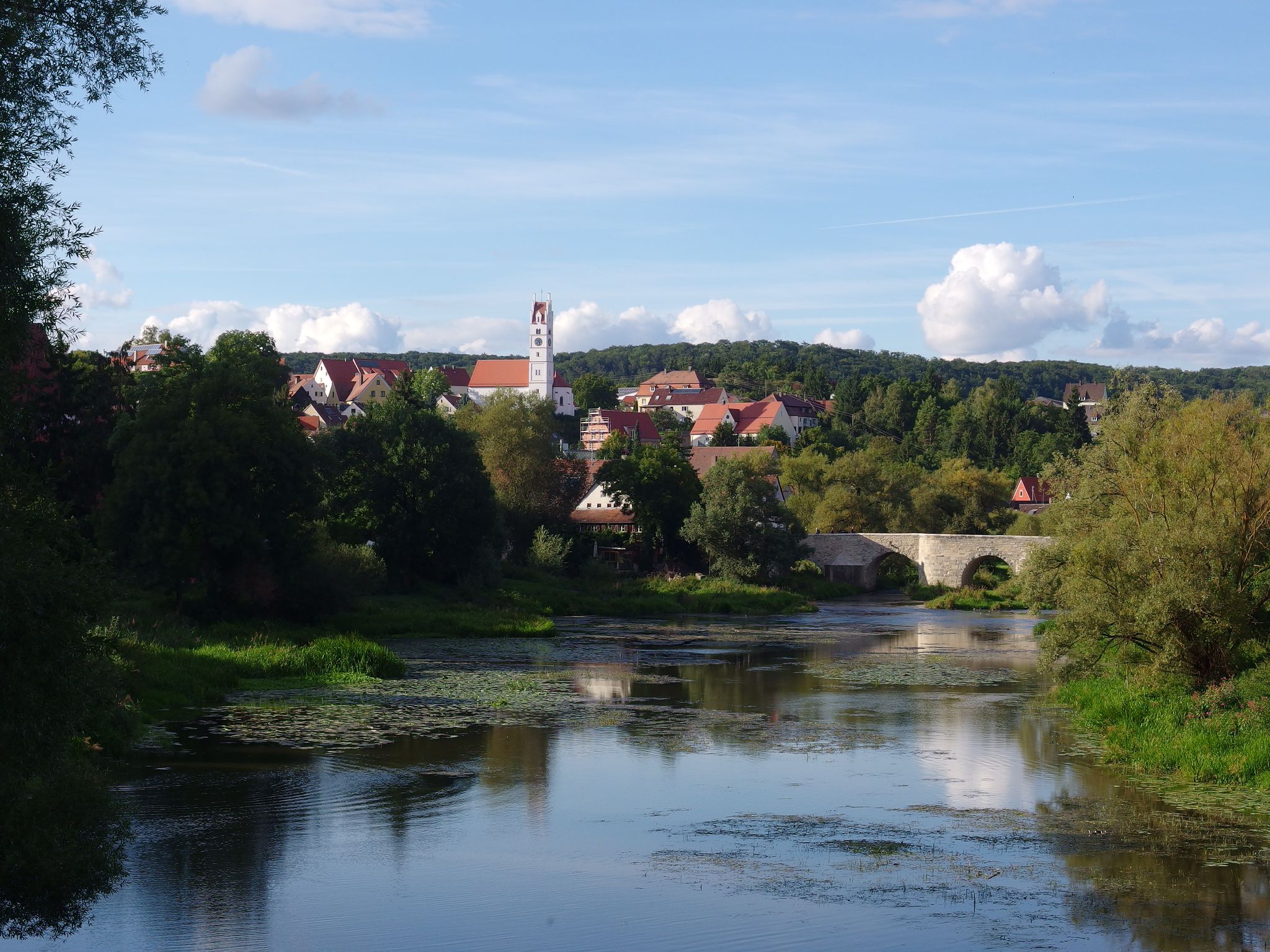
The Romantic Road – 10 fabulous stages
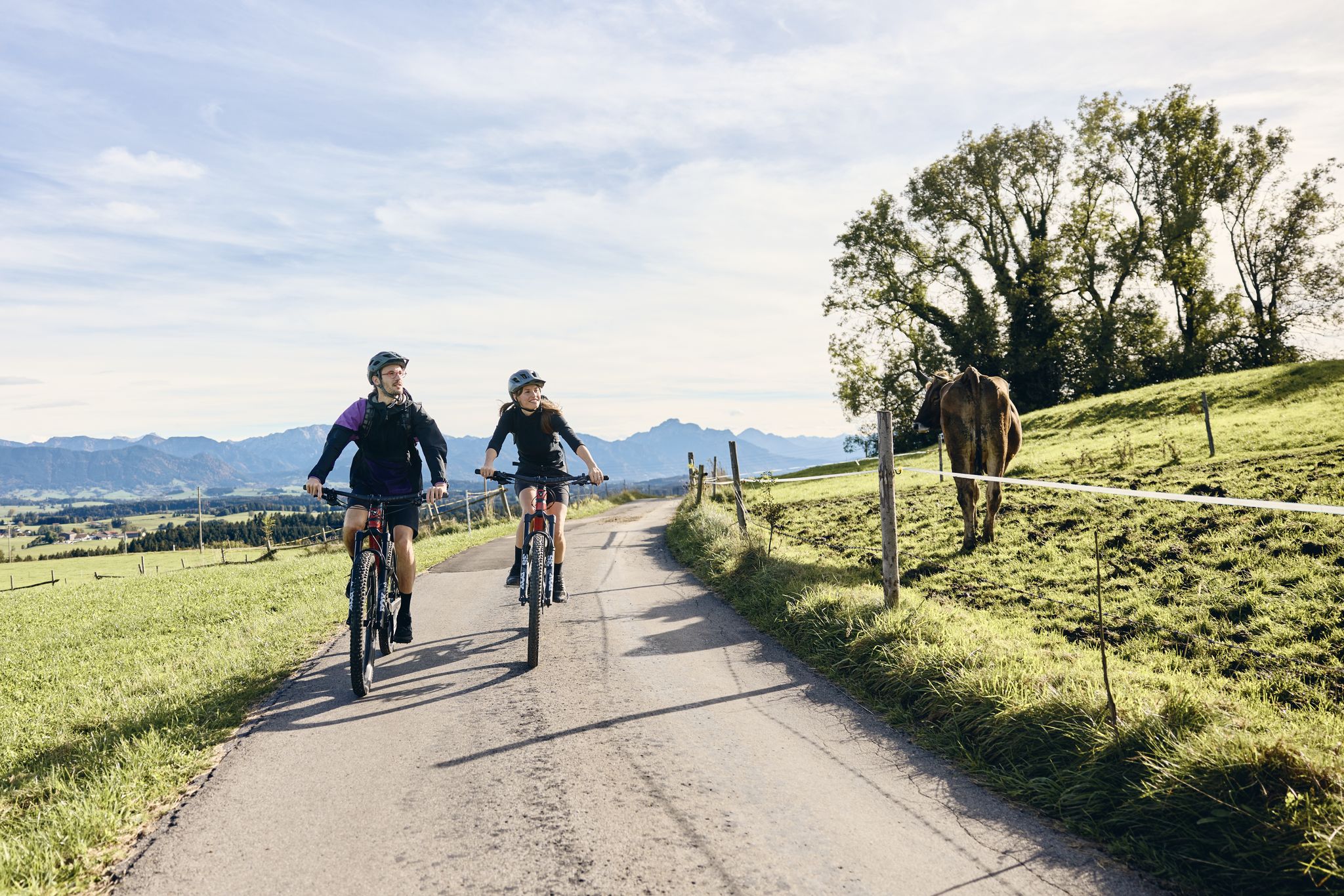
Land of the Moors – cycling between alpine views and wetland paths
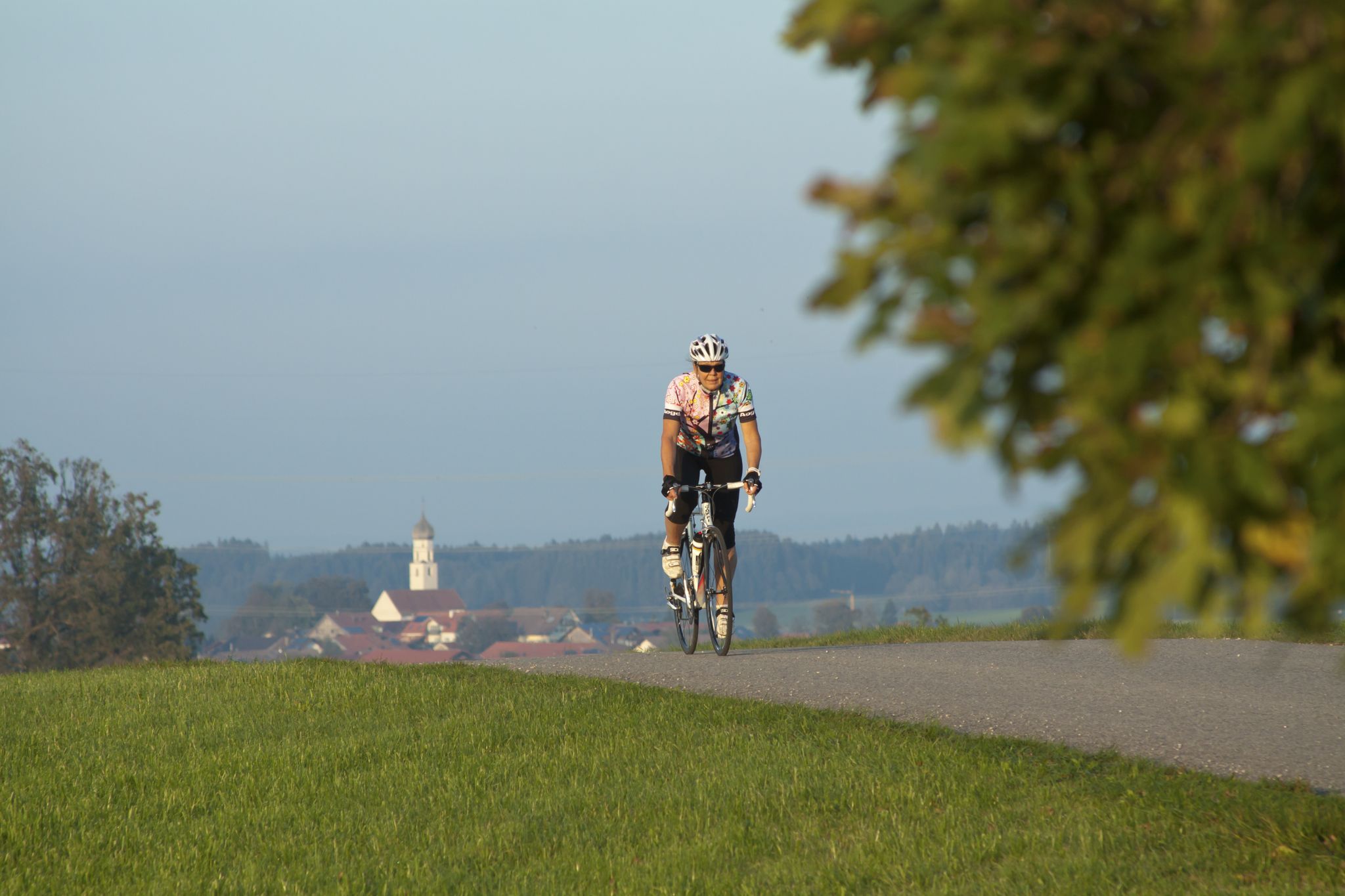
Pfaffenwinkel Radrundfahrt – The most beautiful Racing cycle routes
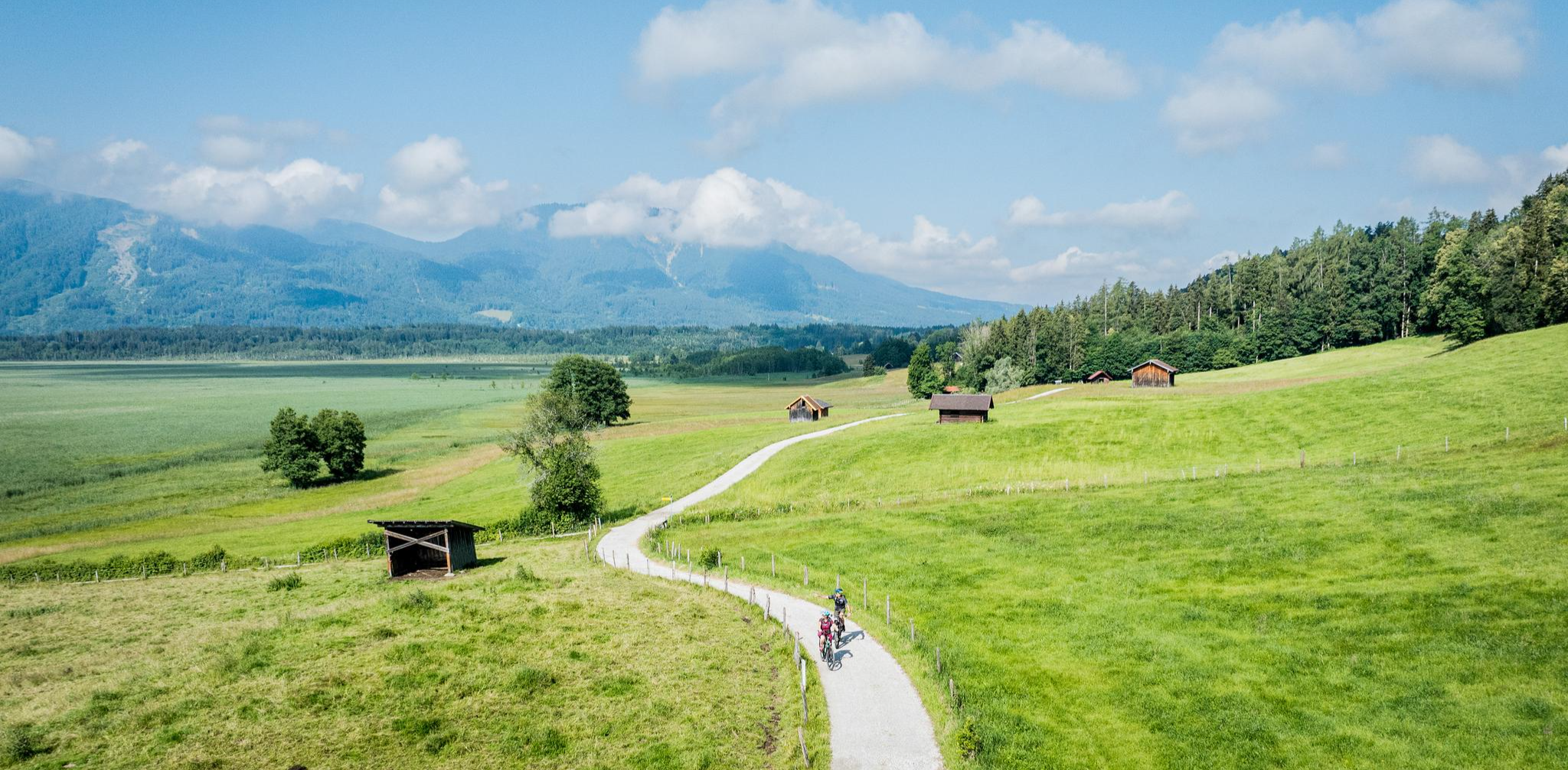
Art and nature by bike – from Munich to the edge of the Alps
Other adventures in Weilheim-Schongau


Tips from the Community

Through the nature reserve to Bernried Park past the castle, a very beautiful route with a view and a seating area.
0
0


The manor house is a castle-like cubic structure with suggested side wings and corner turrets in strictly symmetrical, late-classical forms, two-tone exposed brickwork with flat hipped and gable roofs. It was built in 1866/1867 according to plans by the architect Georg Dollmann,[1] who worked for Ludwig II from 1868 onwards and designed several palace buildings for him. The manor house is located on the shore of the lake amidst a large park landscape, which was first designed by the court garden director Carl von Effner.[6] Source: https://de.wikipedia.org/wiki/Schloss_Seeseiten
4
0
The former country house of Ludwig von der Pfordten was designed by Georg von Dollmann and built in 1866/67.[1] It is one of the largest and most important villas on Lake Starnberg. It was purchased in 1872 by Rudolf Knosp, a Württemberg commercial councillor and co-founder of the "Baden Anilin and Soda Factory" (BASF).[2] Through his daughter, the later Henriette Baroness von Simolin-Bathory (née Knosp), the castle came into the possession of her son Rudolf von Simolin-Bathory. He bequeathed it to his illegitimate daughter Rudolfine von Simolin-Bathory Domeneck, who married Captain Le Tanneux von Saint Paul. Francine Le Tanneux von Saint Paul married August von Finck Jr.;[3][4] thus the property came into the possession of the von Finck family.[5] Source https://de.wikipedia.org/wiki/Schloss_Seeseiten
5
1

The former Schongau Castle is now used as the district office - in front of the building there is a bust of Franz Josef Strauß, who was also a district administrator here
2
1

Two- and three-story three-wing complex with half-hipped roofs, the core of which was rebuilt after a fire in 1493, expanded and renovated in the second half of the 18th century and in 1938. Old castle garden wall on Bauerngasse, probably 16th century
3
0

The castle ruins of Gögerlburg can still be seen.
1
0

This imposing building was built between 1907 and 1909 in the historicist style and is currently privately owned, so unfortunately it cannot be visited. Over the years, the ownership and use of the castle changed several times: in 1943, the property came into the possession of the Nazi state and was a guest house for the Reich Foreign Ministry; the most prominent guest in 1943 was Benito Mussolini. Briefly owned by the US Army after the war, the castle was taken over by the US government, which set up and operated a seminary of the Ukrainian Greek Catholic Church there in 1946. Finally, in 1961, the castle came into the possession of the Federal Republic of Germany, which housed a training center for candidates for the senior civil service at the BND there until 2000. After that, the site changed hands several times. Further information about this interesting building can be found on Wikipedia at https://de.wikipedia.org/wiki/Schloss_Hirschberg_am_Haarsee.
2
0
Frequently Asked Questions
What are some unique historical sites to visit in Weilheim-Schongau beyond traditional castles?
Beyond traditional castles, you can explore significant historical sites like Kloster Polling, a former Benedictine and Augustinian monastery known for its impressive collegiate church and acclaimed library hall. Another notable site is Burgstall Peißenberg, the location of a former spur castle where the St. Georg chapel now stands, featuring significant wall and ceiling paintings from around 1400. Bernried Abbey also offers a rich historical and cultural experience.
Which castles or historical sites in Weilheim-Schongau offer beautiful views?
For beautiful views, consider visiting Schlossberg Cross and Viewpoint (Schongau), which offers panoramic vistas and historical insights. Seeseiten Castle is also noted for its impressive location on the lake, providing picturesque scenery. Hochschloss Pähl, though privately owned, is positioned about 100 meters above the Ammer valley and Lake Ammersee, suggesting stunning natural surroundings.
Are there any family-friendly castles or historical sites in Weilheim-Schongau?
Yes, several sites are considered family-friendly. Höhenried Castle, Seeseiten Castle, Former Schongau Castle (Now District Office), Bernried Abbey, and Schlossberg Cross and Viewpoint (Schongau) are all categorized as family-friendly. These locations often have accessible grounds or points of interest suitable for all ages.
Can I find historical ruins or archaeological sites in Weilheim-Schongau?
Yes, the region has several sites with historical ruins. The Old Schongau Castle, for instance, has parts, including two towers, that were destroyed in 1704, providing a tangible link to past conflicts. Burgstall Peißenberg marks the location of a former spur castle destroyed in 1388. Additionally, the Gögerlburg Ruins offer another glimpse into the region's medieval past.
What kind of architectural styles can I expect to see among the castles in Weilheim-Schongau?
The castles and historical buildings in Weilheim-Schongau showcase a range of architectural styles. Schloss Weilheim, for example, features a Neo-classical portal and has undergone rebuilding in 1857 and 1909. Lower Castle Pähl dates back to before the mid-16th century with Renaissance and later extensions. Hochschloss Pähl is a villa built in a romantic castle style from 1883-1885. Hirschberg Castle on Lake Haarsee was built in the historicist style between 1907 and 1909, incorporating Baroque and Art Nouveau elements. Kloster Polling displays a Gothic core, Renaissance modifications, and Rococo renovations.
Are there opportunities for outdoor activities near the castles in Weilheim-Schongau?
Absolutely! The Weilheim-Schongau region offers diverse outdoor activities. You can find numerous mountain hikes, road cycling routes, and running trails. For example, you can explore routes like 'Musikpunkt Peißenberg – View from Hohenpeißenberg' for hiking or 'Allgäu Cycle Path – View of Neuschwanstein Castle' for road cycling. Many of these routes pass by or are close to historical sites. You can find more details on these activities in the Mountain Hikes, Road Cycling Routes, and Running Trails guides for Weilheim-Schongau.
What is the best time of year to visit the castles in Weilheim-Schongau?
The best time to visit the castles in Weilheim-Schongau generally depends on your preferred activities. Spring and autumn offer pleasant temperatures for exploring the grounds and nearby trails, with beautiful foliage in autumn. Summer is ideal for combining castle visits with lake activities, especially near sites like Seeseiten Castle or Hochschloss Pähl. Winter can be magical, especially if you visit Höhenried Castle during its renowned Christmas markets.
Are there any castles in the region that are privately owned and not accessible to the public?
Yes, some castles in the region are privately owned and not publicly accessible. Hochschloss Pähl, for instance, is a private residence. Similarly, Hirschberg Castle on Lake Haarsee is privately owned and cannot be visited internally, though you can often view its impressive exterior from a distance or through its gate.
Where can I find more information about the history of specific castles like Schloss Weilheim?
For detailed historical information on specific sites, you can often find resources online. For example, you can learn more about Schloss Weilheim's transformation from a ducal seat to a tax office, and its archaeological importance, on its Wikipedia page: Schloss Weilheim in Oberbayern. Similarly, information for other sites like Hochschloss Pähl and Burgstall Peißenberg can be found on their respective Wikipedia pages.
Are there any castles or historical sites that host special events?
Yes, Höhenried Castle is particularly known for its beautifully landscaped castle avenues and its Christmas markets, which are highly recommended by visitors. Kloster Polling, while not a castle, is a vibrant cultural center that hosts various concerts and cultural events in its acclaimed library hall.
What do visitors enjoy most about the castles and historical sites in Weilheim-Schongau?
Visitors frequently appreciate the historical significance and diverse architecture of the sites, ranging from ducal castles to manor houses and ruins. The scenic locations, such as Seeseiten Castle on the lake, are also a major draw. Many enjoy the opportunity to combine historical exploration with outdoor activities like cycling or hiking in the surrounding natural landscapes. The community has contributed over 300 photos and 470 upvotes, highlighting the visual appeal and engaging experiences offered.
Can I bring my dog to the castle grounds or nearby areas?
While specific dog policies vary by site and are often not explicitly stated for all historical buildings, many outdoor areas and trails around the castles in Weilheim-Schongau are generally dog-friendly. It's always best to keep dogs on a leash and check for any specific signage at each location, especially for interior access or protected natural areas. The surrounding hiking and cycling routes are typically suitable for walks with dogs.
Most popular routes in Weilheim-Schongau
Most popular attractions in Weilheim-Schongau

Get inspired with the komoot mobile app


Didn’t find what you were looking for?
Explore Weilheim-Schongau’s best castles region by region:
