Top 9 Castles around Gräfenthal
Best castles around Gräfenthal are situated in a region characterized by the Thuringian-Franconian Slate Mountains. The town of Gräfenthal is defined by Schloss Wespenstein, a medieval castle perched above the town. This area offers a blend of historical sites and natural landscapes. The castles here provide insight into centuries of regional history and architectural evolution.
Best castles around Gräfenthal
- The most popular castles is Lauenstein Castle, a castle built over a thousand years ago. This hilltop castle was renovated…
Last updated: June 27, 2026
Lauenstein Castle
Highlight • Castle
Translated by Google •
Tip by

Eyba Castle
Highlight • Castle
In 1369 the Edelhof was the seat of a …
Translated by Google •
Tip by

Sign up now to discover places like this
Get recommendations on the best single tracks, peaks, & plenty of other exciting outdoor places.
Sign up for free
Friedensburg Castle
Highlight • Castle
Translated by Google •
Tip by

Wespenstein Castle
Highlight • Castle
... the former seat of the Imperial Marshal of Pappenheim, has shaped the face of the town of Gräfenthal for centuries.
The best way to get to know …
Translated by Google •
Tip by

View of Lauenstein Castle
Highlight • Viewpoint
Translated by Google •
Tip by
Sign up for free to discover even more castles around Gräfenthal.
Sign up for free
Already have an account?
Start today with a free account
Your next adventure awaits.
Login or Signup
Tips from the Community

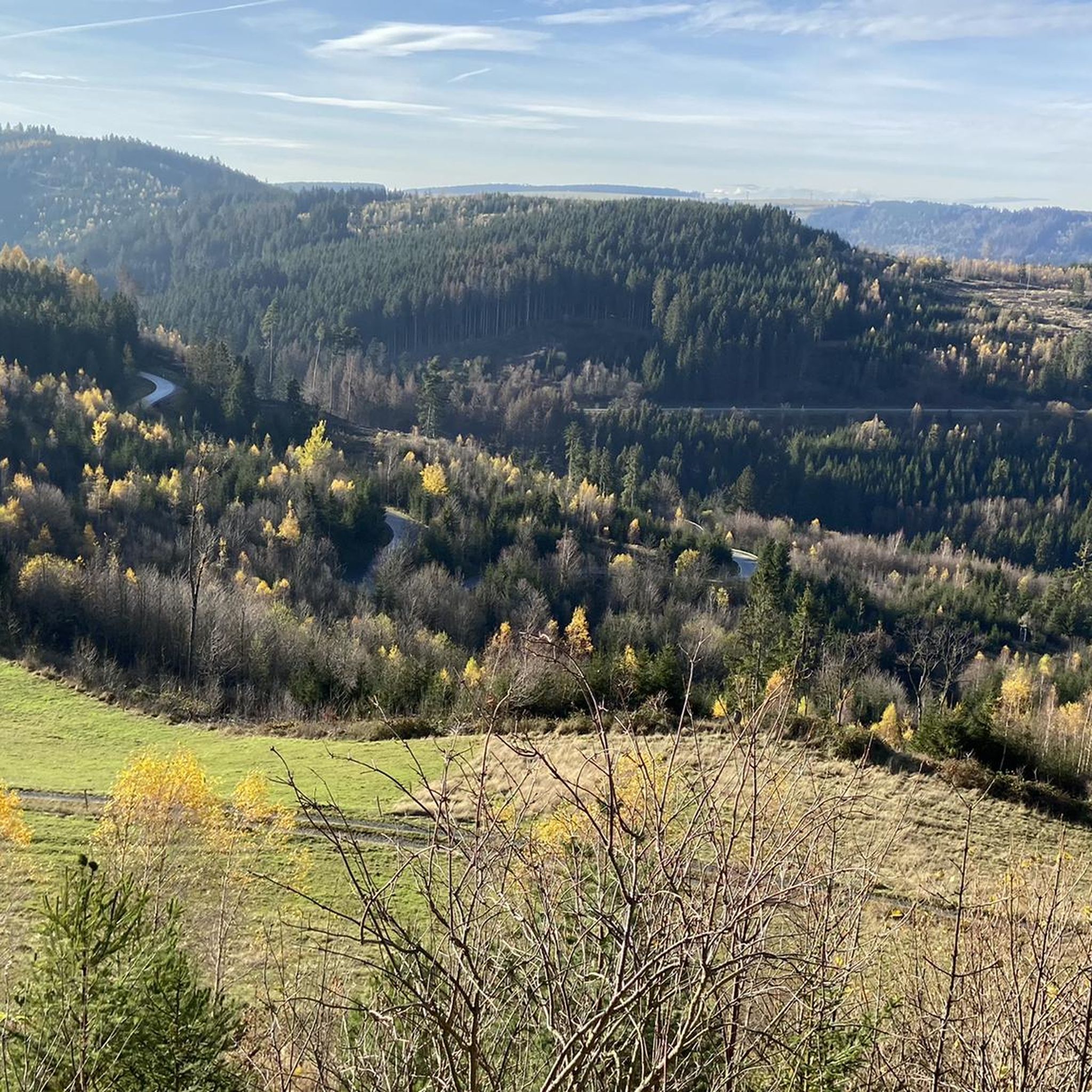
Great views of Lauenstein Castle, the town and half of the Franconian Forest
0
0

Great panoramic views in good weather.
0
0

Imposing castle, now a specialist clinic
0
0

This hilltop castle, originally part of the Orlagau region, was built over a thousand years ago in the midst of a clearing on the upper reaches of the Saale River and its tributary, the Loquitz. It was first mentioned in a document from 1222. Via the Counts of Orlamünde (1250) and the Knights of Ghüna (1506), the castle finally passed to the Margraves of Brandenburg-Kulmbach and Bayreuth in 1622, falling to Prussia in 1791 and Bavaria in 1803. In 1896, the castle romanticist Dr. Erhard Messmer from Halle an der Saale acquired the completely neglected castle complex, had it renovated, and refurbished. Katharina von Orlamünde was born at Lauenstein Castle in the 14th century. She is said to haunt the castle to this day as the restless ghost known as the "White Lady."
16
0
After the castle romanticist Dr. Ehrhard Messmer from Halle an der Saale purchased the dilapidated Lauenstein Castle in 1896, he had the building renovated in the historicist style. This included the restoration of the bridge over the moat leading up to the historic castle gate.
13
0
From the hiking trails in the area you can always enjoy beautiful views of the medieval hilltop castle Lauenstein, which was built almost 900 years ago above the village.
13
0

Also worth a highlight for me; however, it is privately owned and not open to the public
0
0

First written information from the 9th century as a Slavic refuge. Around the year 1000 it was mentioned as a count's hunting lodge and from 1080 as a "fortified house" of the Count of Schwarzburg (Leutenberg line). Over the centuries there were ongoing conversions and extensions to become the count's and widow's residence of the Leutenberg family and the princes of Schwarzburg-Rudolstadt. 1934 major fire at Friedensburg. Restoration work by the GDR government. From 1958 it served as a guest house for the GDR Council of Ministers. After the fall of the Berlin Wall in 1989 it was used as a hotel complex. This was followed by extensive renovation work and the installation of a hospital in 1993. The "Friedensburg Castle" complex opened as a specialist hospital for dermatology. Guided tours of the specialist hospital and the castle complex by appointment. The inner courtyard is recommended for visits 🤩.
32
1
Frequently Asked Questions
What historical significance do the castles around Gräfenthal hold?
The castles in the Gräfenthal region are deeply rooted in history, with some, like Lauenstein Castle, dating back over a thousand years. They served various purposes, from customs houses and noble residences to administrative centers. For example, Schloss Wespenstein, first documented in 1337, hosted historical figures like Martin Luther and Emperor Charles V. These structures reflect centuries of regional history, architectural evolution, and the changing hands of powerful families.
Are there family-friendly castles to visit near Gräfenthal?
Yes, several castles in the area are considered family-friendly. Lauenstein Castle, with its fairytale appearance and a legend of a 'White Lady' ghost, is often a hit with children. The tips mention it as a worthwhile destination for families. Eyba Castle and New Palace Steinach are also categorized as family-friendly, offering different experiences from historical exploration to cultural insights.
What kind of outdoor activities can I do near the castles in Gräfenthal?
The region around Gräfenthal's castles offers diverse outdoor activities, primarily hiking and gravel biking. You can find numerous routes, from easy walks to more challenging trails. For instance, there are easy hikes like the 'Lauenstein Castle – View of Lauenstein Castle loop' and more difficult ones such as the 'Gräfenthal Town Hall – Schlossblick Viewpoint loop.' You can explore more options for hiking and gravel biking on the dedicated guide pages: Easy hikes around Gräfenthal, Hiking around Gräfenthal, and Gravel biking around Gräfenthal.
What are the best viewpoints near Gräfenthal's castles?
Many castles in the Gräfenthal area are situated to offer excellent views. Schloss Wespenstein, perched on a rocky outcrop, provides fantastic panoramic views over the town of Gräfenthal and the surrounding Thuringian-Franconian Slate Mountains. Lauenstein Castle is also noted for its scenic location, offering stunning vistas, especially when approaching from the surrounding hills.
What is the best time of year to visit the castles in Gräfenthal?
While castles can be visited year-round, the spring and autumn months often offer the most pleasant experience. Spring brings blooming nature, and autumn showcases vibrant foliage, enhancing the scenic beauty of the castle surroundings. Summer is also popular, but can be warmer. Winter visits are possible, but some paths might be affected by snow or ice, and certain facilities might have reduced hours.
Can I bring my dog to the castle areas around Gräfenthal?
Generally, the outdoor areas and hiking trails around the castles are dog-friendly, allowing you to enjoy the scenic walks with your pet. However, access to the interior of castle buildings, museums, or specific facilities might be restricted for dogs. It's always advisable to check the specific rules for each castle before your visit, and to keep your dog on a leash.
Where can I find cafes or accommodation near the castles?
The town of Gräfenthal itself, and nearby villages, offer options for cafes and accommodation. While Schloss Wespenstein previously housed a restaurant and guesthouse, its current status may vary, so it's best to check locally. Eyba Castle functions as a conference venue and has a restaurant. For broader options, exploring the main towns in the region will provide more choices for dining and overnight stays.
How long should I plan for a visit to a castle in this region?
The duration of a visit can vary depending on the castle and your interest. For a castle like Schloss Wespenstein, which includes a museum, you might want to allocate 2-3 hours to explore the grounds, museum, and enjoy the views. For castles that are primarily external structures or part of a larger hike, you might spend less time directly at the site, perhaps 1-2 hours, plus travel and hiking time.
Is there parking available at the castles around Gräfenthal?
Parking availability varies by castle. For castles located within or near towns, such as Schloss Wespenstein in Gräfenthal, you can typically find parking in the town itself, often within walking distance. For more remote castles, there might be designated parking areas nearby. It's recommended to check local signage or specific castle websites for detailed parking information.
What makes Schloss Wespenstein particularly notable?
Schloss Wespenstein is the defining landmark of Gräfenthal, perched dramatically on a rock above the town. Its history dates back to the 13th century, serving as a customs house and later expanded by the Pappenheims. It has hosted significant historical figures and, despite a fire in 1686, retains elements of its medieval origins and later reconstructions. Today, it houses a museum showcasing its construction history, local heritage, and offers panoramic views over the Thuringian-Franconian Slate Mountains.
Are there any lesser-known or 'hidden gem' castles worth exploring?
While Lauenstein Castle and Schloss Wespenstein are well-known, Eyba Castle offers a charming, smaller-scale experience as a three-story Renaissance complex. Friedensburg Castle, though now a specialist hospital, is noted for its beautiful exterior and historical significance as a former headquarters for the Schwarzburg Leutenberger line, making it a visually appealing landmark even if interior access is limited. New Palace Steinach, with its blend of 17th-century origins and later reconstructions, also offers a unique architectural insight.
What do visitors appreciate most about the castles in Gräfenthal?
Visitors frequently appreciate the rich history and architectural beauty of the castles. The 'fairytale' appearance of Lauenstein Castle and its resistance to commercialization are often highlighted. The panoramic views from castles like Schloss Wespenstein are also a major draw. Many enjoy the sense of discovery, even for castles like Friedensburg Castle, which surprise visitors with their current uses while maintaining their historical charm.
Most popular routes around Gräfenthal
Most popular attractions around Gräfenthal

Get inspired with the komoot mobile app


Explore more
Looking for the best castles somewhere else? Discover other guides around Gräfenthal:
