Attractions and Places To See around Vila Verde Da Raia - Top 10
Best attractions and places to see around Vila Verde Da Raia are predominantly found in the nearby city of Chaves, a region known for its historical significance and natural beauty. This area, situated near the Portugal-Spain border, features a landscape shaped by river valleys and traditional rural settlements. Visitors can explore ancient Roman structures, medieval landmarks, and thermal springs that highlight the region's rich past and natural resources. The integration of cultivated lands with natural features creates a diverse environment for exploration.
Best attractions and places to see around Vila Verde Da Raia
- The most popular attractions is Chaves Old Town, a settlement known for its architecture dating back to Roman times and a fort recalling the War of Independence with Spain. It features narrow houses with colorful wooden balconies and numerous spa centers.
- Another must-see spot is Trajan Bridge (Chaves Roman Bridge), a historical bridge spanning the Tâmega River. Constructed between the late 1st and early 2nd century AD, it is considered one of the best-preserved Roman bridges in the Iberian Peninsula and became a pedestrian bridge in 2008.
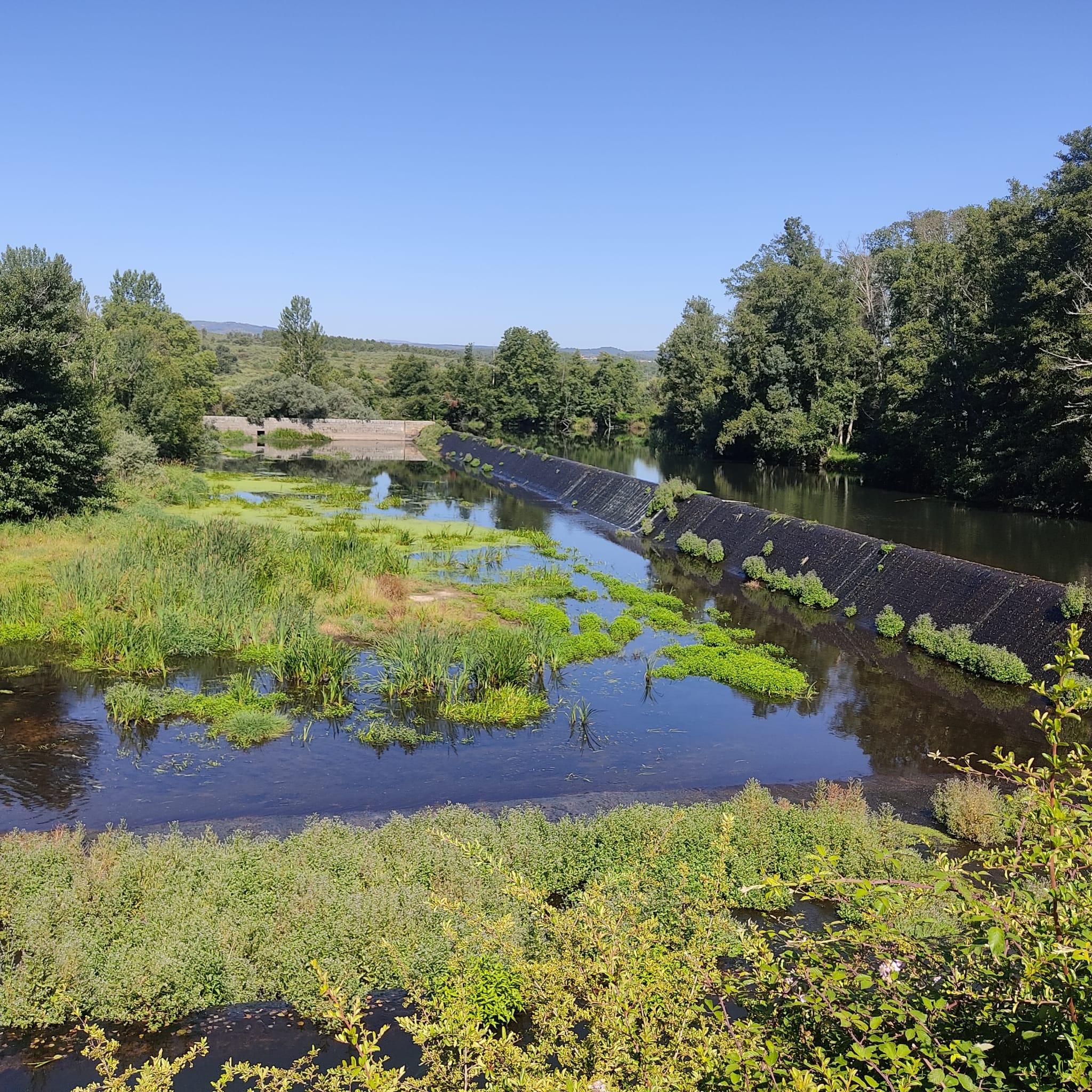
- Visitors also love Poldrado de Curalha, a well-preserved granite bridge from 1889. Designed by Engineer Augusto Xavier Teixeira, this walkway is used by people and animals to cross the river.
- Vila Verde Da Raia is known for its historical sites, natural monuments, and cultural landmarks. The area offers a variety of attractions to see and explore, from ancient Roman engineering to traditional town squares and thermal springs.
- The attractions around Vila Verde Da Raia are appreciated by the komoot community, with 30 upvotes and 42 photos shared by visitors.
Last updated: October 1, 2026
Chaves Old Town
Highlight • Settlement
Tip by

Trajan Bridge (Chaves Roman Bridge)
Highlight • Bridge
Approximately one hundred and fifty metres long and with a dozen visible arches, the works carried out in the 1930s covered some of the arches and others were still buried in the construction of the houses built there and overlooking the river.[citation needed]
In 2008 it became a pedestrian bridge.
Translated by Google •
Tip by
Sign up now to discover places like this
Get recommendations on the best single tracks, peaks, & plenty of other exciting outdoor places.
Statue of Francisco de Silveira
Highlight • Monument
In March 1809 he led a force which carried out the successful Siege of Chaves from its French garrison. He kept the French from capturing Amarante from 18 April to 3 May 1809 during the second French invasion of Portugal. Driven out, he later recaptured the place and helped cut off the forces of Nicolas Soult, forcing the French marshal to abandon his artillery and wagon trains in order to escape. He commanded a Portuguese division in Arthur Wellesley, Marquess of Wellington's Allied army at the Battle of Vitoria on 21 June 1813.
Tip by
Poldrado de Curalha
Highlight • Bridge
"Poldrado de Curalha - 1889. Designed by Engineer Augusto Xavier Teixeira, this granite bridge (poldras or walkway) is very well preserved and is used for people and animals to cross the river.
Translated by Google •
Tip by

Chaves Thermal Spring
Highlight • Natural Monument
Translated by Google •
Tip by

Sign up for free to discover even more attractions around Vila Verde Da Raia.
Already have an account?
Start today with a free account
Your next adventure awaits.

Tips from the Community

The statue honors General Francisco Silveira, the man who led the recapture of Chaves from the French in 1809. Chaves was the first Portuguese city to liberate itself from Napoleon's rule, and it was this general (with the help of popular militias) who besieged the French army inside the Fort of São Francisco and forced them to surrender. The statue celebrates that courage and strategy.
1
0
The Bridge of Trajan (often simply called the Roman Bridge) is, without a doubt, the most important monument in Chaves. It is worth visiting because it is not just an "old stone bridge"; it is a masterpiece of engineering that defines the city's identity. Here are the 4 main reasons why: 1. Walking on 2,000 Years of History This is one of the best-preserved Roman bridges in the entire Iberian Peninsula. It was built between the late 1st and early 2nd century AD, during the reign of Emperor Trajan. The Feeling: Crossing it on foot (cars are forbidden) means you are literally walking on the same stones as Roman legions, medieval merchants, and Napoleonic troops. It is an instant trip back in time. 2. Engineering that Defies Time It is worth looking closely at the structure to understand why it is still standing. The Tâmega River is known for its violent floods, yet the bridge has withstood them for two millennia. The Secret: If you go down to the riverbank, notice the cutwaters (the triangular structures at the base of the pillars). They were designed to "cut" the force of the water and prevent the bridge from collapsing. It is a live lesson in ancient architecture. 3. The Stones that "Speak" (Milestones) In the middle of the bridge, you will find two cylindrical stone columns (milestones) with Latin inscriptions. One of them is particularly important: the "Padrão dos Povos" (Standard of the Peoples). The inscription lists the 10 local tribes of the region (the "Aquiflavienses") who contributed to the construction of the bridge. It is a historical document carved in stone that has survived to this day. 4. The Photogenic Scenery The bridge connects the historic center to the Madalena neighborhood and is set within a beautiful public garden (Jardim do Tabolado). It is the perfect spot to watch the sunset, seeing the reflection of the arches in the water with the Castle of Chaves dominating the landscape high above. Visitor Tip: After crossing the bridge coming from the historic center, turn left and walk along the landscaped riverbanks. There are stepping stones (pedras poldras) nearby in the water that allow you to see the grandeur of Trajan's Bridge from an impressive low angle.
2
0
The Historic Centre of Chaves is one of the most fascinating in Northern Portugal because it manages to tell the story of millennia—from the Romans to the Napoleonic invasions—in a compact, walkable area. Here are the 4 main reasons why it is worth visiting: 1. The Roman Bridge of Trajan This is the city's landmark and one of the greatest legacies of Roman engineering in the Iberian Peninsula. Why visit: Crossing this pedestrian bridge over the Tâmega River is literally walking over 2,000 years of history. Built in the 1st century AD, it still maintains its robust stone arches. It is the perfect spot for that classic photo of the city with the river and houses in the background. 2. The Castle Keep (Torre de Menagem) & Views Of the old medieval castle, the imposing Keep (a National Monument) remains, surrounded by a very well-kept garden. The Viewpoint: Climbing to the top offers the best panoramic view over the Chaves valley, the river, and the surrounding mountains. Military Museum: Inside the tower, there is a military museum (symbolic entry fee of ~€1) that explains the strategic importance of Chaves in defending the border against Spain and during the French Invasions. 3. The Colorful Balconies of Rua Direita Rua Direita is the backbone of the historic center. Photogenic Charm: It is famous for its narrow houses with colorful wooden balconies, very typical of this region, creating a picturesque corridor full of traditional shops. Praça de Camões: This street leads to the main square, where the noble buildings are concentrated: the Town Hall, the Main Church (Matriz) with its Romanesque portal, and the Misericórdia Church (Baroque, with beautiful tiles inside). 4. The Thermal Heritage Chaves is the city of water (known as "Aquae Flaviae" to the Romans). Just a short walk away, at Largo do Arrabalde, you will find the Roman Baths Museum, a recently musealized archaeological complex showing how the Romans already utilized these medicinal hot waters. Right next to it, you can see (and taste, with caution!) the water springing out at over 70°C (158°F) at the thermal Buvette. Foodie Tip: Don't leave the historic center without entering a pastry shop to try the authentic Pastel de Chaves (PGI). It is a flaky puff pastry filled with minced veal—the perfect snack while exploring the streets.
2
0

Tâmega and Corgo International Ecovia "Poldrado de Curalha - 1889. Designed by Engineer Augusto Xavier Teixeira, this granite bridge (poldras or walkway) is very well preserved and is used for people and animals to cross the river.
0
0

He commanded the cavalry in 1807, when the Portuguese army was ordered to march from the borders to the coast. He was in Aveiro, when in December he was called to Coimbra to testify for the annihilation of the 6th, 9th, 11th and 12th regiments, by General Junot. With the fall of the monarchy in sight, he escaped to Porto in order to board an English ship, where he assumed that he would depart for Brazil. His plan foiled, he escaped to Vila Real, where he later became one of the factors in the acclamation of the legitimate government in 1808. In March 1809 he led a force which carried out the successful Siege of Chaves from its French garrison. He kept the French from capturing Amarante from 18 April to 3 May 1809 during the second French invasion of Portugal. Driven out, he later recaptured the place and helped cut off the forces of Nicolas Soult, forcing the French marshal to abandon his artillery and wagon trains in order to escape. He commanded a Portuguese division in Arthur Wellesley, Marquess of Wellington's Allied army at the Battle of Vitoria on 21 June 1813.
4
0
The 140 metre-long Ponte Trajano (Trajan Bridge) in Chaves in the Trás-os-Montes region of north eastern Portugal dates from the reign of the Emperor Trajan (53-117) in the early second century AD. The Emperor Trajan was known as a great promoter of public works including the Trajan Forum and Trajan Column in Rome.
6
0
The Roman Bridge of Chaves, also known as Trajan's Bridge, is located over the River Tâmega and was built between the end of the 1st century and the beginning of the 2nd century. Along with the development of the thermal baths, it constitutes one of the best Roman legacies of the ancient Águas Flávias, which still stands today, withstanding historic floods and the strong currents of the river. Approximately one hundred and fifty metres long and with a dozen visible arches, the works carried out in the 1930s covered some of the arches and others were still buried in the construction of the houses built there and overlooking the river.[citation needed] In 2008 it became a pedestrian bridge.
6
0
Chaves is famous for its many spa centres and thermal baths that are said to cure many ailments. Chaves is a small town in the north of Portugal located near the River Tâmega and not far from the border of Spain. The city also boasts some great architecture which dates back to Roman times and a fort which is a reminder of the war of Independence with Spain.
5
0
Frequently Asked Questions
What historical sites can I visit near Vila Verde da Raia?
The region is rich in history, primarily centered around the nearby city of Chaves. You can explore the Chaves Old Town, known for its Roman-era architecture and a fort from the War of Independence. Don't miss the Trajan Bridge (Chaves Roman Bridge), a well-preserved Roman bridge spanning the Tâmega River. Another notable historical structure is the Poldrado de Curalha, a granite walkway from 1889.
Are there any natural features or viewpoints to explore?
While Vila Verde da Raia itself is a small locality, the surrounding area offers natural beauty. The Tâmega River flows through Chaves, notably under the Trajan Bridge. You can also find the Chaves Thermal Spring, where hot water emerges at over 70°C, a testament to the region's 'city of water' heritage. The Minho Region landscape, where Vila Verde da Raia is situated, is characterized by river valleys and panoramic views.
What cultural experiences are available in the area?
Chaves offers a deep dive into Portuguese culture. Wander through Chaves Old Town with its narrow houses and colorful wooden balconies, especially along Rua Direita. The Praça de Camões features noble buildings like the Town Hall and the Main Church. The Roman Baths Museum in Chaves showcases the ancient use of the region's medicinal hot waters, highlighting its thermal heritage.
Are there family-friendly attractions around Vila Verde da Raia?
Yes, several attractions are suitable for families. The Chaves Old Town is great for a stroll, offering historical insights and traditional shops. The Chaves Thermal Spring can be an interesting stop to see the natural hot water. Exploring the pedestrian Trajan Bridge is also a pleasant activity for all ages.
What outdoor activities can I do near these attractions?
The area around Vila Verde da Raia is excellent for outdoor activities. You can find various routes for running, hiking, and road cycling. For running, consider routes like the 'Running loop from Outeiro Seco' or 'Running loop from Chaves'. Hikers can explore the 'Chaves Thermal Spring loop from Chaves' or the 'Vilarelho da Raia loop'. Cyclists have options such as the 'Vilaza – Verín loop from Outeiro Seco'. You can find more details on these and other routes in the respective guides: Running Trails around Vila Verde Da Raia, Hiking around Vila Verde Da Raia, and Road Cycling Routes around Vila Verde Da Raia.
Are there hiking trails available near Vila Verde da Raia?
Yes, there are several hiking trails in the vicinity. Popular options include the 'Chaves Thermal Spring loop from Chaves' (easy, 7.17 km) and the 'Chaves Old Town – Nadir Afonso Foundation loop from Chaves' (easy, 6.99 km). For a moderate challenge, try the 'Vilarelho da Raia loop from Vilarelho da Raia' (15.36 km). More hiking routes can be found in the Hiking around Vila Verde Da Raia guide.
What do visitors enjoy most about the attractions near Vila Verde da Raia?
Visitors frequently appreciate the historical depth and well-preserved Roman heritage, particularly the Trajan Bridge and the archaeological sites in Chaves. The charm of Chaves Old Town, with its unique architecture and thermal springs, is also a highlight. Many enjoy the panoramic views from the Castle Keep and the opportunity to walk through centuries of history.
Are there any accessible attractions for wheelchair users?
Yes, the Trajan Bridge (Chaves Roman Bridge) is noted as wheelchair accessible, offering a chance to experience this ancient landmark. The Statue of Francisco de Silveira is also accessible.
Where can I see monuments related to local heroes or significant events?
In Chaves, you can find the Statue of Francisco de Silveira. This monument honors General Francisco Silveira, who led the recapture of Chaves from the French in 1809, making it the first Portuguese city to liberate itself from Napoleon's rule.
What is the significance of the thermal springs in Chaves?
Chaves is historically known as the 'city of water' (Aquae Flaviae by the Romans) due to its thermal springs. The water emerges at over 70°C (158°F) and has been utilized for its medicinal properties since Roman times. You can visit the Chaves Thermal Spring and the Roman Baths Museum to learn more about this heritage.
Can I find places for a relaxing walk or stroll?
Absolutely. The pedestrianized Trajan Bridge offers a pleasant walk over the Tâmega River. The gardens surrounding the Castle Keep in Chaves provide a well-kept space for a leisurely stroll. Additionally, the Chaves Old Town, particularly Rua Direita, is ideal for exploring on foot, with its charming architecture and traditional shops.

Get inspired with the komoot mobile app


Explore more
Still not found the Highlight you’re looking for? See guides of the top attractions in other regions:
