Top 20 Caves around Langenenslingen
Best caves around Langenenslingen are found within the broader Swabian Alb region, characterized by its distinctive karst landscape. This area is known for its geological formations, including numerous caves formed over millennia. The Laucherttal, near Langenenslingen, is a significant cave area for prehistoric research and geological history. Visitors can explore a variety of cave types, from water-filled passages to ancient Neanderthal dwellings.
Best caves around Langenenslingen
- The most popular caves is Wimsener Cave, a cave that is Germany's only…
Last updated: July 6, 2026
Wimsener Cave
Highlight • Cave
The natural monument known as the "Wimsen Cave" or "Friedrich Cave" is the only "active" water cave in Germany that can be navigated …
Translated by Google •
Tip by

Gieß Waterfall (Veringendorf)
Highlight • Waterfall
Translated by Google •
Tip by

Sign up now to discover places like this
Get recommendations on the best single tracks, peaks, & plenty of other exciting outdoor places.
Sign up for free
Göpfelstein Cave
Highlight • Cave
Translated by Google •
Tip by

Caganas Cave
Highlight • Cave
Translated by Google •
Tip by

Hagentor Caves
Highlight • Cave
Translated by Google •
Tip by

Sign up for free to discover even more caves around Langenenslingen.
Sign up for free
Already have an account?
Start today with a free account
Your next adventure awaits.
Login or Signup
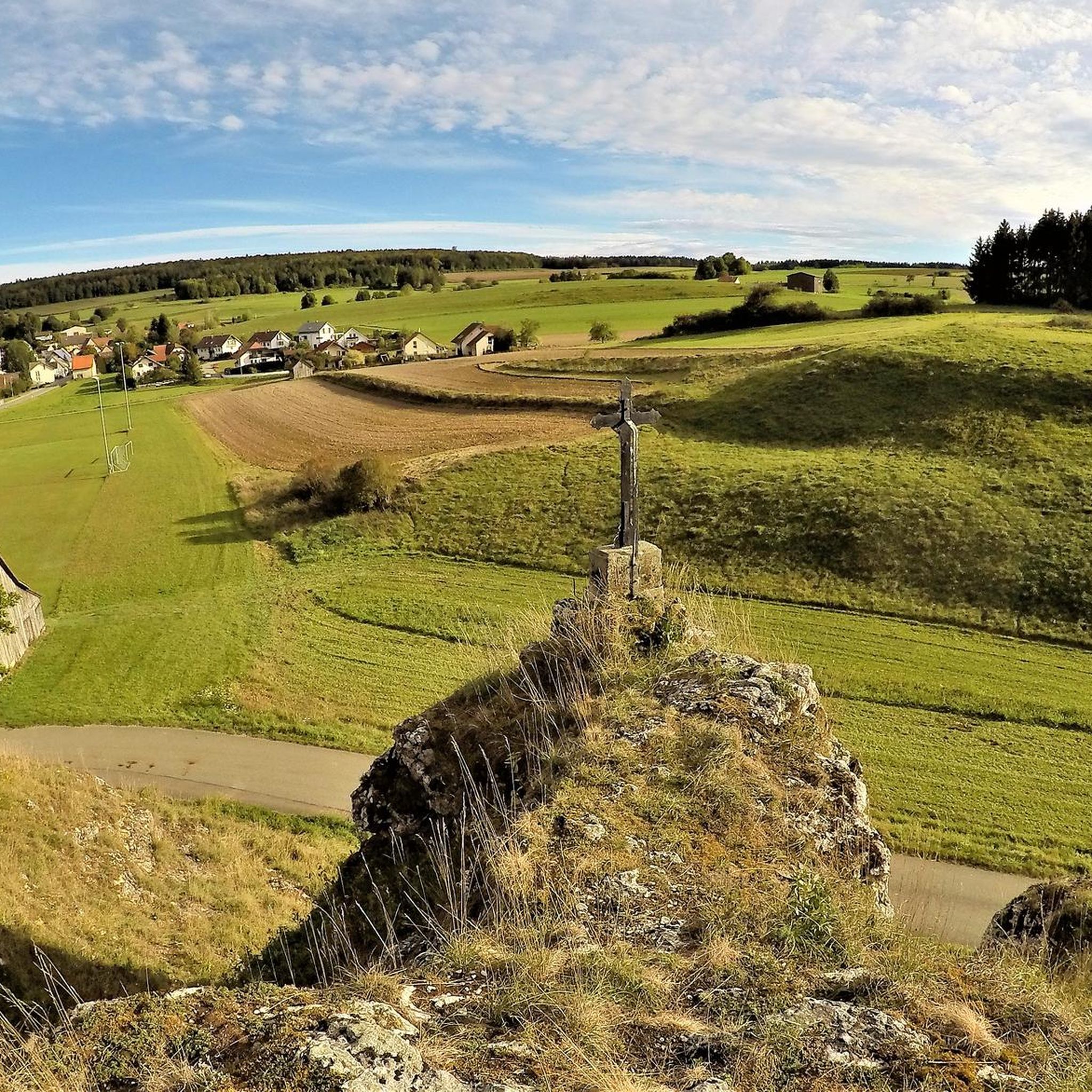
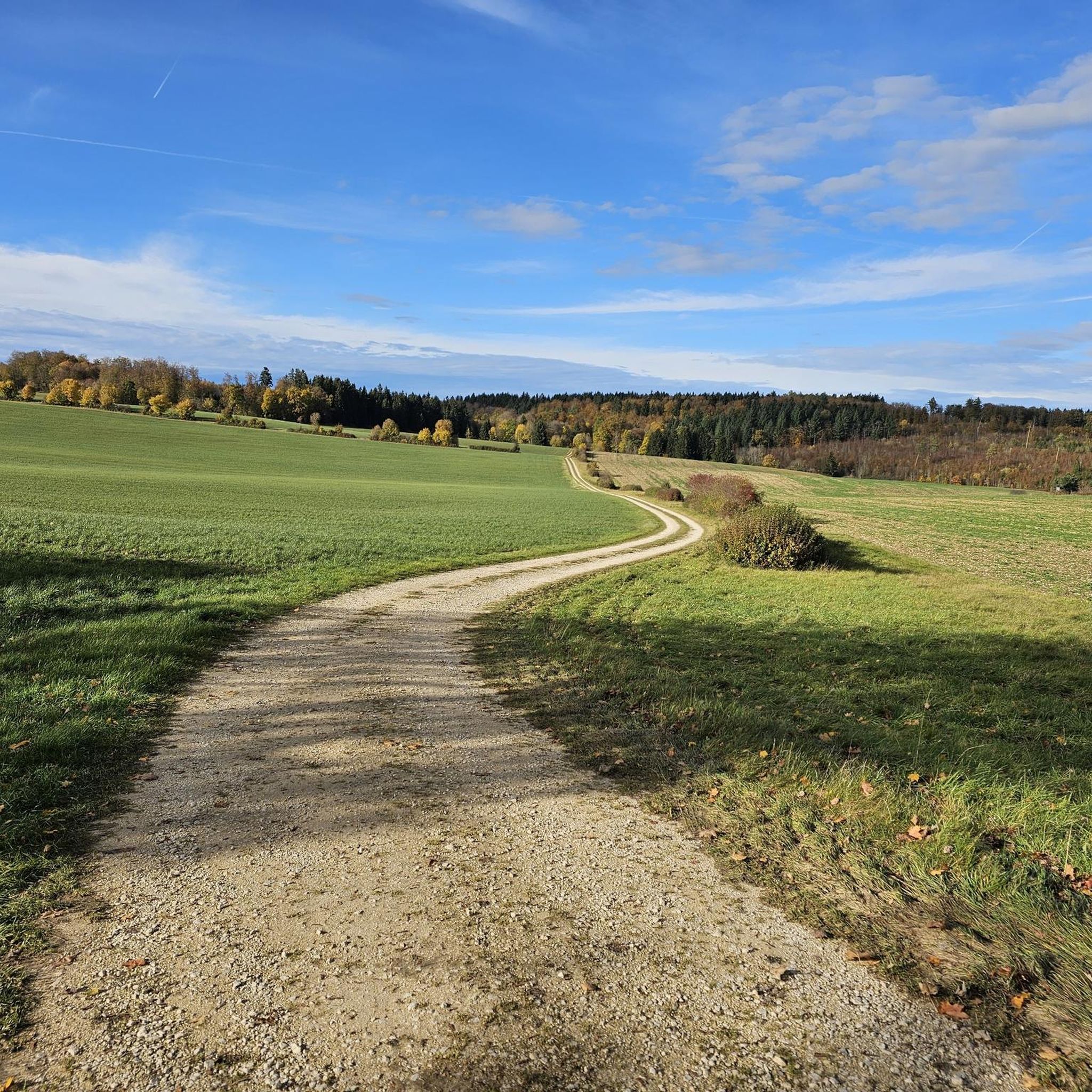
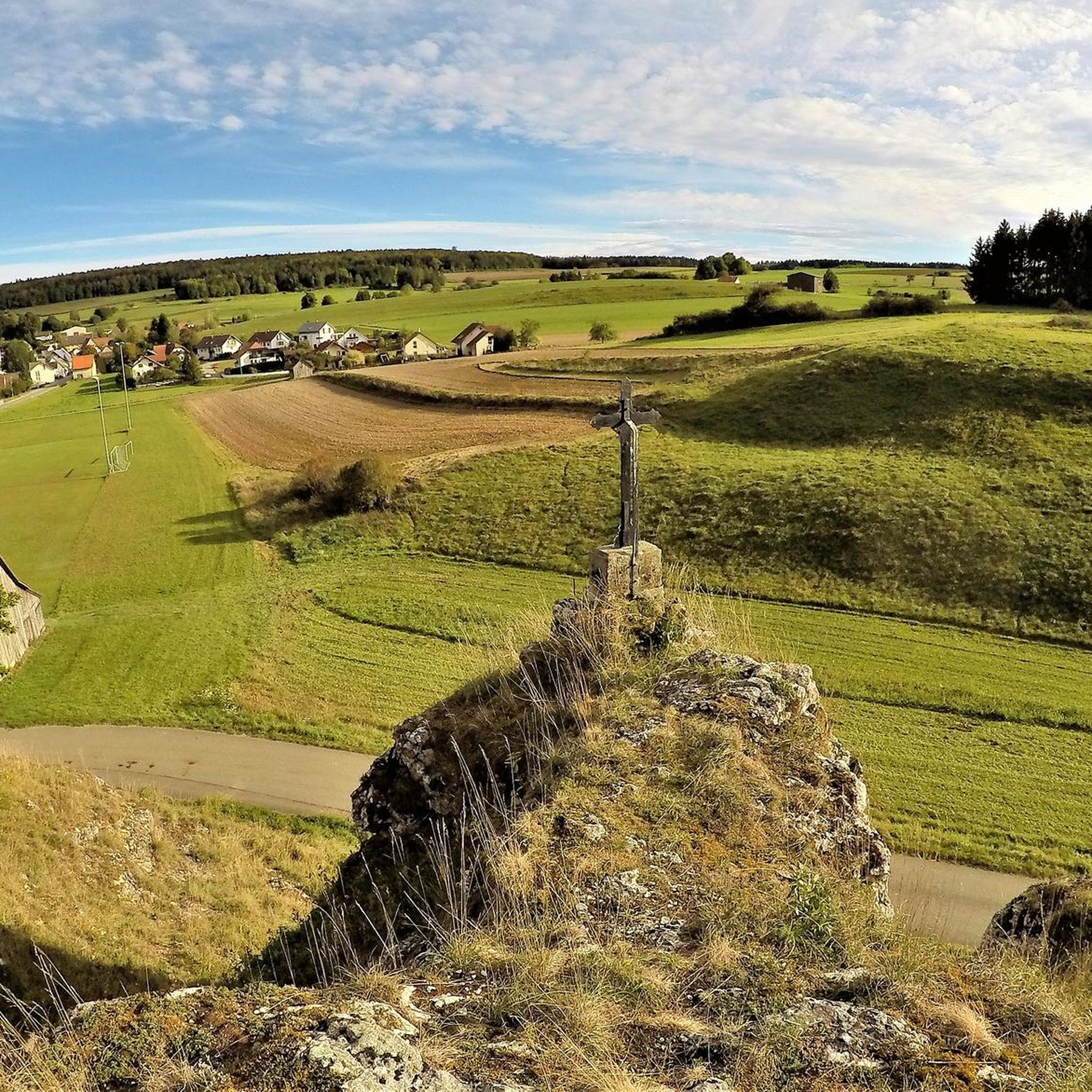
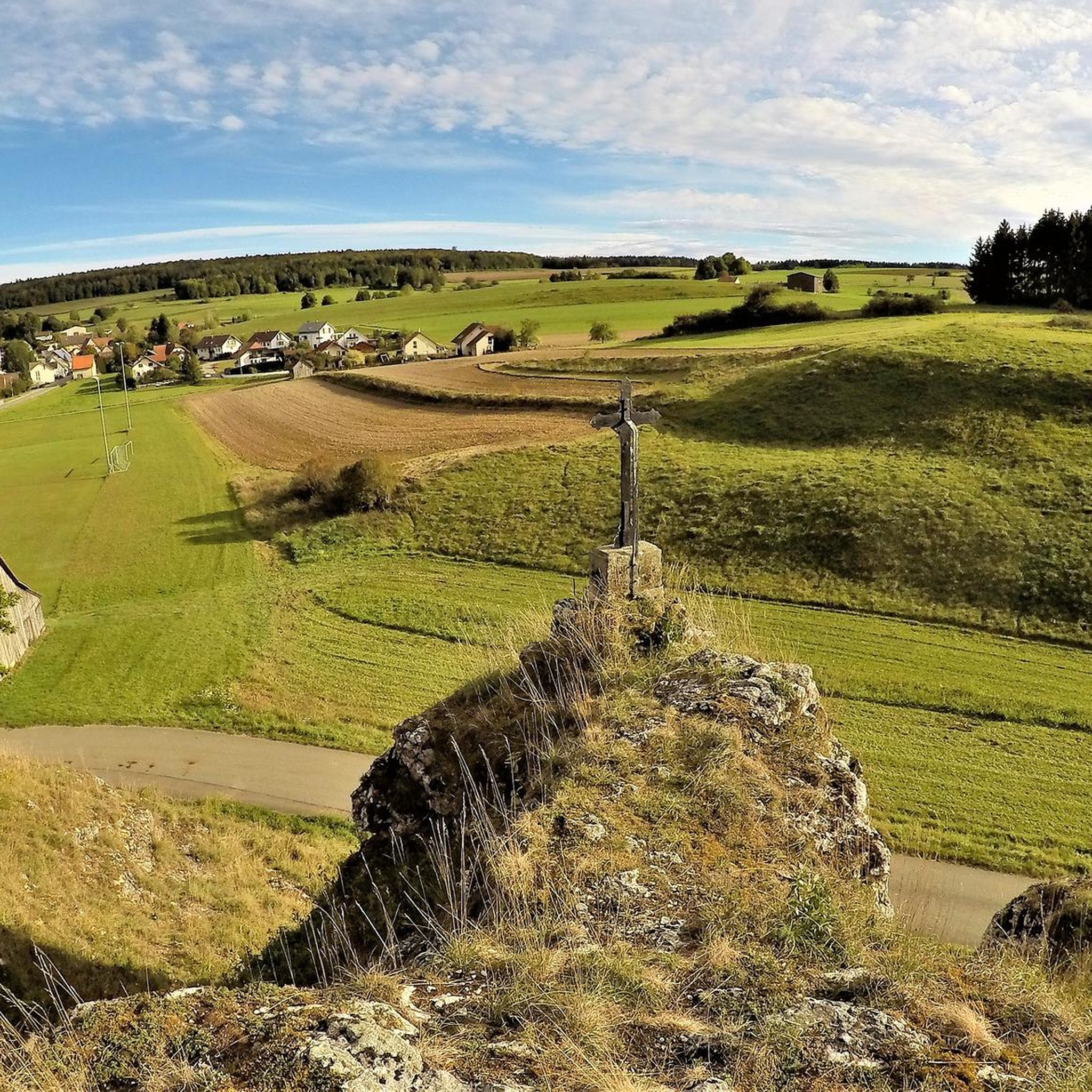
Tips from the Community

Located right on the side of the road... just take a quick look inside!
8
0
Great route for everyone... but you're probably rarely alone here
9
0

The Burgweg leads upwards from the old town. At the crest of the mountain spur, a signposted footpath branches off to the left, leading down to the Göpfelstein Cave. An information board is located at the cave entrance. The cave is freely accessible. The Göpfelstein Cave is located at an elevation of 660 m above sea level at the western exit of Veringenstadt, to the right above the Lauchert River and the old town. The entrance faces south and is visible from afar, set in a massive White Jurassic rock. The cave has a spacious vestibule. Behind the vestibule lies the three-meter-wide and three-meter-high entrance to the actual cave, which leads into the interior of the rock on two levels. The upper, more spacious section of the cave is seven meters long, seven meters wide, and five meters high. The lower section has a similar floor area and a height of approximately 1.20 meters. When Neanderthals occupied the Göpfelstein Cave, the cave had only one level. Only after the last Ice Age did a false ceiling collapse, opening access to the upper cave level. 34 caves are known around Veringenstadt.
0
0

It is a very idyllic place where you can take a break
7
0


It's worth making a detour here. It's a really beautiful place.
3
0

Coming from the "Hayinger Brücke" car park, the glass cave is on the right-hand side next to the cycling and hiking path. The cave is slightly smaller than the bear cave.
3
0

You can also walk through or explore part of the cave
3
0
Frequently Asked Questions
What makes the caves around Langenenslingen unique?
The region is characterized by its distinctive karst landscape, offering a variety of cave types. These range from active water caves to ancient Neanderthal dwellings, making the area significant for both geological and prehistoric research, particularly in the Laucherttal.
Are there any caves with historical or archaeological significance near Langenenslingen?
Yes, the Göpfelstein Cave is a notable historical site. It was once used as a living space by Neanderthals and features two distinct levels. The broader Laucherttal area is recognized for its importance in prehistoric research due to its numerous caves.
Which caves are suitable for families?
The Wimsener Cave is highly recommended for families. It's Germany's only active water cave navigable by boat, offering a unique experience for all ages. The surrounding natural landscape is also ideal for hiking, and there's a water playground nearby.
Can I explore caves that are freely accessible?
Yes, the Hagentor Caves are freely accessible and located on the outskirts of Veringenstadt. They feature two corridors that lead into the mountain and meet inside.
What kind of geological formations can I expect to see in the caves?
The Swabian Alb region is known for its karst landscape. You can find impressive stalactite formations, such as those in Blank's Tropfsteinhöhle near Uttenweiler. The Tiefenhöhle in Laichingen showcases deep karstification and multiple cave levels.
Are there any caves that offer a unique experience, like a boat tour?
Absolutely. The Wimsener Cave is Germany's only active water cave where visitors can explore its passages by boat, making it a truly unique natural monument.
What is the deepest accessible cave in the region?
The Tiefenhöhle in Laichingen is Germany's deepest accessible show cave. Visitors can descend 55 meters into the Earth's interior via numerous stairways, offering an impressive view of the Swabian Alb's karst formations.
Are there any caves with specific seasonal access restrictions?
Yes, the Geisterhöhle (Rechtenstein Cave) near Uttenweiler is closed during the winter months, specifically from November 15th to April 15th, to protect the bat population that hibernates there.
What outdoor activities can I combine with a cave visit?
The region around Langenenslingen offers various outdoor activities. You can find numerous hiking trails, including easy hikes. For cyclists, there are MTB trails and road cycling routes that allow you to explore the beautiful natural landscape surrounding the caves.
What should I wear when visiting caves in the area?
When visiting caves like the Nebelhöhle, it's advisable to wear sturdy footwear due to potentially slippery paths. Some caves may also have low ceiling heights, so being prepared for varied conditions is best.
Are there any caves known for their flowstone formations?
The Nebelhöhle (Fog Cave) near Sonnenbühl is renowned for its beautiful flowstone formations and fantastic stalactites. It offers a sense of discovery with its numerous smaller side paths.
Where can I find more information about the formation of these caves?
At the Tiefenhöhle in Laichingen, there is a museum at the entrance that provides detailed information on the cave's formation and the broader karst landscape of the Swabian Alb.
Most popular routes around Langenenslingen
Most popular attractions around Langenenslingen

Get inspired with the komoot mobile app


Explore more
Extend your search for the best caves by checking out these guides of the top ones around Langenenslingen:
