Βούλισα (Φαρσών-Δαγάτων-Διλινάτων-Κουρουκλάτων)
Βούλισα (Φαρσών-Δαγάτων-Διλινάτων-Κουρουκλάτων)
The best running trails in Βούλισα (Φαρσών-Δαγάτων-Διλινάτων-Κουρουκλάτων)
3.9
(9)
661
runners
28
runs
Jogging routes in Βούλισα (Φαρσών-Δαγάτων-Διλινάτων-Κουρουκλάτων) offer a mix of coastal paths and routes around the main town of Argostoli. The terrain is generally flat to gently undulating, providing accessible running conditions. Many paths feature views of the Ionian Sea and local landmarks, making for scenic runs. The region's routes are suitable for various fitness levels, with most being moderate in difficulty.
Best jogging routes in Βούλισα (Φαρσών-Δαγάτων-Διλινάτων-Κουρουκλάτων)
- The most popular jogging route is Saint Theodore Lighthouse – View of Kefalonia…
Last updated: August 15, 2026
19
runners
9.08km
01:01
90m
90m
Moderate run. Good fitness required. Mostly paved surfaces. Suitable for all skill levels.
4.5
(2)
81
runners
8.20km
00:51
20m
20m
Moderate run. Good fitness required. Mostly paved surfaces. Suitable for all skill levels.

Sign up for free
3.0
(1)
36
runners
7.55km
00:47
20m
20m
Moderate run. Good fitness required. Mostly paved surfaces. Suitable for all skill levels.
47
runners
7.08km
00:44
10m
10m
Moderate run. Good fitness required. Mostly paved surfaces. Suitable for all skill levels.
19
runners
5.71km
00:36
30m
30m
Moderate run. Good fitness required. Mostly paved surfaces. Suitable for all skill levels.
Get access to more routes and recommendations from other explorers.
Sign up for free
Already have an account?
Our route recommendations are based on thousands of hikes, rides, and runs completed by other people on komoot.
Start today with a free account
Your next adventure awaits.
Login or Signup
Popular around Βούλισα (Φαρσών-Δαγάτων-Διλινάτων-Κουρουκλάτων)
Tips from the Community

The obelisk is located on a small artificial island right next to the historic De Bosset Bridge (formerly Drapano Bridge), which crosses the bay of Argostoli. Erected in 1813, the obelisk served as a sign of gratitude from the Parliament of Kefalonia to Great Britain. It is often also called Kolona. Despite the severe earthquake of 1953, the obelisk and parts of the bridge survived the catastrophe.
0
0
(2) In the middle of the bridge stands a distinctive marble obelisk, erected in honor of the builders. It separates the Koutavos lagoon from the rest of the harbor basin. Today it is purely a pedestrian bridge, after it was extensively renovated between 2011 and 2013. The bridge is a popular place for walks, especially in the evening when it is illuminated. With a bit of luck, you can even observe sea turtles (Caretta caretta) in the water from there.
1
0
The De-Bosset Bridge (also called Drapano Bridge) is a prominent historical landmark. It is considered the world's longest stone sea bridge. The bridge is about 690 meters long (exactly 689.9 meters according to the Guinness Book of Records). It was originally built in 1813 as a wooden structure by the Swiss engineer Charles-Philippe De Bosset, who was the governor of the island at the time. It was later rebuilt in stone. Originally, it was intended to connect Argostoli with the mainland, facilitating access to the town, as previously the Koutavos lagoon had to be bypassed.
1
0
From Argostoli, you look directly east across the bay at the opposite district of Drapano (Δράπανο). You can see the wooded shore of Drapano, which is significantly less densely built-up than the city center of Argostoli. De Bosset Bridge: To the right in the field of vision (south), the historic stone bridge stretches across the bay of Argostoli, connecting the city with Drapano. Drapano Hill: In the background, the island's hilly landscape rises, forming a natural backdrop from this position. Argostoli Yacht Marina: Immediately in front of you (on your own shore), you see the jetties of the marina, where yachts and sailboats often anchor.
0
0
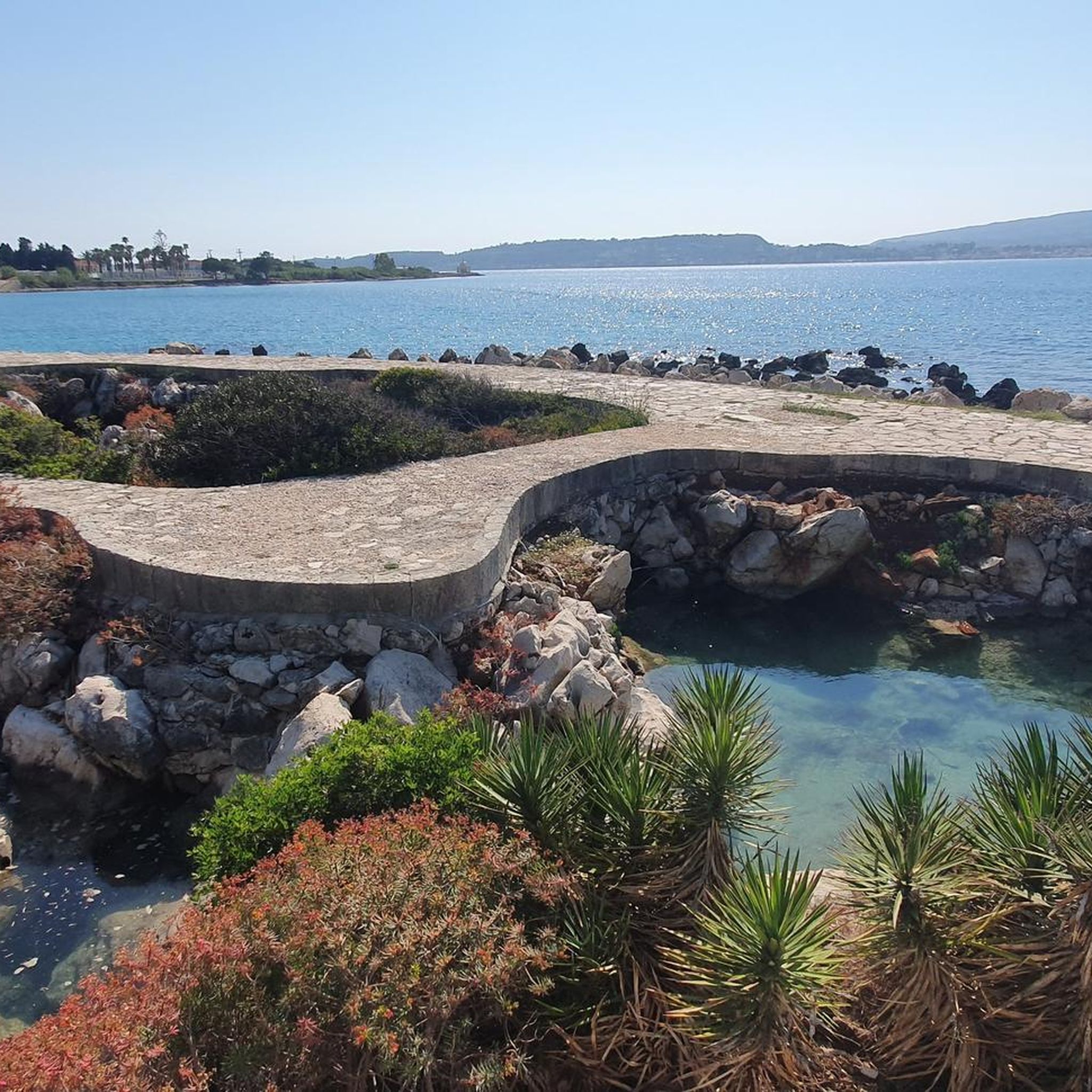
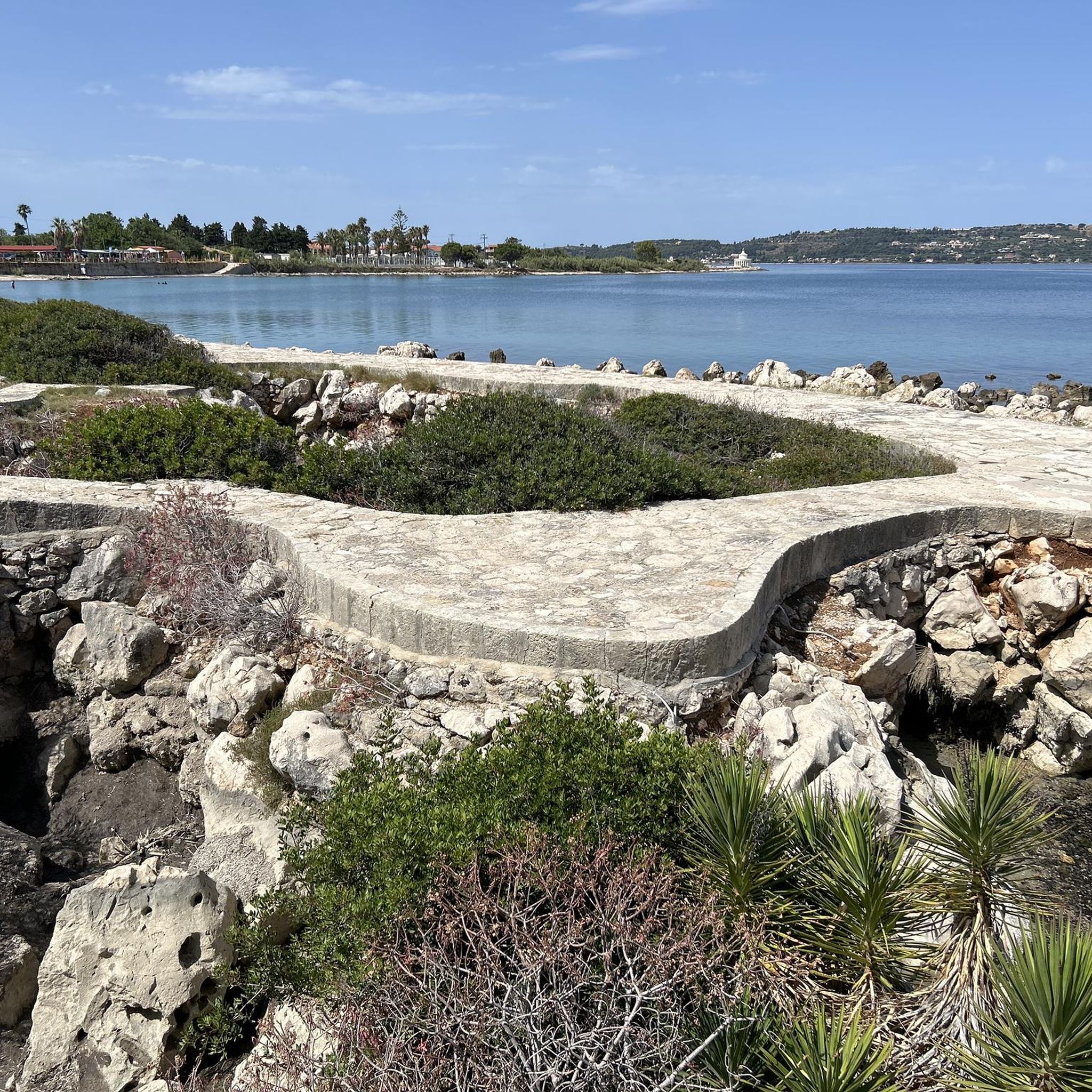
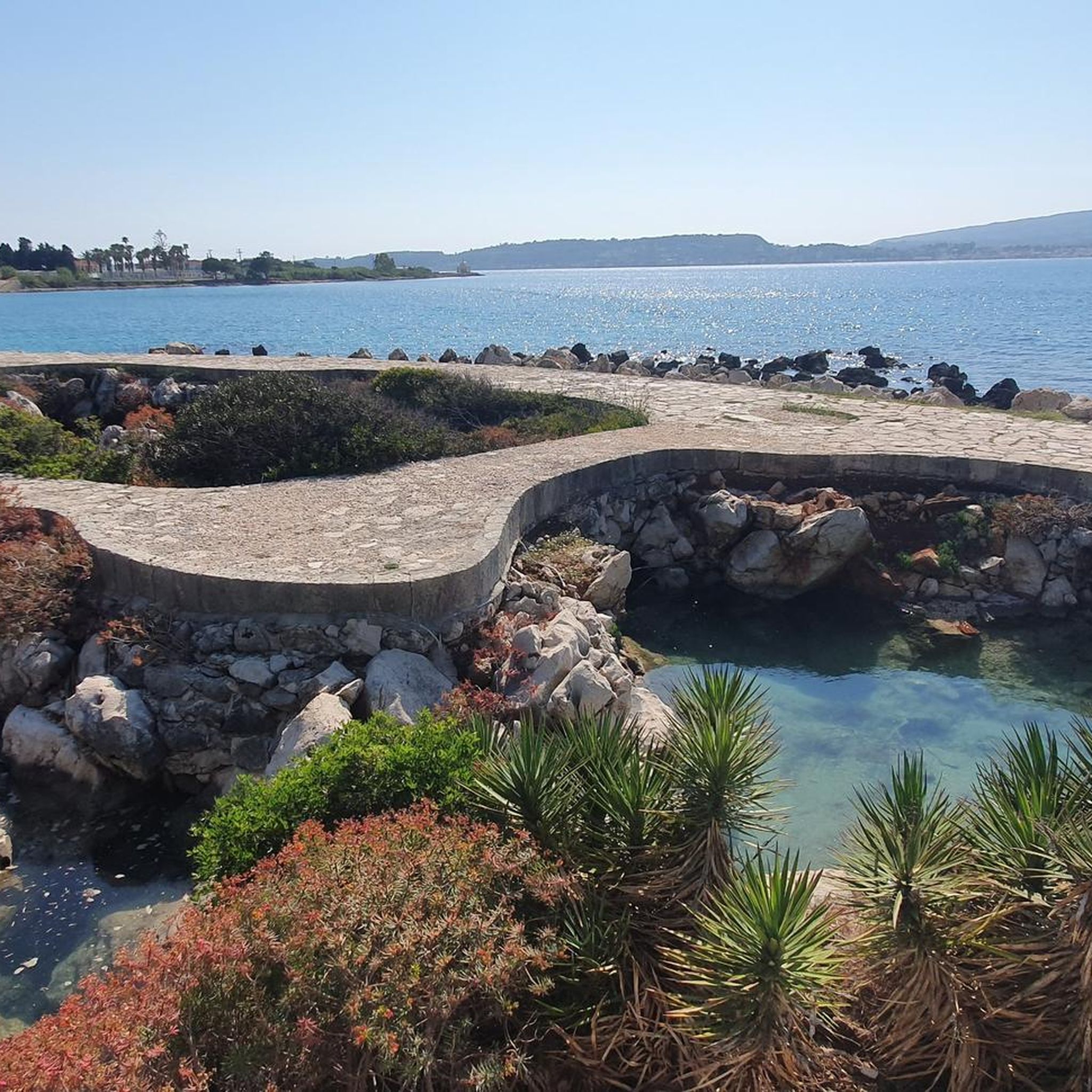
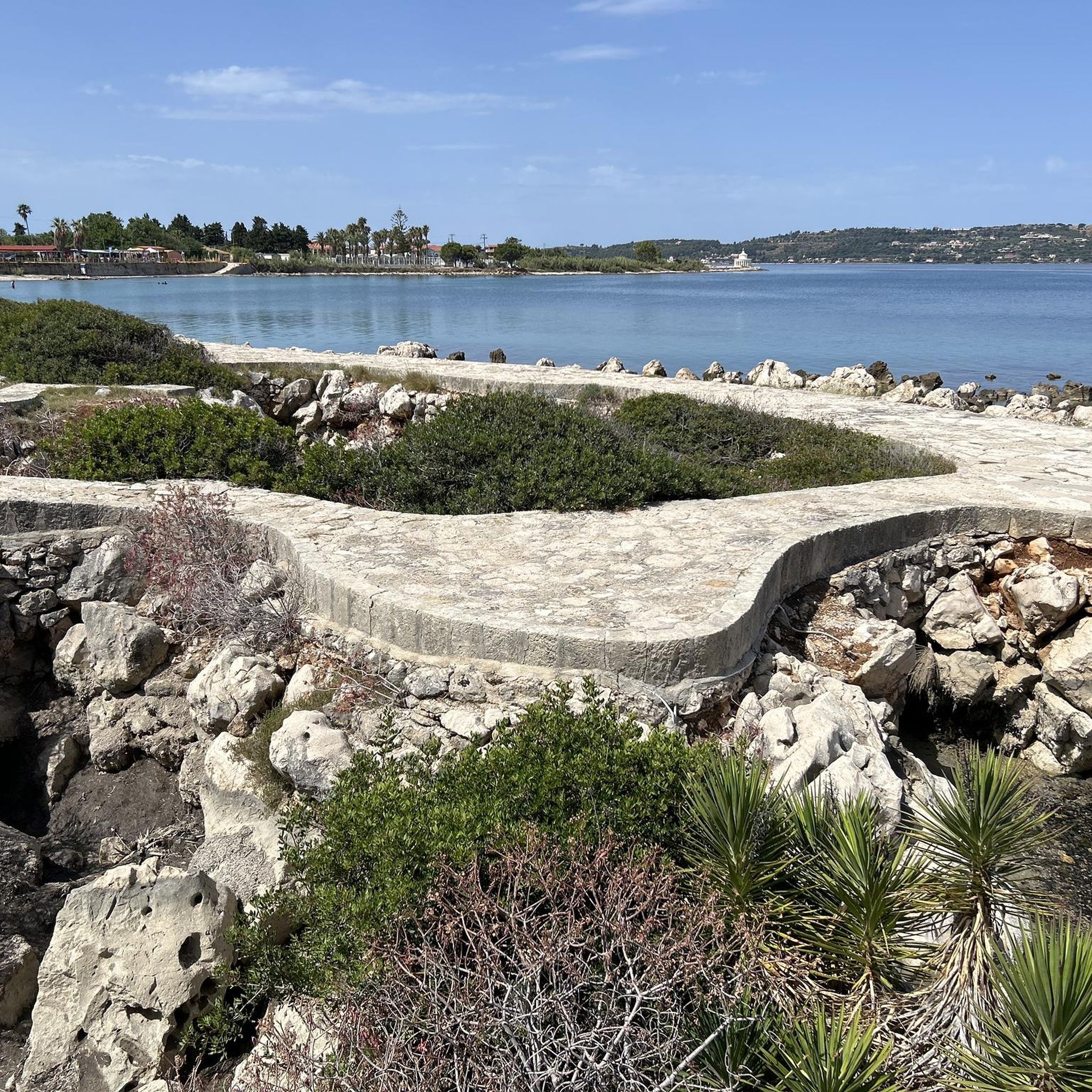
The Saint Theodore Lighthouse (Greek: Agioi Theodoroi), also known as Fanari, is one of Kefalonia's most famous landmarks. It stands on an artificial peninsula about 3 km from the island's capital, Argostoli. The original lighthouse was built in 1828/29. The structure is distinguished by its striking circular design in the Doric style. The 8-meter-high tower is framed by 20 white columns. The devastating earthquake of 1953 completely destroyed the original. In 1964, the lighthouse was faithfully reconstructed by architect Takis Pavlatos, following the original plans. Since 1995, it has been a protected monument of modern Greek history. The location offers sweeping views across the sea to the Paliki peninsula and the island of Vardianoi.
2
0

The obelisk commemorates the British protectorate.
1
0

The beautiful small Agios Theodoros lighthouse has a classicist shape surrounded by columns. It was built in 1953, modeled on the previous lighthouse from 1829 that was destroyed by an earthquake - and has been recently restored. It is in active operation, securing the Argostoli bay, its natural port, and the small pebble beach in front.
2
0

Saint Theodore Lighthouse, a very unusual lighthouse, was built in 1829 in the neoclassical style and rebuilt after the earthquake.
1
0
Frequently Asked Questions
How many running routes are available in Βούλισα (Φαρσών-Δαγάτων-Διλινάτων-Κουρουκλάτων)?
There are nearly 30 running routes in Βούλισα (Φαρσών-Δαγάτων-Διλινάτων-Κουρουκλάτων), offering a variety of options for different fitness levels. Most are moderate, with at least one easy route available.
Are there easy running routes for beginners in Βούλισα?
Yes, there is at least one easy running route suitable for beginners. The terrain in the region is generally flat to gently undulating, making many paths accessible even for those new to running.
What are some longer running trails in the region?
For a longer run, consider the Agios Theodoros Lighthouse – View of Kefalonia loop from Argostoli, which is over 10.5 km (6.5 miles) long. Another good option is the Saint Theodore Lighthouse – View of Kefalonia loop from Argostoli, spanning about 9.1 km (5.6 miles).
Which running routes offer the best views?
Many routes in the area boast scenic views of the Ionian Sea and local landmarks. The Saint Theodore Lighthouse – View of Kefalonia loop from Argostoli offers views of the lighthouse and the Kefalonia coastline. The View of Kefalonia – De Bosset Bridge loop from Camping Argostoli also provides excellent views of Kefalonia and passes by the historic De Bosset Bridge.
Are there circular running routes in Βούλισα?
Yes, many of the popular running paths in Βούλισα are loops. For example, the View of Kefalonia – De Bosset Bridge loop from Argostoli is a circular route, as is the De Bosset Bridge loop from Argostoli.
When is the best time of year to go running in Βούλισα?
The region is pleasant for running during spring and autumn when temperatures are milder. Summer can be hot, so early morning or late evening runs are recommended to avoid the midday heat. Winter offers cooler temperatures but may bring more unpredictable weather.
What do other runners enjoy most about jogging in Βούλισα?
The running routes in Βούλισα are highly rated by the komoot community, with an average score of 3.9 stars. Runners frequently praise the beautiful coastal paths, the stunning views of the Ionian Sea, and the routes around landmarks like the De Bosset Bridge and Saint Theodore Lighthouse.
Are the running trails in Βούλισα suitable for dogs?
While specific regulations for dogs on trails can vary, many outdoor paths in Greece are generally dog-friendly, especially if kept on a leash. It's always advisable to check local signage and ensure your dog is well-behaved and doesn't disturb wildlife or other users.
Is parking available near the running trails in Βούλισα?
Many routes start from or pass through Argostoli, where public parking is generally available. For routes starting outside the main town, look for designated parking areas or roadside parking, especially near popular trailheads or attractions like the lighthouse.
Can I reach the jogging routes by public transport?
Argostoli, the main town in the region, is well-served by local buses, making it possible to access routes that start or pass through the town. For trails further afield, public transport options might be limited, and a car or taxi may be more convenient.
Are there family-friendly running options in Βούλισα?
Given the generally flat to gently undulating terrain and the presence of easy routes, many paths in Βούλισα can be considered family-friendly. Routes along the coast or around the De Bosset Bridge offer relatively flat surfaces suitable for families with children, though supervision is always recommended.
Most popular routes in Βούλισα (Φαρσών-Δαγάτων-Διλινάτων-Κουρουκλάτων)

Get inspired with the komoot mobile app


Explore more
Browse the best Running Trails & Routes in other regions.
