The best cycling routes in Breiter Berg Bei Haselstein
4.6
(2413)
9,831
riders
288
rides
Touring cycling in Breiter Berg Bei Haselstein offers routes through a diverse landscape within the Rhön Biosphere Reserve. The area features predominantly forested hills, including woodruff-beech forests, alongside peripheral grasslands and wetlands. Geologically, basalt block slopes and varied forest communities characterize the terrain, providing a mix of elevations for cycling. This region is part of a larger network known for its scenic vistas and varied terrain.
Best touring cycling routes in Breiter Berg Bei Haselstein
- The most popular touring cycling…
Last updated: July 5, 2026
4.0
(4)
13
riders
Moderate bike ride. Good fitness required. Mostly paved surfaces. Suitable for all skill levels.
5.0
(2)
10
riders
Moderate bike ride. Good fitness required. Mostly paved surfaces. Suitable for all skill levels.

Sign up for free
5.0
(1)
5
riders
Moderate bike ride. Good fitness required. Mostly paved surfaces. Suitable for all skill levels.
5.0
(2)
8
riders
Hard bike ride. Very good fitness required. Mostly paved surfaces. Suitable for all skill levels.
5.0
(1)
4
riders
Moderate bike ride. Good fitness required. Mostly paved surfaces. Suitable for all skill levels.
Get access to more routes and recommendations from other explorers.
Sign up for free
Already have an account?
Our route recommendations are based on thousands of hikes, rides, and runs completed by other people on komoot.
Start today with a free account
Your next adventure awaits.
Login or Signup
Tips from the Community

Idyllic wooden bridge over the Hasel.
2
0
Very lively sculpture of Rumpelstiltskin.
0
0
The neoclassical nave, built between 1838 and 1840, has five window axes, but its floor plan dates back to the Middle Ages. Of the medieval predecessor church from the 11th century, which was given a Gothic style in 1486, only the choir tower remains. A Baroque cap was added to it around 1912 to house the clock and belfry. After the nave was built, parts of the flat-roofed choir on the ground floor of the tower initially served as a sacristy. A Gothic tabernacle from 1486, set into the wall, has also been preserved there. In 1854, the church received an altar from 1716, which had previously stood in St. Michael's Church in Fulda. It was installed under the chancel arch. It was removed during a renovation around 1941. During this renovation, an external sacristy was added. In 2008 and 2009, the interior was the primary focus of the renovation. The renovation project focused on redesigning the altar area. The renovation was completed with the consecration of the new people's altar on January 17, 2010. (Source: Wikipedia)
0
0
The church's origins date back to the 15th century. The simple building was renovated several times before its demolition in 1930. The last service took place in January 1930, followed by the laying of the foundation stone for the new building, which was consecrated in August. The hall church, with its steeple extending into the nave and supporting an octagonal tent roof between battlements, is built in the style of a fortified church. The Pietà from the 1735 altar has been preserved. The wooden figures of St. Valentine and St. Pantaleon come from an altar of the Fourteen Holy Helpers from the early 16th century. On the back wall of the galleries is a depiction of St. Christopher. Also visible are statues of Mary, St. Joseph, and St. Elizabeth. (Source: Wikipedia)
1
0


The cross basilica was built in the middle of the 14th century.
0
0

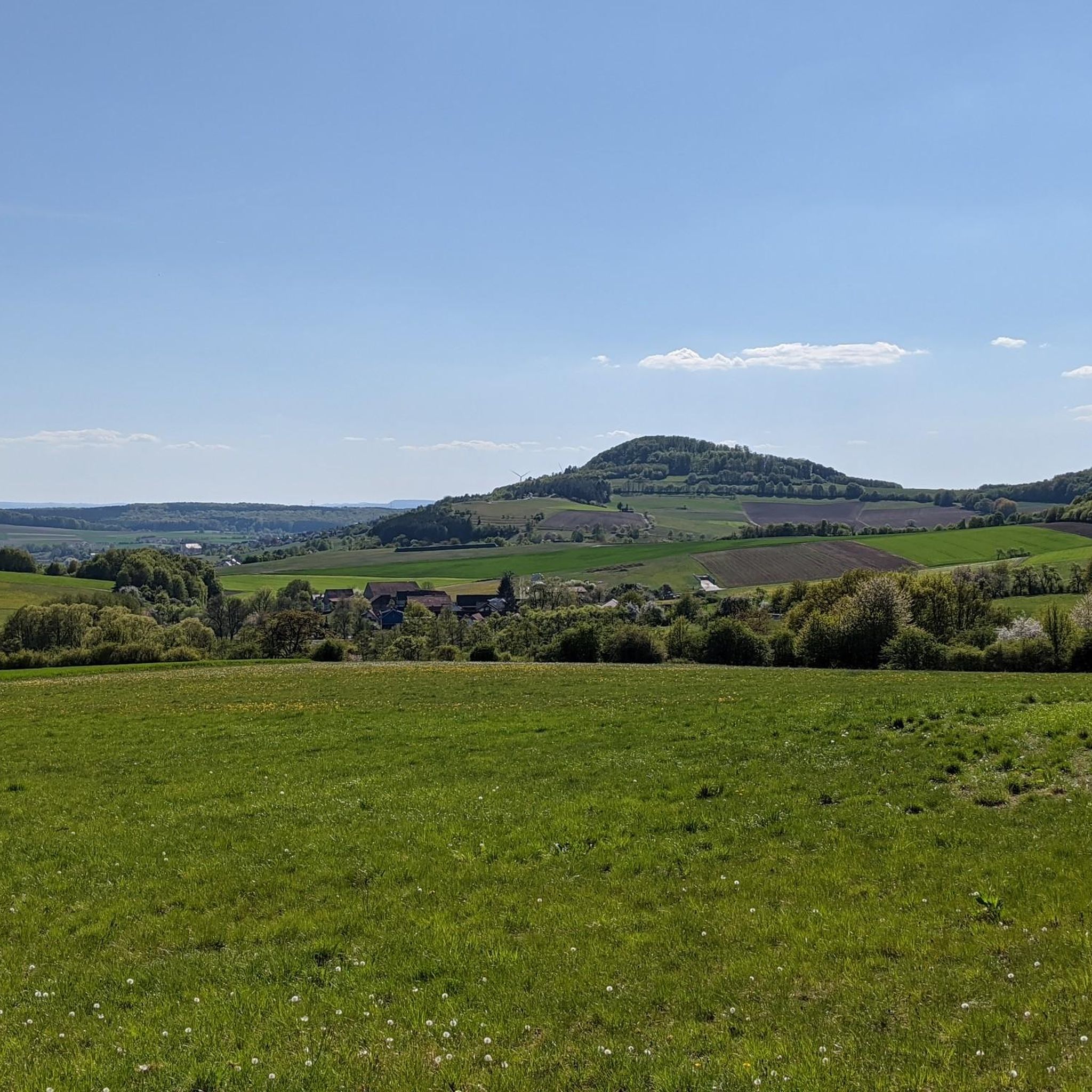
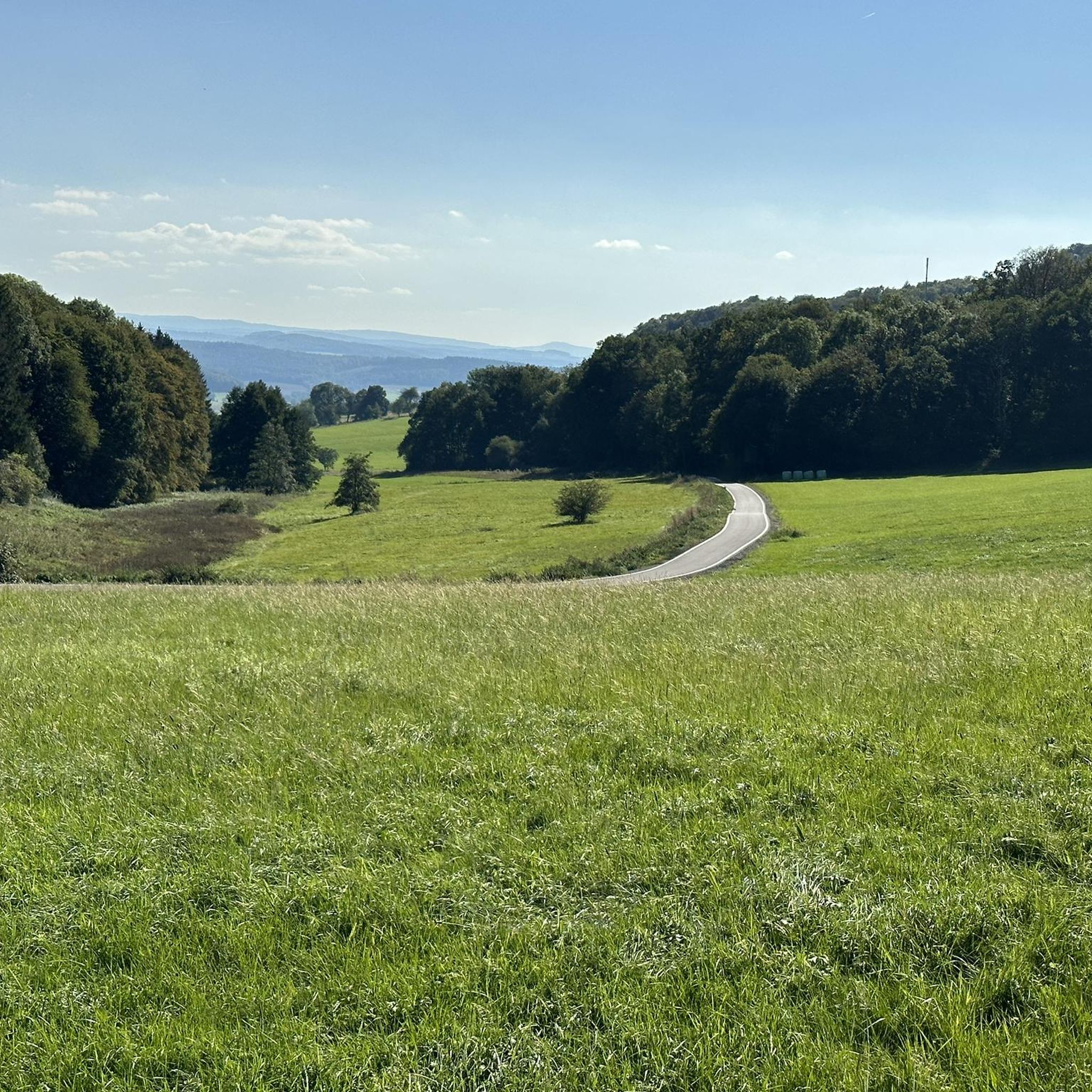
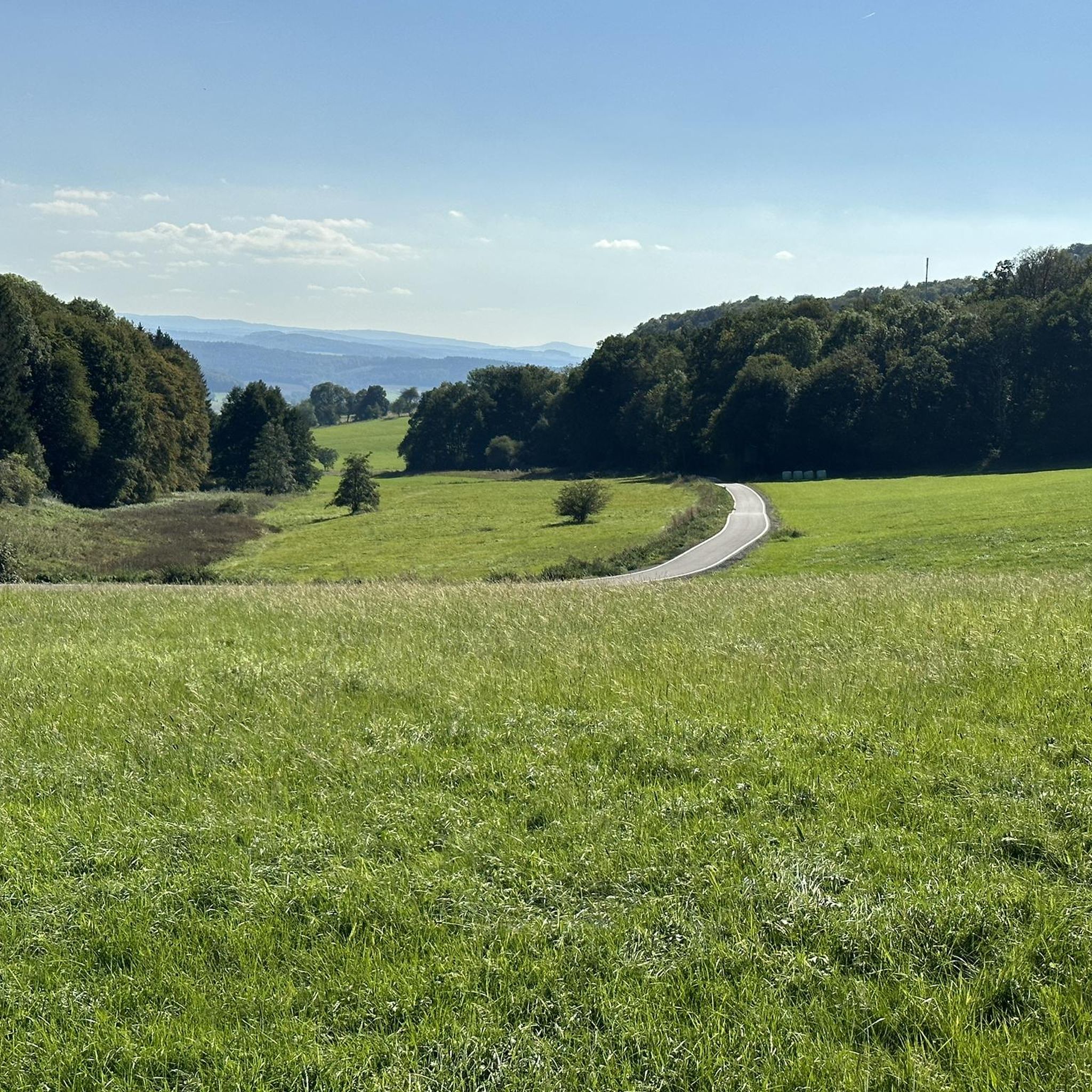
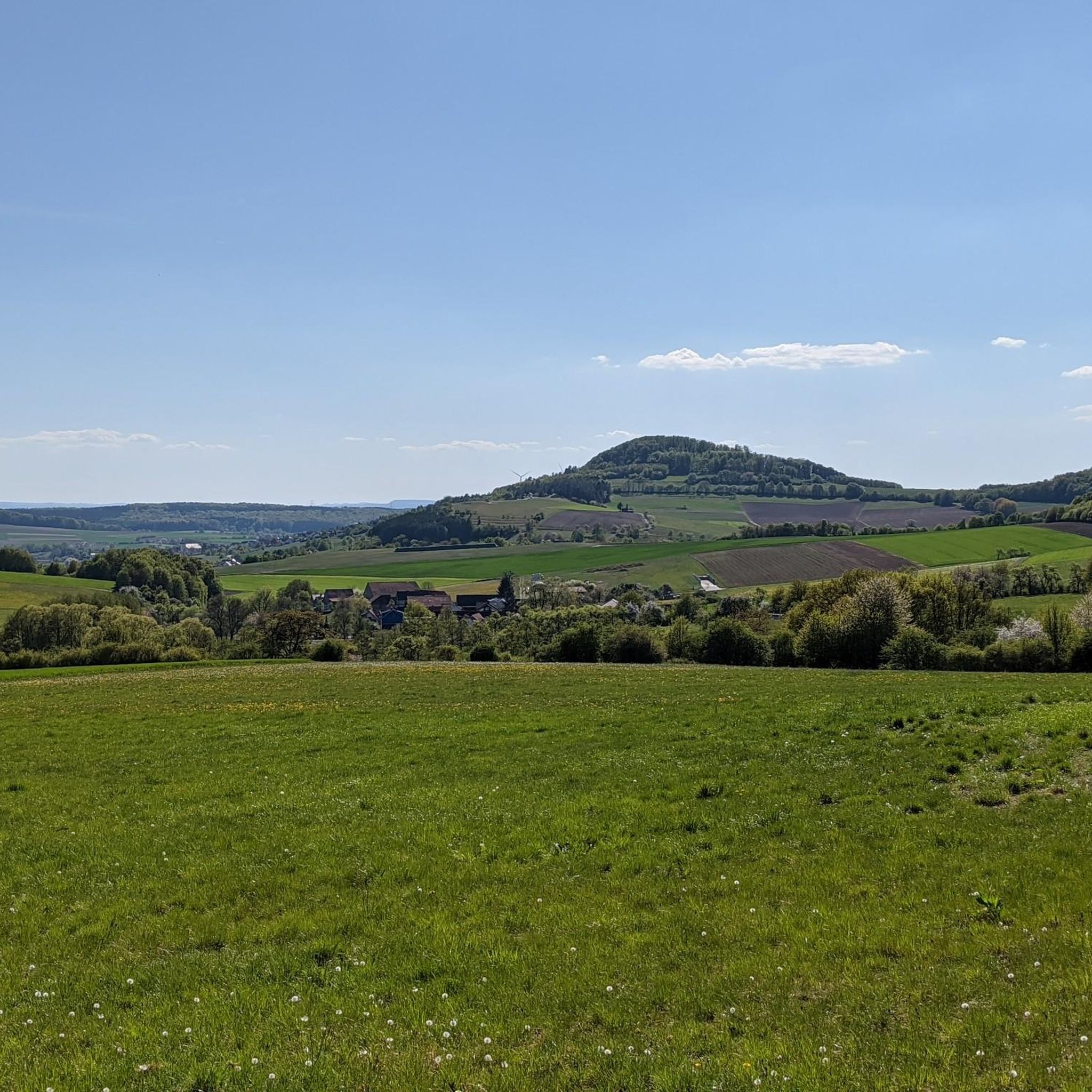
From this rest area, located almost at the highest point of the Aschenbach Cycle Path, you have a magnificent view up to the high Rhön Mountains. The Wasserkuppe and Milseburg are in direct view. The Aschenbach Cycle Path begins in the small village of Morles, picturesquely situated on the well-known Nüsttal Cycle Path. Here, cyclists are greeted by a peaceful, natural setting with rolling hills, well-kept half-timbered houses, and the soothing murmur of the Aschenbach stream, which gives the path its name. The path first passes through the charming village of Mittelaschenbach. Then it continues to the higher-lying village of Oberaschenbach. The climb is rewarded with magnificent views of the surrounding valley. From up here, the view sweeps over the gently rolling hills of the Rhön, which changes color depending on the season. The cycle path finally ends after a rapid, winding descent in the picturesque village of Haselstein. This route not only offers a pleasant bike ride for young and old, but also a wonderful opportunity to fully enjoy the rural beauty of the region. Speaking of enjoyment, after completing this tour, you'll have truly earned a stop at the Café Am Rosenbach in the village of Haselstein. Many people know this café simply by its name "The Café with the Large Slices of Cake."
1
0

The baroque Bieberstein Castle towers over the valley on the mountain and you have a beautiful view of the castle from the cycle path.
1
0
Frequently Asked Questions
How many touring cycling routes are available in Breiter Berg Bei Haselstein?
Breiter Berg Bei Haselstein offers a wide selection of touring cycling routes, with over 300 options available on komoot. These routes cater to various skill levels, including 78 easy, 125 moderate, and 106 difficult trails.
What kind of terrain can I expect on touring cycling routes in Breiter Berg Bei Haselstein?
The terrain in Breiter Berg Bei Haselstein, part of the Rhön Biosphere Reserve, is quite diverse. You'll encounter predominantly forested hills, including woodruff-beech forests, as well as peripheral grasslands, wetlands, and basalt block slopes. The region's varying elevations offer a mix of climbs and descents, and you can expect paths along idyllic river valleys and former railway lines, which are generally well-maintained.
Are there routes suitable for beginners or families in Breiter Berg Bei Haselstein?
Yes, Breiter Berg Bei Haselstein has 78 easy touring cycling routes, making it suitable for beginners and families. These routes often follow gentler paths through the diverse landscapes of the Rhön Biosphere Reserve, allowing for a relaxed cycling experience.
Are there any challenging touring cycling routes for experienced cyclists?
Absolutely. For experienced touring cyclists seeking a challenge, there are 106 difficult routes in Breiter Berg Bei Haselstein. An example is the View of Bieberstein Castle – View of Bieberstein Castle loop from Kernzone des NSG Breiter Berg bei Haselstein, which covers 41.8 km with significant elevation changes, offering a rewarding ride through varied terrain.
Can I find circular touring cycling routes in the area?
Yes, many of the touring cycling routes in Breiter Berg Bei Haselstein are designed as loops, allowing you to start and end at the same point. Examples include the popular Rasdorf Collegiate Church – Bornmühle Pond (Rasdorf) loop from Kernzone des NSG Breiter Berg bei Haselstein and the Blue Bridge over the Ulster River – St. Georg Church, Wenigentaft loop from Kernzone des NSG Breiter Berg bei Haselstein.
What are some scenic viewpoints or natural features to look out for while cycling?
The region is known as the 'land of endless horizons,' offering impressive panoramas. Cyclists can enjoy 'Blick auf die Rhön' (views of the Rhön) from various points. The landscape features open, unwooded peaks, diverse forest communities like woodruff-beech forests and basalt block slopes, as well as grasslands and wetlands. You might also pass by orchards, pastures, and grazing Rhön sheep.
What is the best time of year for touring cycling in Breiter Berg Bei Haselstein?
While specific seasonal data isn't provided, the diverse natural features and open landscapes of the Rhön Biosphere Reserve suggest that spring, summer, and early autumn would be ideal. These seasons offer pleasant weather for cycling through forests, grasslands, and enjoying the expansive views.
Are there any cafes or places to stop for refreshments along the routes?
While specific cafes are not detailed for every route, the Café Am Rosenbach – Haselstein Castle Ruins loop from Kernzone des NSG Breiter Berg bei Haselstein route name suggests there are establishments like 'Café Am Rosenbach' in the vicinity. The broader Rhön region often features local villages and towns with opportunities for refreshments and accommodation.
What do other cyclists say about the touring routes in Breiter Berg Bei Haselstein?
The touring cycling routes in Breiter Berg Bei Haselstein are highly regarded by the komoot community, with an average rating of 4.6 stars from over 2,300 reviews. More than 9,900 touring cyclists have explored the area, often praising the varied terrain, scenic vistas, and the well-integrated network within the Rhön Biosphere Reserve.
Are there any historical landmarks or points of interest to see while cycling?
Yes, the routes often pass by or offer views of historical sites. For instance, the Rasdorf Collegiate Church – Bornmühle Pond (Rasdorf) loop from Kernzone des NSG Breiter Berg bei Haselstein includes the Rasdorf Collegiate Church, and the Blue Bridge over the Ulster River – St. Georg Church, Wenigentaft loop from Kernzone des NSG Breiter Berg bei Haselstein passes by St. Georg Church in Wenigentaft. You can also find routes that offer views of castles, such as the View of Bieberstein Castle – View of Bieberstein Castle loop from Kernzone des NSG Breiter Berg bei Haselstein.
Is the area suitable for dog-friendly cycling?
While specific dog-friendly route designations are not provided, the natural and open character of the Rhön Biosphere Reserve, with its extensive network of paths through forests and grasslands, generally makes it a suitable area for cycling with dogs, provided they are well-behaved and kept under control. Always check local regulations regarding dogs in nature reserves.
How can I access the touring cycling routes by public transport?
The Rhön region is generally well-regarded for its sustainable tourism, which often includes public transport options. While specific public transport links directly to Breiter Berg Bei Haselstein's trailheads are not detailed, the broader Rhön Biosphere Reserve has connections that allow cyclists to access its network. It's advisable to check local bus or train schedules for connections to nearby towns and villages like Haselstein or Rasdorf, which serve as starting points for many routes.
Most popular routes in Breiter Berg Bei Haselstein

Get inspired with the komoot mobile app


Explore more
Browse the best Cycling routes in other regions.
