Attractions and Places To See in Untere Mulde - Top 20
Best attractions and places to see in Untere Mulde include a diverse range of landmarks, natural features, and cultural sites. This region, characterized by the Mulde River, offers a dynamic river landscape with meanders, oxbow lakes, and extensive floodplain forests. It is also home to historical sites and a UNESCO World Heritage Site, making it appealing for nature enthusiasts and those interested in history and architecture. The area provides numerous opportunities for outdoor activities like hiking and cycling.
Best attractions…
Last updated: July 5, 2026
Hunting Bridge over the Mulde
Highlight • Bridge
Translated by Google •
Tip by

Cycle Bridge over the Mulde
Highlight • Bridge
Translated by Google •
Tip by

Sign up now to discover places like this
Get recommendations on the best single tracks, peaks, & plenty of other exciting outdoor places.
Sign up for free
Manor House and Church Muldenstein
Highlight • Historical Site
construction time
12th century or 13th century, 14th century (choir),
17th century (conversion of choir)
architectural style
Romanesque, Gothic, Baroque
Builder / Architect
–
Condition
the Eve …
Translated by Google •
Tip by

Muldenstein Manor House
Highlight • Historical Site
Translated by Google •
Tip by
Untere Mulde River
Highlight • River
Translated by Google •
Tip by
Sign up for free to discover even more attractions in Untere Mulde.
Sign up for free
Already have an account?
Start today with a free account
Your next adventure awaits.
Login or Signup
Tips from the Community

The manor house – situated on the banks of the Mulde River and the Steinberg hill – is part of an estate comprising a church (12th century) and a Franciscan monastery (15th century). During the Reformation, the last monks left the site in 1534. In the following years, the monastery was converted into a knight's estate. At the end of the 19th century, parts of the monastery were demolished, and the present manor house, built in the Historicist style by estate and brickyard owner Arno Meisel, was constructed on its cellars. It combines various architectural styles, from Gothic to Classicism. An imposing wooden staircase from the Gründerzeit (late 19th-century) leads from the entrance hall to the upper floor, where the fireplace room and the Luther Room are tastefully furnished. The grand entrance portal, bearing the Meisel family coat of arms, also dates from this period. The manor house provides an ideal setting for events, exhibitions, and celebrations with approximately 80 guests. Weddings are also possible in the manor house and the church. The estate opens its doors to visitors annually on Open Monument Day or by prior telephone arrangement. Source: https://www.mulderadweg.de/poi/herrenhaus-muldenstein
2
0
The Mulde River runs exclusively in the North German Plain, initially flowing through the Saxon Hills and passing Grimma, Nerchau, and Trebsen. Approximately near Wurzen, along the western edge of which it runs, the Mulde reaches the Elbe-Mulde Lowland. It then flows through Eilenburg and Bad Düben, and shortly thereafter leaves Saxon territory. The Mulde covers the rest of its course to its mouth in Saxony-Anhalt. The Mulde continued to flow west of the two towns of Pouch and Friedersdorf in the area of today's Goitzschesee until 1975. Since then, it has been dammed east of the two towns in the Mulde Reservoir – a former open-cast mine. The Mulde then flows past Muldenstein, Jeßnitz, Raguhn, and Dessau, and flows into the Elbe between Dessau and Roßlau after a distance of 147 km.[2] The "Wilde Mulde" revitalization project for the lower reaches of the river in Dessau was recognized as an official project of the UN Decade on Biodiversity in November 2018.[11][12] Source: https://de.wikipedia.org/wiki/Mulde_(Fluss)
4
0
Although the confluence of the two source rivers occurs approximately halfway along the Mulde's entire course, the Freiberg and Zwickau Mulde already contribute over 80% of the total water volume. This is due, on the one hand, to the shape of the catchment area, which is very wide in the Ore Mountains and narrows towards the Elbe, and, on the other hand, to the higher precipitation and, at the same time, higher proportions of runoff water in the mountains. The shape of the catchment areas also means that the longer Zwickau Mulde is the smaller of the source rivers at the confluence. The dominant hydrological branch of the Freiberg Mulde's river system is the Zschopau. In its upper catchment area, it is a named tributary, the Flöha, which contributes the larger water flow and is thus the Mulde's actual source river. Along this main flow path, the Mulde is approximately 267 kilometers long, and along its longest flow path (the Zwickau Mulde), a good 314 kilometers.[3] The Mulde catchment area has total gradients of 600 to 900 meters for many important flow paths, resulting in exceptionally high flow velocities for northern Germany. The Mulde is sometimes even described as the fastest-flowing river in Central Europe.[10] Source: https://de.wikipedia.org/wiki/Mulde_(Fluss)
4
0
The Mulde, also known as the United Mulde or Vereinigte Mulde, is a left-hand, non-navigable tributary of the Elbe. It originates southeast of Leipzig near Sermuth (Saxony) through the confluence of two large source rivers, the longer Zwickau Mulde and the Freiberger Mulde, which has a larger discharge and drains a larger catchment area. The river's catchment area encompasses large parts of Saxony and, in particular, the vast majority of the northern slopes of the Ore Mountains. With a water flow of approximately 73 m³/s at its mouth,[8] it is the fourth largest tributary of the Elbe. The old form of the Mulde's name, Milda, is translated by onomastics as "the watery one."[9] The word component "Mel," referring to milling, is sometimes associated with the name due to the large number of mills that once operated on the river, which ignores the fact that river names represent the oldest, often Slavic or Celtic, geographical name layer. Source https://de.wikipedia.org/wiki/Mulde_(Fluss)
4
0
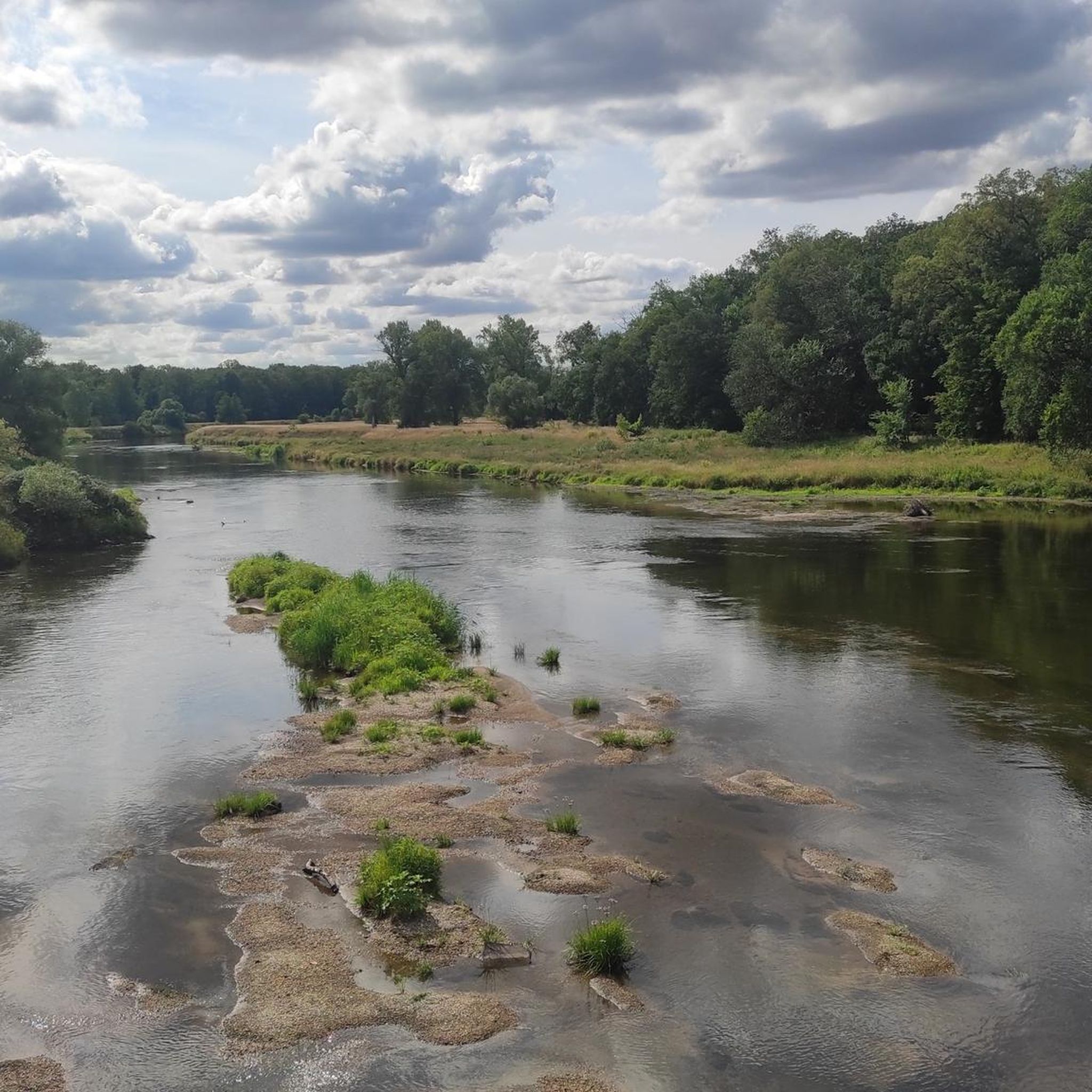
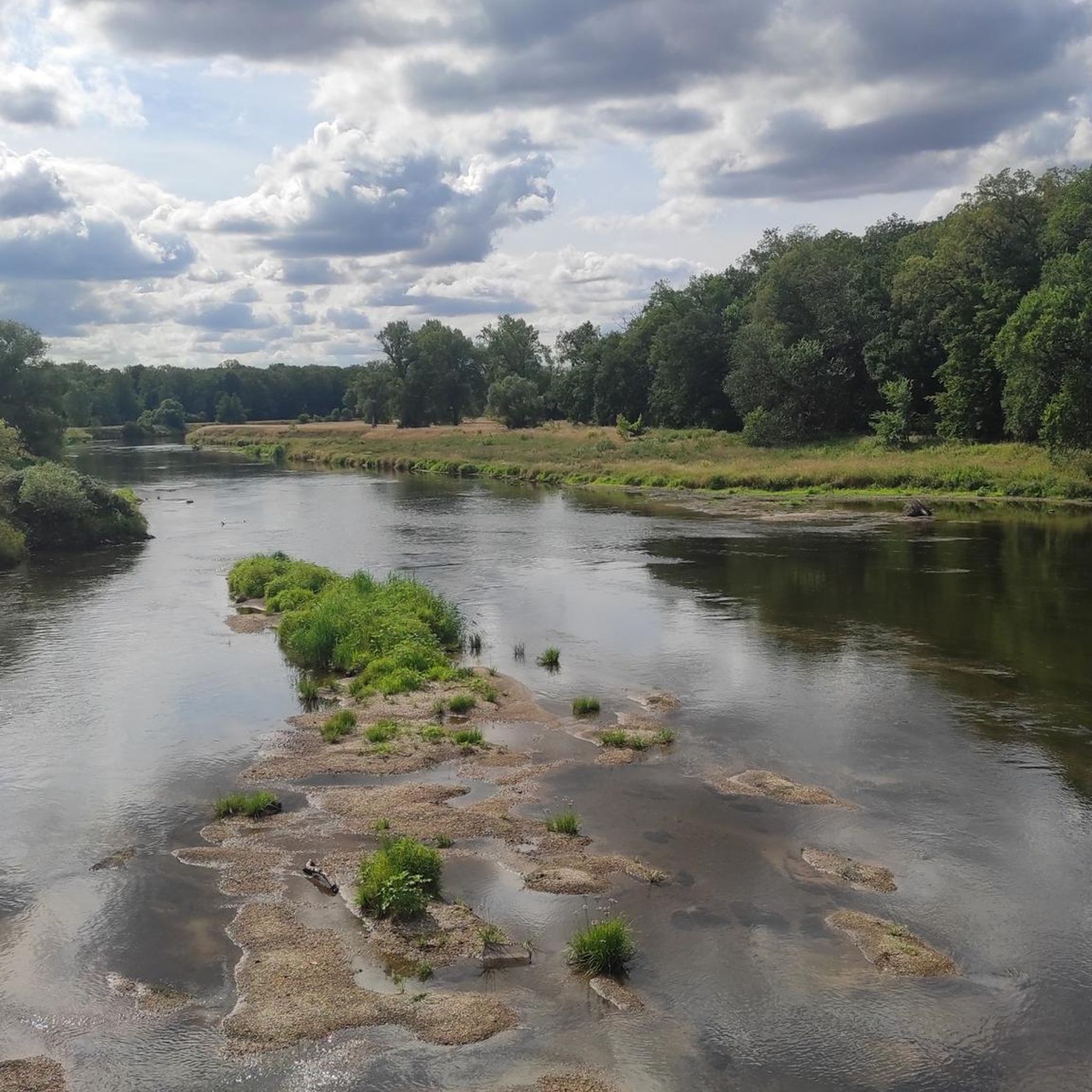
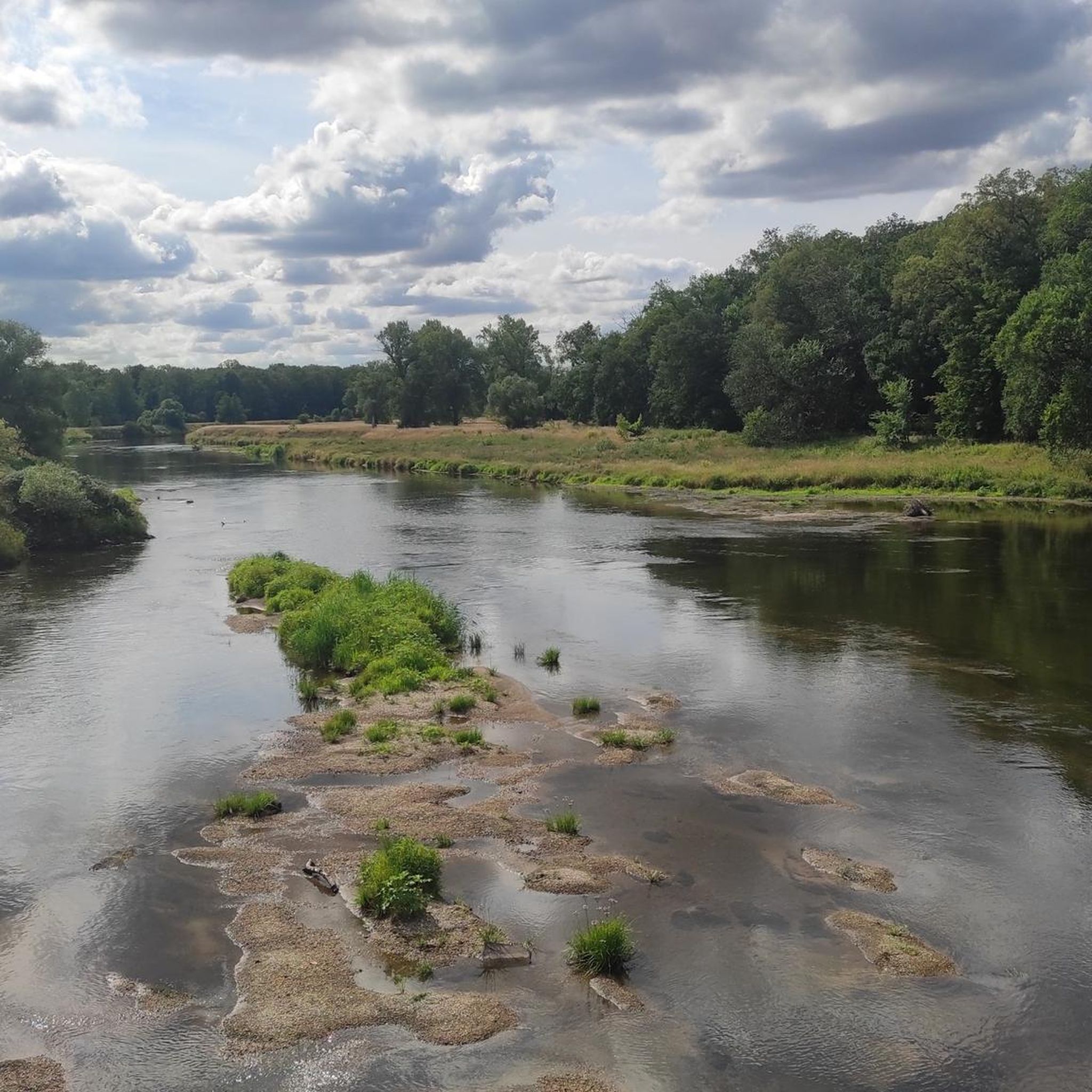
Great view from the bridge to the Mulde
2
0
The Mulde, also known as the United Mulde or Vereinigte Mulde, is a left, non-navigable tributary of the Elbe. It is formed southeast of Leipzig near Sermuth (Saxony) by the union of two large source rivers, the longer Zwickauer Mulde and the Freiberger Mulde, which has a larger discharge and drains a larger catchment area. The river's catchment area covers large parts of Saxony and in particular the vast majority of the northern slopes of the Ore Mountains. With a water flow of almost 73 m³/s at the mouth[8], it is the fourth largest tributary of the Elbe. The old form of the Mulde's name, Milda, is translated by name researchers as the water-rich one.[9] The word component Mel, with reference to grinding, is sometimes associated with the name in view of the large number of mills that used to operate on the river, which ignores the fact that river names represent the oldest, often Slavic or Celtic, geographical name layer. Source https://de.wikipedia.org/wiki/Mulde_(Fluss)
4
0
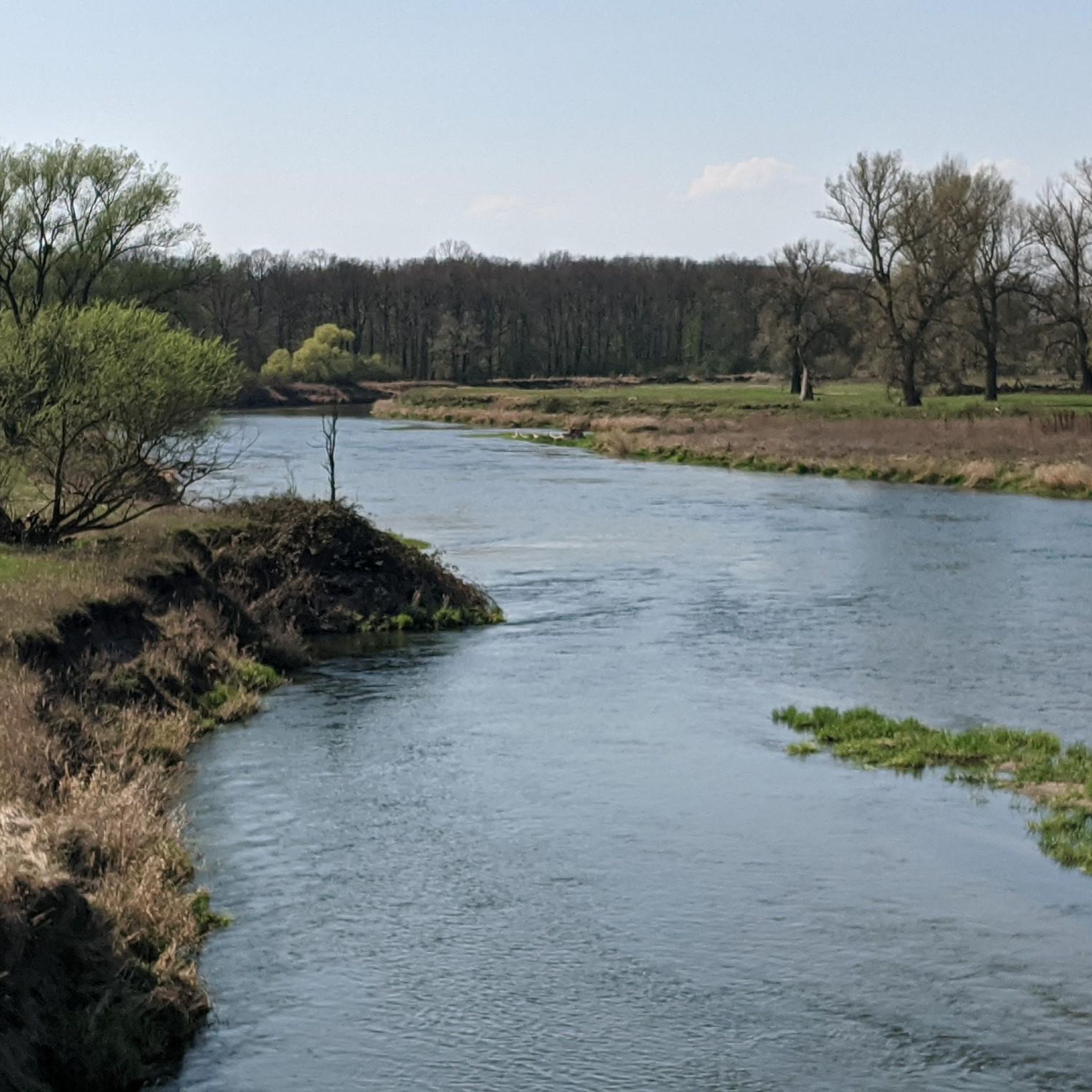
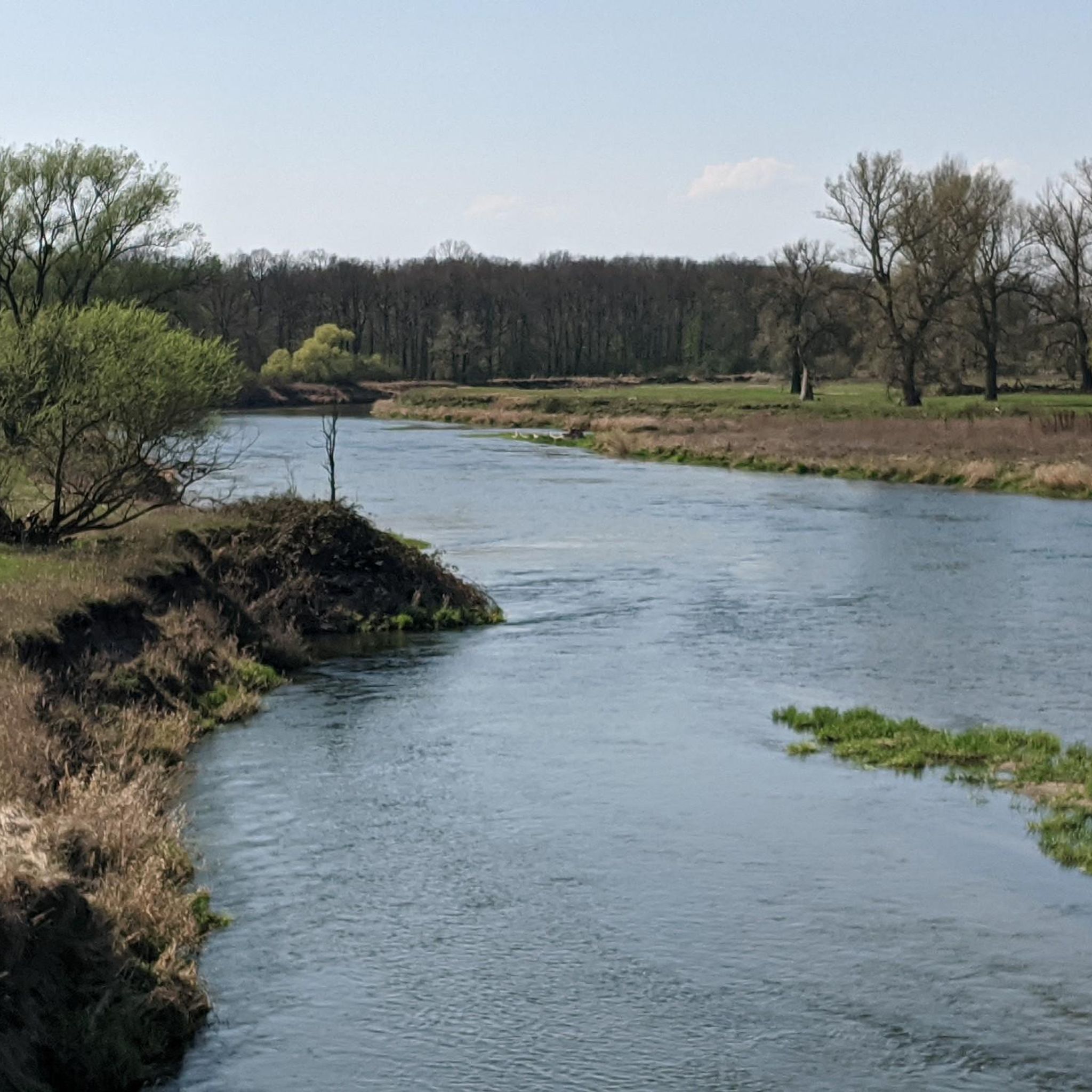
Bridge for cyclists and pedestrians over the Mulde near the A9
3
0
Even more information at http://www.muldenstein.de/herrenhaus/mieten.php
4
0
Frequently Asked Questions
What natural features can I explore in Untere Mulde?
The region is defined by the Untere Mulde River, a non-navigable tributary of the Elbe, known for its dynamic landscape with meanders, oxbow lakes, and extensive floodplain forests. You can also visit the Untere Mulde Nature Reserve, a vital habitat for various wildlife, or enjoy activities at the Muldestausee and nearby Lake Goitzsche. The Dübener Heide Nature Park, adjacent to the Mulde, offers diverse forests and picturesque lake scenery.
Are there any historical landmarks or cultural sites to visit?
Yes, the region boasts several historical and cultural sites. The Manor House and Church Muldenstein showcases a blend of architectural styles, with the manor house available for events. The Dessau-Wörlitz Garden Realm, a UNESCO World Heritage Site, offers meticulously sculpted gardens and interconnected buildings. You can also explore the historic Irrgarten Altjeßnitz, one of the largest baroque mazes, and the nearby Bauhaus Dessau and Meisterhäuser Dessau.
What outdoor activities are popular in the Untere Mulde region?
Untere Mulde is excellent for outdoor enthusiasts. You can enjoy extensive hiking and cycling routes, including the almost 400 km long Mulderadweg (Mulde Cycle Path) which traverses the floodplains and the Dessau-Wörlitz Garden Realm. Water hiking and canoeing are popular on the Mulde between the confluence of the Freiberger and Zwickauer Mulde and the Muldestausee near Pouch. For specific routes, check out the cycling, easy hikes, and gravel biking guides.
Are there family-friendly attractions in Untere Mulde?
Many attractions in Untere Mulde are suitable for families. The Hunting Bridge over the Mulde is a fun spot where children can observe salmon trout. The Dessau-Wörlitz Garden Realm offers vast spaces for exploration, and the Irrgarten Altjeßnitz provides an engaging maze experience. The numerous easy hiking and cycling paths along the Mulde River are also great for family outings.
Where can I find unique viewpoints in the area?
For impressive panoramic views, visit the Bitterfeld Arch (Bitterfelder Bogen) near Lake Goitzsche. This structure, created by artist Claus Bury, offers unique perspectives of the redeveloped lake landscape. The Hunting Bridge over the Mulde also features two viewing bulges, perfect for observing the river and its aquatic life.
What is the best time of year to visit Untere Mulde?
The Untere Mulde region is particularly appealing from spring to autumn. These seasons offer ideal weather for outdoor activities like hiking, cycling, and water sports. The natural landscapes, including the floodplain forests and gardens, are vibrant and lush during these months. Events at the Muldenstein Manor House or the Dessau-Wörlitz Garden Realm are also more frequent during the warmer seasons.
Can I go hiking near the attractions?
Absolutely. The region offers numerous hiking opportunities. For example, you can find easy routes like the 'Schiller Park Dessau – Hunting Bridge over the Mulde loop from Dessau-Roßlau' or the 'Tannenheger Bridge – Blue Bridge over the Mulde loop from Dessau'. More options are available in the easy hikes guide for Untere Mulde.
Are there any notable bridges in the Untere Mulde region?
Yes, two prominent bridges are the Hunting Bridge over the Mulde in Dessau, known for its viewing bulges and salmon trout observation, and the Wörlitz Bridge, an arched bridge completed in 1894 that is accessible for pedestrians and cyclists.
What is the significance of the Mulde River itself?
The Mulde River is a non-navigable tributary of the Elbe, characterized by a naturally dynamic river landscape. It features numerous meanders, oxbow lakes, gravel islands, and extensive soft and hardwood floodplain forests. It's a crucial part of the Untere Mulde Nature Reserve, providing a vital habitat for various bird species, amphibians, reptiles, beavers, and otters. The river's old name, Milda, translates to 'the watery one'.
What do visitors enjoy most about the attractions in Untere Mulde?
Visitors frequently appreciate the diverse natural landscapes, particularly the dynamic river scenery of the Mulde and the opportunities for outdoor activities like cycling and hiking. The historical sites, such as the Muldenstein Manor House and the UNESCO-listed Dessau-Wörlitz Garden Realm, are also highly valued for their cultural significance and beauty. The community has shared over 760 photos and given more than 2100 upvotes to the region's highlights.
Are there opportunities for cycling along the Mulde River?
Yes, the Mulde River is a prime destination for cycling. The region is home to the almost 400 km long Mulderadweg (Mulde Cycle Path), which offers a scenic route through the Mulde floodplains, the Dessau-Wörlitz Garden Realm, and the Dübener Heide. You can find various routes, from easy to difficult, in the cycling guide for Untere Mulde.
Is the Muldenstein Manor House accessible to the public?
The Muldenstein Manor House, built on the foundations of a 15th-century Franciscan monastery, is available for events and opens its doors to visitors on Monument Open Day. While the adjacent church is not accessible, the manor house itself provides a unique historical experience.
Most popular routes in Untere Mulde

Get inspired with the komoot mobile app


Explore more
Still not found the Highlight you’re looking for? See guides of the top attractions in other regions:
