The best MTB trails in Am Spitzberg
4.7
(74)
259
riders
61
rides
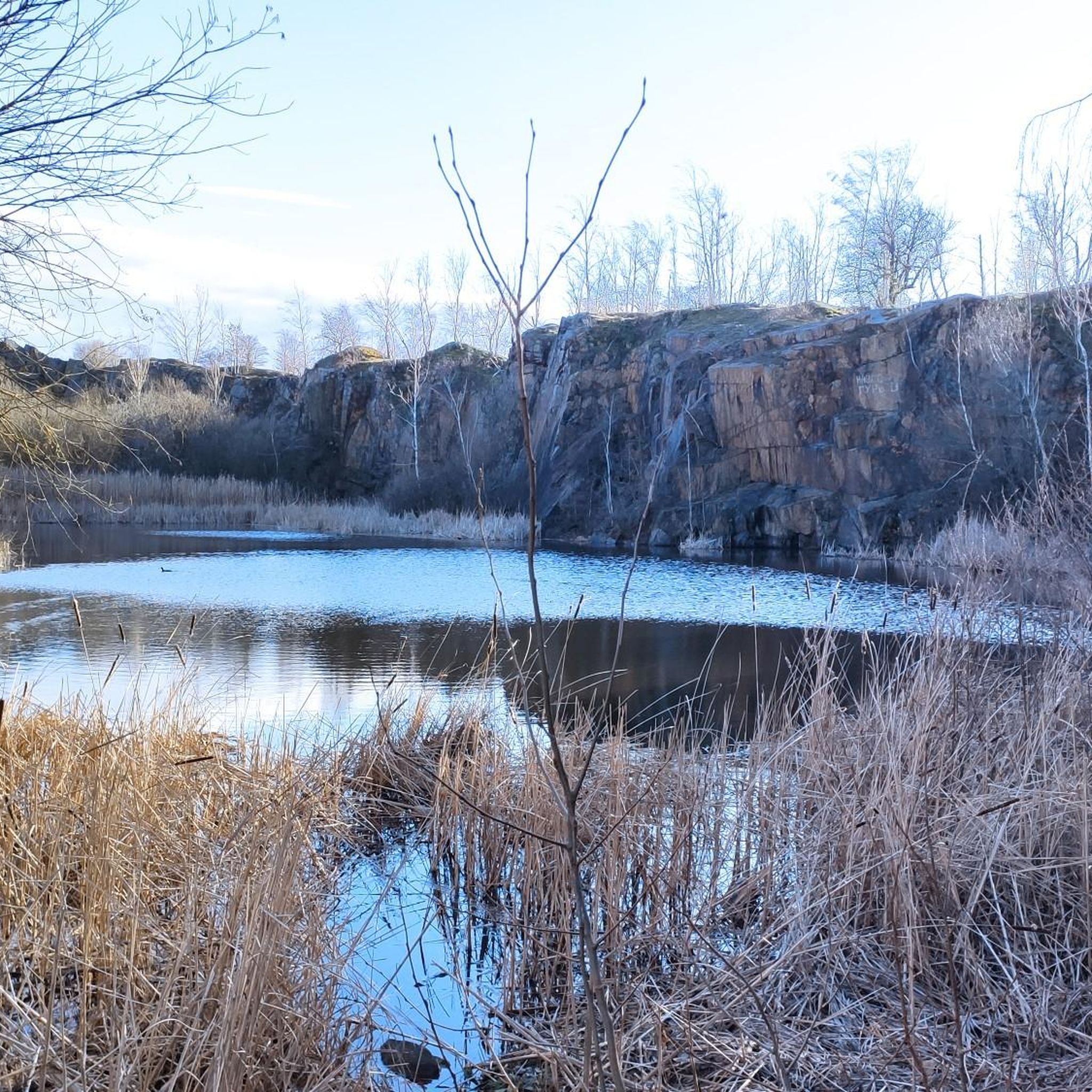
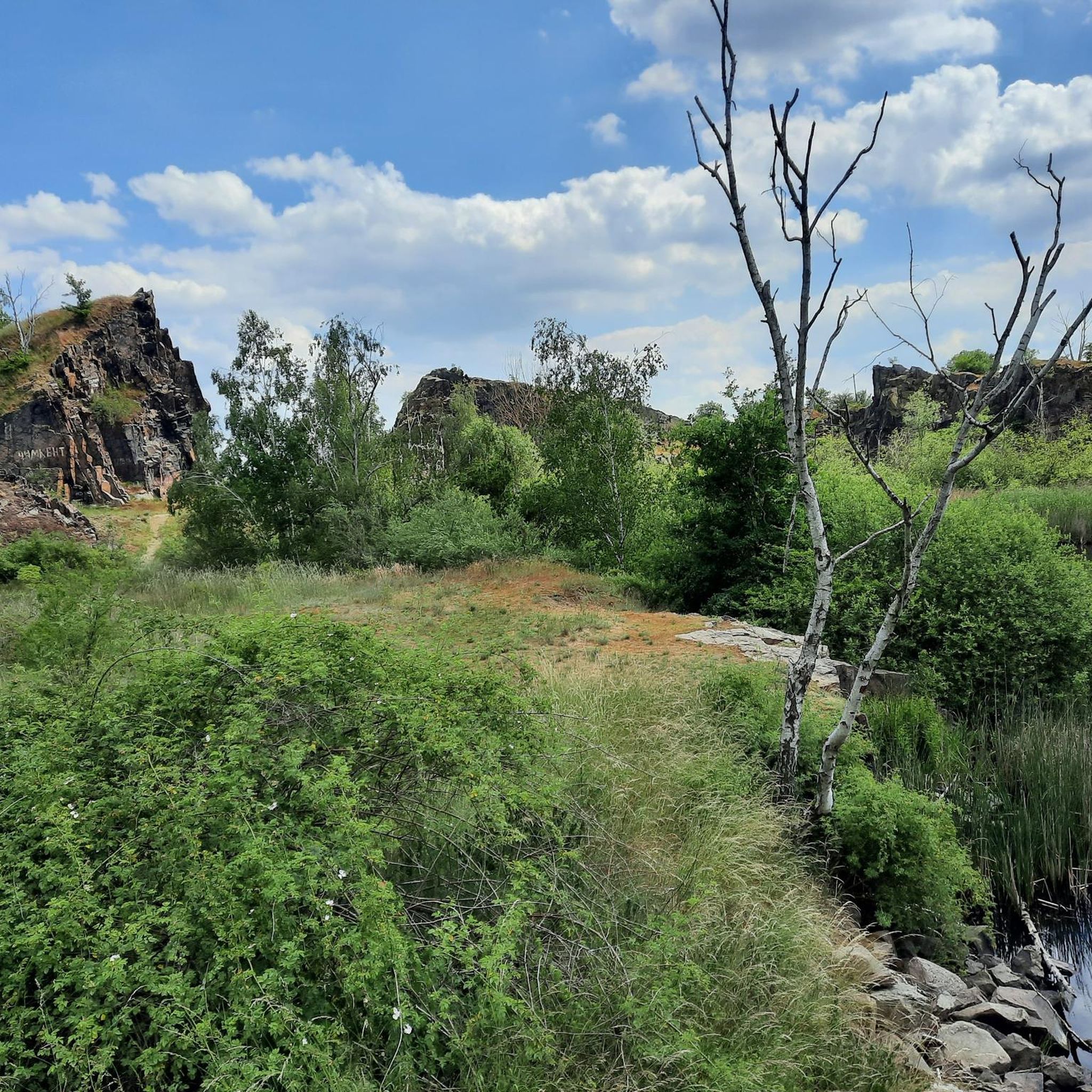
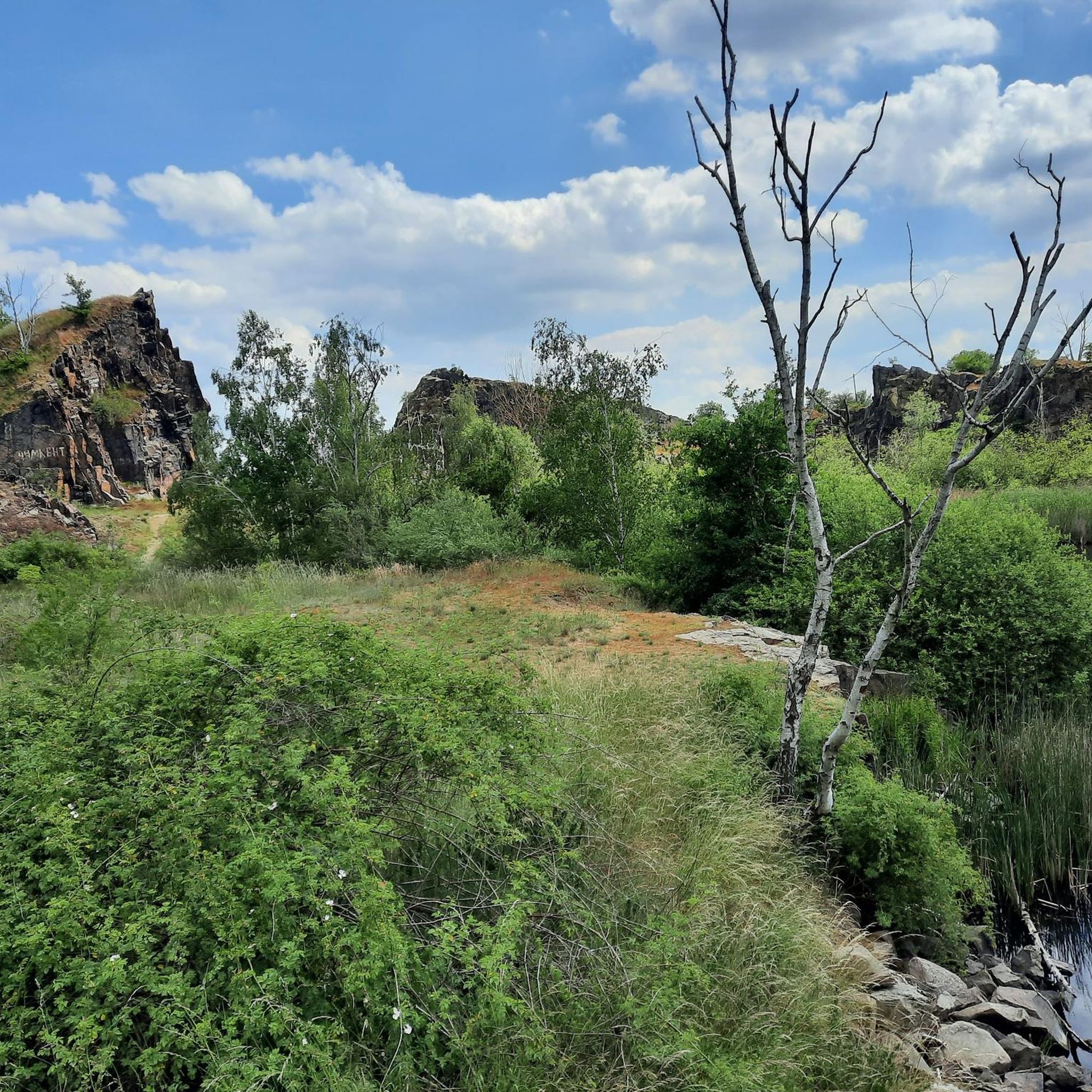
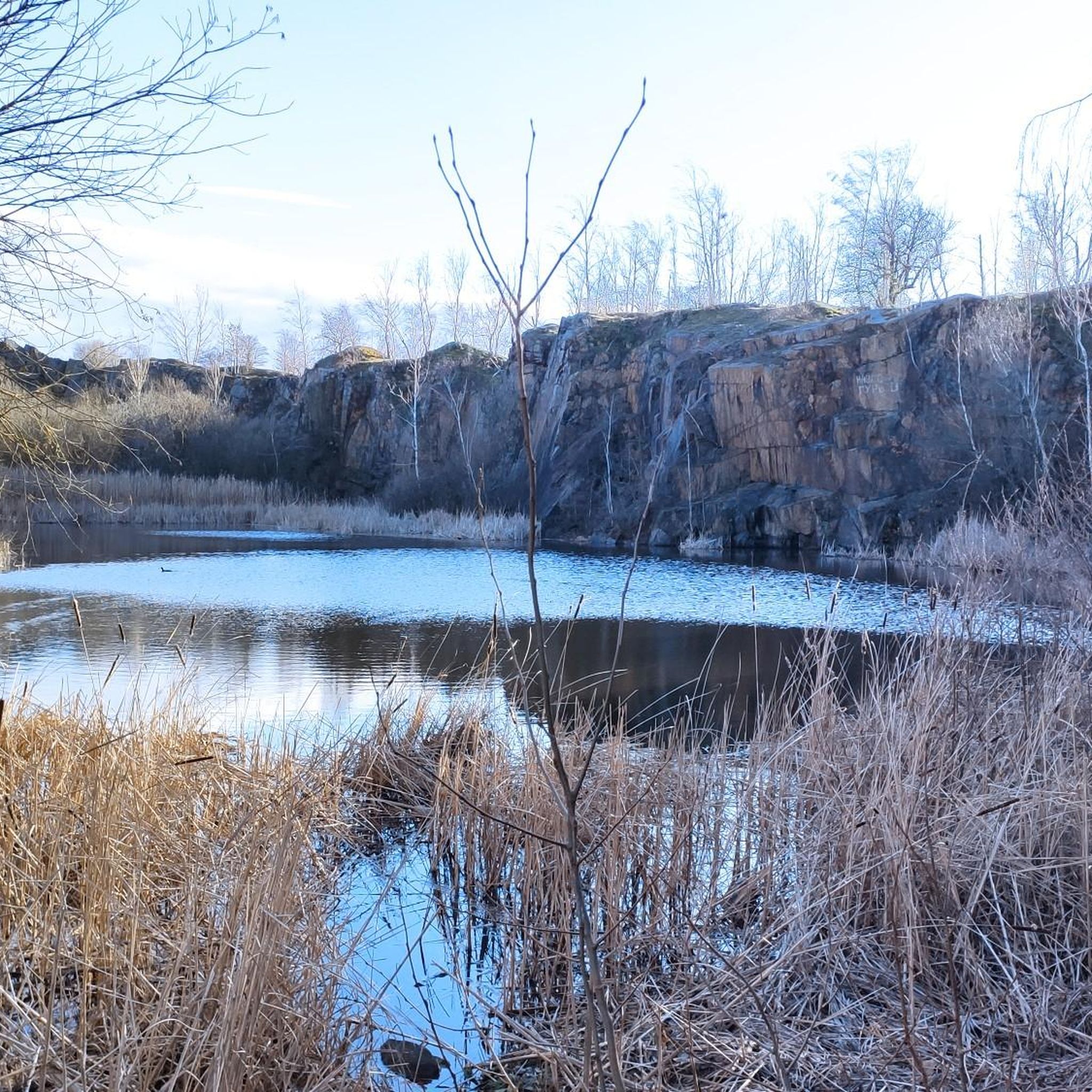
Mountain biking in Am Spitzberg, located in the Landkreis Leipzig region of Saxony, offers diverse terrain shaped by its history. The area features a 160-hectare nature reserve, characterized by a water-filled quarry lake surrounded by steep walls, remnants of former quarrying activities. Beyond these unique post-industrial landscapes, the region includes rolling hills and lush forests, providing varied topography for mountain bike trails. This blend of natural features and historical elements contributes to a dynamic riding experience.
Best mountain bike trails…
Last updated: May 14, 2026
2
riders
Moderate mountain bike ride. Great for any fitness level. Advanced riding skills necessary.
5.0
(12)
37
riders
43.4km
02:23
190m
190m
Moderate mountain bike ride. Good fitness required. Suitable for all skill levels.

Sign up for free
5.0
(3)
17
riders
55.2km
02:57
200m
200m
Moderate mountain bike ride. Good fitness required. Suitable for all skill levels.
5.0
(3)
17
riders
35.0km
02:01
70m
70m
Moderate mountain bike ride. Good fitness required. Suitable for all skill levels.
3.0
(1)
5
riders
57.5km
04:11
350m
350m
Hard mountain bike ride. Good fitness required. Advanced riding skills necessary. Some portions of the route may require you to push your bike.
Get access to more routes and recommendations from other explorers.
Sign up for free
Already have an account?
Our route recommendations are based on thousands of hikes, rides, and runs completed by other people on komoot.
Start today with a free account
Your next adventure awaits.
Login or Signup

Tips from the Community

already filled with water, natural monument
2
0

As state property of the GDR, the palace, which had survived the war largely undamaged, served as a retirement and nursing home until reunification. During this time, the complex began to deteriorate progressively, which was only barely halted. Thanks to the work of a group of Polish restorers since the early 1980s, the palace's garden facade was largely restored to its original condition. In the early 1990s, the municipality sold the palace complex to a private investor named Grimm. It later became a holding company, which is gradually restoring the late Baroque palace complex. To date, the facade of the courtyard, the adjacent orangery and administration buildings, as well as the teahouse in the park, have been restored. Extensive restoration work has taken place inside, including the ceiling and wall paintings, as well as the late neoclassical staircase. Source: https://de.wikipedia.org/wiki/Schloss_Nischwitz
5
0
After further changes of ownership, extensive renovations were carried out on the ground floor in the mid-19th century under the direction of Gustav Adolf Boenisch. During this time, the Baroque staircase was replaced by a prestigious late-classical staircase and adorned with large wall and ceiling paintings. At this time, the Rococo park, designed by Friedrich August Krubsacius, was also transformed into an English landscape garden with tea pavilions, stone statues, and vases. In 1848, the von Ritzenberg family had a family crypt built in the form of a Doric temple in this park. Towards the end of the century, in 1888, Kurt von Zimmermann[3] purchased the Nischwitz Palace and Estate. In the final days of World War II, the von Zimmermann family fled from advancing Soviet troops and was expropriated during the Soviet occupation of 1945–1949. Later efforts by the family to regain their property after German reunification were unsuccessful, except for the return of some furniture. Source: https://de.wikipedia.org/wiki/Schloss_Nischwitz
4
0
The history of the castle dates back to the late Middle Ages.[2] The village, along with the associated manor, was acquired by the von Nischwitz family in 1450, and received its name from them. In 1714, after the old manor had fallen into disrepair, the then owner, Baron von Rackwitz, Chamberlain of the Electorate of Saxony, commissioned the construction of a new castle with appropriate outbuildings and a park. Matthäus Daniel Pöppelmann was the architect. After its completion in 1721, the property changed hands several times over the years. Finally, Count Heinrich von Brühl acquired the property in 1743. Around 1750, he had the property converted into his summer residence in the Rococo style under the direction of the chief architect, Johann Christoph Knöffel. The extensive extensions and renovations created an ensemble that has survived to this day, with its spacious courtyard, orangery, administrative buildings, and the palace park adjacent to the garden. However, much of the original, precious interior furnishings has been lost. The late Baroque wall and ceiling paintings in the garden and ballroom, attributed to the Italian painter Stefano Torelli, are worth seeing. They depict hunting scenes and mythological scenes. During the Seven Years' War, Prussian troops marched into Saxony in 1758. They occupied and plundered the palace. After the death of Heinrich von Brühl, his heirs sold the property to the Leipzig lawyer Philipp Heinrich Lastrop. Source: https://de.wikipedia.org/wiki/Schloss_Nischwitz
5
0
Hotel and Restaurant ... Info at https://www.schloss-wurzen.de/
4
0
The massive building on a rectangular ground plan with its southeastern and northwestern corner towers, as well as the deep, dry moat with its medieval drawbridge, mark the transition from a medieval castle to a late Gothic palace. The spatial layout, the spiral stone, the curtain-arch windows on the towers and on the first floor, and especially the cell vaults with their reticulated figuration in the interior, point to direct connections with Albrechtsburg Palace in Meissen, whose master builder, Arnold von Westfalen, significantly pioneered palace architecture in Saxony. The construction cost 14,000 Reichstaler. With the exception of two destroyed towers, the palace survived various wartime threats and fires. Source: https://de.wikipedia.org/wiki/Schloss_Wurzen
4
0
As early as 995, the Diocese of Meissen acquired Wurzen and the Wurzen region, which became an administrative unit of the Bishopric of Meissen in the 14th century. Bishop Johann VI of Saalhausen, who was striving intensively to reform his diocese, had the castle built between 1491 and 1497 as an additional bishopric outside of Meissen. After its completion, he resided here relatively frequently in addition to his stays at Stolpen Castle. Recent research suggests that the Meissen cathedral master builder Klaus Kirchner, who died in 1494, was the designer of this architecturally significant structure.[1] In 1631, the two towers burned down and were severely damaged. Many valuable details adorn the building, such as the late Gothic niche portal, above which is a heraldic stone. The entrance hall features a high cell vault; in total, there are more than 40 cell vaults of various sizes in the castle. Wurzen Castle was the residence of the bishops of Meissen until 1581. On October 20, 1581, the last bishop, Johann IX von Haugwitz, abdicated. After that, the building served as the seat of the Wurzen Abbey until 1856.[2] Later, the building was used by the district court and, after 1945, by the police. On June 17, 2002, the Wedekind family purchased the property. One year later, on August 17, 2003, the restaurant area (cellar and ground floor of the main building) was completed. In August 2004, the hotel in the adjacent building (the granary) opened with twelve double rooms and one single room. In total, Wurzen Castle encompasses 6,600 m² of land and 3,300 m² of space. Source https://de.wikipedia.org/wiki/Schloss_Wurzen
5
0
Frequently Asked Questions
How many mountain bike trails are available in Am Spitzberg?
Am Spitzberg offers a diverse network of over 60 mountain bike trails. These routes cater to various skill levels, ranging from easy paths to more challenging rides, allowing you to explore the region's unique blend of natural features and historical landscapes.
Are there mountain bike trails suitable for beginners in Am Spitzberg?
Yes, Am Spitzberg has approximately 15 easy mountain bike trails perfect for beginners or those looking for a relaxed ride. An excellent option is the Wurzen Castle – Nischwitz Castle loop from Wurzen, which is 21.3 miles (34.3 km) long and connects historical castles through relatively flat terrain.
What kind of challenges can advanced mountain bikers expect in Am Spitzberg?
For advanced riders, Am Spitzberg offers around 10 difficult mountain bike trails. These routes often feature the varied topography resulting from the area's former quarrying activities, including steep sections and natural features. The Schildberg Tower – Wittes Quarry loop from Wurzen, for example, is a 35.7 miles (57.5 km) trail that leads through varied and demanding terrain.
What kind of terrain will I encounter on mountain bike trails in Am Spitzberg?
The terrain in Am Spitzberg is quite varied, shaped by its history as a former quarry and its status as a nature reserve. You'll find rolling hills, lush forests, and unique post-industrial landscapes. Expect to ride along paths near the striking water-filled quarry lake with its steep walls, as well as through more traditional forest trails.
Are there any interesting landmarks or viewpoints along the mountain bike trails?
Absolutely. The region around Am Spitzberg is rich with points of interest. You can find stunning views from Spitzberg Near Lüptitz or enjoy the serene Spitzberg Quarry Pond. Another notable spot is the View of Am Spitzberg Conservation Area, offering panoramic vistas of the protected landscape. For a historical touch, you might encounter the Platz der Freiheit Memorial.
Are there mountain bike routes that feature lakes or rivers?
Yes, several routes incorporate the region's water features. For instance, the Mühlbach Lake – View of the Mulde River loop from Wurzen offers scenic views of the Mulde River and surrounding landscapes. Another option is the Lake Moritz – Gattersburg Suspension Bridge loop from Wurzen, which takes you past Lake Moritz.
What do other mountain bikers enjoy most about the trails in Am Spitzberg?
The mountain bike trails in Am Spitzberg are highly rated by the komoot community, with an average score of 4.6 stars from over 70 reviews. Riders often praise the diverse terrain, which combines natural beauty with the unique character of the former quarry landscapes, offering a dynamic and engaging riding experience for various skill levels.
Are there any mountain bike routes that pass through wetlands or forests?
Yes, the region's lush forests and natural areas are a significant part of the riding experience. The Wetland in Planitzwald – Trebsen Castle loop from Wurzen is a great example, taking you through the Planitzwald wetland and offering a blend of natural scenery and historical sites.
Can I find circular mountain bike routes in Am Spitzberg?
Many of the mountain bike trails in Am Spitzberg are designed as loops, providing convenient starting and ending points. This allows riders to explore the diverse landscapes without needing to retrace their steps. You'll find options for various distances and difficulties that are circular.
What is the best time of year to go mountain biking in Am Spitzberg?
While Am Spitzberg offers year-round opportunities, the spring and autumn months generally provide the most pleasant conditions for mountain biking. The weather is typically milder, and the natural scenery, whether blooming or displaying autumn colors, is particularly beautiful. Summer can also be great, but be prepared for warmer temperatures.
Is Am Spitzberg suitable for family-friendly mountain biking?
Yes, Am Spitzberg offers several family-friendly mountain bike options, particularly among its 15 easy trails. These routes are generally less technical and cover shorter distances, making them suitable for families with children or those looking for a more relaxed outing. Always check the specific route details for elevation and terrain to ensure it matches your family's ability.
Most popular routes in Am Spitzberg
Most popular attractions in Am Spitzberg

Get inspired with the komoot mobile app


Explore more
Browse the best MTB trails in other regions.
