Attractions and Places To See around Grimburg - Top 20
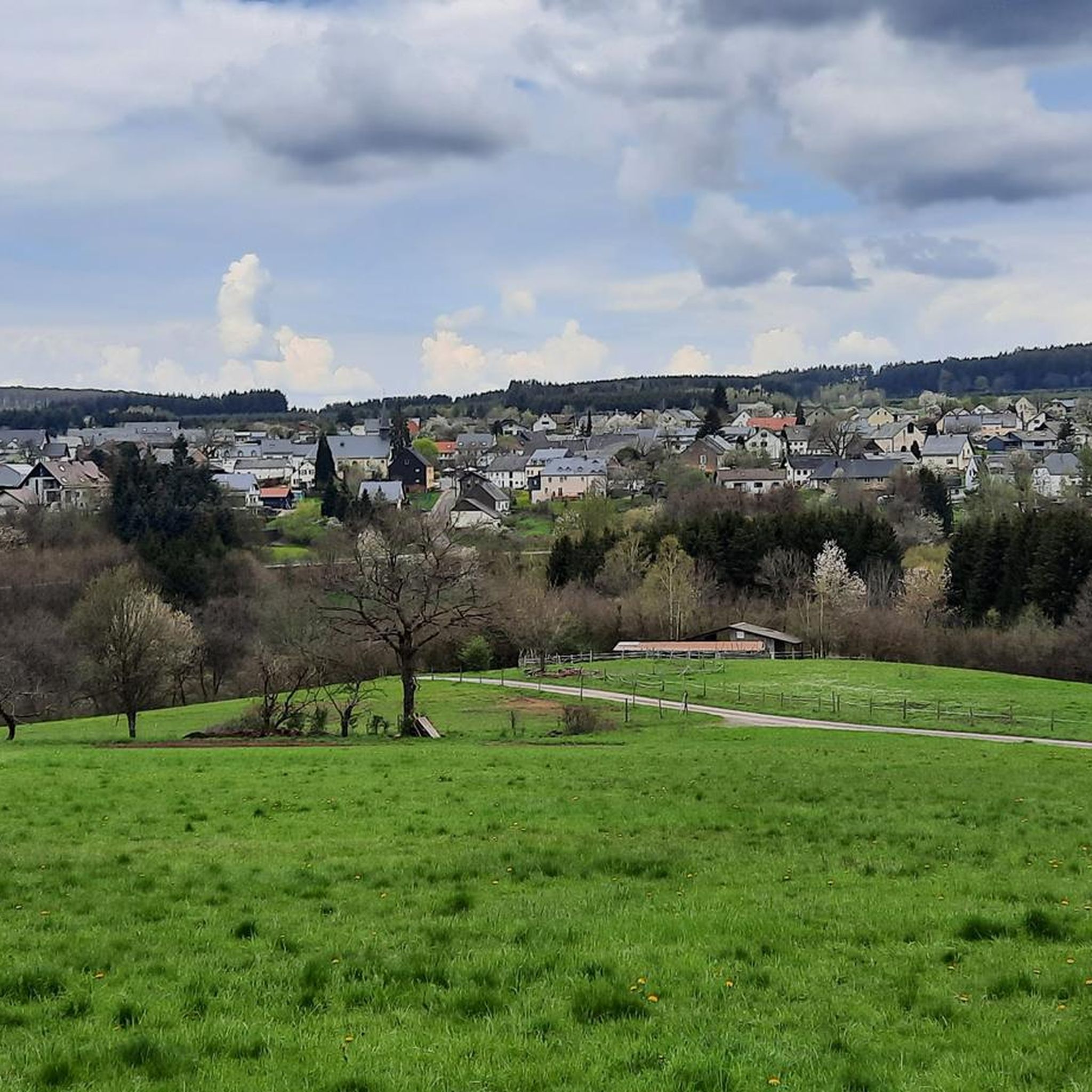
Attractions and places to see around Grimburg include a blend of historical sites and natural landscapes in the Trier-Saarburg district of Saarland, Germany. The area is characterized by picturesque hills, extensive forests, and valleys like the Prims and Wadrill. Grimburg serves as a base for exploring the region's diverse offerings, from ancient structures to natural reservoirs. Visitors can find numerous hiking trails that traverse varied terrain.
Best attractions and places to see around Grimburg
- The most popular attraction is Stone…
Last updated: May 25, 2026
Stone Steps on the Celtic Ring Wall (Hunnenring)
Highlight • Historical Site
Be careful the steps are uneven!
Translated by Google •
Tip by

Dollberg – Highest point in Saarland
Highlight • Summit
The incredible 'silence' of nature and the fairytale character of the immediate surroundings make this summit - which …
Translated by Google •
Tip by

Sign up now to discover places like this
Get recommendations on the best single tracks, peaks, & plenty of other exciting outdoor places.
Sign up for free
Celtic Ring Wall (Hunnenring) Otzenhausen
Highlight (Segment) • Historical Site
Even today the following …
Translated by Google •
Tip by
Züscher Hammer
Highlight • Historical Site
During the Thirty Years' …
Translated by Google •
Tip by

Keller Reservoir
Highlight • Lake
Translated by Google •
Tip by

Sign up for free to discover even more attractions around Grimburg.
Sign up for free
Already have an account?
Start today with a free account
Your next adventure awaits.
Login or Signup

Other adventures around Grimburg

Tips from the Community

Reservoir, which can be comfortably walked around on wide paths (also suitable for strollers), beautiful views along the route included as well as the opportunity to stop off at Hau's am See (it is particularly nice on the terrace directly on the lake) and pedal boat rental included.
1
0

The Dollberg is 695 m above sea level. NN is the highest mountain in Saarland and belongs to one of the prominent mountain ranges in the high forest. These stretch as ridges running from southwest to northeast from the Saar to the Rhine. The ridges consist of quartzite, which in turn has its origin in sandstone. This was finally transformed into quartzite by pressure and high temperatures during the folding of the mountains in the Devonian. Due to its hardness, it is comparatively weather-resistant. As the surrounding, softer rock was eroded, the quartzite deposits were preserved as ridges. A beautiful hiking destination and, as the highest "mountain" in Saarland, of course also a highlight here in the region. https://www.naturpark.org/natur-und-kultur/natur/geologie/geopunkte-devon-permokarbon-nonnweiler-und-zuesch/dollberg
7
0

Traveling to all 16 peaks in the federal states, it is very interesting to see how differently the states deal with their highest peaks. Perhaps the term "natural" fits quite well here
8
0

A quiet place early in the morning with a lot of waterfowl.
1
0

extra The owner of Züsch is mentioned for the first time in 1225 - "Knight Symon von Sussaü" -; he lived in a castle there. Around 1300 it came into the possession of those from Hunolstein, from 1437 to 1776 Züsch belonged to the rear county of Sponheim as "Palatinate-Baden". Züsch was completely destroyed in 1504. The Reformation was introduced before 1569: 20 families lived in Züsch in 1574. Around 1606 the village consisted of two parts - the upper and the lower - with 6 and 7 houses respectively After the 30-year war, the castle and village of Züsch fell victim to complete destruction again in 1635. It was not until the beginning of the 18th century that the population began to increase Territory under Margrave Karl Friedrich The French occupied the area in 1792. It became French territory in 1797 before being assigned to the Kingdom of Prussia in 1815. The in The Lutheran church erected in 1724 was replaced in 1836/37 by the new building of today's Protestant church. Built in 1783/84 in the baroque style, the cath. The church was expanded in 1848/51 and 1910/11 and is now one of the oldest churches in the area. In 1972 the 750th anniversary of the town was celebrated. Source: text information board Zurich hammer "Only 3.5 kilometers from the dam is the Züscher Hammer, a particularly impressive testimony to the pre-industrial history of the Hochwald. There was already a flourishing iron industry in the area before the Thirty Years' War. The largest one was built in Züsch at the beginning of the 17th century Ironworks of the Hunsrück On the initiative of the "Züscher Hammer" association, the old hammer mill was reconstructed and put into operation in 2001. Together with the remains of the wall of a former warehouse and the commemorative cross for the first church of the smelter, it conveys a lively impression of the work and life of the people in the woods around today's reservoir." Source: Text and further information https://www.talsperreverband-nonnweiler.de/zuescher-hammer/
19
5

Very beautiful and loving restored facility
8
0

Nice area to rest, there is still an intact mill wheel nearby
7
0
Frequently Asked Questions
What natural attractions can I explore around Grimburg?
Grimburg is surrounded by natural beauty. You can visit Noswendeler Lake, a 6.6-hectare lake that forms the heart of a leisure center, or the beautifully located Keller Reservoir, which has a path along its shore. For panoramic views, head to Dollberg – Highest point in Saarland, a summit hidden within the forest offering a unique sense of tranquility.
Are there historical sites to visit in the Grimburg area?
Yes, Grimburg has a rich history. The prominent 13th-century Grimburg Castle overlooks the Prims valley, offering guided tours and breathtaking views. You can also explore the Stone Steps on the Celtic Ring Wall (Hunnenring), an impressive historical site with a great view from above its huge ring structure. Another notable historical location is the Züscher Hammer, a former ironworks that was once the largest in the Hunsrück region.
What kind of hiking opportunities are available near Grimburg?
The area around Grimburg is excellent for hiking, with landscapes featuring extensive forests, fields, and meadows, particularly in the Wadrill and Engbach valleys. The Saar-Hunsrück Climb, a premium long-distance hiking trail, runs directly through Grimburg. For specific routes, you can find various options, including easy hikes like the 'Grimburg Castle Tower – Grimburg Castle loop' or moderate trails such as the 'Ascent to Grimburg Castle – Grimburg Castle loop'. More details on these and other routes can be found in the Hiking around Grimburg guide.
Are there easy hiking trails suitable for beginners or casual walkers?
Absolutely. Grimburg offers several easy hiking trails perfect for a relaxed outing. Examples include the 'Grimburg Castle Tower – Grimburg Castle loop' (3.7 km) and the 'Mount of Olives Chapel – Wadrill Bridge loop' (4 km). These routes allow you to enjoy the scenic surroundings without strenuous effort. You can explore more easy options in the Easy hikes around Grimburg guide.
What cycling routes are available around Grimburg?
For cyclists, Grimburg and its surroundings offer diverse road cycling routes. You can find options ranging from easy to difficult, such as the 'Rail Trail Sankt Wendeler Land – Nonnweiler Railway Cycle Path loop' (22 km) or more challenging rides like the 'Moselle Riverside Cycle Path – Ruwer Covered Wooden Bridge loop' (120 km). Discover more routes in the Road Cycling Routes around Grimburg guide.
Are there family-friendly attractions or activities in Grimburg?
Yes, Grimburg offers options suitable for families. Noswendeler Lake is a family-friendly spot with facilities and a leisure center. The Züscher Hammer, a historical ironworks, also offers an engaging experience for all ages with its water wheel and information boards. Additionally, the Freizeitzentrum Peterberg, located nearby in Nonnweiler, provides recreational activities.
What cultural experiences can I find in Grimburg?
Grimburg offers cultural insights through its history and local traditions. The Museum für Volkskunde (Museum of Folklore) in Grimburg showcases traditional handicrafts and historical everyday objects, providing a glimpse into the region's past. The Züscher Hammer also represents a significant piece of industrial heritage.
Is there anything wheelchair accessible around Grimburg?
Yes, the Keller Reservoir is noted for having a path along its shore, making it a potentially accessible option for those using wheelchairs. It's a beautiful spot to enjoy the natural scenery.
What do visitors enjoy most about the attractions around Grimburg?
Visitors frequently appreciate the blend of historical significance and natural beauty. The impressive scale of the Stone Steps on the Celtic Ring Wall (Hunnenring) and the tranquil, fairytale-like atmosphere of Dollberg – Highest point in Saarland are often highlighted. The peaceful paths around reservoirs like Keller Reservoir are also popular for their scenic views and opportunities for longer tours.
Are there any notable viewpoints in the Grimburg area?
Yes, several spots offer excellent views. Grimburg Castle itself provides breathtaking views of the surrounding Prims valley. The Stone Steps on the Celtic Ring Wall (Hunnenring) offers a great vantage point from above the ancient ring structure. Additionally, Dollberg – Highest point in Saarland, while hidden in the forest, is a summit that provides a unique perspective of the landscape.
When is the best time to visit Grimburg for outdoor activities?
Grimburg's natural beauty can be enjoyed throughout the year. Spring and autumn offer pleasant temperatures for hiking and cycling, with vibrant foliage or blooming landscapes. Summer is ideal for enjoying the lakes and leisure centers. Even in winter, the area offers opportunities for walks, though some facilities might have reduced opening hours.
Most popular routes around Grimburg
Most popular attractions around Grimburg

Get inspired with the komoot mobile app


Explore more
Still not found the Highlight you’re looking for? See guides of the top attractions in other regions:
