Attractions and Places To See around Dierbach - Top 20
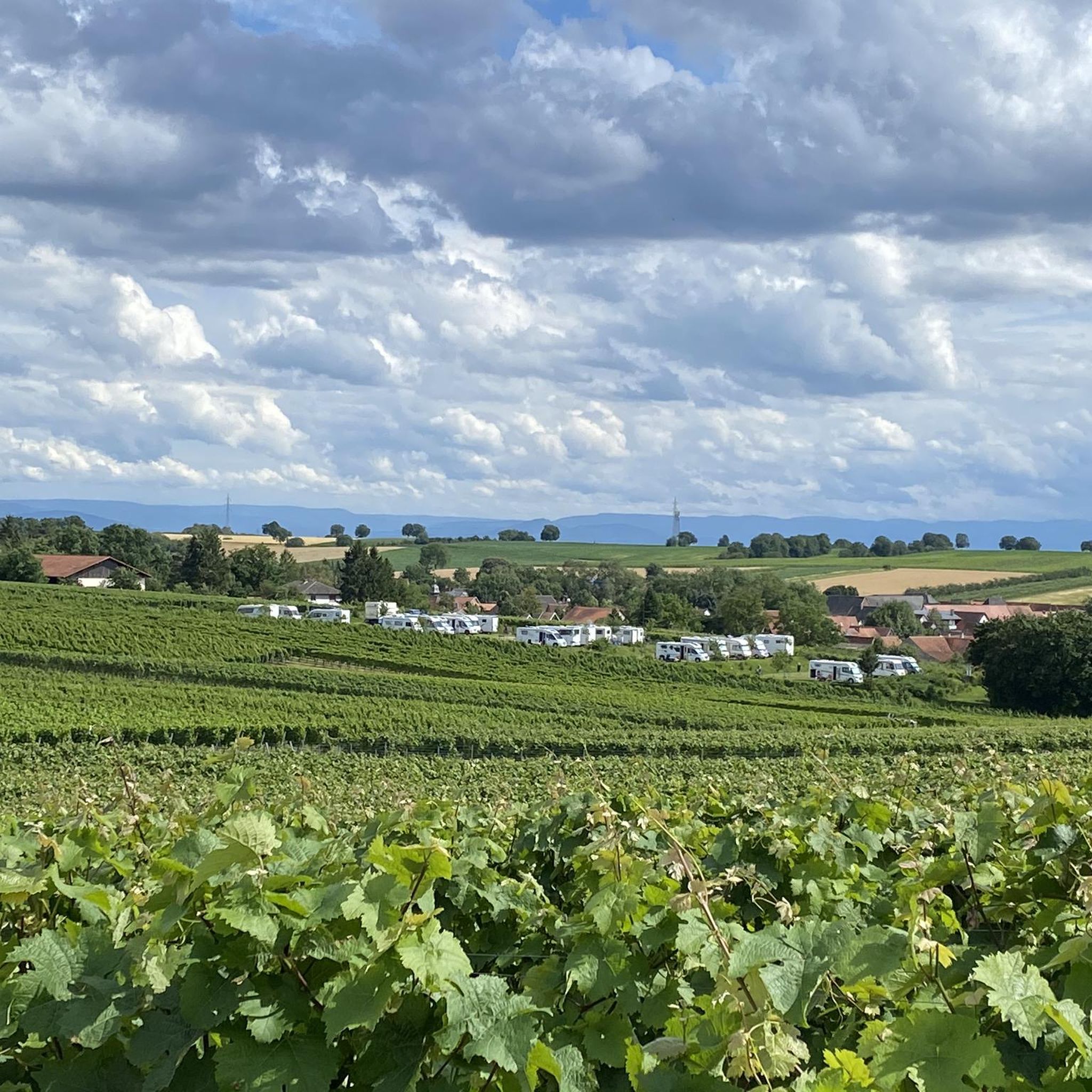
Best attractions and places to see around Dierbach are primarily found in its surrounding region within the Südliche Weinstraße district of Rhineland-Palatinate, Germany. This area is characterized by its charming landscape, extensive vineyards, and a blend of historical and natural features. Dierbach serves as a base for exploring the wider region, which includes parts of the German Wine Route and nearby French Alsace. The landscape offers opportunities for scenic drives, cycling, and hiking through picturesque areas.
Best attractions and places…
Last updated: August 29, 2026
Landeck Castle
Highlight • Castle
Showing Translation
Tip by

Wissembourg
Highlight • Settlement
Translated by Google •
Tip by

Sign up now to discover places like this
Get recommendations on the best single tracks, peaks, & plenty of other exciting outdoor places.
Sign up for free
German Wine Gate (Deutsches Weintor)
Highlight • Monument
Showing Translation
Tip by

Wissembourg Old Town and Canals
Highlight • Historical Site
Translated by Google •
Tip by

Martin's Tower on Treutelskopf
Highlight • Viewpoint
Translated by Google •
Tip by

Sign up for free to discover even more attractions around Dierbach.
Sign up for free
Already have an account?
Start today with a free account
Your next adventure awaits.
Login or Signup
Tips from the Community

The German Wine Gate in Silent-Rechenbach is accessible all year round and offers a beautiful all-round view. It is built in the style of a Roman fort. From a historical perspective, you should know that it was created in 1936 during National Socialism at the same time as the Wine Route. When looking at the Weintor from the French side, the former imperial eagle can still be seen; the obligatory swastika was subsequently knocked out. All too understandable. There are some very good winemakers in the surrounding area and it is highly recommended to try one or two wines.
12
0

Beautiful old town. The best way to explore is on foot, along the Circuit des Remparts (circular path above the city walls). If you don't want to walk, you can take the "Sightseeing Train" through the city. Departure is at the Tourist Information Office.
11
1

Today we "slipped" across the German-French border to Wissembourg, one of the most beautiful towns in Alsace. Wissembourg, also known in German as Weißenburg, is located directly on the German-French border in Alsace. Directly on the banks of the Lauter lies the historic old town with its many half-timbered houses, which still characterize Wissembourg today. Some date back to the late Middle Ages. But the small town in Alsace has a longer history. Above all, the monastery founded in the 7th century, which soon became an abbey, ensured a steadily growing settlement. Between the early 14th and the late 17th century, Wissembourg was one of the Alsatian Imperial Cities. The far-reaching history of the town, with its nearly 8,000 inhabitants, can be experienced on a leisurely stroll through the narrow streets. The old town is still surrounded by remnants of the old city fortifications today. Characteristic of the historic core are the towers of the Abbey Church of St. Peter and Paul. They form the northern starting point of the Romanesque Route, which connects Romanesque architectural monuments in Alsace. The predominantly Gothic Abbey Church of Saints-Pierre-et-Paul is one of the largest places of worship in the Bas-Rhin outside of Strasbourg. Also very worth seeing are the 15th-century Salt House, the 16th-century Maison de l’ami Fritz, and the Neoclassical Town Hall, a central work by Strasbourg city architect Joseph Massol. Connoisseurs also appreciate Wissembourg: there are some excellent restaurants in the town, and the fresh Alsatian wine from the surrounding area is sold in the „Caves de Wissembourg“ wine cellar. Due to its compact size, Wissembourg can best be explored on foot, which we are happy to confirm and recommend. It is really worth it. We were very pleasantly surprised. 😉 https://www.geo.de/reisen/22484-rtkl-wissembourg-eins-der-schoensten-staedtchen-im-elsass
17
0

Small, romantic French town that invites you to linger with its half-timbered houses and many different restaurants. It's always fun to walk through the streets and experience the savoir-vivre of the French up close
9
0
An impressive building from a darker era in German history. It's the beginning or end of the German Wine Route and not far from Wissembourg. You can taste and purchase wine right there.
6
1

On August 4, 1870, Prussian troops defeated the French in the Battle of Weissenburg. Two well-kept monuments - one for the French and one for the German fallen - on the Geisberg on the Wissembourg-Riedseltz road commemorate the many fallen soldiers. Citizens from Wissembourg fought as soldiers on the French side. With the Peace of Frankfurt (1871), Alsace (with Wissembourg) and Lorraine were incorporated into the newly founded German Empire. From June 28, 1871 to 1918, the city was part of the Reichsland Alsace-Lorraine. After the First World War, the city was added to France along with Alsace under the terms of the Treaty of Versailles. During the Second World War from 1940 to 1944/1945, the city and the country were annexed by the German Reich. In March 1945, the city and the surrounding area were captured by US troops as part of Operation Undertone. The city has been part of France again since 1945. Negotiations continued until 1990 regarding sovereignty over the Mundat Forest in the north of Wissembourg in the Palatinate.
13
0

The creation of the Weintor unfortunately goes back to a very dark chapter in German history, but it is a tourist attraction.
8
0
Historical Middle Ages in the picturesque old town.
15
1
Frequently Asked Questions
What historical sites can I visit near Dierbach?
The region around Dierbach is rich in history. You can explore Landeck Castle, a well-preserved medieval ruin above Klingenmünster offering insights into the past and great views. Other notable historical landmarks mentioned in the region research include Madenburg Castle near Waldhambach, Trifels Castle in Leinsweiler, and Burg Berwartstein in Südwestpfalz.
Are there any significant cultural landmarks in the region?
Yes, a prominent cultural landmark is the German Wine Gate (Deutsches Weintor) in Schweigen-Rechtenbach. This impressive 18-meter-high structure marks the beginning of the German Wine Route and was built to promote the region's viticulture. It's a significant symbol of the area's wine-growing heritage.
What is there to see in the nearby French town of Wissembourg?
Just across the border, the historic French town of Wissembourg offers a charming cultural excursion. Its impressive old town, with ancient fortifications and picturesque location on the Lauter and Lauter Canal, is worth exploring. Key sights include the 15th-century salt house and the Abbey Church of Saints-Pierre-et-Paul. Visitors enjoy the French flair, historic alleys, and cafes.
Where can I find the best panoramic views around Dierbach?
For breathtaking panoramic views, head to Martin's Tower on Treutelskopf. Standing at 503m above sea level, this tower provides extensive views of the surrounding Palatinate Forest, including Trifels and Madenburg castles. Another excellent viewpoint is from Landeck Castle, which offers sensational views over the entire Rhine plain.
Are there unique natural attractions near Dierbach?
While Dierbach itself is known for its charming landscape, unique natural attractions in the vicinity include the Wissembourg Old Town and Canals, where the Lauter River and its canals shape the townscape. Additionally, the region is part of the Südliche Weinstraße, characterized by extensive vineyards. For a truly unique experience, Kakteenland Steinfeld, a 'Cactus Land,' is located just 4.1 km from Dierbach.
What hiking opportunities are available near Dierbach?
The Dierbach area offers various hiking opportunities. You can find easy to moderate trails, such as the 'Kneipp Basin at Dierbach – Geiger Winery loop' (5.7 km, easy) or the 'Geiger Winery – Bad Bergzabern Castle loop' (14.9 km, moderate). For more options, explore the hiking routes around Dierbach.
Are there cycling routes suitable for different skill levels around Dierbach?
Yes, the region provides cycling routes for various abilities. Easy road cycling options include the 'Bienwald Road – Bienwaldmühle loop from Schaidt' (34.5 km). For mountain biking, you can find moderate trails like the 'Town Hall – Wissembourg Town Center loop from Barbelroth' (35.8 km) or more difficult ones like the 'Stäffelsberg Trail – Stäffelsberg Tower loop' (52 km). Discover more options on the road cycling and MTB trails around Dierbach guide pages.
Are there family-friendly attractions or activities near Dierbach?
Several attractions are suitable for families. The German Wine Gate and Wissembourg Old Town and Canals are marked as family-friendly. Additionally, the Südliche Weinstraße Wildlife Park, about 11.5 km away, offers opportunities to observe local wildlife, and the Fun Forest GmbH Adventure Park in Kandel provides active outdoor engagement.
What do visitors particularly enjoy about the attractions near Dierbach?
Visitors frequently praise the stunning views, especially from Martin's Tower on Treutelskopf and Landeck Castle. The historical ambiance of the castles and the charming atmosphere of Wissembourg are also highly appreciated. Many enjoy the combination of history, nature, and the opportunity to relax with good food and wine at places like the castle tavern at Landeck Castle or cafes in Wissembourg.
Are there places to eat or relax near the attractions?
Yes, you'll find options for dining and relaxation. Landeck Castle hosts a castle tavern serving regional specialties, and the German Wine Gate also has a restaurant. In Wissembourg, you can enjoy cafes and excellent restaurants in the historic alleys. The Sudpfalz Therme in Bad Bergzabern offers relaxing hot springs.
Are any attractions around Dierbach wheelchair accessible?
Yes, the German Wine Gate (Deutsches Weintor) is noted as being wheelchair accessible, making it an inclusive option for visitors.
Can I explore castles near Dierbach?
Absolutely! The region is home to several historic castles. The most prominent is Landeck Castle, a well-preserved ruin with a castle tavern and stunning views. Other castles in the vicinity include Madenburg Castle, Trifels Castle, and Burg Berwartstein, offering a rich historical experience.
Most popular routes around Dierbach
Most popular attractions around Dierbach

Get inspired with the komoot mobile app


Explore more
Still not found the Highlight you’re looking for? See guides of the top attractions in other regions:
