Attractions and Places To See around Lubań (Rural) - Top 20
Best attractions and places to see around Lubań (Rural) include a diverse range of historical landmarks, significant natural features, and cultural sites. The region is characterized by its medieval heritage and volcanic landscapes. Visitors can explore impressive man-made structures, scenic lakes, and the picturesque Kwisa River. This area offers varied opportunities for outdoor activities and historical exploration.
Best attractions and places to see around Lubań (Rural)
- The most popular attractions is Czocha Castle, a castle that is a medieval…
Last updated: August 25, 2026
Czocha Castle
Highlight • Castle
Translated by Google •
Tip by

Euroregional Cycle Route ER-4
Highlight • Cycleway
Translated by Google •
Tip by

Sign up now to discover places like this
Get recommendations on the best single tracks, peaks, & plenty of other exciting outdoor places.
Sign up for free
Świecie Castle Ruins
Highlight • Castle
Translated by Google •
Tip by

Rajsko Castle
Highlight • Castle
Translated by Google •
Tip by

St. Michael the Archangel Church, Włodzice Wielkie
Highlight • Religious Site
Translated by Google •
Tip by

Sign up for free to discover even more attractions around Lubań (Rural).
Sign up for free
Already have an account?
Start today with a free account
Your next adventure awaits.
Login or Signup

Tips from the Community

Świecie Castle ruins, unfortunately closed and no information. Inside you can see that a renovation has started. Everything is locked, secured with barbed wire. Maybe something will change in the future. Otherwise a very interesting castle.
1
0
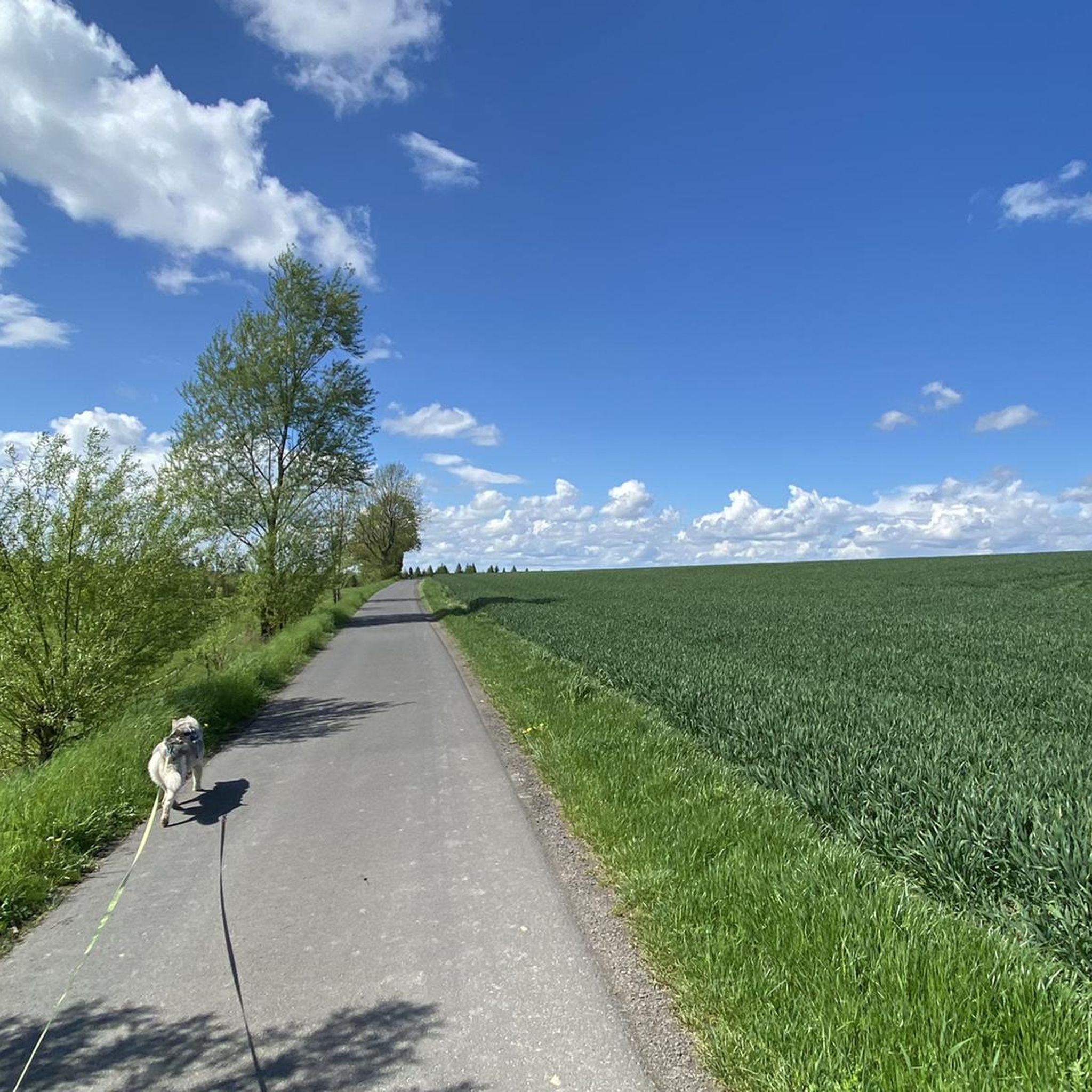
A pleasant, mostly accessible bike path, mostly away from heavy traffic (it runs along small side roads and through small villages) – the R4 is well-signposted. Mostly well-developed, except for a few small sections that aren't suitable for road bikes. Easily manageable with a regular bike or mountain bike.
1
0

The castle was probably built in the 13th or 14th century on the initiative of the Silesian Piasts. Rajsko was certainly intended to be a counterweight to the neighbouring Lusatian castle of Czocha. Rajsko, known in the past as Neidburg or Neidberg, was inhabited by Jobst von Kolditz. This knight was involved in robberies and attacked merchants' camps, which made him the terror of the entire area. The castle was captured by the Hussites and burned down. Over time, the ruins of the stronghold disappeared into the thicket of bushes and trees. In 1862-1863, the castle was rebuilt without preserving any of the period style, by Baron Aleksander von Minutowi. In the interwar period, it housed a youth hostel. Currently, the castle is in private hands and is being rebuilt, and the pop star Ed Sheeran spent his holiday there a few years ago. The castle can be visited or lived in upon request. (source: Olszyna commune website)
1
0

the official name of ER-4 is the Euroregional Bicycle Trail ER-4, marked with new orange signs, but along the way you can also see the old marking with paint on the trees - a red stripe on a white background
1
0
The surface on the Zgorzelec side is a disappointment. I do not recommend using asphalt tires, especially after rain. Zgorzelec from Citronex at ul. Słowiańska/Aleja Lipowa to Łagów and A4 is potholed, uneven and sandy. Better to skip it. You can drive backwards from Citronex behind the hypermarkets at ul. Jaśminowa, and from Łagowaga take ul. There is a great bike path there on Leśna Street. The area around Gronowo and the basalt mine has very leaky asphalt, you can drive it but it shakes a lot. Then to Henryków, great surface. As of spring 2024. In Henryków, the historic Henryk yew tree is about 1,300 years old, is undergoing treatment and does not look impressive because it is surrounded by mesh and scaffolding, but it is still alive.
0
0

A beautiful place. The owners are renovating and rebuilding the castle at their own expense. They have no support from groups responsible for the protection of monuments. It is not surprising that there is a fee for the opportunity to enter and see the ruins, as well as hear stories about the castle, the history of the struggle with reconstruction and plans for what will be available in the castle in the future. But this fee is worth it, because really every złoty is invested in the castle. And the effects of the work of today's castle owners are really visible.
2
0

Very good quality paths and also signs for the ER 4 from Görlitz/Zgorzelec to Lauban/Labàn.
2
1

The ruins of Świecie Castle (German Burg Schwerta, 1937–1945: Schwertburg) are located in the village of Świecie (Schwerta), which since 1945 has belonged to the town and country municipality of Leśna (Marklissa) in the Lubański powiat in Poland, about five kilometers to the south from Leśna on a gneiss rock. Further information can be found at: https://de.m.wikipedia.org/wiki/Burg_%C5%9Awiecie
6
0
Frequently Asked Questions
What historical sites can I explore in Lubań (Rural)?
The region is rich in history. You can visit Czocha Castle, a medieval fortress known for its intriguing history and secret passages. Another historical site is Rajsko Castle, which has a fascinating past of being rebuilt in a neo-Gothic style. Additionally, the historic town center of Lubań itself features several monuments, including the Kramarska Tower, the Renaissance Town Hall (housing the Regional Museum), and the Bracka Donjon with its mineralogical exhibition.
Are there any impressive natural features or viewpoints in the area?
Yes, the Lubań (Rural) area is characterized by its volcanic landscapes and the scenic Kwisa River. You can visit the Leśniańskie Lake Dam and Hydropower Plant, which offers impressive views of the dam and the lake. The region also features basalt quarries with impressive rock columns formed by volcanic activity, and some smaller, flooded quarries have created charming forest lakes.
What cycling routes are available around Lubań (Rural)?
The area offers excellent cycling opportunities, including the Euroregional Cycle Route ER-4, which features good quality, well-signposted paths that largely avoid heavy traffic. For more options, you can explore various road cycling routes such as the 'Horse Stud Agritourism – New Road to Gościszów loop' or 'Road Along the Kwisa River – Kliczków Castle loop'. You can find more details on these routes in the Road Cycling Routes around Lubań (Rural) guide.
Are there family-friendly attractions in Lubań (Rural)?
Many attractions in the region are suitable for families. Czocha Castle, with its secret passages and historical tales, can be an exciting visit for children. The 'Na Kamiennej Górze' Park features didactic paths, including the 'Trail of animated nature,' which winds among ancient trees, offering an engaging outdoor experience for all ages.
Where can I find information about the town of Lubań itself?
The town of Lubań boasts a rich history. You can explore its historic town center, which includes the Kramarska Tower (remains of the 13th-century Gothic town hall), the Renaissance Town Hall (housing the Regional Museum), and the Bracka Donjon, which hosts a permanent West-Sudetic mineralogical exhibition. The town also features ancient Stone Curtains made from local basalt.
What is the Leśniańskie Lake Dam and Hydropower Plant known for?
The Leśniańskie Lake Dam and Hydropower Plant is an impressive man-made monument built between 1901 and 1905. It still utilizes German technology from Siemens-Schuckert and blends well with the landscape. Visitors can enjoy the scenic views and, according to local tips, find freshly smoked mackerel at the upper parking lot.
Can I find any unique geological formations in the Lubań (Rural) area?
Yes, the area around Lubań has a history of basalt exploitation. Former quarries, such as the nepheline quarry, showcase impressive rock columns formed by volcanic activity. Some smaller, flooded quarries have even created charming forest lakes, offering unique natural sights.
Are there any religious or pilgrimage sites nearby?
Lubań is a significant stop on the Polish sections of the Way of St. James, notably featuring the only intersection of three Jakub Routes in Poland. Additionally, the St. Michael the Archangel Church in Włodzice Wielkie is a point of interest in a nearby village.
What kind of hiking trails are available around Lubań (Rural)?
The region offers various hiking opportunities. You can find running trails that are also suitable for hiking, such as the 'Świętoń loop from Lubań' or the 'Kamienna Góra loop from Lubań Śląski'. These trails range from moderate to difficult in intensity. More detailed information on these routes can be found in the Running Trails around Lubań (Rural) guide.
What is the best time of year to visit Lubań (Rural) for outdoor activities?
The Lubań (Rural) area is enjoyable for outdoor activities throughout the warmer months, typically from spring to early autumn. This period offers pleasant weather for cycling on routes like the Euroregional Cycle Route ER-4, hiking, and exploring the natural features like Leśniańskie Lake. Winter activities are also possible, but specific conditions should be checked.
What kind of wildlife can I expect to see in the region?
The Mokradła nad Wilką (Wetlands on the Wilka River) nature reserve, located in the gmina Olszyna, protects the Wilka stream valley, its wetlands, and floodplains. Shaped by beaver activity, this area provides important habitats for various amphibians, birds, and mammals, making it a good spot for wildlife observation.
Are there any less crowded or hidden gems to discover?
Beyond the main attractions, the region offers charming forest lakes formed in old basalt quarries, which can be less crowded and offer serene natural beauty. The numerous agritourism offerings in the villages near Lubań also provide unique and authentic local experiences away from typical tourist paths.
What is the history behind Rajsko Castle?
Rajsko Castle, also known as Neidburg or Neidberg, was likely built in the 13th or 14th century. It was once inhabited by Jobst von Kolditz, a knight known for his robberies. The castle was destroyed by the Hussites in 1431. It was later rebuilt in a neo-Gothic style in the 19th century by Count Alexander of Minutoli and served as a youth hostel in the interwar period. Today, it is privately owned and undergoing reconstruction.
Most popular routes around Lubań (Rural)
Most popular attractions around Lubań (Rural)

Get inspired with the komoot mobile app


Explore more
Still not found the Highlight you’re looking for? See guides of the top attractions in other regions:
