The best running trails around Karczmiska
4.3
(7)
393
runners
86
runs
Jogging around Karczmiska offers access to diverse natural landscapes, including the scenic Kazimierz Landscape Park and areas near the Vistula River. The region features varied terrain, from accessible paths to trails with moderate elevation changes, such as those found in ravines. These running routes provide opportunities to explore the natural beauty of eastern Poland.
Best jogging routes around Karczmiska
- The most popular jogging route is Kwaskowa Góra Ravine Loop from Kazimierz Dolny, a 3.4 miles (5.5 km) trail that…
Last updated: July 4, 2026
1
runners
5.54km
00:38
100m
90m
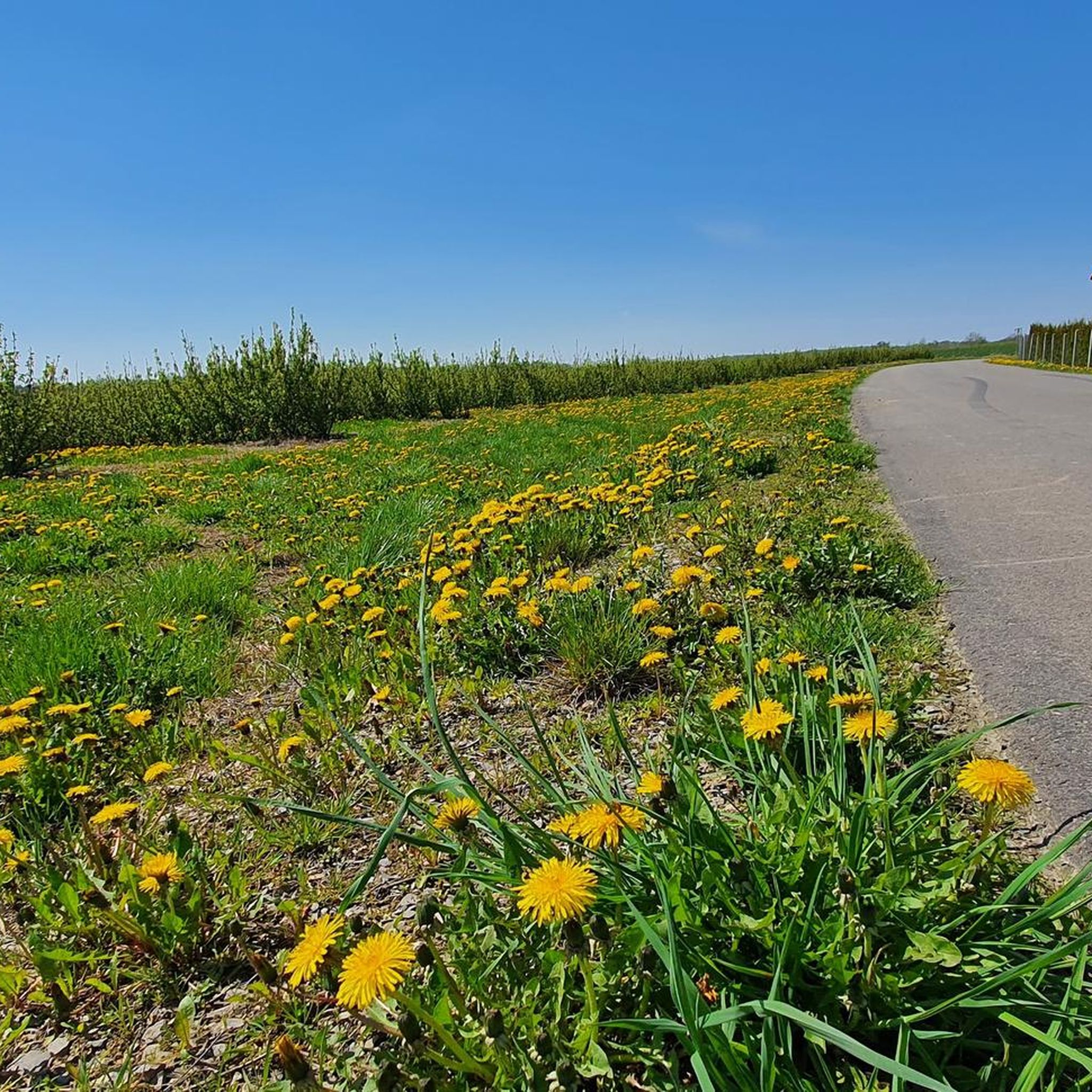
This moderate 3.4-mile jogging loop from Kazimierz Dolny takes you through the scenic Kwaskowa Góra Ravine and other loess formations.
28
runners
8.51km
00:54
70m
70m
Moderate run. Good fitness required. Mostly paved surfaces. Suitable for all skill levels.

Sign up for free
18
runners
9.96km
01:07
180m
180m
Moderate run. Good fitness required. Mostly accessible paths. Some sure footedness required.
9
runners
Moderate run. Good fitness required. Mostly paved surfaces. Suitable for all skill levels.
13
runners
8.06km
00:51
40m
40m
Moderate run. Good fitness required. Mostly accessible paths. Some sure footedness required.
Get access to more routes and recommendations from other explorers.
Sign up for free
Already have an account?
Our route recommendations are based on thousands of hikes, rides, and runs completed by other people on komoot.
Start today with a free account
Your next adventure awaits.
Login or Signup

Tips from the Community

On a Monday morning in December, there is a chance for less crowds. Overall, a cult place. A strong hit on a market day. A must 🔥🔥🔥
1
0

The castle in Kazimierz Dolny is a complex of defensive fortifications from the 13th and 14th centuries, located on Castle Hill. The castle consists of two main parts: the upper castle (also known as the "Baszta" or Łokietek's Tower) and the lower castle. The upper castle is a defensive bergfried tower from the turn of the 13th and 14th centuries, erected at the height of the Vistula River crossing. The tower, with a height of up to 20 meters, originally served as a guardhouse, providing control over the crossing and the collection of customs duties. In later years, it served as a navigation beacon. The entrance to the tower is located six meters above ground level, and its lower storey housed a dungeon. The lower castle was built on the orders of Casimir the Great in the 1340s and was part of a larger defensive complex. Initially built in the Gothic style, built of limestone, it had thick walls and wooden internal buildings. In the 15th century, during the time of the Grot family, the castle was expanded, including a two-storey residential wing and a defensive tower. In the 16th century, the castle underwent another reconstruction in the Renaissance style, thanks to the Firlej family, who added an attic and built the southern wing. During the Swedish Deluge (1655) and a fire in 1663, the castle was seriously damaged. In the 18th century, during the reign of August II the Strong, plans for reconstruction in the palace style were not realized due to the civil war. As a result of further destruction and destruction by the Austrian authorities in 1806, the castle fell into ruin. The castle witnessed historical events, including the Battle of Kazimierz Dolny in 1831 during the November Uprising. In the years 1958-1960, archaeological research was carried out, and the castle was secured and made available to tourists. Today, it is a tourist attraction, preserving the form of a permanent ruin.
1
0
The lower castle in Kazimierz Dolny was built in the mid-14th century on the initiative of Casimir the Great as a Gothic structure. Built of local limestone, it was originally an oval in shape surrounded by massive perimeter walls. It mainly served an administrative function and supported the development of trade on the Vistula. In the 15th century, expanded by the Grot family, it gained new residential wings, a tower and a moat. In the 16th century, during the Firlejs' times, the castle was rebuilt in the Renaissance style according to the design of Santi Gucci, adding, among other things, attics. Destroyed by the Swedes and Rákóczi's troops in the 17th century, it eventually fell into ruin. In the 18th century, there were plans to rebuild it in the palace style, but this did not happen. In the 19th century, it was the site of uprisings, and in the 20th century it was secured as a permanent ruin and opened to the public.
2
0
The market square in Kazimierz Dolny was marked out after the city was founded under Magdeburg law in 1406. It is the central urban point of the city, with an open view of the parish church and the castle ruins. The market square has retained its historical layout with a characteristic undeveloped northern part of the square. For centuries, it has served a commercial and social function. It is currently the tourist heart of Kazimierz, surrounded by historic tenement houses, including Przybyłów, Celejowska and Czarnotów. In its center stands a historic well from the 19th century, one of the symbols of the city.
4
0
The historic well in the Market Square in Kazimierz Dolny is one of the most recognizable symbols of the city. It was built in the 19th century as a street fountain, and in 1913 the architect Jan Koszczyc-Witkiewicz gave it its current appearance - a wooden casing with a characteristic roof and a pazdur. In later years, the well was modernized: an Abyssinian pump was installed, and in the 1980s a new cast iron pump and lighting. The last renovation was carried out in 2012. According to local legend, whoever drinks water from the well will always return to Kazimierz. The water is suitable for drinking and washing fruit bought at the local market. Similar wells are also located in the corner of the Market Square, on Krakowska and Lubelska streets.
3
0
The bronze statue of a dog is located at the market square in Kazimierz Dolny, near the parish church. It was made of bronze in 2000 by sculptor Bogdan Markowski and depicts the dog Werniks, belonging to the painter Zbigniew Szczepanek. The monument commemorates the presence of dogs in the life of the town and artists, especially those associated with the Rynkowa Café. There are many legends and anecdotes surrounding the statue, and tourists customarily stroke the dog's nose for good luck. The monument has become one of Kazimierz's tourist attractions.
2
0
The centre has been operating since 17 August 2012 and is located at Rynek 15. It is open daily from 9:00 to 17:00. You can contact it by phone at (81) 881 07 09. For stays longer than 24 hours, a resort fee applies: PLN 2.00 per day in Kazimierz Dolny and PLN 1.50 in towns within the commune.
2
0
The Church of St. Anne and the Holy Spirit is a historic branch church belonging to the parish of St. John the Baptist and St. Bartholomew. The construction of the church began in 1649, but was not completed until 1671 due to the interruption caused by the "Swedish Deluge". It was erected on the site of the previous chapel of the Holy Spirit. The church represents the Lublin Renaissance style. It has one nave, a semicircular presbytery with a sacristy and vaulted basements. The walls are made of limestone and brick, and characteristic architectural elements include decorative pilasters, pinnacle pinnacles and a bell tower. The interior is decorated with a barrel vault with lunettes and stucco, but the 17th-century equipment was disfigured over time by repainting. Next to the church is a former hospital building, the beginnings of which date back to 1530. The building was expanded in the 17th century, especially after the plague of 1625. Restored after World War II, in the years 1953–1957 it was transformed into a Cultural Center and library.
2
0
Frequently Asked Questions
How many running routes are available in Karczmiska?
Karczmiska offers a wide selection of nearly 50 running routes. These trails cater to various preferences, with options ranging from easy paths to more challenging runs through diverse landscapes.
What kind of terrain can I expect on jogging trails around Karczmiska?
The jogging trails around Karczmiska are characterized by varied terrain, including scenic river valleys, particularly along the Vistula, and the distinctive loess gorges. You'll find paths through the Kazimierz Landscape Park, offering a mix of accessible routes and those with moderate elevation changes.
Are there routes for different fitness levels?
Yes, Karczmiska provides running routes suitable for various fitness levels. While the majority (38) are considered moderate, there are 3 easy routes perfect for beginners or a relaxed jog, and 7 more difficult trails for those seeking a greater challenge.
What do other runners say about the routes in Karczmiska?
The running routes in Karczmiska are highly regarded by the komoot community, holding an average rating of 4.0 stars from over 4 reviews. Runners often praise the natural beauty, especially the unique loess gorges and the tranquil paths along the Vistula River.
Can I find routes that pass through the famous loess gorges?
Absolutely! The region is renowned for its unique loess gorges. You can experience these natural wonders on routes like the Korzeniowy Dół Ravine – Lower castle loop from gmina Kazimierz Dolny. The Korzeniowy Dół Ravine itself is particularly famous for its twisted tree roots, offering a visually engaging path. Other notable gorges like Lipinki Gorge and Na Wiktora Gorge are also part of the area's natural charm.
Are there any longer, more challenging running trails for experienced runners?
For experienced runners looking for a challenge, Karczmiska offers several difficult routes. One such option is the Entrance to Okalski Gorge – Remains of the Vistula Ranch loop from Kazimierz Dolny, which spans over 21 kilometers and features significant elevation changes.
Are there any scenic viewpoints along the jogging paths?
Yes, you can find scenic viewpoints that offer panoramic vistas. The Three Crosses Hill is a prominent viewpoint in the area, providing excellent opportunities to take in the surrounding landscapes while on your run.
Are there any circular jogging routes available?
Many of the routes in Karczmiska are designed as loops, perfect for a continuous run. For example, the Kwaskowa Góra Ravine Loop from Kazimierz Dolny is a popular circular trail that takes you through a ravine landscape.
Are there running routes that follow the Vistula River?
Yes, the Vistula River offers beautiful routes for jogging. A popular choice is the Trail by the Vistula loop from Kazimierz Dolny, which provides a moderate 8.5 km path along the river. Another option is the Kazimierz–Janowiec Ferry – Passenger Shipping Marina loop from Kazimierz Dolny, which also explores riverine landscapes.
What is the best time of year for jogging in Karczmiska?
The Karczmiska area is generally pleasant for jogging from spring through autumn. The natural shade provided by the trees in the loess gorges can make runs more comfortable during warmer months. Local events like the 'Bieg po zdrowie' (Run for Health) often take place in spring or early autumn, indicating favorable conditions during these seasons.
Are there any family-friendly running paths in Karczmiska?
While specific 'family-friendly' designations aren't always explicit, the 3 easy routes available in Karczmiska would be the most suitable for families or those looking for a gentle jog. These paths typically have less challenging terrain and elevation.
Most popular attractions around Karczmiska

Get inspired with the komoot mobile app


Explore more
Browse the best Running Trails & Routes in other regions.
