Attractions and Places To See around gmina Krasnobród - Top 20
Best attractions and places to see around gmina Krasnobród include a diverse range of significant landmarks, natural features, and cultural sites within the Roztocze region of Poland. The area is characterized by forest-covered limestone hills, such as Wapielnia, and is a source of several rivers and streams. Visitors can explore historical sites, unique religious buildings, and protected natural areas. gmina Krasnobród offers a variety of points of interest for those seeking exploration and recreation.
Best attractions and places to see…
Last updated: August 25, 2026
Zwierzyniec Brewery
Highlight • Historical Site
Translated by Google •
Tip by

Zamoyski's Summer Residence in Zwierzyniec
Highlight • Historical Site
Translated by Google •
Tip by

Sign up now to discover places like this
Get recommendations on the best single tracks, peaks, & plenty of other exciting outdoor places.
Sign up for free
Zamoyski Paper Mill Ruins
Highlight • Monument
Translated by Google •
Tip by

Echo Ponds Beach
Highlight • Beach
Translated by Google •
Tip by

Church of Saint Stanislaus the Bishop and Martyr in Górecko Kościelne
Highlight • Religious Site
Its history dates back to the 17th century and is associated with the cult of St. Stanislaus, bishop and martyr, …
Translated by Google •
Tip by

Sign up for free to discover even more attractions around gmina Krasnobród.
Sign up for free
Already have an account?
Start today with a free account
Your next adventure awaits.
Login or Signup
Popular around gmina Krasnobród

Other adventures around gmina Krasnobród

Tips from the Community

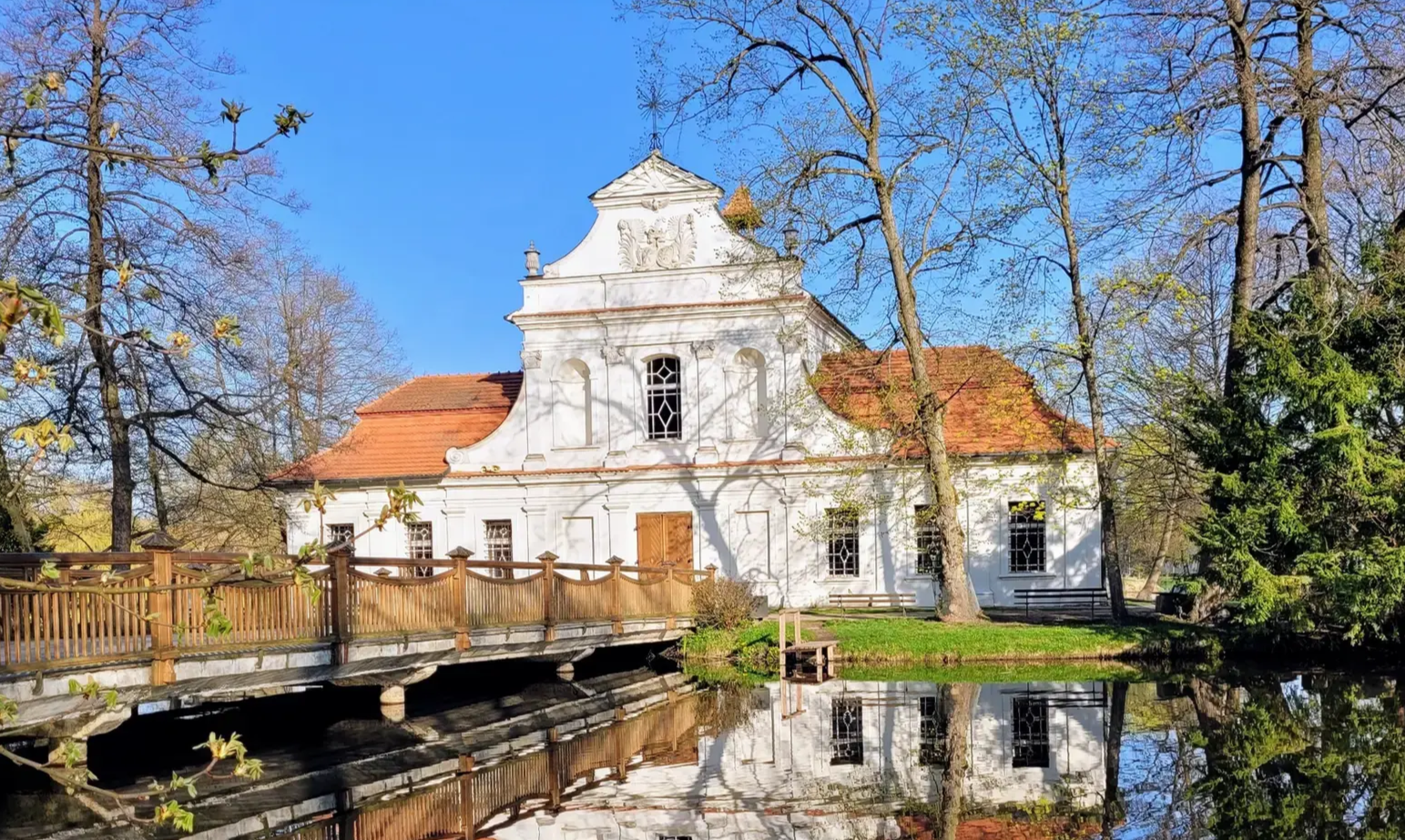
In 1593, Jan Zamoyski purchased the Szczebrzeszyn estate. There, near the village of Rudka, in the valley of the Wieprz River and the Świerszcz Stream, in an area covered with forests, he decided to realize the Renaissance idea of a "villa." He built a wooden, larch palace where he hosted distinguished guests and relaxed with his family. Early on, Jan Zamoyski also brought to the area gentle animals such as red deer, roe deer, fallow deer, and wild horses, also known as tarpans. These animals gave rise to Zwierzyńczyk and later Zwierzyniec. The summer palace was demolished due to its age in the mid-19th century and stood in the center of Zwierzyniec between two brick outbuildings – where the Woodworking School is currently located. Opposite their summer residence, Tomasz Antoni Zamoyski and his wife, Teresa Michowska, built a palace-style church in thanksgiving to God for the birth of their long-awaited son, Klemens. The Church of St. John of Nepomuk remains a major tourist attraction in Roztocze National Park.
0
0
The first wooden chapel was built in this place in 1668 from the foundation of Marcin Zamoyski, the Lviv Sub-Stole, later the Grand Treasurer of the Crown. From 1688 to 1886 under the administration of the Franciscans. In 1720, it was re-endowed by Tomasz Józef Zamoyski, the starost of Grodecki and Płoskirów, probably with the simultaneous construction of a new church or the expansion of the original chapel. It was burned down by the Swedes in the 18th century. The current church was built in 1768 from the foundation of Jan Jakub Zamoyski, later the voivode of Podolia. In 1778, it was consecrated by Bishop Melchior Jan Kochnowski. Extended on the northern side in the years: 1897-8. Thoroughly renovated before 1930, and in 1975 the roof was renovated.
0
0
The Zwierzyniec Brewery is a historic brewery from the early 19th century located in Zwierzyniec. The owner of the plant is the State Treasury, and the lessee – Perła – Browary Lubelskie. The brewery in Zwierzyniec was founded as part of the Zamoyski Family Fee Tariff by Stanisław Kostka Zamoyski at the beginning of the 19th century. The first buildings, which included a single-storey brewing plant, cellars, warehouses, a cooperage and a coach house, were built in 1805–1806 on the site of the former Zamoyski residence. The masonry work was supervised by master Grzegorz Szostakiewicz, and the Scottish brewer John McDonald was responsible for starting beer production. In 1806–1810, English porter-type beer was brewed there. In 1810, the brewery burned down. However, it was quickly rebuilt from the destruction. In 1834–1836, it was expanded and modernized. At that time, it was equipped with a steam engine, and a mill for grinding malt was set up in the new wing. From the 1840s, the plant was leased by the Zamość Estate. In the years 1866–1878, it suspended operations. Most of its equipment was sold. In 1878, after another expansion and the purchase of new equipment, it was reopened.
0
0

The brewery is open to visitors, and you can also grab a tasting ;)
0
0

Crowded but pleasant. You can relax.
1
0

The ruins are the remains of a once large industrial plant of the Zamość estate built in the 18th century. In the years of the Duchy of Warsaw and the Kingdom of Poland, the plant was leased by Lejbuś Kahan, and then Cała Wax - the owner of the Hebrew printing house in Józefów. In the 1830s, approximately 4,000 reams of paper were produced here, which constituted 80% of the total production in the Lublin Governorate. Over 9 types of paper, including wrapping, printing, office and stamp paper. Paper was made by hand, mainly from rags. An interesting fact is that it contained a watermark - the lord's monogram or the Zamoyski family's coat of arms. It is one of the largest plants in the Kingdom of Poland. He used the power of the Sopot River flowing down. The collapse of the paper mill was directly caused by floods in 1849 and 1870 and a fire in 1883, after which the reconstruction of the plant became unprofitable due to the enormous damage.
0
0

A great place for an effortless walk
0
0
Frequently Asked Questions
What historical and religious sites can I visit in gmina Krasnobród?
gmina Krasnobród is rich in historical and religious landmarks. You can explore the Chapel on the Water (Kaplica na Wodzie), a unique 18th-century chapel built over natural springs believed to have healing properties. Other significant sites include the Marian Sanctuary, known for its baroque architecture and miraculous image of Our Lady of Krasnobród, and the Chapel of St. Roch, nestled in the scenic Zagóra valley. Don't miss the Church of Saint Stanislaus the Bishop and Martyr in Górecko Kościelne, a 17th-century church with a fascinating history.
Are there any natural attractions or scenic viewpoints in gmina Krasnobród?
Absolutely! The region is home to the picturesque Krasnobród Landscape Park, characterized by forest-covered limestone hills, including Wapielnia, the highest peak in Central Roztocze. You can also visit the Krasnobród Reservoir for recreation or explore the inactive quarry in Krasnobród, which serves as a geological documentation site with fossilized imprints. An observation tower atop the quarry offers panoramic views of the area.
What family-friendly activities are available in gmina Krasnobród?
Families visiting gmina Krasnobród can enjoy several attractions. The Krasnobród Reservoir is a popular spot for summer recreation, offering swimming and relaxation. For a unique experience, consider visiting the Jurassic Park Krasnobród, a themed attraction designed for family fun. Many historical sites, such as the Chapel on the Water, are also considered family-friendly.
Where can I learn about the local culture and history of gmina Krasnobród?
To delve into the local culture and history, visit the Krasnobród Parish Museum, which features exhibitions on ethnography, paleontology (including fossils from the Krasnobród quarry), Krasnobród pottery, and the flora and fauna of Roztocze. The Museum of Sacral Art, located in the monastery, showcases liturgical objects and historical books. Additionally, the Harvest Wreath Museum displays a growing collection of traditional harvest wreaths.
Are there opportunities for hiking or walking in gmina Krasnobród?
Yes, gmina Krasnobród offers numerous walking and cycling paths, especially within the Krasnobród Landscape Park. You can find various running trails around the area, including routes like "Pętla Zalew w Krasnobrodzie - Rezerwat Święty Roch" and longer, more challenging options. For more details on routes, check out the Running Trails around gmina Krasnobród guide.
What cycling routes are available near gmina Krasnobród attractions?
Cyclists will find a variety of routes around gmina Krasnobród. Options range from easy rides like the "Krasnobród Reservoir – Pier on Krasnobród Reservoir loop" to moderate and challenging routes such as "The trail bypasses the sandy road. loop from Krasnobród" or "Bridge Over the Tanew River – Majdan Sopocki Reservoir loop from Krasnobród." Explore more options in the Cycling around gmina Krasnobród guide.
What is the best time of year to visit gmina Krasnobród?
gmina Krasnobród is enjoyable throughout the year. The summer months are ideal for water activities at the Krasnobród Reservoir and exploring the numerous walking and cycling paths. During winter, the surrounding slopes of Roztocze provide opportunities for winter sports and sleigh rides through the scenic forests, making it a versatile destination for different seasons.
Can I find unique artistic or craft experiences in the area?
Yes, for a unique artistic experience, you can visit the Szur Gallery in the village of Szur, about 4 km from Krasnobród. This is an author's gallery by Marek Rzeźniak, an artist whose studio is open to tourists and locals, offering a glimpse into local craftsmanship.
Are there any places to see historical industrial heritage?
You can visit the Zamoyski Paper Mill Ruins, which are the remains of a significant 17th-century industrial plant. This site produced 80% of the paper in the Lublin Governorate during its peak. It's a beautiful place for quiet walks and offers a glimpse into the region's industrial past.
What are some lesser-known natural spots or 'hidden gems' in gmina Krasnobród?
Beyond the main attractions, explore the healing springs in the Valley of St. Roch or the complex of about 40 springs near Hutki village. The "Belfont" ecological site is another natural interest, featuring a pond, wetlands, and waterholes, providing a habitat for European beavers and a tranquil spot for nature observation.
What do visitors particularly enjoy about the attractions in gmina Krasnobród?
Visitors appreciate the diverse range of experiences, from the historical significance of sites like the Zwierzyniec Brewery and Zamoyski's Summer Residence, to the unique spiritual atmosphere of the Chapel on the Water. The natural beauty of the Krasnobród Landscape Park and the opportunities for outdoor activities like hiking and cycling are also highly valued by the community.
Are there any specific religious pilgrimage sites in gmina Krasnobród?
Yes, gmina Krasnobród is a significant pilgrimage destination. The Marian Sanctuary, with its miraculous image, is a central site. Additionally, the Calvary of Krasnobród, located at the foot of Chełmowa Mountain, features 16 stations with 84 larger-than-life wooden figures, offering a profound site for prayer and reflection.
Most popular routes around gmina Krasnobród
Most popular attractions around gmina Krasnobród

Get inspired with the komoot mobile app


Explore more
Still not found the Highlight you’re looking for? See guides of the top attractions in other regions:
