The best traffic-free bike rides around gmina Krasnobród
4.2
(39)
432
riders
42
rides
Gravel biking around gmina Krasnobród offers diverse terrain within the Roztocze region of eastern Poland, characterized by rolling hills, deep river valleys, and extensive forests. The landscape includes a mosaic of crop fields and wooded hills, with many routes traversing unpaved surfaces and forest roads. This area provides a network of no traffic gravel bike trails suitable for exploring its natural beauty and varied topography.
Best no traffic gravel bike trails around gmina Krasnobród
- The most popular no traffic gravel…
Last updated: May 30, 2026
8
riders
43.0km
02:23
200m
200m
Moderate gravel ride. Good fitness required. Mostly paved surfaces. Suitable for all skill levels.
2
riders
77.7km
05:05
500m
500m
Hard gravel ride. Very good fitness required. Mostly paved surfaces. Suitable for all skill levels.

Sign up for free
2.0
(1)
4
riders
12.8km
00:59
120m
120m
Easy gravel ride. Great for any fitness level. Mostly paved surfaces. Suitable for all skill levels.
3
riders
65.3km
03:45
400m
400m
Moderate gravel ride. Good fitness required. Mostly paved surfaces. Suitable for all skill levels.
1
riders
46.1km
03:08
360m
360m
Moderate gravel ride. Good fitness required. Mostly paved surfaces. Suitable for all skill levels.
Get access to more routes and recommendations from other explorers.
Sign up for free
Already have an account?
Our route recommendations are based on thousands of hikes, rides, and runs completed by other people on komoot.
Start today with a free account
Your next adventure awaits.
Login or Signup


Other adventures around gmina Krasnobród

Tips from the Community

I definitely recommend this place!
0
0

In 1593, Jan Zamoyski purchased the Szczebrzeszyn estate. There, near the village of Rudka, in the valley of the Wieprz River and the Świerszcz Stream, in an area covered with forests, he decided to realize the Renaissance idea of a "villa." He built a wooden, larch palace where he hosted distinguished guests and relaxed with his family. Early on, Jan Zamoyski also brought to the area gentle animals such as red deer, roe deer, fallow deer, and wild horses, also known as tarpans. These animals gave rise to Zwierzyńczyk and later Zwierzyniec. The summer palace was demolished due to its age in the mid-19th century and stood in the center of Zwierzyniec between two brick outbuildings – where the Woodworking School is currently located. Opposite their summer residence, Tomasz Antoni Zamoyski and his wife, Teresa Michowska, built a palace-style church in thanksgiving to God for the birth of their long-awaited son, Klemens. The Church of St. John of Nepomuk remains a major tourist attraction in Roztocze National Park.
0
0

The Czartowe Pole Reserve is one of the most picturesque parts of Roztocze, located on the Sopot River, on the border of the Józefów and Susiec communes. It delights with the natural landscape of the valley with numerous water rapids, steep slopes covered with forest and rare plants. In the area you will see the ruins of the 17th-century Zamoyski paper mill and symbolic graves of partisans. The reserve is open to tourists - a nature trail about 1 kilometer long with wooden footbridges leads through it. Right next to it is the Green Velo parking place with shelters and stands where you can attach a bike.
2
0
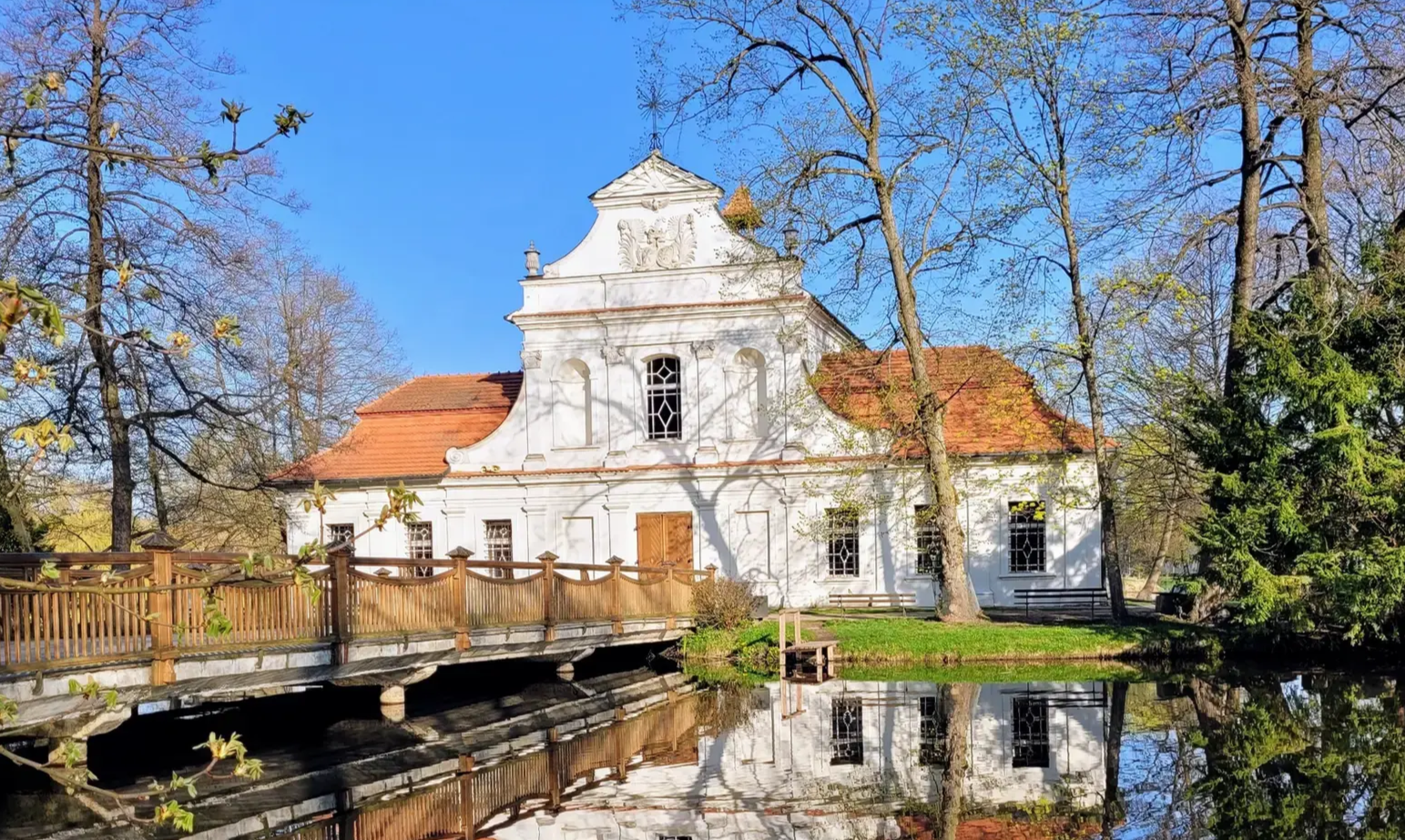
The Church of St. John of Nepomuk in Zwierzyniec is a charming Baroque church built on an island in 1741–1747 as a family chapel for the Zamoyski family. The characteristic bridge leading to the church and the picturesque location make this place a unique point on the map of Roztocze. The interior is decorated with polychrome by Łukasz Smuglewicz and paintings in the side chapels, including a painting of the coronation of the Virgin Mary attributed to him. The building is easily accessible by bike – it is worth stopping for a moment and looking inside.
3
0

At the promenade and beach. Numerous food outlets and restaurants.
0
0
The Florian Oak, whose trunk had already reached 770 centimetres in circumference, was declared a natural monument in 1956.
0
0
The Zwierzyniec Brewery is a historic brewery from the early 19th century located in Zwierzyniec. The owner of the plant is the State Treasury, and the lessee – Perła – Browary Lubelskie. The brewery in Zwierzyniec was founded as part of the Zamoyski Family Fee Tariff by Stanisław Kostka Zamoyski at the beginning of the 19th century. The first buildings, which included a single-storey brewing plant, cellars, warehouses, a cooperage and a coach house, were built in 1805–1806 on the site of the former Zamoyski residence. The masonry work was supervised by master Grzegorz Szostakiewicz, and the Scottish brewer John McDonald was responsible for starting beer production. In 1806–1810, English porter-type beer was brewed there. In 1810, the brewery burned down. However, it was quickly rebuilt from the destruction. In 1834–1836, it was expanded and modernized. At that time, it was equipped with a steam engine, and a mill for grinding malt was set up in the new wing. From the 1840s, the plant was leased by the Zamość Estate. In the years 1866–1878, it suspended operations. Most of its equipment was sold. In 1878, after another expansion and the purchase of new equipment, it was reopened.
0
0

Roman Catholic Church "On the Water" of St. John of Nepomuk.
0
1
Frequently Asked Questions
How many traffic-free gravel bike trails are available in gmina Krasnobród?
You'll find a good selection of traffic-free gravel bike trails in gmina Krasnobród, with 28 routes currently available. These range in difficulty from easy to difficult, ensuring there's something for every skill level.
What kind of terrain and difficulty can I expect on gravel bike trails in gmina Krasnobród?
The terrain in gmina Krasnobród is wonderfully varied, featuring rolling hills, deep river valleys, and extensive forest paths. You can expect a mix of unpaved surfaces, forest roads, and some sections that might be more challenging, especially after rain. There are 7 easy, 13 moderate, and 8 difficult routes to choose from, so you can pick a trail that matches your experience.
Are there any family-friendly, traffic-free gravel routes in gmina Krasnobród?
Yes, gmina Krasnobród offers several easy and moderate routes suitable for families looking for traffic-free gravel biking. These trails often pass through scenic areas and near water bodies like the Krasnobród Reservoir. Look for routes marked as 'easy' to ensure a comfortable ride for all family members.
What natural attractions can I see along the gravel bike trails in gmina Krasnobród?
Gravel biking in gmina Krasnobród allows you to explore the stunning natural beauty of the Roztocze region. You can encounter diverse landscapes within the Krasnobród Landscape Park, with its ancient forests and varied flora and fauna. Many routes pass by picturesque water bodies such as the Krasnobród Reservoir, Echo Ponds Beach, and Majdan Sopocki Reservoir. The region is also known for its efficient springs, some protected as natural monuments.
Are there any historical landmarks or points of interest along the routes?
Absolutely! Beyond the natural beauty, you can discover several historical and cultural sites. Some routes might lead you near the historic Chapel on the Water (Kaplica na Wodzie) or the Church of Saint Stanislaus the Bishop and Martyr in Górecko Kościelne. For a taste of local history, you might also pass by the Zwierzyniec Brewery or the Zamoyski's Summer Residence in Zwierzyniec.
What is the best time of year to go gravel biking in gmina Krasnobród?
The best time for gravel biking in gmina Krasnobród is typically from spring through autumn (April to October). During these months, the weather is generally pleasant, and the trails are in good condition. Spring brings lush greenery, while autumn offers beautiful fall foliage. Summers are warm, perfect for combining rides with dips in the reservoirs.
Are there any loop routes for gravel biking in gmina Krasnobród?
Yes, many of the gravel bike trails in gmina Krasnobród are designed as loops, allowing you to start and end your ride in the same location. For example, the "Krasnobród Lake – Krasnobród Reservoir loop from Krasnobród" is an easy 12.8 km loop, perfect for a shorter ride. Another option is the more challenging 77.7 km "Singletrack Józefów – Krasnobród Reservoir loop from Krasnobród".
What do other gravel bikers enjoy most about riding in gmina Krasnobród?
The komoot community highly rates the gravel biking experience in gmina Krasnobród, with an average score of 4.1 stars. Reviewers often praise the quiet, traffic-free nature of the routes, the stunning natural scenery of the Roztocze region, and the variety of terrain that makes for engaging rides. The opportunity to combine cycling with exploring historical sites and natural landmarks is also frequently highlighted.
Is there parking available near the gravel bike trailheads?
Yes, parking is generally available in and around Krasnobród, especially near popular starting points for cycling routes and attractions like the Krasnobród Reservoir. Specific parking information can often be found in the details of individual komoot tours, helping you plan your starting point.
Can I reach the gravel bike trails using public transport?
While gmina Krasnobród is well-connected within the Roztocze region, direct public transport options to specific trailheads might be limited. It's advisable to check local bus schedules or consider reaching Krasnobród by regional transport and then cycling to your desired starting point. For longer distances, parts of the Green Velo Eastern Cycling Trail pass through Roztocze, which might offer some connectivity.
Are there any cafes or pubs near the gravel bike trails for a break?
Yes, you'll find cafes, restaurants, and pubs in Krasnobród and the surrounding villages. These establishments offer great opportunities to refuel and relax during or after your ride. Many are conveniently located near popular attractions or along well-trafficked routes, making it easy to grab a coffee or a meal.
Are dogs allowed on the gravel bike trails in gmina Krasnobród?
Generally, dogs are welcome on many outdoor trails in gmina Krasnobród, especially on public paths and forest roads. However, it's crucial to keep your dog on a leash, especially in protected areas like the Krasnobród Landscape Park or if you encounter wildlife. Always be mindful of local regulations and other trail users.
Most popular routes around gmina Krasnobród
Most popular attractions around gmina Krasnobród

Get inspired with the komoot mobile app


Explore more
Browse the best Gravel rides in other regions.
