The best cycling routes around Obryte
4.8
(91)
651
riders
95
rides
Touring cycling around Obryte, Poland, is characterized by its location within the Masovian lowlands, offering predominantly flat terrain suitable for cycling. The region is largely covered by the Puszcza Biała (White Forest), an extensive forest complex with diverse ecosystems including pine stands, aquatic environments, and marshlands. The northern boundary of the gmina is formed by the Narew River, contributing to the area's natural features. Over 60% of Gmina Obryte is within a protected landscape zone, ensuring the preservation of its…
Last updated: June 27, 2026
5.0
(1)
23
riders
19.2km
01:13
40m
40m
Easy bike ride. Great for any fitness level. Mostly paved surfaces. Suitable for all skill levels.
5.0
(6)
17
riders
Easy bike ride. Great for any fitness level. Mostly paved surfaces. Suitable for all skill levels.

Sign up for free
5.0
(3)
7
riders
36.5km
02:34
90m
90m
Moderate bike ride. Good fitness required. Mostly paved surfaces. Suitable for all skill levels.
8
riders
31.4km
01:48
80m
80m
Easy bike ride. Great for any fitness level. Mostly paved surfaces. Suitable for all skill levels.
5.0
(2)
9
riders
38.9km
02:30
110m
110m
Moderate bike ride. Good fitness required. Mostly paved surfaces. Suitable for all skill levels.
Get access to more routes and recommendations from other explorers.
Sign up for free
Already have an account?
Our route recommendations are based on thousands of hikes, rides, and runs completed by other people on komoot.
Start today with a free account
Your next adventure awaits.
Login or Signup
Tips from the Community

"The history of the town hall dates back to the early 15th century. Bishop Jakub of Płock is said to have funded the seat of the town authorities in 1405. The Gothic tower added to the town hall fulfilled both judicial and penitentiary functions as well as defense. Initially, it reached a height of 15 m and was built on a rectangular plan. During the 15th and 16th centuries, it was gradually raised, with additional storeys built on an octagonal plan. A new town hall was also built - lower, more modern - in the Renaissance style, topped with a crested attic. The 30-meter tower at that time gained a domed spire with a lantern, and a clock was also ordered for it. During the wars in the 17th and 18th centuries, the town hall burned down several times. In 1728, it was rebuilt with funds from Bishop Andrzej Stanisław Kostka Załuski. The two-bay building surrounded the tower in a horseshoe shape from the east. The entrance was located on the north and covered with a wooden arcade. The tower roof was changed to an octagonal one, and the clock was abandoned. In this form, the town hall survived until the end of the 19th century. At that time, in addition to the city authorities, the army was quartered here, and there was a prison and even warehouses for Pułtusk merchants. At the end of the 19th century, a shelter was organized in the ruined building, and from 1880, the ground floor and the tower were put into use by the Volunteer Fire Department. After 1902, a new, smaller building was erected on the site of the former building, in the neo-Gothic style, only for the use of the fire department. The tower was deprived of its roof, replacing it with an uncovered platform. It turned out to be completely non-functional and the original roof covering of the tower top was quickly restored. Also at that time, a clock was placed on the north side, on the seventh floor." Source: https://arch.pultusk.pl/wieza-dawnego-ratusza-gotycko-renesansowa/
1
0
As shown by an old photo from over 100 years ago, taken during the Russian partition (the photo shows the word Pułtusk written in Cyrillic), originally Saint John of Nepomuk stood on the other side of the canal, closer to the bridge and at the edge of the then paved Świętojańska Street. Both the pedestal and the sculpture itself were significantly different from those exhibited 15 years ago. In addition, the approximately 3-meter high pedestal and the approximately 2-meter figure of the saint were surrounded by a metal fence. On the current pedestal there is a plaque with the following text: "MONUMENT DESTROYED BY THE GERMANS DURING WORLD WAR II RESTORED TO THE CITY AS A VOTE OF THE RESIDENTS OF PUŁTUSZ LAND IN THE JUBILEE YEAR OF 24 SEPTEMBER 2000" Near the city (a few kilometres from the market square) on the Narew River, people interested in the figures of St. John of Nepomuk will find four other sculptures depicting his image. They stand in the following villages near Pułtusk: Lipniki Stare (from 1906), Głodowo (from 1909), Grabówiec (figure in a chapel), Kacice (date not visible, covered by artificial flowers hanging at its base). Source: https://polska-org.pl/10209429,Pultusk,Figura_sw_Jana_Nepomucena_Pultusk.html
1
0

Bridge over the Narew in Pułtusk.
3
0

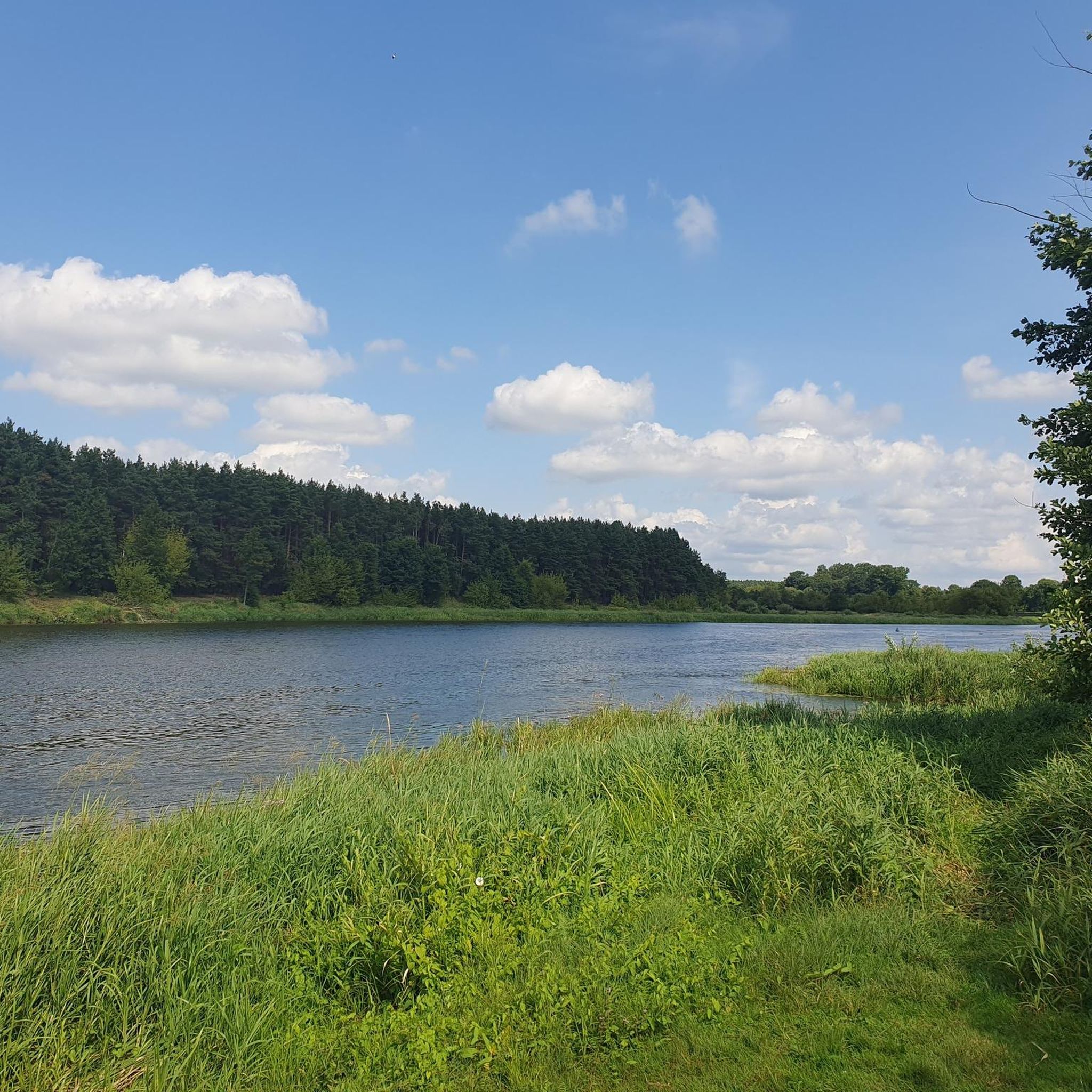
It is worth coming here for this footbridge and the view of the Narew River.
0
1
Coffee and cake next to the town hall
0
0
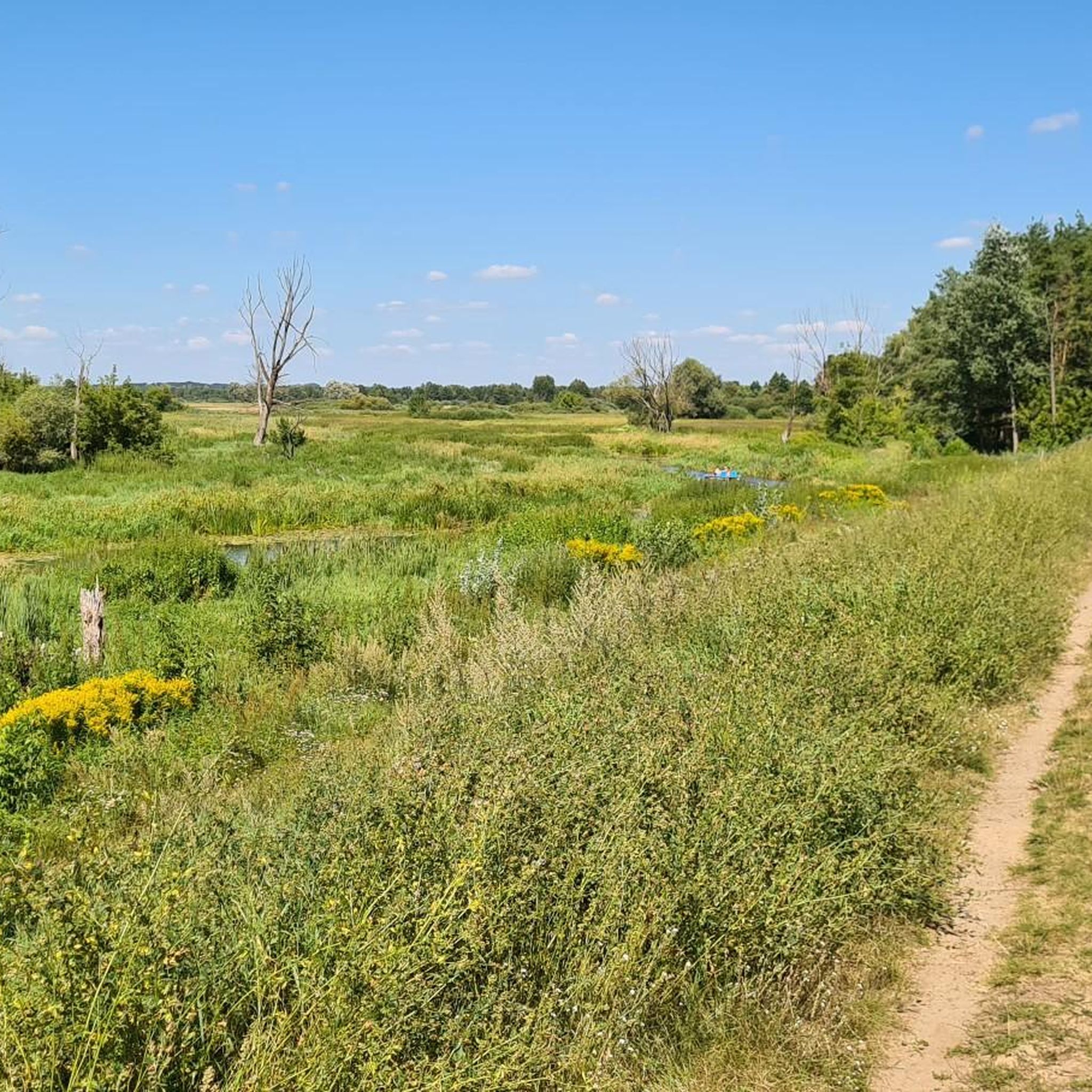
you can't see anything from the road. You have to go up the embankment
0
0
There's no point in hiding it. Cobblestone is cobblestone, but it's worth driving through it and turning off to the canal.
0
1

It was erected in 1231. From the 13th century to 1825, the parish was the provost of the Benedictines from Płock, who owned the village and provided services to the parish. The present parish church of st. Wojciech was built in the years 1896-1900 according to the design of the architect Feliks Nowicki. This temple was destroyed in 1915 and 1939–1944 (tower and vaults). Rebuilt until 1958.
0
0
Frequently Asked Questions
How many touring cycling routes are available around Obryte?
There are over 80 touring cycling routes in the Obryte area, offering a wide range of options for exploration. Most of these routes are considered easy, making them accessible for various skill levels.
What is the best time of year for touring cycling in Obryte?
The Masovian lowlands, including Obryte, are generally pleasant for cycling from spring through early autumn. The flat terrain makes it enjoyable, and the extensive forest coverage of Puszcza Biała provides shade during warmer months. Always check local weather forecasts before heading out.
Are there touring cycling routes suitable for beginners or families in Obryte?
Yes, Obryte is an excellent area for beginners and families. Over 60 of the available touring cycling routes are rated as easy, taking advantage of the region's predominantly flat terrain. These routes often pass through forested areas, offering a calm and scenic experience.
What kind of natural features can I explore by bike near Obryte?
The touring cycling routes in Obryte primarily traverse the Puszcza Biała (White Forest), an extensive complex of pine stands, diverse ecosystems, and marshlands. You'll also find routes along the Narew River, which forms part of the gmina's boundary, offering scenic riverside views. Over 60% of Gmina Obryte is within a protected landscape zone, ensuring a rich natural environment.
Are there any historical or cultural landmarks to see along the cycling routes?
Yes, beyond the natural beauty, you can encounter historical and cultural landmarks. For instance, the View of the Pultusk Canal – Pułtusk Town Hall Tower loop from Rowy route passes by the Pułtusk Town Hall Tower. Other routes may lead you past ancient churches or traditional Kurpie cottages, offering glimpses into the local heritage.
Can I find scenic viewpoints or places to relax along the touring routes?
Many routes offer scenic views, particularly those that follow the Narew River or wind through the Puszcza Biała. For example, the View of the Castle – View of the Narew River loop from Grabówiec provides beautiful vistas of the river area. The tranquil forest settings and riverside spots are ideal for relaxing breaks.
Are there any challenging touring cycling routes for experienced cyclists?
While most routes in Obryte are easy, there are some moderate options for those seeking a bit more challenge. For example, the View of the Pultusk Canal – Pułtusk Town Hall Tower loop from Rowy is rated moderate and covers a longer distance of almost 39 km (24 miles). There are 6 routes rated as difficult in the area for experienced riders.
Are there any circular touring cycling routes in the Obryte area?
Yes, all the featured touring cycling routes in the Obryte area are designed as loops, allowing you to start and end at the same point. This includes popular options like the Pub & Restaurant Magdalenka – View of the Pultusk Canal loop from Szygówek, which offers views of the Pultusk Canal.
Is parking available for cyclists near the touring routes in Obryte?
While specific designated cyclist parking areas are not extensively detailed, given the rural nature of Obryte and its proximity to Pułtusk, you can often find parking in or near villages that serve as starting points for routes. Many routes, such as the Forest Parking with Shelters – Wooden Bus Shelter loop from Pułtusk, begin near established parking facilities.
What do other touring cyclists enjoy the most about touring cycling in Obryte?
The area is highly rated by the komoot community, with an average score of 4.8 stars from over 80 reviews. Reviewers often praise the quiet, natural environment of the Puszcza Biała, the flat and accessible terrain suitable for all levels, and the scenic views along the Narew River and Pultusk Canal. The well-maintained paths and the opportunity to explore protected landscapes are also frequently highlighted.
Are dogs allowed on the touring cycling routes in Obryte?
Generally, dogs are welcome on cycling routes in natural areas like Puszcza Biała, especially if kept on a leash. However, it's always advisable to check local regulations for specific nature reserves (like Bartnia, Popławy, or Wielgolas) or protected zones within the Puszcza Biała to ensure compliance. Always practice responsible pet ownership by cleaning up after your dog.
Are there cafes or restaurants along the touring cycling routes in Obryte?
While Obryte itself is a village, the routes often pass through or near other villages and the town of Pułtusk, where you can find amenities. For example, the route Pub & Restaurant Magdalenka – View of the Pultusk Canal loop from Szygówek explicitly mentions a pub and restaurant, indicating opportunities for refreshments. Pułtusk offers more options for dining and cafes.
Most popular attractions around Obryte

Get inspired with the komoot mobile app


Explore more
Browse the best Cycling routes in other regions.
