Attractions and Places To See around gmina Kazimierza Wielka - Top 20
Best attractions and places to see around gmina Kazimierza Wielka, located in the Świętokrzyskie Voivodeship of southern Poland, offers a blend of historical significance and cultural heritage. The region features ancient archaeological sites, impressive religious architecture, and unique natural features. Visitors can explore historical monuments and cycling routes, providing diverse outdoor experiences. The landscape holds significant archaeological value with evidence of prehistoric settlement.
Best attractions and places to see around gmina Kazimierza Wielka
- The most popular attractions is Basilica of…
Last updated: July 1, 2026
Basilica of the Nativity of the Blessed Virgin Mary in Wiślica
Highlight • Religious Site
Translated by Google •
Tip by

Church of the Conversion of St. Paul the Apostle in Uście Solne
Highlight • Religious Site
Translated by Google •
Tip by

Sign up now to discover places like this
Get recommendations on the best single tracks, peaks, & plenty of other exciting outdoor places.
Sign up for free
Medieval Stronghold in Wiślica
Highlight • Historical Site
Translated by Google •
Tip by

Długosz House in Wiślica
Highlight • Historical Site
Translated by Google •
Tip by
Velo Raba Gravel Path
Highlight (Segment) • Cycleway
Translated by Google •
Tip by

Sign up for free to discover even more attractions around gmina Kazimierza Wielka.
Sign up for free
Already have an account?
Start today with a free account
Your next adventure awaits.
Login or Signup
Popular around gmina Kazimierza Wielka
Tips from the Community


The Wiślica stronghold, currently known as "Na Łąkach", was built at the earliest around the second half of the 10th century. The nature of the fortifications' construction would indicate that its construction was related to Czech influences and the period of Czech rule in Lesser Poland, although it is also possible that its foundation was carried out by the Piast dynasty at the turn of the 10th and 11th centuries, but the construction was carried out according to the building traditions known in the region. Since there was another, slightly older stronghold in Wiślica, in the area of which later developed monumental palace and sacral buildings, it is possible that the seat "Na Łąkach" was associated exclusively with a military function. Alternatively, the stronghold "Na Łąkach" was built after the destruction of the older stronghold and both establishments did not initially function at the same time. In the 11th century, in addition to the stronghold "Na Łąkach", at least three nearby settlements developed in Wiślica, one of which was located on the site of an older stronghold that was destroyed at that time. At the end of the 11th century or at the beginning of the 12th century, the stronghold "Na Łąkach" was also burned down. Its fall may have occurred in 1135, during the invasion of the Ruthenians and Cumans, associated with the policy of supporting the pretender to the Hungarian throne, Boris Kolomanović, by the Polish prince. Boris was probably settled in the stronghold of Wiślica at that time, so when Krzywousty stopped supporting him, he could take revenge by handing him over to the allied Ruthenians, led by Władymirka, son of Włodar, the prince of Przemyśl and Galicia. After rebuilding from the destruction, Bolesław Krzywousty did not restore the rank of Wiślica, which initially, as one of the less significant centers, became part of the senior district.
1
0
Collegiate Basilica of the Nativity of the Blessed Virgin Mary in Wiślica – a Gothic church built in the 14th century by Casimir the Great in Wiślica, on the foundations of two older Romanesque temples. It bears the title of collegiate church, and since September 8, 2005 also of minor basilica[2]. In 2018, the basilica (together with the relics of St. Nicholas' Church and the hillfort) was entered on the list of historical monuments as part of the campaign "100 Historical Monuments for the Centenary of Regaining Independence".
1
0
Collegiate Basilica of the Nativity of the Blessed Virgin Mary in Wiślica – a Gothic church built in the 14th century by Casimir the Great in Wiślica, on the foundations of two older Romanesque temples. It bears the title of collegiate church, and since September 8, 2005 also of minor basilica. In 2018, the basilica (together with the relics of St. Nicholas' Church and the hillfort) was entered on the list of historical monuments as part of the campaign "100 Historical Monuments for the Centenary of Regaining Independence".
0
0

it's worth forgiving
0
0

The fortified settlement is just outside the city
0
0

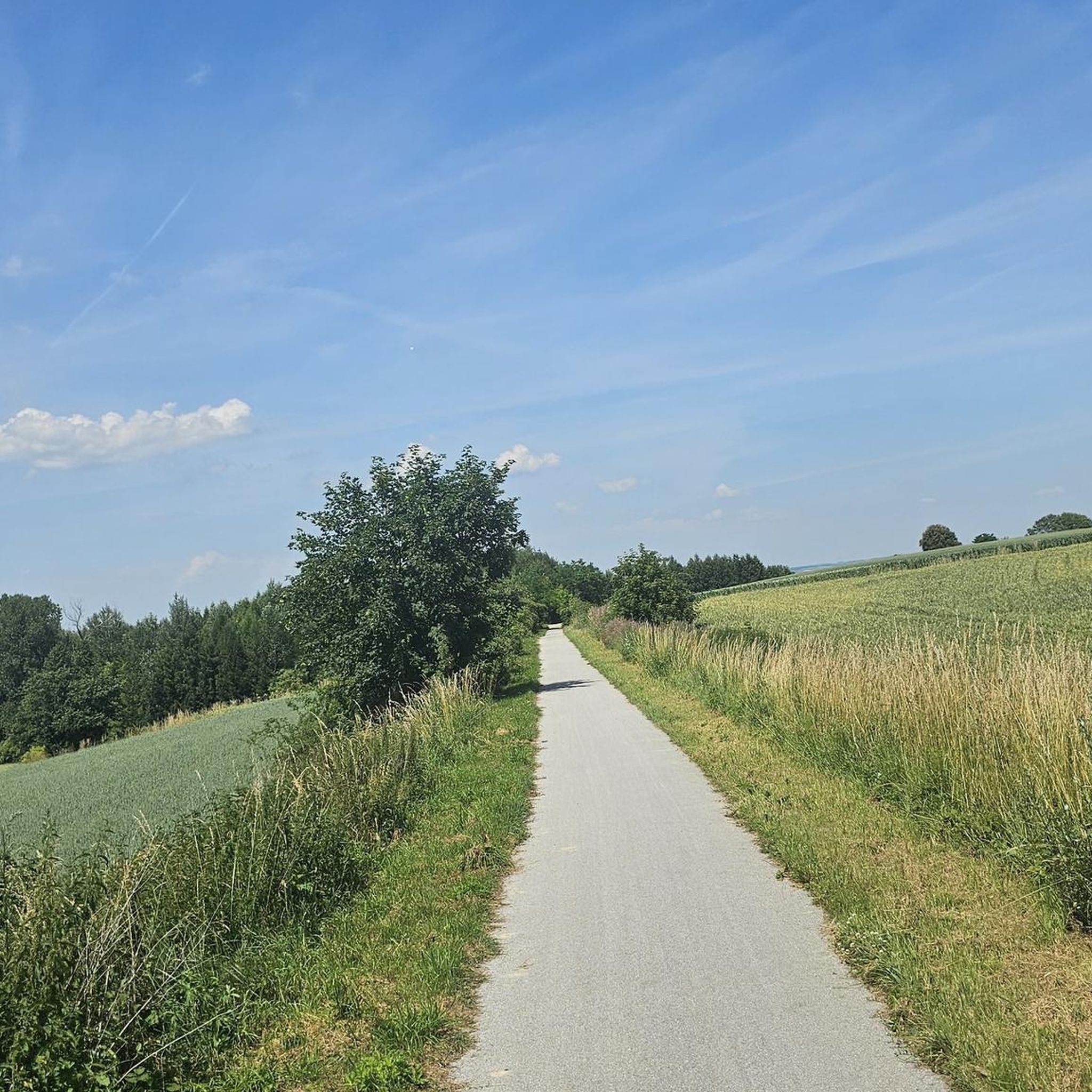
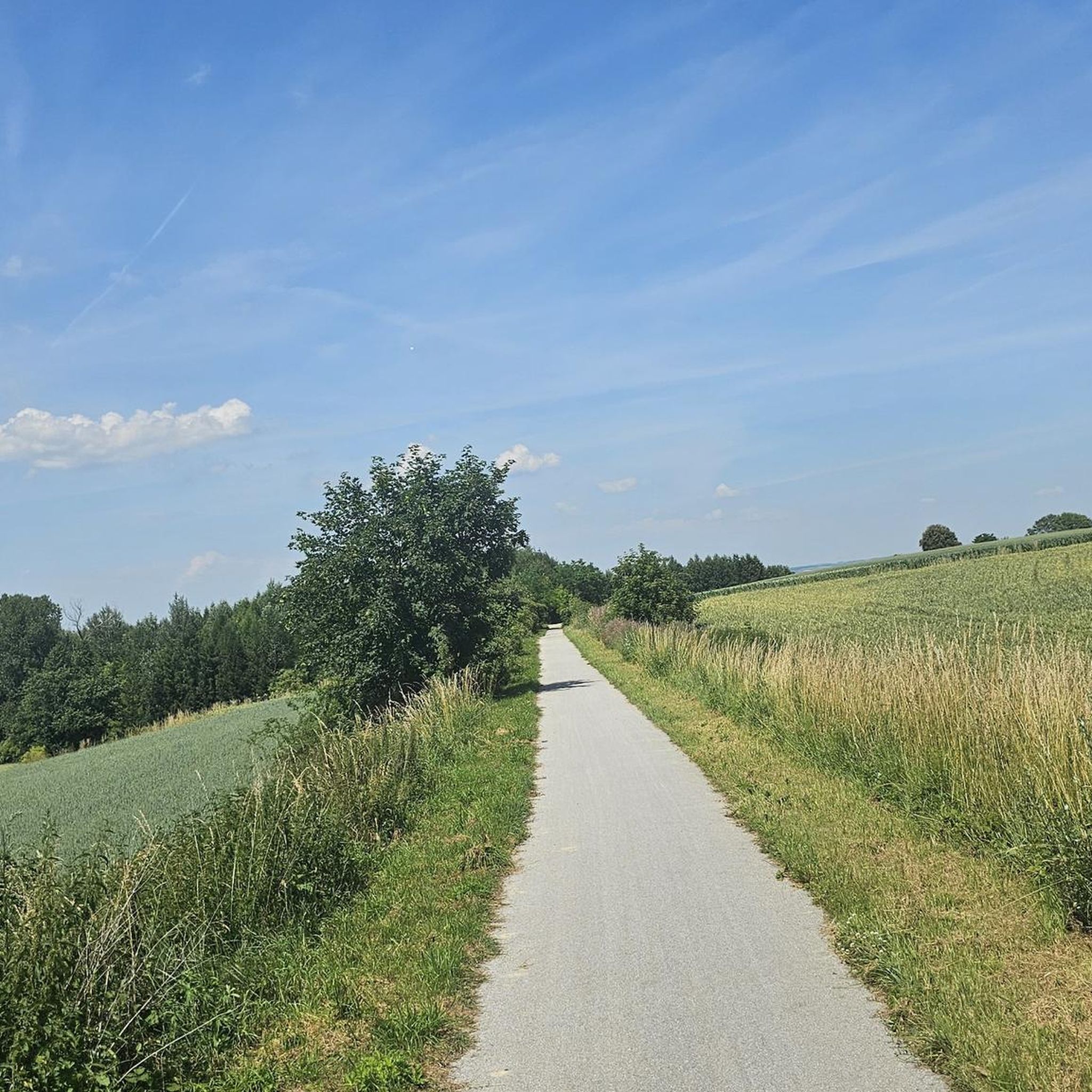
A gravel section of the route, quite suitable for gravel bikes.
1
0

Four years later, the section is still gravel :) But it's really good gravel, you can accelerate, and you're not afraid to drive on the road.
1
0
Frequently Asked Questions
What unique historical attractions can I visit in Gmina Kazimierza Wielka?
Beyond the well-known sites, you can explore the impressive Medieval Stronghold in Wiślica, an earth formation that is the remains of a significant historical settlement. Also, consider visiting the Długosz House in Wiślica, a high-class monument built by Canon Jan Długosz in the 15th century. The region also features the historical Former Sugar Factory Complex in Kazimierza Wielka, including a unique bastille, and the ancient Grodzisko Stradów, one of Poland's largest early medieval strongholds.
Are there any significant religious sites in the area?
Yes, Gmina Kazimierza Wielka is rich in religious heritage. A prominent site is the Basilica of the Nativity of the Blessed Virgin Mary in Wiślica, a Gothic church from the 14th century built by Casimir the Great. Another notable church is the Church of the Conversion of St. Paul the Apostle in Uście Solne, constructed in the 19th century and later rebuilt. You can also find the historic Parish Church in Kazimierza Wielka, the Podominikański Kościół p.w. Św. Jakuba Ap. in Opatowiec, and the parish church in Bejsce, founded in 1340.
What kind of natural features can I explore around Gmina Kazimierza Wielka?
The region offers unique natural and archaeological features. Near Kazimierza Wielka, in Słonowice, you can discover the Megalithic Tombs, sometimes called the 'Valley of Kings,' which are ancient burial sites dating back to the 4th/3rd millennium BCE. While not a natural feature itself, the Velo Raba Gravel Path runs along the Raba river, offering picturesque views of the natural landscape.
Are there opportunities for cycling near the attractions?
Absolutely! The area is great for cycling. A section of the EuroVelo 11 cycling route runs from Wiślica to Lekszyce, passing through the communes of Kazimierza Wielka, Czarnocin, and Opatowiec. You can also enjoy the Velo Raba Gravel Path, an unpaved route along the Raba river suitable for gravel bikes. For more cycling options, explore the various routes in the Cycling around gmina Kazimierza Wielka guide, which includes easy to difficult tours.
What archaeological sites are worth visiting in the region?
Gmina Kazimierza Wielka is rich in archaeological significance. The Megalithic Tombs in Słonowice, also known as 'Dolina Królów,' are a must-see, featuring ancient burial sites from the turn of the 4th/3rd millennium BCE. Additionally, the Grodzisko Stradów, located near Stradów, is one of Poland's largest early medieval strongholds. You can also visit the Medieval Stronghold in Wiślica, which dates back to the 10th century.
Are there any family-friendly activities or places to see?
Yes, the region offers several family-friendly options. The Basilica of the Nativity of the Blessed Virgin Mary in Wiślica is listed as family-friendly, offering a glimpse into historical architecture. For recreation, the Kazimierskie Baseny Mineralne (Mineral Pools) provide a fun attraction. The Stud Farm in Ksanach also offers opportunities for equestrian activities, which can be enjoyable for families.
What are the options for outdoor activities like running or hiking?
While the area is particularly noted for cycling, there are also options for running. You can find various running trails around the gmina, with routes ranging from easy to moderate difficulty. For detailed routes and distances, check out the Running Trails around gmina Kazimierza Wielka guide.
Can I find any viewpoints with scenic vistas?
Yes, the region offers several spots with scenic views. The Church of the Conversion of St. Paul the Apostle in Uście Solne is categorized as a viewpoint. Additionally, the EuroVelo 11 cycling route, which passes through the gmina, offers picturesque views of the landscape and numerous natural monuments along its path.
What is the best time of year to visit Gmina Kazimierza Wielka for sightseeing?
The best time to visit Gmina Kazimierza Wielka for sightseeing and outdoor activities is generally during the spring (April to June) and autumn (September to October) months. During these periods, the weather is typically mild and pleasant, ideal for exploring historical sites, cycling routes, and natural attractions without the extreme heat of summer or the cold of winter. The landscape is also particularly beautiful with blooming flowers in spring and vibrant foliage in autumn.
Are there any lesser-known or 'hidden gems' in Gmina Kazimierza Wielka?
Beyond the main highlights, the Megalithic Tombs in Słonowice, often referred to as 'Dolina Królów,' are a unique and less commonly known archaeological treasure. The historical significance of the Former Sugar Factory Complex in Kazimierza Wielka, with its distinctive bastille, also offers a glimpse into the region's industrial past that might be considered a hidden gem for those interested in local history.
How long should I plan for a visit to the main attractions?
To fully appreciate the main historical and natural attractions in Gmina Kazimierza Wielka, such as the Basilica in Wiślica, the Megalithic Tombs, and the various cycling routes, planning at least 2-3 days is recommended. This allows enough time to explore the key sites without rushing, and to enjoy some of the outdoor activities or delve deeper into the local history.
Is the area suitable for visitors with dogs?
Many outdoor areas and natural features in Gmina Kazimierza Wielka, such as the EuroVelo 11 route and the Velo Raba Gravel Path, are generally suitable for visitors with dogs, provided they are kept on a leash and owners clean up after them. However, access to specific historical buildings or religious sites may be restricted for pets. It's always best to check individual attraction policies beforehand.
Are there any accessible attractions for wheelchair users?
While specific accessibility information for all attractions is not detailed, historical sites and older buildings in the region may have limited accessibility due to their age and architecture. However, outdoor routes like sections of the EuroVelo 11 or the Velo Raba Gravel Path might offer more accessible experiences, depending on the terrain. It is advisable to contact specific sites directly for detailed accessibility information before your visit.

Get inspired with the komoot mobile app


Explore more
Still not found the Highlight you’re looking for? See guides of the top attractions in other regions:
