Top 4 Castles in Mainz
Castles in Mainz and its surrounding region offer a glimpse into the area's rich history and architectural heritage. The city, situated along the Rhine, features historical sites that reflect its past as an electoral residence and a fortified location. Many structures have been meticulously restored, while others stand as ruins, contributing to the picturesque landscape. These sites collectively offer diverse experiences, from exploring preserved medieval architecture to appreciating strategic historical fortifications.
Best castles in Mainz
- The most popular castles is Electoral Palace, Mainz, a castle that served as the former city residence of the archbishops of Mainz. This palace showcases mannerist forms of the German late Renaissance and was rebuilt after 1942.
- Another must-see spot is Mainz Citadel (Zitadelle Mainz), a historical site expanded from 1655 as part of the city's fortifications. From its location on Jakobsberg hill, visitors can enjoy panoramic views over Mainz.
- Visitors also love Fort Josef, a historical site that was part of the Mainz fortifications. Built between 1710 and 1730, only its underground casemates remain today.
- Mainz is known for its electoral palaces, citadels, and historical forts. The region offers a variety of castles, from meticulously restored structures to significant historical ruins.
- The castles in Mainz are appreciated by the komoot community, with more than 400 upvotes and over 110 photos shared by visitors.
Last updated: July 1, 2026
Mainz Railway Bridge
Highlight • Bridge
Translated by Google •
Tip by

Electoral Palace, Mainz
Highlight • Castle
Source Wikipedia; de.wikipedia.org/wiki/Kurf%C3%BCrstliches_Schloss_(Mainz)
Translated by Google •
Tip by

Sign up now to discover places like this
Get recommendations on the best single tracks, peaks, & plenty of other exciting outdoor places.
Sign up for free
Mainz Electoral Palace
Highlight • Historical Site
mainz.de/tourismus/gehenswertes/kurfuerstliches-schloss.php
Translated by Google •
Tip by

Mainz Citadel (Zitadelle Mainz)
Highlight • Historical Site
Translated by Google •
Tip by

Fort Josef
Highlight • Historical Site
Translated by Google •
Tip by

View of the Citadel in Mainz
Highlight • Viewpoint
Translated by Google •
Tip by

Start today with a free account
Your next adventure awaits.
Login or Signup
Popular around Mainz

From the city to a sea of vines – cycling Tours in Rheinhessen

Winter adventures by public transport – hikes for the whole family
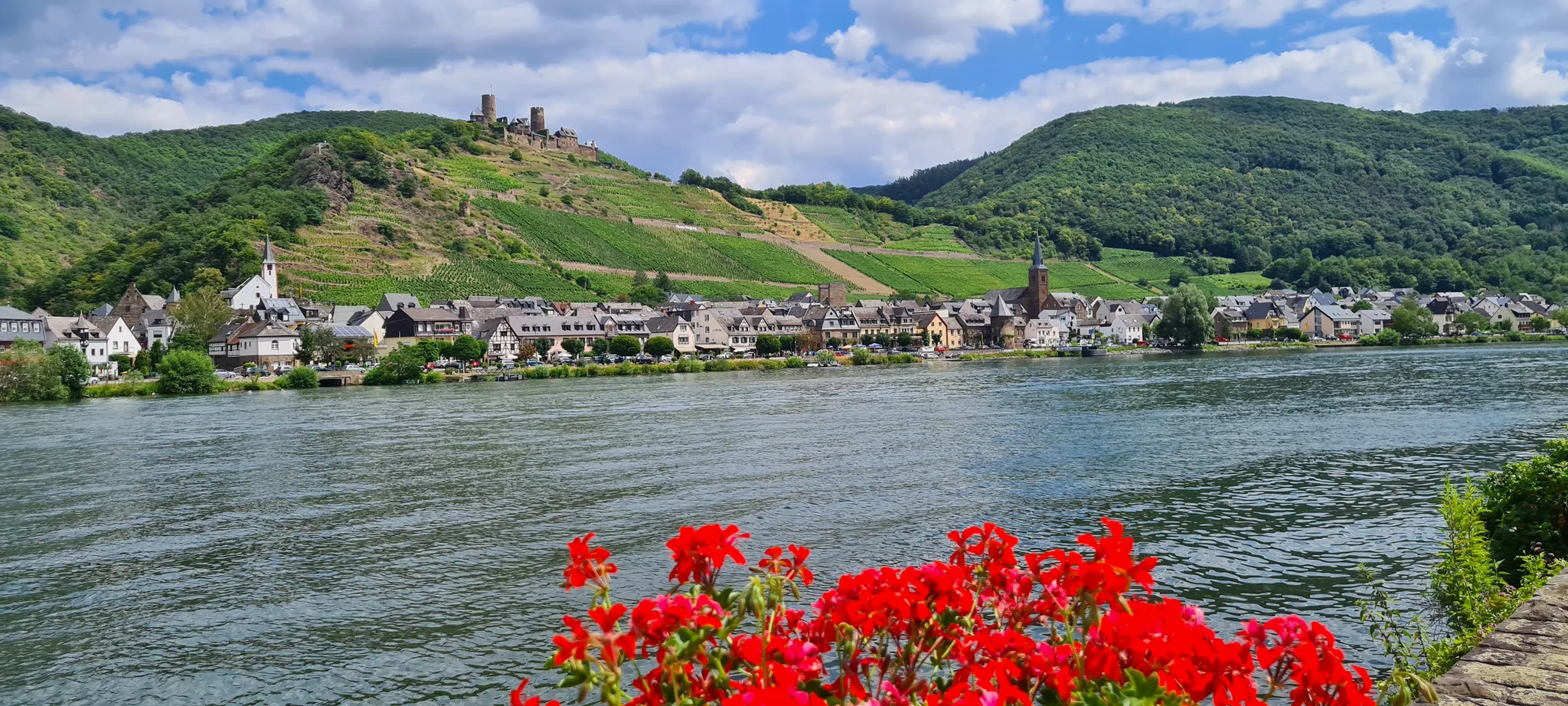
D-Route 5: Saar-Moselle-Main

On the Bonifatius Route from Mainz to Fulda
Culture, nature and good food in Hessen – gourmet Tours in the RMV region
Einfach durch Wiesbaden, Mainz, Darmstadt und Frankfurt am Main

Rheinhessen mit Aussicht - Die schönsten Panoramatouren in Rheinhessen

Weinerlebnis in der sanften Hügellandschaft in Rheinhessen
Cycling in Mainz
Running Trails in Mainz
Other adventures in Mainz


Tips from the Community

The Mainz South Bridge (also known as the Mainz-South Railway Bridge, and at times as the Mainz-Gustavsburg Railway Bridge) is a railway bridge on the Mainz–Frankfurt railway line, spanning the Rhine at river kilometer 496.4 and connecting Mainz in Rhineland-Palatinate with Gustavsburg in Hesse. A footbridge attached to the north side of the bridge allows pedestrians and cyclists to cross the river.
14
1

Mainz's "Gut Stubb" Anyone entering Mainz over the Theodor Heuss Bridge will immediately notice the striking, sandstone-red Electoral Palace, which stretches 75 meters along the Rhine. It's as if the city wants to immediately show its visitors the pinnacle of its history – its heyday as an electoral residence. The palace is uniquely influenced by the German late Renaissance. In the immediate vicinity are the former Teutonic Order House and the New Armory. It stands out from these two late Baroque buildings with the virtuoso formal language of its façade. As the host of the television carnival program "Mainz bleibt Mainz, wie es singt und lacht" (Mainz Remains Mainz, as it Sings and Laughs), the Great Hall of the city's most important secular building is known beyond the state borders. Source: https://www.mainz.de/tourismus/sehenswertes/kurfuerstliches-schloss.php
0
0

📝 High above the old town stands the Citadel, a baroque fortress dating back to the 17th century. Built on the Jakobsberg hill, it once served as a military stronghold for Mainz. Today, it's a place for culture, history, and events – with sweeping views over the city and partially accessible bastions. 💡 Tip: Take a walk along the outside – the old walls and views are just as worthwhile as the interior.
2
1

The citadel is, next to the cathedral, the most important historical building in Mainz. First fortified in 1620, the citadel took its present form on Jakobsberg hill in 1660. The citadel and its surroundings document Mainz's military history in a very small area: from the Roman war memorial "Drususstein" to the barracks buildings from the time of the Federal Fortress in the 19th century, and finally to the air-raid shelters from the Second World War. The Drusus Bastion, with its mysterious passageways, is particularly captivating. Source: http://www.festung-mainz.de/zitadelle/einfuehrung.html
0
0
The grounds of the Mainz Citadel are open year-round. The two gates to the citadel (the Commandant's Building and the bridge at Windmill Hill) are no longer closed. The citadel can therefore be visited even late in the evening. Access may be restricted only for a few specific events (such as Open Ohr). Source: http://www.festung-mainz.de/zitadelle/touristische-hinweise.html
0
0
The castle only served its royal purpose for a short time - until 1797. After the fall of the Electorate in 1806, however, it was used as a barracks, hospital, customs warehouse and customs authority. From 1842 onwards, the city library, picture gallery, antiquities museum and the Roman-Germanic Central Museum moved in. None of them remained. TV viewers are particularly familiar with the Great Hall of the city's most important secular building: the carnival session "Mainz remains Mainz, how it sings and laughs" takes place here every year. Source:https://www.mainz.de/tourismus/sehenswertes/kurfuerstliches-schloss.php#SP-grouplist-4-1:4 Beautiful interior plan: https://www.mainz-congress.com/locations/kurfuerstliches-schloss
2
0

After World War II, the French occupying forces confiscated the complex (until 1955). In the 1960s, the Mainz Commercial Vocational School was located in the citadel until its relocation to a new building on the Hartenberg. Today, the citadel belongs to the city of Mainz and houses numerous municipal offices. The Mainz Citadel has been a listed historical monument since 1907. The moat in the southern part of the citadel has been a protected landscape since the mid-1980s as an "anthropogenic biotope" of "national importance."[3] The City History Museum is now housed in Building D in front of the Drusus Stone. The citadel and its surroundings document Mainz's urban history in a very small area: from the Roman war memorial Drusus Stone to the barracks buildings from the federal fortress era in the 19th century, and on to the air-raid shelters from World War II. Since 1975, the OpenOhr Festival, a themed youth culture festival with discussion forums and workshops, cabaret, and live concerts, has taken place annually at the Mainz Citadel over the Pentecost weekend. In October 2015, the Mainz Citadel was awarded the Hague Plaque by UNESCO, designating the structure as a protected monument. In the event of damage caused by armed conflict, the International Court of Justice would assume prosecution should the German government be unable to do so.
1
0

https://www.zitadelle-mainz.de Construction of the fortified citadel began in 1620.
1
1
Frequently Asked Questions
Are there family-friendly castles to visit in and around Mainz?
Yes, several castles in the region offer engaging experiences for families. The Mainz Citadel (Zitadelle Mainz) is considered family-friendly and offers a beautiful panoramic view over Mainz. Further afield, Electoral Palace, Mainz is also listed as family-friendly. Many castles, like Stahleck Castle, which now serves as a youth hostel, or Eltville Castle with its rose garden, provide interesting settings for all ages to explore history.
What are some of the most historically significant castles near Mainz?
The region boasts a rich history. Electoral Palace, Mainz, for instance, was the former city residence of the Archbishops of Mainz and showcases German late Renaissance architecture. The Mainz Citadel (Zitadelle Mainz), expanded from 1655, was a crucial part of the city's fortifications. Beyond Mainz, Rheinstein Castle and Reichenstein Castle are prime examples of Prussian Rhine romanticism, meticulously rebuilt and offering museums that delve into their medieval past.
Are there hiking or walking trails near the castles in the Mainz region?
Absolutely. The picturesque Rhine Valley, where many castles are located, offers numerous opportunities for outdoor activities. While specific trails directly around every castle vary, you can find many routes in the wider Mainz area. For example, you can explore easy hikes in Mainz, including routes through the Lenneberg Forest, which is near Schloss Waldthausen. Many castles, like Stahleck and Rheinstein, are perched above the Rhine, offering scenic walks with stunning views.
What is the best time of year to visit the castles around Mainz?
The spring and autumn months are generally ideal for visiting the castles in the Mainz region. The weather is pleasant for exploring castle grounds and enjoying outdoor views. Spring brings blooming landscapes, while autumn offers vibrant foliage, especially along the Rhine. While some castles may have reduced hours or closures in winter, many remain accessible, offering a different, often quieter, experience.
Are there any castles in the region that offer unique viewpoints?
Yes, several castles provide exceptional viewpoints. The Mainz Citadel (Zitadelle Mainz) offers a beautiful panoramic view over Mainz as far as the Taunus mountains. The Malakoff Terrace Mainz, while not a castle itself, is a viewpoint near the Rhine with castle connections. Further along the Rhine, castles like Rheinstein and Stahleck are renowned for their commanding positions, offering picturesque views of the Rhine Valley and surrounding towns.
Can I find cafes or restaurants near the castles in Mainz?
Yes, many castles or their immediate vicinities offer dining options. Rheinstein Castle, for example, has an adjoining restaurant. Reichenstein Castle also houses a restaurant and a hotel. In Mainz itself, the area around the Malakoff Terrace often has facilities, and the city center near the Electoral Palace provides numerous cafes and eateries.
Are there any hidden gem castles or lesser-known historical sites worth exploring near Mainz?
While not a 'hidden gem' in the sense of being unknown, Fort Josef is a fascinating part of the Mainz fortifications, offering a glimpse into the city's military history with its underground casemates. Outside of Mainz, Pfalzgrafenstein Castle, uniquely situated on an island in the Rhine, is a remarkable site that served as a medieval toll station and offers a distinct historical experience.
How accessible are the castles in Mainz for visitors using public transport?
Mainz itself is well-served by public transport. The Mainz Citadel (Zitadelle Mainz) is conveniently located in the immediate vicinity of the Römisches Theater train station. The Electoral Palace is also centrally located and easily reachable. For castles further along the Rhine, such as Eltville Castle, regional trains and buses often connect to the towns where these castles are situated, though some may require a walk from the nearest stop.
Are there guided tours available for the castles in the Mainz region?
Many of the larger, restored castles offer guided tours to enhance the visitor experience. For instance, Rheinstein Castle and Reichenstein Castle, both housing museums, typically provide guided tours or detailed information for self-guided exploration. Eltville Castle, which also serves as a tourist information office, may offer insights into tour availability. It's always recommended to check the specific castle's official website for current tour schedules and booking information.
What kind of outdoor activities can I combine with a castle visit in the Mainz area?
The region around Mainz is excellent for combining castle visits with various outdoor activities. You can enjoy easy hikes through natural reserves like the Mainzer Sand Dune or the Lenneberg Forest. Cycling is also popular, with options for traffic-free bike rides along the Rhine or through vineyards, offering views of castles like those in the Rheingau. Mountain biking routes are also available for more challenging rides, such as tours through Rheinhessen.
Are there any castles near Mainz that are particularly known for their architecture?
Schloss Waldthausen, located in the Lenneberg Forest, is a notable example of impressive historicist architectural style from the German Empire, built in 1910. The Electoral Palace, Mainz, while rebuilt, retains its unique mannerist forms of the German late Renaissance. Rheinstein Castle is a prime example of Prussian Rhine romanticism, meticulously rebuilt in the Neo-Gothic style while preserving its medieval structure.
Most popular routes in Mainz
Most popular attractions in Mainz

Get inspired with the komoot mobile app


Explore more
Looking for the best castles somewhere else? Discover other guides in Mainz:
