Spring Mountains National Recreation Area
Spring Mountains National Recreation Area
Attractions and Places To See in Spring Mountains National Recreation Area - Top 20
Best attractions and places to see in Spring Mountains National Recreation Area include a diverse range of natural features and cultural sites. This expansive area, also known as Mount Charleston, spans over 316,000 acres and provides a natural escape from the Mojave Desert. It features impressive peaks like Charleston Peak, ancient bristlecone pine forests, and unique canyons. The region also offers cultural points of interest such as the Spring Mountains Visitor Gateway and historic mining sites.
Best attractions and places to see in Spring Mountains National Recreation Area
- The most popular attractions is Fletcher Canyon Narrows, a canyon known for its sheer, water-polished limestone cliffs. This unique section offers a distinct hiking experience within a mountain environment.
- Another must-see spot is North Loop Trailhead, a trailhead for challenging routes into the alpine area. Visitors can access Charleston Peak, Fletcher Peak, Mummy Mountain, and the ancient Raintree from this location.
- Visitors also love South Loop, Echo Canyon, and Cathedral Rock Trailhead, a trailhead where several popular trails in Kyle Canyon begin. This location provides access to trails like Cathedral Rock and Griffith Peak, and popular rock climbing areas.
- Spring Mountains National Recreation Area is known for its canyons, peaks, and diverse trailheads. The area offers a variety of attractions to see and explore, from natural monuments to challenging hiking routes.
- The attractions in Spring Mountains National Recreation Area are appreciated by the komoot community, with 7 upvotes and 6 photos shared by visitors.
Last updated: September 26, 2026
Cathedral Rock Trail
Highlight (Segment) • Trail
Tip by

Echo Canyon Overlook
Highlight • Viewpoint
Tip by
Sign up now to discover places like this
Get recommendations on the best single tracks, peaks, & plenty of other exciting outdoor places.
Fletcher Canyon Narrows
Highlight (Segment) • Canyon
Tip by
South Loop, Echo Canyon, and Cathedral Rock Trailhead
Highlight • Trail
Tip by
North Loop Trailhead
Highlight • Trail
The trail leads to the Rain Tree, a 3,000-year-old, imposing Bristlecone Pine, and to the turnoff for Flechter Peak and Mummy Mountain.
Tip by

Mummy Spring
Highlight • Waterfall
Tip by
The Raintree
Highlight • Natural Monument
Tip by
Small Waterfall
Highlight • Waterfall
Tip by
REVEL Mt. Charleston Marathon Course
Highlight (Segment) • Trail
If you want to participate then make sure you train downhill runs (e.g. on a treadmill with negative incline). Participants are normally bussed up to the starting line and loading starts in Sumerlin around 3:30am. If you are lucky, then rent a cabin (Mt. Charlston lodge & cabins) directly at the starting line and step out of the warm room into the freezing air just 10min before the race starts at 6am.
One of the best moments is when the sun rises over the desert directly in front of you...
Tip by

Mount Charleston Summit
Highlight • Summit
Tip by
Sign up for free to discover even more attractions in Spring Mountains National Recreation Area.
Already have an account?
Start today with a free account
Your next adventure awaits.
Popular around Spring Mountains National Recreation Area
Other adventures in Spring Mountains National Recreation Area

Tips from the Community

The Mt. Charlston race is probably the fastest Marathon in the US. After the start at 7600ft it drops 5000ft at a 4% slope. The race takes place the first Saturday in April and is a Boston Qualifier. See the Revel Marathon website for details. If you want to participate then make sure you train downhill runs (e.g. on a treadmill with negative incline). Participants are normally bussed up to the starting line and loading starts in Sumerlin around 3:30am. If you are lucky, then rent a cabin (Mt. Charlston lodge & cabins) directly at the starting line and step out of the warm room into the freezing air just 10min before the race starts at 6am. One of the best moments is when the sun rises over the desert directly in front of you...
0
0

This is the trailhead for the North Loop Trail. This popular, but challenging, trail is one of the most common ways to summit Mount Charleston. You can also access Fletcher Peak, Mummy Mountain, Mummy Springs, Trail Canyon, Cave Springs, and the incredible Raintree (the oldest living organism in Nevada) from this trailhead.
0
2
This section of Fletcher Canyon is known as the narrows. Although the trail fades somewhat as you continue up into the narrows, it is difficult to get truly lost because you are hiking between sheer, water-polished limestone cliffs. This unique, shaded section of Fletcher canyon is a fantastic adventure and a great way to end your hike; it's amazing to be able to explore a narrow, sheer canyon hidden in a mountain environment!
0
0
This massive Bristlecone Pine Tree, known as "Raintree" or "the Raintree," is over 3,000 years old and is one of the oldest living things in Nevada! Bristlecone Pines are some of the longest-living organisms on the planet and can survive for centuries in incredibly dry, harsh environments. Regardless of your destination, this tree is an amazing piece of natural history and is well worth a stop on your hike on the North Loop Trail.
0
1
On the east slope of Mummy Mountain, you pass through an open, gravelly hillside dotted with ancient Bristlecone Pines and reach Mummy Springs. Just 0.3 miles off the main North Loop Trail (0.6 miles round trip from the North Loop) this peaceful spring waters a picturesque alpine meadow and a lovely place to take photos and rest.
0
1
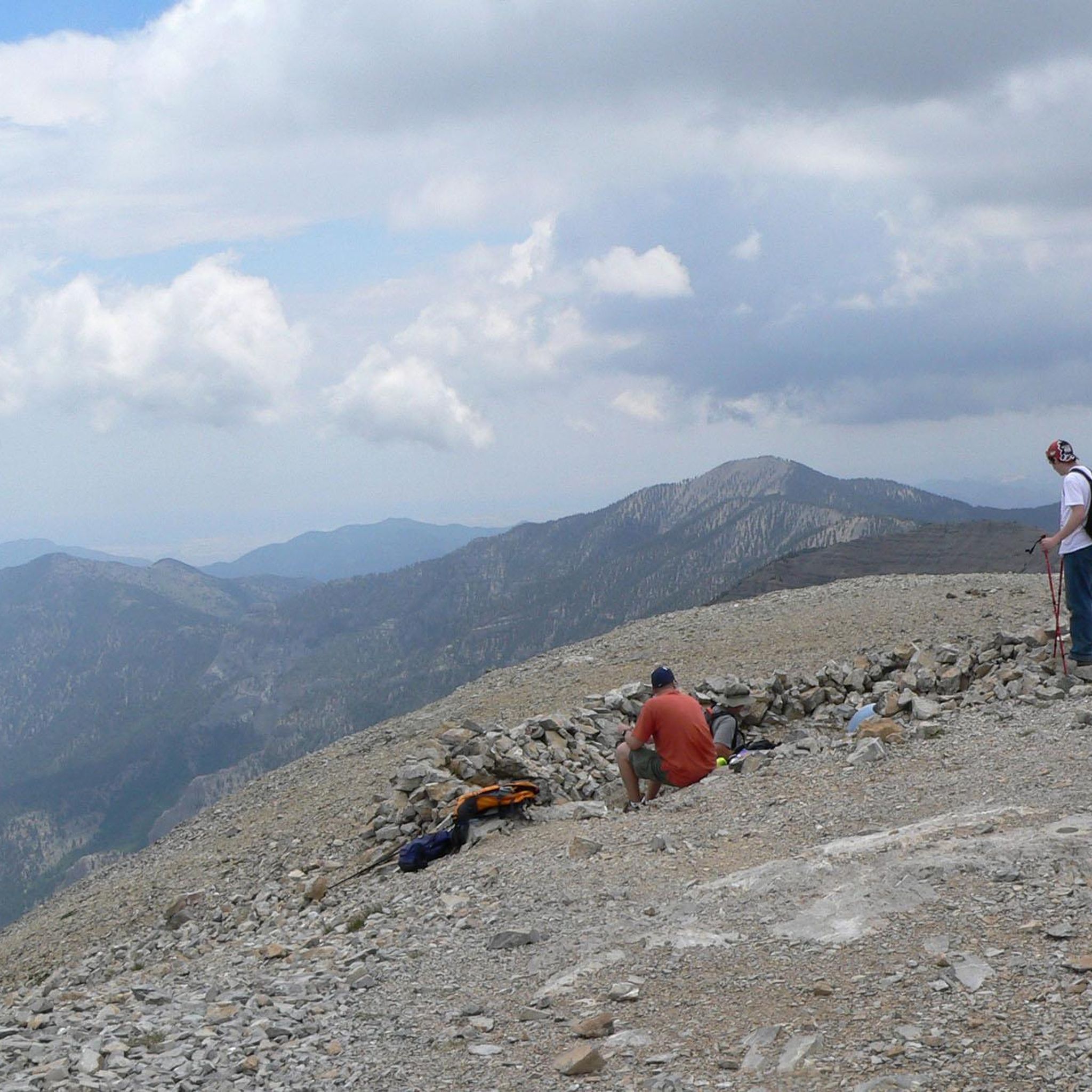
Standing at 11,916 feet, Mount Charleston is the eighth highest mountain in Nevada and the highest mountain in Spring Mountains. This exposed, prominent peak is a proud accomplishment; whether you took the North or South Loops or combined the two to reach the summit, it is an over 16-mile round trip excursion with over 4,000 feet of climbing. At the summit you are rewarded with panoramic views of the entire Spring Mountains area, the Sierra Nevada, Death Valley, and the Las Vegas valley. This exposed, rocky summit is a great place to rest, eat snacks, drink water, sign the summit register, and take photos before beginning the long descent to the trailhead.
0
0
Just a few hundred feet off the main trail is a small waterfall flowing down a two-tiered limestone cliff (well technically three, but you can only see two from the base). It is a great little detour on your way up or down from Cathedral Rock.
0
0
The Cathedral Rock Trail is a very popular, moderate trail that winds up through ponderosa pines and aspen groves toward Cathedral Rock. You get phenomenal views of the impressive, sheer limestone Echo Cliffs almost the entire way up the trail. On the Cathedral Rock trail there are log benches every 16th of a mile along the way for you to stop, sip water, and admire the views. After the junction for the Little Falls the trail steepens, but you are rewarded with increasingly spectacular views as you reach the summit of Cathedral Rock.
1
0
Frequently Asked Questions
What natural features can I explore in the Spring Mountains National Recreation Area?
The area is rich in natural beauty, featuring impressive peaks like Charleston Peak, ancient bristlecone pine forests, and unique canyons. You can explore the distinctive, water-polished limestone cliffs of Fletcher Canyon Narrows or hike through vibrant Aspen Groves, particularly stunning in the fall. Other notable features include Mummy Spring and various waterfalls, though some, like Mary Jane Falls, may be seasonally dry or temporarily closed.
Are there challenging hiking routes for experienced trekkers?
Yes, the Spring Mountains offer several challenging routes. The North Loop Trailhead provides access to demanding trails leading to Charleston Peak, Fletcher Peak, and Mummy Mountain. Another popular starting point for challenging climbs is the South Loop, Echo Canyon, and Cathedral Rock Trailhead, which also serves rock climbing areas.
Where can I find easy or family-friendly hiking trails?
For easier options, you can explore routes like the Escarpment Trail Loop or the Pinyon to Sawmill Loop. The Spring Mountains National Recreation Area offers a variety of easy hikes suitable for families. You can find more details and specific routes in the Easy hikes in Spring Mountains National Recreation Area guide.
What cultural or historical sites are there to visit?
The Spring Mountains National Recreation Area has several points of cultural interest. The Spring Mountains Visitor Gateway features exhibits, a bookstore, the Silent Heroes of the Cold War National Memorial, and the Seven Stones Plaza, which honors the Southern Paiute tribes. You can also find remnants of historic mining and logging sites, including old sawmills and the Tecopa Charcoal Kilns, as well as Civilian Conservation Corps and WPA structures.
What is the best time of year to visit the Spring Mountains National Recreation Area?
The Spring Mountains offer year-round activities. Summer provides a cool escape from the desert heat, ideal for hiking and outdoor recreation. Fall is particularly vibrant with changing aspen leaves. Winter brings opportunities for skiing, snowboarding, and snowshoeing. Spring is excellent for hiking as snow melts and wildflowers emerge. Always check current trail conditions and closures before your visit, especially after significant weather events.
Are there opportunities for running or cycling in the area?
Yes, the Spring Mountains National Recreation Area is popular for both running and cycling. You can find various running trails, from moderate to difficult, including routes like the Pictographs loop or the North Loop Trailhead – Echo Canyon Overlook loop. For cyclists, there are routes such as the Dead Horse Loop Trail or the Blue Diamond Village loop. Explore more options in the Running Trails and Cycling in Spring Mountains National Recreation Area guides.
Is parking available at trailheads, and do I need a permit for hiking?
Parking is available at various trailheads, such as the North Loop Trailhead and the South Loop, Echo Canyon, and Cathedral Rock Trailhead. However, parking spaces can be very limited, especially during peak seasons like summer and fall. Generally, permits are not required for day hiking on established trails, but it's always advisable to check with the Spring Mountains Visitor Gateway for the latest regulations or specific wilderness area requirements.
What should I know about trail closures or conditions?
Due to natural events like Tropical Storm Hilary, some trails and facilities in the Spring Mountains National Recreation Area may be closed indefinitely. For example, Mary Jane Falls Trail and parts of Cathedral Rock Trail have experienced closures. It is crucial to check weekly trail condition reports and closure notices from official sources before planning your trip to ensure access and safety.
Can I see ancient trees in the Spring Mountains?
Yes, the Spring Mountains are home to ancient bristlecone pines, some of the world's oldest living organisms. The Mount Charleston Wilderness Area contains one of the largest bristlecone pine groves in the Intermountain West. You can specifically visit The Raintree, an impressive 3,000-year-old bristlecone pine accessible via trails from the North Loop Trailhead.
Are there any specific viewpoints or scenic spots I shouldn't miss?
Many trails offer spectacular views. For instance, the Cathedral Rock Trail provides phenomenal views of the impressive Echo Cliffs. From higher elevations, you can often see panoramic vistas of the surrounding desert and even Las Vegas. The Spring Mountains Visitor Gateway also offers scenic overlooks.
What kind of wildlife can I expect to see?
The Spring Mountains National Recreation Area is a diverse ecosystem, providing habitat for a variety of wildlife. Depending on the season and elevation, you might spot mule deer, bighorn sheep, various bird species, and smaller mammals. It's a great place for wildlife viewing, but remember to observe from a distance and never feed wild animals.
Are there facilities for group gatherings or picnics?
Yes, the area provides facilities for outdoor gatherings. You can find numerous picnic areas throughout the recreation area, such as the Cathedral Rock Picnic Area and Pinion & Ponderosa Group Picnic Areas, which are suitable for day use and group events.
Most popular routes in Spring Mountains National Recreation Area
Most popular attractions in Spring Mountains National Recreation Area

Get inspired with the komoot mobile app


Didn’t find what you were looking for?
Are you keen on exploring more awesome places nearby? Browse our guides:
Explore more
Still not found the Highlight you’re looking for? See guides of the top attractions in other regions:
