The best walks and hikes in Everglades National Park
4.3
(103)
1,280
hikers
44
hikes
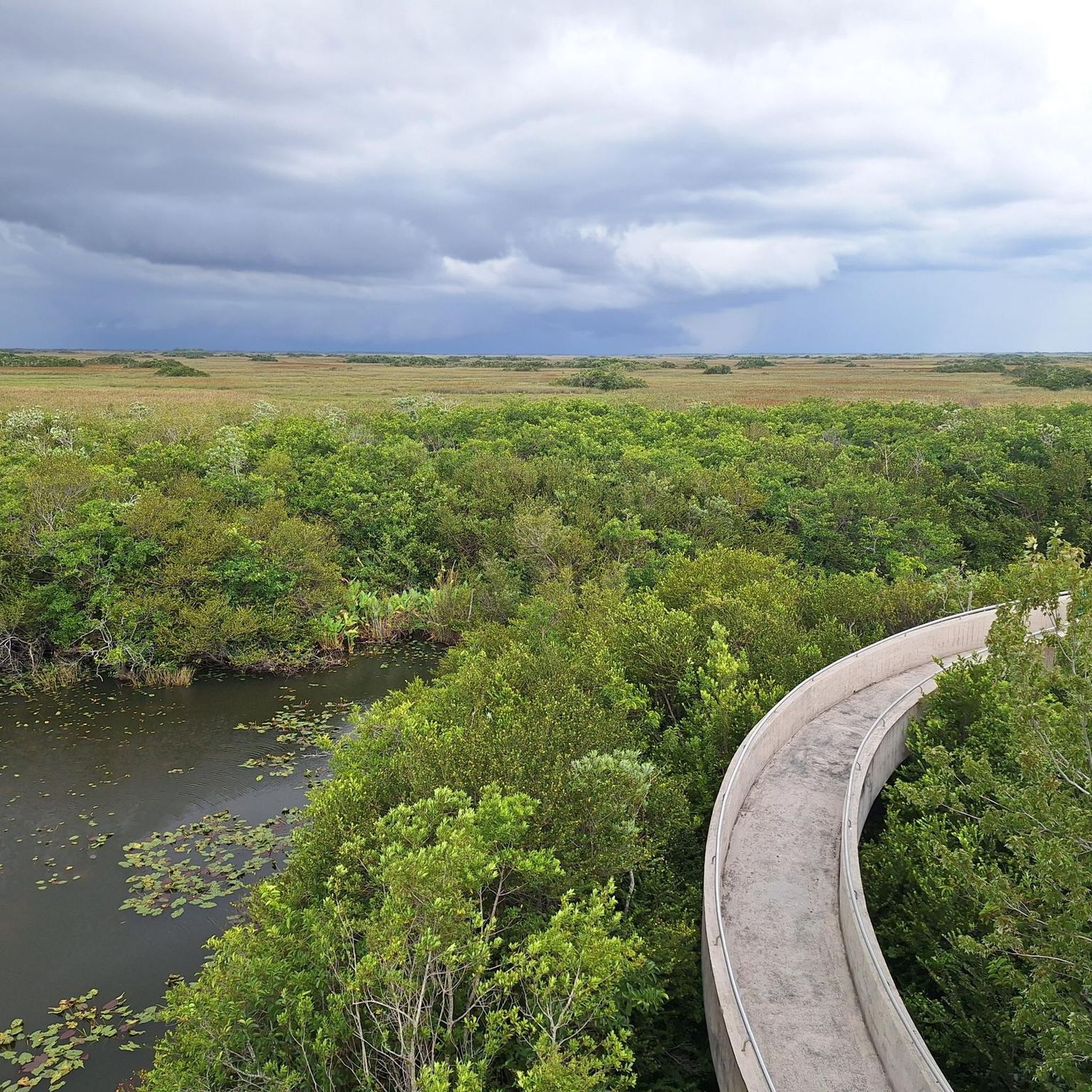
Hiking in Everglades National Park offers a unique experience through a vast wetland ecosystem. The landscape is primarily a mix of sawgrass prairies, dense hardwood hammocks, and coastal mangrove forests. Many of the park's trails are flat, utilizing boardwalks and paved paths that cross over the watery terrain, making them accessible for various fitness levels.
Best hiking trails in Everglades National Park
- The most popular hiking route is Anhinga and Gumbo Limbo Trail loop — Everglades National Park, a…
Last updated: October 10, 2026
4.3
(6)
60
hikers
718m
00:11
0m
0m
The Mahogany Hammock Trail offers a captivating glimpse into the Everglades' unique hardwood hammock ecosystem. As you stroll along the boardwalk, you'll find yourself immersed in a dense, jungle-like environment,…
6
hikers
2.95km
00:44
0m
0m
Embark on the Snake Bight Trail, an easy 1.8-mile (3.0 km) hiking route that takes you through the unique ecosystems of Everglades National Park. You will experience a gentle journey…

5.0
(2)
7
hikers
700m
00:11
0m
0m
Step onto the Pinelands Trail for an easy hike through a rare pine rockland ecosystem. This short 0.4-mile (0.7 km) route takes about 10 minutes to complete, with a minimal…
6
hikers
773m
00:12
0m
0m
Step onto the Bobcat Boardwalk Trail for an easy, immersive hike through the Everglades. This accessible boardwalk route spans just 0.5 miles (0.8 km) with a negligible elevation gain of…
4
hikers
2.03km
00:31
0m
0m
Embark on an easy 1.3-mile (2.0 km) hike along the Bayshore Loop Trail, a quick 30-minute walk with a minimal 4 feet (1 metres) of elevation gain. You will discover…
Get access to more routes and recommendations from other explorers.
Already have an account?
Our route recommendations are based on thousands of hikes, rides, and runs completed by other people on komoot.
Start today with a free account
Your next adventure awaits.



Other adventures in Everglades National Park


Tips from the Community

Very beautiful area
3
0

Hiking and cycling tours can be started from here. There is a bike rental service on site, but unfortunately it is not particularly cheap.
1
0

Visitor Center with Ranger Infos, Little shop, and Tour Start
0
0


It is a good place to get information about the conditions of the trails and also about the flora and fauna of the area. You can also pick up some snacks from here. There is bikes available for renting.
0
0

The Pinelands Trail leads through some typical Floridian vegetation: beautiful palms trees and pine trees. Enjoy this short stroll and keep your eyes peeled for some interesting rock formations: the solution holes. Those are created by the decomposition of organic material in stagnant water which leads to weak acids that dissolve the limestone over time.
2
0

It almost looks like a jungle here.
1
0
If you are here in Florida you should have been to the southernmost tip of Florida.
1
0
Frequently Asked Questions
What is the best time of year to hike in the Everglades?
The best time for hiking is during the dry season, which runs from December to April. During these months, you'll experience lower humidity, fewer mosquitoes, and more pleasant temperatures. This is also the prime season for wildlife viewing, as animals tend to congregate around the remaining water sources.
Are dogs allowed on the hiking trails?
Pets are generally not permitted on most trails in Everglades National Park, including all boardwalks and unpaved paths. This is to protect the park's sensitive ecosystem and ensure the safety of both your pet and the local wildlife. They are usually allowed in parking lots and on paved roads, but it's best to check the official park regulations before you go.
What should I pack for a hike in the Everglades?
Packing appropriately is key for a safe and enjoyable hike. Essentials include:
- Water: Bring plenty of water, especially in the warmer months, as there are few places to refill on the trails.
- Sun Protection: A wide-brimmed hat, sunglasses, and sunscreen are crucial due to the intense sun exposure.
- Insect Repellent: Mosquitoes and other biting insects can be prevalent, particularly during the wet season (May to November).
- Footwear: Sturdy, comfortable walking shoes are sufficient for most paved and boardwalk trails.
Are there any easy, family-friendly hikes in the park?
Yes, the Everglades is very family-friendly, with many short and accessible trails. A great option is the Bobcat Boardwalk and Otter Cave Hammock Trail. This easy 1.7-mile (2.8 km) walk takes you through a beautiful tropical hardwood hammock and is perfect for all ages.
What kind of wildlife can I expect to see?
The Everglades is famous for its abundant wildlife. On most trails, especially those near water, you have a very high chance of seeing alligators, turtles, and a wide variety of wading birds like herons, egrets, and anhingas. Keep an eye out in the hardwood hammocks for tree snails and various insects, and in the coastal areas, you might spot manatees or crocodiles.
Are there any circular walks available?
Many of the most popular trails in the park are designed as loops. For a walk that combines coastal prairie and mangrove estuary environments, consider the Guy Bradley Trail & Eco Pond Trail loop. It's an easy 2.7-mile (4.4 km) circuit that is excellent for birdwatching.
Are there any trails with good viewpoints?
For the most expansive views, head to the Shark Valley area. The trail here leads to the Shark Valley Observation Tower, a highly-regarded spot offering stunning 360-degree panoramic views over the vast sawgrass prairie, often called the "River of Grass."
Are there any wheelchair-accessible trails?
Yes, many of the park's most famous trails are designed to be accessible. The Anhinga Trail, Gumbo Limbo Trail, and Pa-hay-okee Overlook all feature boardwalks or paved surfaces that are suitable for wheelchairs. For a comprehensive list of accessible facilities and trails, you can visit the official National Park Service website.
Where can I get information or a trail map when I arrive?
There are several visitor centers where you can get maps, trail conditions, and expert advice from park rangers. The Ernest F. Coe Visitor Center is located at the main park entrance near Homestead and is a great first stop. If you are entering from the Tamiami Trail, the Shark Valley Visitor Center is your main hub for information.
Are there any longer or more challenging hikes?
While most Everglades trails are short and flat, there are options for a longer day out. The Snake Bight & Rowdy Bend Trail loop is a moderately difficult 7.5-mile (12.1 km) hike through dense coastal prairie and tropical hardwood hammock, offering a more remote experience.
Can I go biking in the Everglades?
Absolutely. The 15-mile paved loop of the Shark Valley Tram Road is extremely popular for cycling. It provides a fantastic opportunity to cover more ground and see a large expanse of the sawgrass prairie ecosystem. You can bring your own bike or rent one at the Shark Valley Visitor Center.
Are there any waterfalls in Everglades National Park?
No, there are no waterfalls in the Everglades. The park is famous for its extremely flat landscape, which is essentially a very wide, slow-moving river. The beauty here comes from the unique wetland ecosystems and abundant wildlife, not from dramatic changes in elevation.
Most popular routes in Everglades National Park
Most popular attractions in Everglades National Park

Get inspired with the komoot mobile app


Explore more
Browse the best Hikes in other regions.
