Attractions and Places To See around Drinkstone - Top 20
Best attractions and places to see around Drinkstone, a tranquil village in mid-Suffolk, offer a blend of English history and natural beauty. The area is characterized by its gently undulating, wooded countryside, featuring ancient trees and a network of footpaths. Visitors can explore notable landmarks and cultural sites that reflect the region's rich past and rural charm. This unspoilt setting provides opportunities for walking and discovering historical architecture.
Best attractions and places to see around Drinkstone
- The most popular attractions is Lavenham Medieval Village, a settlement that is a wonderfully well-preserved medieval village. It was once one of the wealthiest villages in the country, with its history and character evident throughout.
- Another must-see spot is St Edmundsbury Cathedral, a religious building with almost 1000 years of history. Originating in the 11th century, it became a cathedral in 1914 after several rebuilds and extensions.
- Visitors also love St Mary's Church, Woolpit, a historical site known for its 15th-century double-hammerbeam angel roof. This church is one of Suffolk's notable medieval churches, showcasing intricate carvings and a rich history.
- Drinkstone is known for its historical sites, religious buildings, and well-preserved medieval villages. The area offers a variety of attractions to see and explore, from ancient churches to picturesque settlements.
- The attractions around Drinkstone are appreciated by the komoot community, with more than 120 upvotes and over 40 photos shared by visitors.
Last updated: May 4, 2026
Lavenham Medieval Village
Highlight • Settlement
Tip by

St Edmundsbury Cathedral
Highlight • Religious Site
Tip by

Sign up now to discover places like this
Get recommendations on the best single tracks, peaks, & plenty of other exciting outdoor places.
Sign up for free
Abbey Gate, Bury St Edmunds
Highlight • Historical Site
(en.wikipedia.org/wiki/Bury_St_Edmunds)
Tip by
St Mary's Church, Woolpit
Highlight • Historical Site
The church of The Blessed Virgin Mary in Woolpit is one of the great medieval churches of Suffolk, a county blessed with some of the finest country churches in England. Like so many other Suffolk villages Woolpit owes its superb church to the wealth of the medieval wool trade, but there was a church on this spot centuries before Suffolk wool merchants gained their wealth.
The earliest record of a church at Woolpit comes from AD 1005 when the Earl of the East Angles gave the church and manor here to the Shrine of St Edmund at Beodricsworth (Bury St Edmunds). The church remained the property of the Abbey until the Dissolution of the Monasteries. The Woolpit church originally sent 10 marks worth of tithes to support the monks of Bury, but at some point in the medieval period this sum claimed by the crown.
The monks of St Edmundsbury Abbey were furious, and determined to seek reparation. Two monks disguised themselves as Scottish pilgrims and without permission left the abbey and made the long journey to Rome, where they sought and obtained a Papal charter affirming their right to the money.
They were attacked and robbed on their return journey, but one of the monks hid the charter in his mug, and so preserved it. The pair's belongings had been stolen, so they had no choice but to beg their way back to the abbey. The Papal charter did the trick, however, and Woolpit's tithe once more went to help maintain sick monks.
Shortly before 1087, a new church was built at the behest of Abbot Baldwin. The only remaining feature of this Norman building is the priest's door in the south wall of the chancel.
The double-hammerbeam angel roof
OUR LADY OF WOOLPIT
Woolpit became a destination for pilgrims during the medieval period, when it held a richly decorated statue of Our Lady in its own chapel. No trace of this chapel now survives but it was probably on the north side of the chancel, where the vestry now stands.
Alternatively, it may have stood at the east end of the south aisle. Pilgrims began arriving at least as early as 1211 when the Bishop of Norwich ordered that their offerings be given to St Edmundsbury Abbey.
The Shrine of Our Lady of Woolpit became extremely popular during the 15th and 16th centuries. Henry VI visited twice, and Queen Elizabeth of York, wife of Henry VII, ordered that a pilgrimage be made on her behalf in 1501. In 1538 Henry VIII ordered that Catholic images be destroyed, and it seems likely that the statue was pulled down at that time. in 1551 the Court of Augmentation ordered that the chapel itself be pulled down and the material sold.
A curious scene took place at Woolpit during the tumult of the English Civil War. The incumbent rector was John Watson, and when he was ordered to accept the new Puritan style of worship he refused. He was removed from his living, and the Earl of Manchester sent armed men to enforce the order. The village split into two factions, and a furious melee broke out in the church. The rector was removed, and retired to Norfolk where he died shortly after.
St Mary's is worth visiting for its superb double-hammerbeam roof, decorated with carved figures of angels. Iconoclast William Dowsing did his best to destroy the angels in 1644. His deputy found 80 'superstitious Pictures' some of which he destroyed and others he ordered to be taken down. Many of the angel's heads were defaced but these were sensitively restored in the 19th century.
Other highlights include beautifully carved medieval bench ends decorated with a wide variety of carved figures. These figures probably survived because the Puritans considered them heraldic symbols rather than religious. Eye-catching figures include griffins and a very mournful looking dog.
Another highlight is a finely crafted south porch dating to 1430-1455. Over the porch arch is a parvise, a small chamber possibly used for storing important documents. The porch roof is vaulted with exceptionally detailed lierne vaulting and decorated bosses.
The eagle lectern is a rare early Tudor relic, made around 1520 and one of just 20 surviving examples made to accept a chained Bible. A local tradition suggests that Elizabeth I gave the lectern to the church, though there is no proof of this. The queen did visit nearby Haughley Park in 1600 and sent one of her knights to visit Woolpit on her behalf. It is certainly possible that he gave the parishioners money that was used to buy the lectern.
The screen is 15th century, though the gates are Jacobean. The screen is painted and gilded and retains the medieval beam made to hold the rood, or crucifix. The base of the screen is painted with figures of saints including St Withburga, St Edmund, St Etheldreda, and St Felix. The face of St Felix is actually a portrait of Henry Page, the serving rector at the time of the Victorian restoration. Over the arch is a beautifully vaulted painted dedication board, decorated with figures of angels.
The large east window is a beautiful example of Decorated Gothic style, with reassembled fragments of medieval glass in the upper lights.
Each end of the chancel choir stalls has a bench end with an intricate figure of a Green Man. Set against the wall is a fascinating carving of a woodwose, a wild man of the woods figure found throughout East Anglia.
Most of the building is Perpendicular Gothic, dating from the mid-15th century but the chancel and south aisle are 14th century. The tower and spire were added in the 1850s by architect Richard Phipson after the medieval originals were damaged by lightning. This is actually the third tower; the first was damaged in a thunderstorm in 1602 and the second was blown down in a hurricane in 1703.
Tip by

St. Saviour's Hospital, Bury St Edmunds
Highlight • Historical Site
Abbot Samson and the convent granted to the hospital the place upon which the buildings stood; £13 in silver of their village of Icklingham; two portions of their church of Melford; portions of certain tithes; eight acres of corn in Cockfield; and their houses at 'Telefort,' saving to the monastery an annual service of 2s., and to the canons 12d. This grant was confirmed on 16 July, 1206, by John de Gray, bishop of Norwich.
The annual value of this hospital in 1291 is set down at the round sum of £10.
A charter of Abbot John, 1292, relative to this hospital, lays down that the inmates henceforth must be poor; that 6s. 8d. was to be allowed to clerks and laymen, and 5s. to sisters; and that the warden was to be a man of prudence and discretion. The endowment was at the same time augmented by 10 acres of land and two of meadow near the south gate, and by 22d. rent in the town.
In the time of Edward I, there were only seven chaplains, and it was decided to dismiss the poor sisters and in their place to receive and maintain old and infirm priests.
In 1336 the abbey successfully resisted the crown's custom of imposing pensioners on the hospital funds; securing a grant that after the death of John de Broughton the hospital should not again be called upon to provide corrodies out of its revenues.
In 1390 William the abbot, with the consent of Adam de la Kyndneth, guest-master, granted to Edward Merssh of Ickworth a corrody in this hospital for his life. In the following year Robert Rymer was granted a corrody by the same abbot in St. Saviour's, through the vacancy caused by the death of Edward Merssh. In the year 1392 John Reve, of Pakenham, was admitted an inmate on the following terms: he was to have board and lodging in the hospital for life, and to receive annually a gown, a pair of stockings, and a pair of shoes. It is added in a memorandum that John Reve in consideration of this grant was to pay to the master of the hospital, towards the new fabric of the hospital, the large sum of 26 marks by the hand of Robert Ashfield. The hospital was also used from time to time as a refuge for worn-out priests. Abbot John of Northwold, when founding the charnel house, laid down that its two chaplains, when they became infirm, were to be admitted to St. Saviour's Hospital, save if they were suffering from any contagious disease, when they were to be sent to the hospital of St. Peter or that of St. Nicholas.
Among the town muniments are five rolls of accounts of this hospital for the years 1353-4, 1374-5, 1385-6, 1386-7, and 1438-9. Mention is made in the accounts for 1386-7 (when the receipts were £106 2s. 9½d. and the expenses £234 3s. 6¾d.), among the ornaments of the chapel of St. Thomas in the infirmary church, of 12s. for a silver box placed beneath the feet of an image, and a base (corbel stone) bought of Simon, the abbey mason, at 5s., for the image to stand on at the right corner of the altar. Also three books with the services of the passion and translation of St. Thomas, 13s. 4d. Sixpence was paid to a messenger going to Clare to get a doctor in theology to preach on St. Thomas's Day, and then on to Sudbury for tiles for the pavement of St. Thomas's Chapel. A suffragan bishop received a gift this year, as well as his chaplain and servant; he probably attended to consecrate the chapel or altar of St. Thomas.
St. Saviour's Hospital was by far the largest and most important institution of its kind in the town. It suffered much at the hands of the rioters of 1327, both in stock and goods; the loss was valued at £21 9s. 6d., including horses, cows, and pigs, as well as smaller articles, such as six silver spoons worth 7s. 6d., and a maser worth a mark.
The accounts of this hospital are not entered separately from those of the abbey in the Valor of 1535. There are eight entries of dues payable to the hospital from certain abbey properties, amounting to £6 2s. 3d. This intermingling of the accounts of the hospital with those of the abbey arose from the fact that in 1528 Pope Clement issued a bull whereby the profits of this hospital were annexed to the abbey and specially assigned for the exercise of hospitality at the abbot's table.
The hospital site and buildings (save the lead) were granted on its suppression by Henry VIII to Sir John Williams and Anthony Stringer in February, 1542-3, but they almost immediately received licence to alienate to Nicholas Bacon and Henry Ashfield.
Wardens of the Hospital of St. Saviour, Bury St. Edmunds
Peter de Shenedon, occurs 1318
Nicholas Snytterton, occurs 1374
Walter de Totyngtone, occurs 1385
John Power, occurs 1390
Adam de Lakyngheth, 1406
Tip by
Sign up for free to discover even more attractions around Drinkstone.
Sign up for free
Already have an account?
Start today with a free account
Your next adventure awaits.
Login or Signup

Tips from the Community

Filming location for Harry Potter and the Deathly Hallows Part 1, representing the wizarding village of Godric's Hollow. De Vere House: Transformed into the dilapidated home of Harry Potter's parents, Lily and James Potter. https://www.deverehouse.co.uk/ Lavenham Guildhall: Also featured and served as a model for the house in the film
0
0
Exceptionally well-preserved medieval architecture, unique timber-framed buildings, and rich history as a wealthy wool town. Visitors can explore historic sites like the Lavenham Guildhall and Little Hall. There over 340 grade listed buildings
0
0

A real feeling of history as you walk through the village.
0
0

The present building is a cathedral. The abbey that preceded it was shut down after the reformation and only its ruins remain.
0
0


This beautiful cathedral was originally built as a church in the early 13th century and became a cathedral for the newly established Diocese of St Edmundsbury and Ipswich in 1914. It has some beautiful characteristics including a large rose window, detailed stone carvings, fantastic gardens and the notable Abbey Gate.
1
0
Frequently Asked Questions
What historical landmarks can I visit in and around Drinkstone?
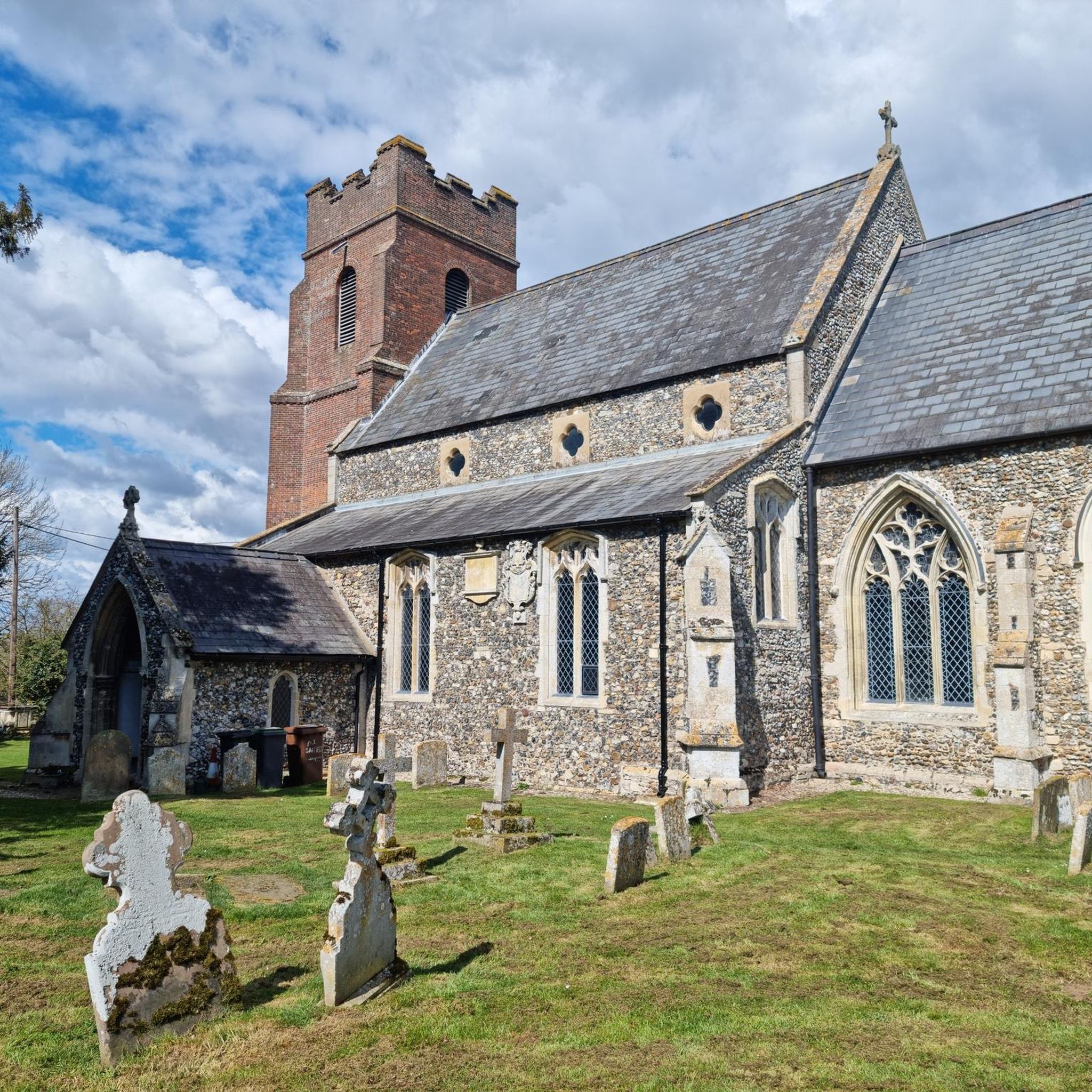
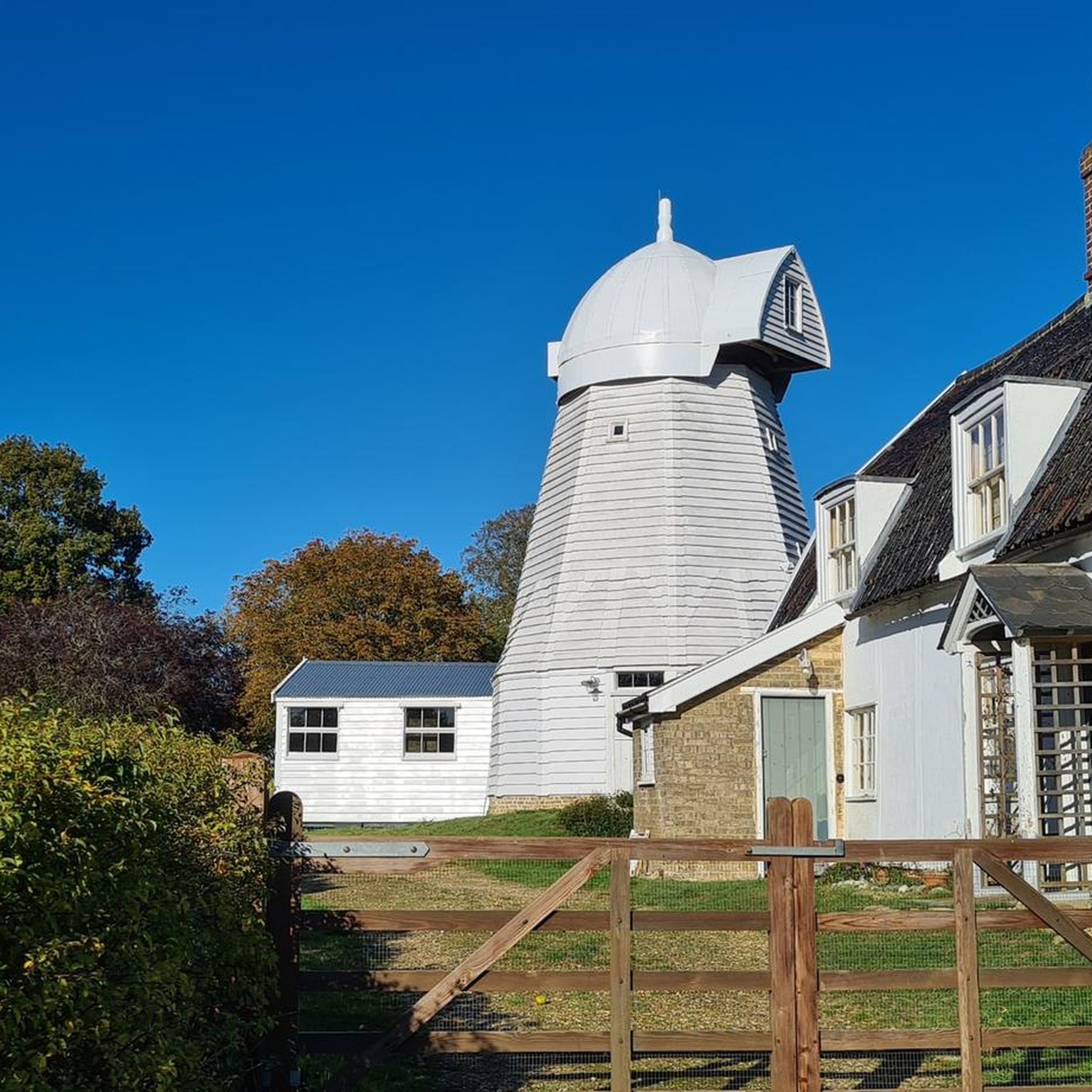
Drinkstone and its surroundings are rich in history. You can explore the 14th-century All Saints' Church in Drinkstone, known for its 15th-century oak screen and historic organ. The village also features the historic Drinkstone Windmills, including a post mill from 1689. Nearby, visit the well-preserved medieval village of Lavenham Medieval Village, the almost 1000-year-old St Edmundsbury Cathedral, and St Mary's Church, Woolpit, famous for its 15th-century double-hammerbeam angel roof.
Are there opportunities for walking and hiking near Drinkstone?
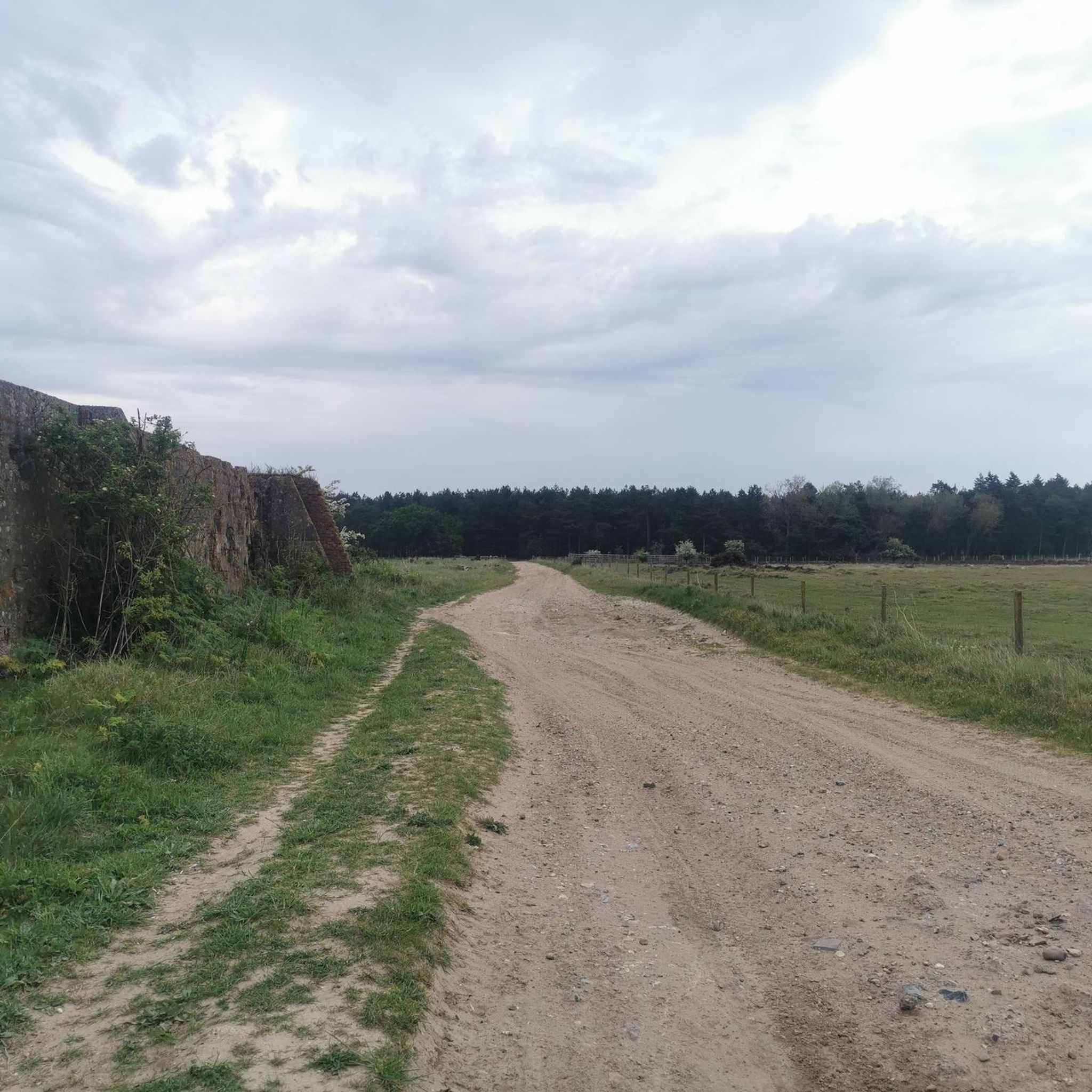
Yes, Drinkstone is surrounded by a wonderful network of footpaths, making it ideal for walking. The area features a gently undulating, wooded countryside with ancient oak trees and parcels of woodland. For dedicated hiking routes, you can find several options, including moderate trails like the Woolpit loop from Rattlesden or easier paths such as the Hiking loop from Bradfield Woods National Nature Reserve. Explore more options on the Hiking around Drinkstone guide.
What natural attractions can I explore in the Drinkstone area?
The primary natural attraction nearby is the Bradfield Woods National Nature Reserve, offering a significant natural escape. Drinkstone itself is set within a beautiful rural landscape characterized by a chalky boulder clay plateau, small river valleys, and lightly wooded arable countryside. You'll encounter prominent oak trees, many ancient pollards, and diverse woodlands, providing a generally wooded feel to the area.
Are there family-friendly attractions or activities in the Drinkstone area?
Many of the historical sites are suitable for families, including exploring the medieval streets of Lavenham Medieval Village and visiting the impressive St Edmundsbury Cathedral. The network of footpaths around Drinkstone also offers opportunities for family-friendly walks, allowing children to enjoy the natural countryside.
What outdoor activities, besides hiking, can I do near Drinkstone?
Beyond hiking, the Drinkstone area offers opportunities for running and gravel biking. You can find various running loops, such as the Running loop from Woolpit or the Mill Hill – Birds Wood loop from Rattlesden, which are generally moderate in difficulty. For gravel biking, there are routes like the Seven Tree Road – West Stow Anglo-Saxon Village loop from Natterer's Wood. Discover more routes on the Running Trails around Drinkstone and Gravel biking around Drinkstone guides.
What is the significance of Drinkstone Park?
Drinkstone Park holds historical significance as the former estate of Joshua Grigsby, an 18th-century figure whose portrait was painted by Thomas Gainsborough. While the grand house was demolished in 1949, the estate's lake and parkland belts remain, and some homes have been converted from stable blocks. It offers a glimpse into the area's past landed gentry.
What do visitors enjoy most about the attractions around Drinkstone?
Visitors particularly appreciate the rich history and character of places like Lavenham Medieval Village, noting its well-preserved medieval architecture. The historical depth of sites such as St Edmundsbury Cathedral and St Mary's Church, Woolpit, with their intricate details and centuries of stories, also receives high praise. The overall tranquil and unspoilt nature of the region is a key draw.
Are there any unique architectural features to look out for in the churches?
Yes, St Mary's Church, Woolpit is particularly notable for its 15th-century double-hammerbeam angel roof, considered one of the finest in Suffolk. All Saints' Church in Drinkstone also features a beautiful 15th-century oak screen and a Flemish bond-brick tower added in 1694, showcasing different architectural styles across centuries.
What is the history behind St. Saviour's Hospital in Bury St Edmunds?
St. Saviour's Hospital, Bury St Edmunds, founded around 1184 by Abbot Samson, was originally established to care for a warden, chaplains, clerks, and poor men and women. It was a significant institution in its day, providing care and refuge, including for worn-out priests. While now largely ruins, it offers a fascinating insight into medieval charitable and religious practices.
Is Drinkstone Village Hall historically significant?
Yes, Drinkstone Village Hall has a unique history. It opened in 1922 as the official Drinkstone War Memorial and originally served as a First World War officers' mess hut at Great Ashfield Airfield. It was brought to Drinkstone in sections and re-erected, becoming a central hub for community activities in the village.
What is the best time of year to visit Drinkstone for outdoor activities?
The best time to visit Drinkstone for outdoor activities like walking and hiking is generally during the spring, summer, and early autumn months (April to October) when the weather is milder and the countryside is in full bloom. The network of footpaths is enjoyable in these seasons. While winter walks are possible, conditions can be muddy, and daylight hours are shorter.

Get inspired with the komoot mobile app


Explore more
Still not found the Highlight you’re looking for? See guides of the top attractions in other regions:
