Attractions and Places To See around Charlton Marshall - Top 20
Best attractions and places to see around Charlton Marshall, Dorset, include a mix of historical sites and natural landscapes. The area features ancient Iron Age hill forts and a restored heritage railway station. Visitors can explore viewpoints offering expansive views and trails suitable for various activities. This region provides opportunities to engage with both local history and the natural environment.
Best attractions and places to see around Charlton Marshall
- The most popular attractions is Shillingstone Railway Station & Museum,…
Last updated: May 21, 2026
Shillingstone Railway Station & Museum
Highlight (Segment) • Historical Site
Tip by

Hambledon Hill Iron Age hill fort
Highlight • Viewpoint
Tip by

Sign up now to discover places like this
Get recommendations on the best single tracks, peaks, & plenty of other exciting outdoor places.
Sign up for free
North Dorset Trailway
Highlight (Segment) • Trail
Tip by

Blandford Railway Arches and Footbridge
Highlight (Segment) • Historical Site
Tip by

Badbury Rings Iron Age hillfort
Highlight • Viewpoint
Tip by
Sign up for free to discover even more attractions around Charlton Marshall.
Sign up for free
Already have an account?
Start today with a free account
Your next adventure awaits.
Login or Signup


Tips from the Community


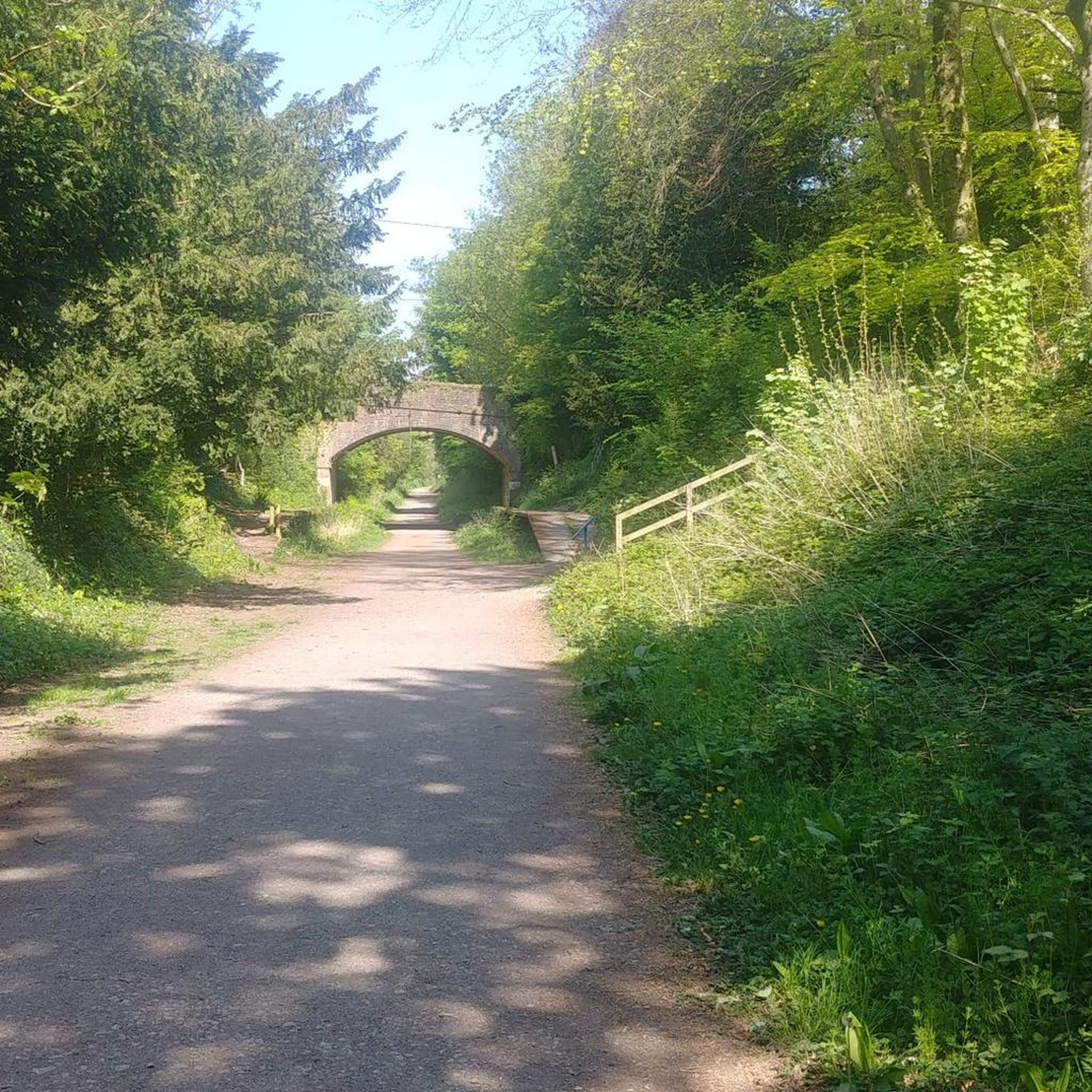
In addition to the main rail bridge spanning the river, smaller bridges were built to allow traffic and pedestrians to cross the cuttings and track as it travelled north-west. Three bridges were built for this purpose and all of them remain integral to the navigation of the town today. Arguably the most distinctive of them is the Alexandra Street pedestrian footbridge, above the site of the dismantled station. Constructed from iron and now partially supported by four narrow legs, the bridge stands at what was once the northern end of the station, where the single-line section to Templecombe began. Blandford station remained open until 7 March 1966, when the entire line from Bath to Bournemouth closed to passengers. Goods traffic continued for a further three years, but the station was finally closed and the track lifted in 1969. Following the closure, the Damory railway bridges, on the southern approach to the station, were eventually demolished in 1978.
1
0
What a beautiful place to ride a bike! Nothing too demanding along this route. A mixture of cyclists, dog walkers, hikers and pushchair parents. highly recommend this route.
1
0
Shillingstone railway station was a station on the Somerset and Dorset Joint Railway (S&DJR), serving the village of Shillingstone in the English county of Dorset. Shillingstone is the last surviving example of a station built by the Dorset Central Railway (one of the forerunners of the S&DJR). The station closed in 1966, when services were withdrawn from the S&DJR route. Since 2001, enthusiasts have been working to re-open the station as a heritage railway attraction.[1] The main building has now been renovated, and opened to the public as a museum, shop and refreshment room in 2008.[ The station was opened on 31 August 1863 by the Somerset and Dorset Railway, although planned and designed by one of its two predecessors, the Dorset Central Railway. Initial train services were provided by the London and South Western Railway (LSWR). In 1875, the Midland Railway and the LSWR together took over a joint lease of the line, forming the Somerset and Dorset Joint Railway.
0
0
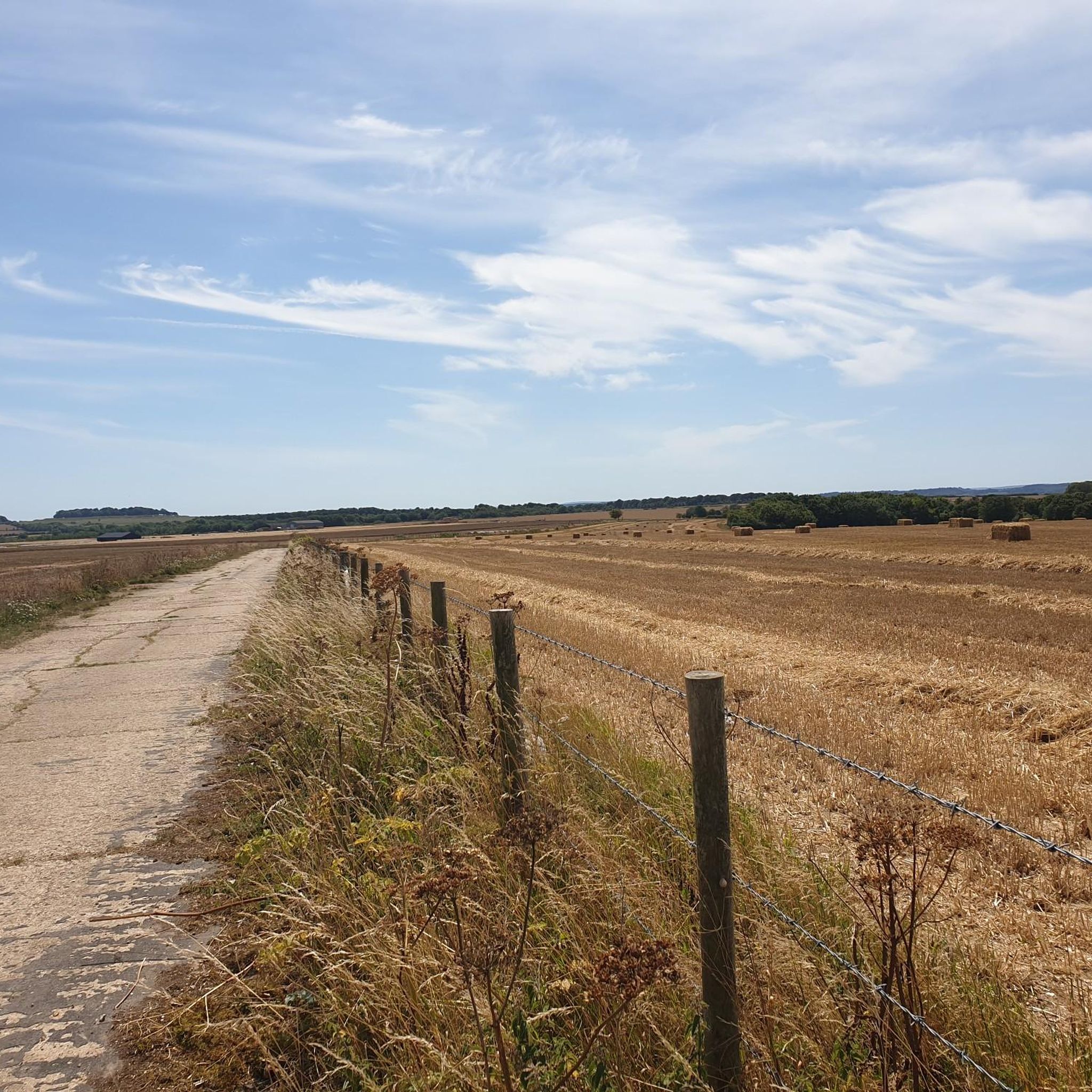
Badbury Rings is an Iron Age hill fort and Scheduled Monument in east Dorset, England. In the Roman era a temple was located immediately west of the fort, and there was a Romano-British town known as Vindocladia ( Known today as Shapwick ) a short distance to the south-west. It sits over 300 feet above sea level, and there are two main phases of construction; the first covered 18 acres and was defended by multiple ditches, while the second was more than twice the size, covering 41 acres and defended by a single ditch and rampart. These ramparts make for great walking, but imagine the terror of trying to scale one whilst under attack from the occupants. Once you'd scaled one, there were more waiting for you. No wonder it was the last fort to be sacked by the Romans. Wonder just how many soldiers died trying to take it. Until 1983 Badbury Rings was privately owned as part of the Kingston Lacy estate, and the owners discouraged investigation of the site.[2] The site now belongs to the National Trust.[2] A survey of the hillfort by the RCHME was begun in 1993. The summit area was cleared of undergrowth by the National Trust in 1997 and the conifer plantation was thinned out. A survey in 1998, which recorded 28 potential hut sites within the ramparts, although some depressions are probably caused by uprooted trees. The first excavations, led by Martin Papworth, took place in 2004, when three evaluation trenches were dug. Almost all of the pottery found was dated to the Late Iron Age. The current evidence does not suggest that the hillfort was a principal settlement in the Early Iron Age. It seems likely that the hillfort became depopulated towards the end of the Late Iron Age, perhaps as the Vindocladia settlement near Shapwick developed.
1
0
The hill is now a National Nature Reserve (NNR) with common plants including milkwort, salad burnet, horseshoe vetch, squinancywort, pyramidal orchid and wild thyme. Rarer species include bastard toadflax, meadow saxifrage, early gentian and dwarf sedge. Butterflies include dingy skipper, grizzled skipper, chalkhill blue and Adonis blue. In August 2014, Hambledon Hill fort was acquired by the National Trust for £450,000. The money to buy the hill had come from a Natural England grant and a legacy gift left to benefit Dorset countryside. The hillfort is a Scheduled Monument, as is the adjacent Neolithic causewayed camp.
2
0

Bradbury Rings is an Iron Age hill fort. The Romans built a temple here and there was a Romano-British town known as Vindocladia nearby. Today, you can run the earthworks and around the edge, it's fun and fascinating. The National Trust own and manage the site but it's open access to all.
0
0
Frequently Asked Questions
What historical sites can I visit near Charlton Marshall?
The area around Charlton Marshall is rich in history. You can explore the restored Shillingstone Railway Station & Museum, which functions as a museum with rolling stock. Additionally, there are ancient Iron Age hill forts like Hambledon Hill and Badbury Rings, both offering insights into the region's past. Don't miss the historic White Mill Bridge, a 14th-century stone bridge with a nearby 18th-century corn mill.
Where can I find scenic viewpoints around Charlton Marshall?
For breathtaking views, visit Hambledon Hill Iron Age hill fort, which towers 623 feet above the Blackmore Vale and River Stour, offering expansive vistas into Wiltshire and Somerset. Badbury Rings also provides wonderful views of the surrounding landscape from its elevated position. The White Mill Bridge offers picturesque views over the River Stour.
Are there family-friendly attractions near Charlton Marshall?
Yes, several attractions are suitable for families. The Shillingstone Railway Station & Museum is a great option, featuring restored rolling stock and a cafe. The North Dorset Trailway is a largely traffic-free path perfect for family walks or cycling. Both Badbury Rings and White Mill Bridge are also considered family-friendly, offering space to explore and enjoy the outdoors.
What outdoor activities can I do near these attractions?
The area around Charlton Marshall is excellent for outdoor activities. You can enjoy hiking on various trails, including easy routes like the 'Oh No' Bridge – Spetisbury Station loop. Cycling is popular, especially on the North Dorset Trailway. Mountain biking trails are also available, such as the 'Tarrent Rawston & Witchampton loop'. For more details on routes, explore the hiking guide or MTB trails guide for Charlton Marshall.
Are there easy walks or trails suitable for all abilities?
Absolutely. The North Dorset Trailway is a largely flat, traffic-free path running between Sturminster and Blandford Forum, making it ideal for easy walks and cycling for all abilities. You can also find several easy hiking routes listed in the Easy hikes around Charlton Marshall guide, such as the 'Spetisbury Station – Spetisbury Station Project loop'.
What are the opening hours for Shillingstone Railway Station & Museum?
The Shillingstone Railway Station & Museum is currently open on Wednesdays, Saturdays, and Sundays from 10 am to 4 pm. It's run by volunteers and enthusiasts who have restored the station and some rolling stock.
Is Hambledon Hill managed by a conservation group?
Yes, Hambledon Hill is managed by the National Trust. It is also designated as a National Nature Reserve (NNR) due to its status as one of the best examples of unimproved calcareous grassland in England, home to many rare plant and animal species.
Can I visit the White Mill and the bridge?
You can visit the White Mill Bridge, a Grade 1 listed 14th-century stone bridge, at any time. The National Trust-managed White Mill, an 18th-century corn mill with old wooden machinery, is typically open from 12:00 to 16:00 on weekends. It's advisable to check the National Trust website for current opening times before your visit.
Are there any natural monuments or reserves in the area?
Yes, Hambledon Hill Iron Age hill fort is not only a historical site but also a National Nature Reserve (NNR). It's recognized for its well-preserved calcareous grassland and diverse rare plant and animal species, making it a significant natural monument.
What is the North Dorset Trailway like for cycling?
The North Dorset Trailway is an excellent option for cycling. It's an off-road gravel path that is largely traffic-free and flat, running between Sturminster and Blandford Forum. This makes it perfect for relaxed rides, families, and less experienced cyclists, offering pleasant views of the surrounding landscape.
What do visitors enjoy most about the attractions around Charlton Marshall?
Visitors particularly appreciate the blend of historical significance and natural beauty. The well-preserved Iron Age hill forts like Hambledon Hill and Badbury Rings are loved for their stunning views and historical context. The restored Shillingstone Railway Station & Museum offers a unique heritage experience, while the North Dorset Trailway is popular for its accessible and scenic paths.
Most popular routes around Charlton Marshall
Most popular attractions around Charlton Marshall

Get inspired with the komoot mobile app


Explore more
Still not found the Highlight you’re looking for? See guides of the top attractions in other regions:
