Attractions and Places To See around Sydling St. Nicholas - Top 20
Best attractions and places to see around Sydling St. Nicholas include a blend of historical landmarks and natural features within the Dorset Downs. The village is situated in a valley carved by the Sydling Water, surrounded by rolling chalk hills and ancient field patterns. This area offers a rich history, with evidence of human occupation dating back almost 5,000 years, alongside significant conservation areas. It serves as a starting point for exploring scenic chalk downlands and quiet stream valleys.
Best…
Last updated: August 2, 2026
Cerne Abbas Giant
Highlight • Monument
Measuring at 55 metres (180 ft) high, the origin of the figure of a man wielding a …
Tip by

Maiden Castle hillfort
Highlight • Viewpoint
Tip by

Sign up now to discover places like this
Get recommendations on the best single tracks, peaks, & plenty of other exciting outdoor places.
Sign up for free
Thomas Hardy's Cottage
Highlight • Historical Site
Tip by

Frome Valley Trail
Highlight • Trail
Tip by

Abbot's Porch, Cerne Abbey
Highlight • Historical Site
Throughout its history, Cerne Abbey played a vital role in the local community …
Tip by

Sign up for free to discover even more attractions around Sydling St. Nicholas.
Sign up for free
Already have an account?
Start today with a free account
Your next adventure awaits.
Login or Signup
Popular around Sydling St. Nicholas

Other adventures around Sydling St. Nicholas

Tips from the Community

The Cerne Abbey Abbot's Porch is a stunning, three-story fragment of history that serves as a grand reminder of the abbey's former glory. It’s the kind of place where you can just sit and admire the intricate stonework and that iconic two-story oriel window. It feels wonderfully peaceful, tucked away at the end of Abbey Street. Since it’s one of the few pieces of the 15th-century monastery still standing, it has a very grounded, quiet presence. It’s perfect for a slow wander when you want to soak up the medieval atmosphere without any rush.
0
0
Towering over the village is Britain’s most "well-endowed" landmark, a 180-foot chalk giant who clearly forgot his trousers—and his modesty. Carved into the hillside with a massive club and an even more massive... ego, he’s been blushing hikers for centuries. Legend says sleeping on his "manhood" boosts fertility, but most people just settle for a breathless selfie. He’s ancient, he’s shameless, and he’s definitely the only hillside that’s genuinely happy to see you.
0
0
Dominating the Dorset landscape, Maiden Castle is one of Europe’s largest and most complex Iron Age hillforts. Its massive, labyrinthine earthworks were engineered around 400 BC to protect a thriving community of hundreds. The site is famous for its "war cemetery," detailing a fierce struggle against the Roman Second Legion in 43 AD. Today, its sweeping ramparts remain a masterclass in ancient defensive architecture.
0
0
* Historic Structure: The cottage itself was built in 1800 by Hardy's great-grandfather and has remained largely unaltered since the Hardy family left. It offers a glimpse into 19th-century rural life, with its open hearths, small windows, and stone floors. While the furniture inside isn't original to the Hardy family, it is authentic to the period, helping to recreate the atmosphere of his upbringing. * National Trust Property: The cottage is now owned and managed by the National Trust, ensuring its preservation and public access. * Traditional Cottage Garden: The property features a typical cottage garden, complete with roses around the door, which would have been an early inspiration for the author.
0
0
* Hardy's Early Life and Works: Hardy lived in this cottage until he was 34 years old. It was here that he wrote some of his early and influential works, including the novels Under the Greenwood Tree (1872) and Far from the Madding Crowd (1874), as well as early poetry and short stories. The surrounding landscape, including the adjacent Thorncombe Wood and the heathland (which inspired his fictional "Egdon Heath" in The Return of the Native), profoundly influenced his writing.
0
0
Thomas Hardy's Cottage is a significant literary landmark located in Higher Bockhampton, near Dorchester, Dorset, England. It is a quaint, cob and thatch cottage, notable for being the birthplace of the celebrated author Thomas Hardy in 1840. Here's what makes it special:
0
0

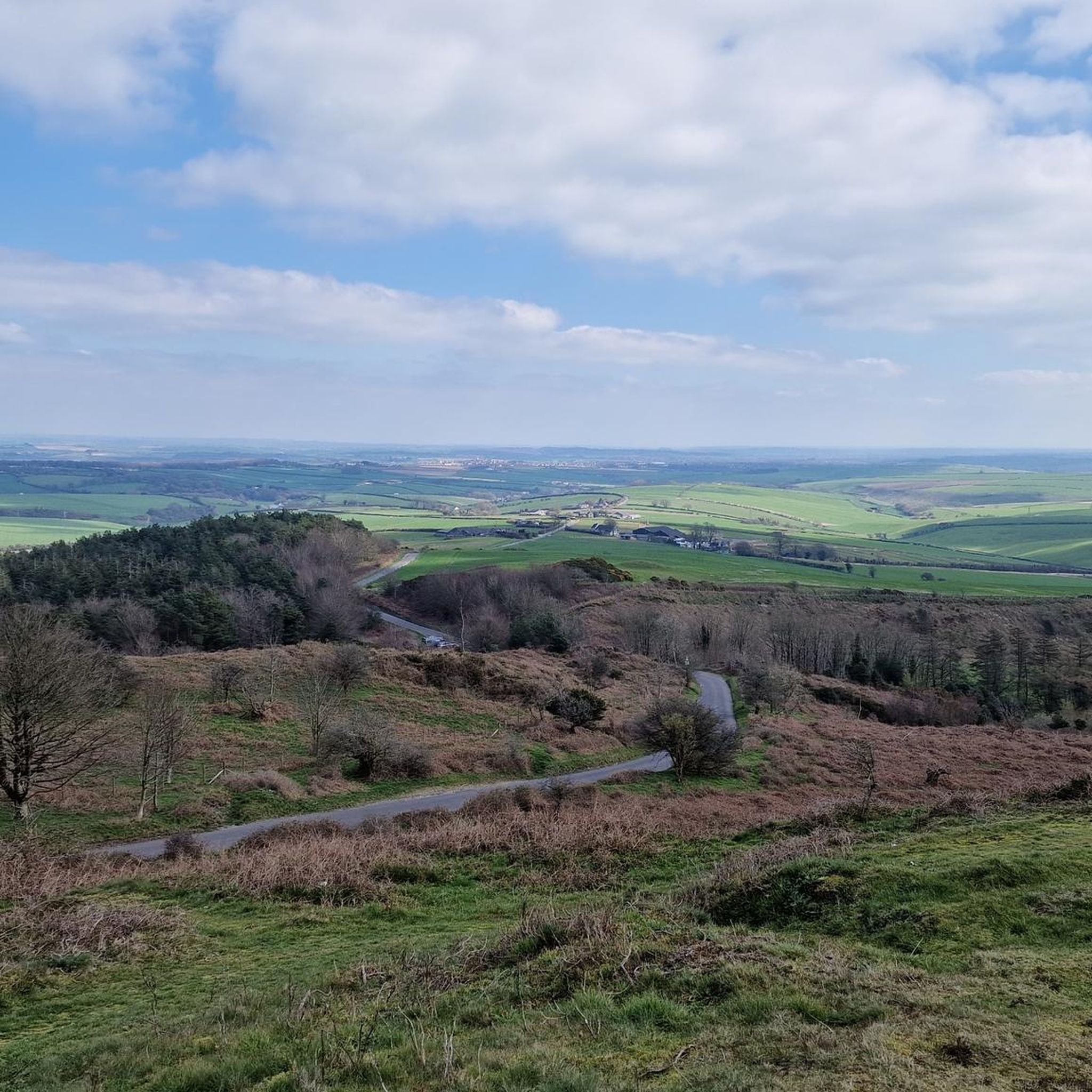
It is very impressive to walk along the extensive ramparts and enjoy the view of the surrounding countryside.
1
0

The view of giant is best from the opposite hill. When I took my photo the chalk was very dull so viewing wasn’t brilliant but I know they restore him every now and again so he should be bright again.The climb up past the giant is very steep so if hiking poles would be a great addition and grippy footwear 👟
0
0
Frequently Asked Questions
What historical sites can I explore in Sydling St. Nicholas?
Sydling St. Nicholas is rich in history. You can visit the Parish Church of St. Nicholas, which dates mainly from the 15th century and features a Norman font and a 1593 tower clock. Nearby, you'll find Sydling Court, a Georgian manor with Tudor origins, and the Elizabethan Tithe Barn from 1590. The village also has a base of an old stone cross, marking the site of its annual fair since the Middle Ages.
Are there natural attractions or scenic landscapes to discover around Sydling St. Nicholas?
Yes, the entire parish of Sydling St. Nicholas lies within the Dorset National Landscape, offering stunning natural beauty. The village is set in a valley carved by the Sydling Water, a chalk stream known for its watercress farms. You can explore the rolling chalk hills of the Dorset Downs, which provide rewarding climbs and far-reaching views.
What kind of walking and hiking opportunities are available near Sydling St. Nicholas?
Sydling St. Nicholas serves as an excellent starting point for various walks and hikes that explore the scenic chalk downlands and quiet stream valleys. Popular routes include those offering views of the Cerne Abbas Giant and parts of the Wessex Ridgeway. For specific running trails, you can find options like the 'View of the Cerne Abbas Giant – Cerne Giant loop' or the 'Woodland Path Along the Stream – Frome Valley Trail loop' on the Running Trails around Sydling St. Nicholas guide.
Are there any family-friendly activities or attractions around Sydling St. Nicholas?
Many of the historical sites and natural landscapes are suitable for families to explore. For example, Hardy Monument is listed as family-friendly, offering 360-degree views. Thomas Hardy's Cottage is also a family-friendly historical site, providing insight into the famous author's birthplace.
Where can I find refreshments or a place to eat in the village?
The Greyhound Inn, a village pub, offers locally sourced ingredients and is known for its 'Proper Homemade Biltong' and local honey. It's a welcoming spot for refreshments after exploring the village and surrounding areas.
What are some unique architectural features in Sydling St. Nicholas?
The village features a delightful mix of houses ranging from the 15th to 19th centuries, many of which are thatched and built of flint and Ham stone, often laid in alternating courses for decorative effect. Several brooks and rills run through the village, with cottages accessed via small bridges, adding to its unique charm.
Can I find routes for cycling or mountain biking near Sydling St. Nicholas?
Yes, the area offers various routes for cycling and mountain biking. For cycling, you can explore routes like the 'Lankham Bottom Nature Reserve – Frome Valley Trail loop'. Mountain biking options include the 'Dorchester & Minterne Magna loop'. More details can be found in the Cycling around Sydling St. Nicholas guide and the MTB Trails around Sydling St. Nicholas guide.
What are the best viewpoints in the area?
For breathtaking vistas, Hardy Monument offers fantastic 360-degree views of Dorset and the English Channel. Additionally, Maiden Castle hillfort provides extensive views over the Dorset countryside from its impressive ramparts.
Is there evidence of ancient history in the region?
Yes, the area around Sydling St. Nicholas has evidence of human occupation dating back almost 5,000 years. This includes Neolithic hand-axes, Bronze and Iron Age pottery, and the remains of a Celtic roundhouse on Shearplace Hill. Round barrows, ancient burial mounds, can also be found on the hill summits.
What makes the Parish Church of St. Nicholas in Sydling St. Nicholas notable?
The Parish Church of St. Nicholas is notable for its 15th-century architecture, a Norman font, and an impressive tower with a clock dating back to 1593, making it one of England's oldest. It is also known for its numerous and intricate gargoyles, which even featured in the 1967 film adaptation of 'Far From the Madding Crowd'.
What is the best time of year to visit Sydling St. Nicholas for outdoor activities?
The region's rolling chalk hills and stream valleys are beautiful year-round. Spring and summer offer pleasant weather for walking, hiking, and cycling, with lush landscapes. Autumn brings vibrant colors, while winter can offer crisp, clear views, though some paths might be muddy. Always check local conditions before heading out.
Are there any specific conservation areas or wildlife spots nearby?
Yes, parts of the parish are located within important conservation areas such as Hog Cliff National Nature Reserve and Cerne and Sydling Downs Special Area of Conservation, highlighting the rich biodiversity of the region. These areas are excellent for wildlife spotting and enjoying nature.
How can I experience the famous Cerne Abbas Giant?
You can view the iconic Cerne Abbas Giant, a 55-meter (180 ft) high chalk figure, from various viewpoints. While its origins are unknown, it's a spectacular site maintained by the National Trust. You can also hike up to the carving via footpaths for a closer look.
What is the significance of Maiden Castle hillfort?
Maiden Castle hillfort is one of Europe’s largest and most complex Iron Age hillforts, built around 400 BC. Its massive, labyrinthine earthworks were engineered to protect a thriving community. It offers extensive views over the Dorset countryside and is free to enter during daylight hours.
Most popular routes around Sydling St. Nicholas
Most popular attractions around Sydling St. Nicholas

Get inspired with the komoot mobile app


Explore more
Still not found the Highlight you’re looking for? See guides of the top attractions in other regions:
