Attractions and Places To See around Redmarley D'Abitot - Top 20
Best attractions and places to see around Redmarley D'Abitot include a blend of historical sites, natural beauty, and cultural points of interest. The village is nestled in Gloucestershire, characterized by rolling hills, ancient woodlands, and farmland. The region's red sandstone gives the soil and many local buildings a distinctive red hue. Visitors can explore various landmarks near Redmarley D'Abitot and enjoy the picturesque scenery of the Leadon Valley.
Best attractions and places to see around Redmarley D'Abitot
- The most popular attractions is Herefordshire Beacon (British Camp), a summit that features an Iron Age hill fort. Climbing to the summit rewards visitors with extensive views of the surroundings.
- Another must-see spot is Millennium Hill, a viewpoint within the Malvern Hills. This peak offers views and is part of the historical British Camp earthworks.
- Visitors also love Jubilee Hill, a viewpoint in the Malvern Hills. Situated on the Herefordshire-Worcestershire border, it provides scenic vistas.
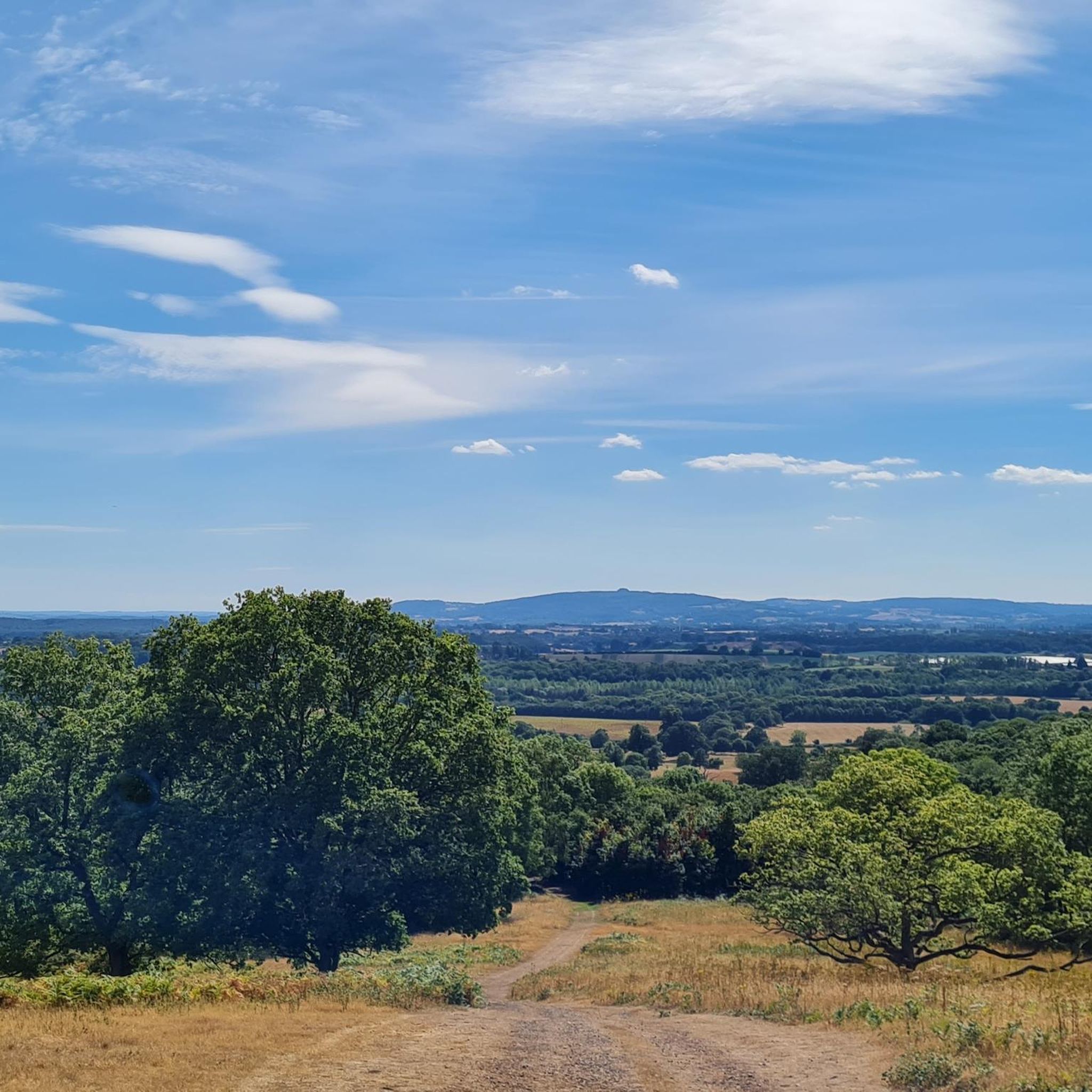
- Redmarley D'Abitot is known for its historical sites, natural features, and numerous hiking routes. The area offers a variety of attractions to see and explore, from ancient churches to prominent hilltops.
- The attractions around Redmarley D'Abitot are appreciated by the komoot community, with more than 80 photos and over 280 upvotes.
Last updated: July 7, 2026
Herefordshire Beacon (British Camp)
Highlight • Summit
Tip by

Midsummer Hill Iron Age Hillfort
Highlight • Historical Site
Tip by

Sign up now to discover places like this
Get recommendations on the best single tracks, peaks, & plenty of other exciting outdoor places.
Sign up for free
May Hill Summit
Highlight • Summit
Tip by

Millennium Hill
Highlight • Viewpoint
Tip by

Jubilee Hill
Highlight • Viewpoint
Jubilee Hill was named by the Malvern Hills Conservators in 2002 in honour of The Queen's Golden Jubilee. The Duke of York unveiled a plaque at the top of the hill, commemorating its new identity, in 2003
Tip by

Sign up for free to discover even more attractions around Redmarley D'Abitot.
Sign up for free
Already have an account?
Start today with a free account
Your next adventure awaits.
Login or Signup
Tips from the Community

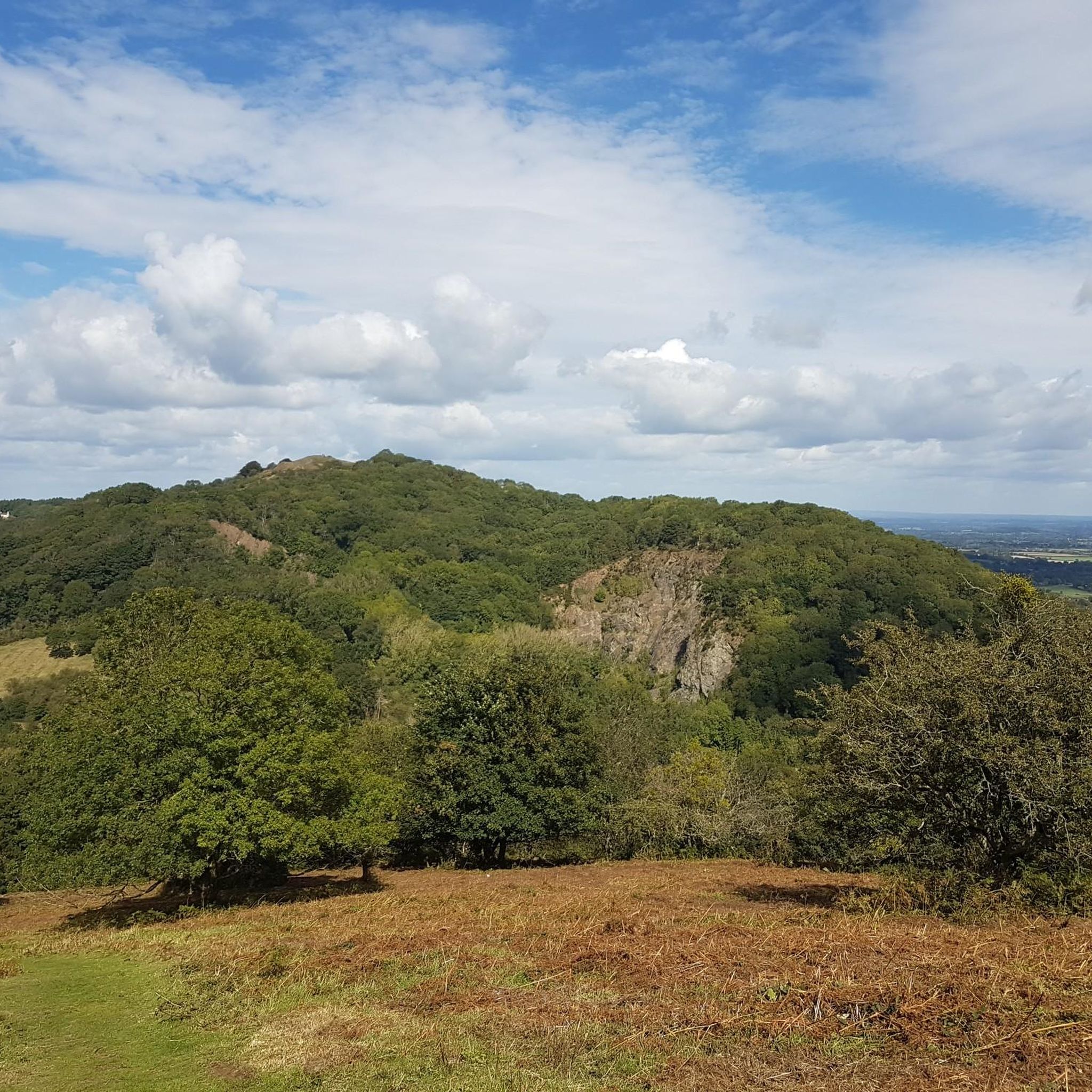
This little top is a fine viewpoint both north to Perseverance Hill and beyond to the Worcester Beacon, and south to Pinnacle Hill.
0
0
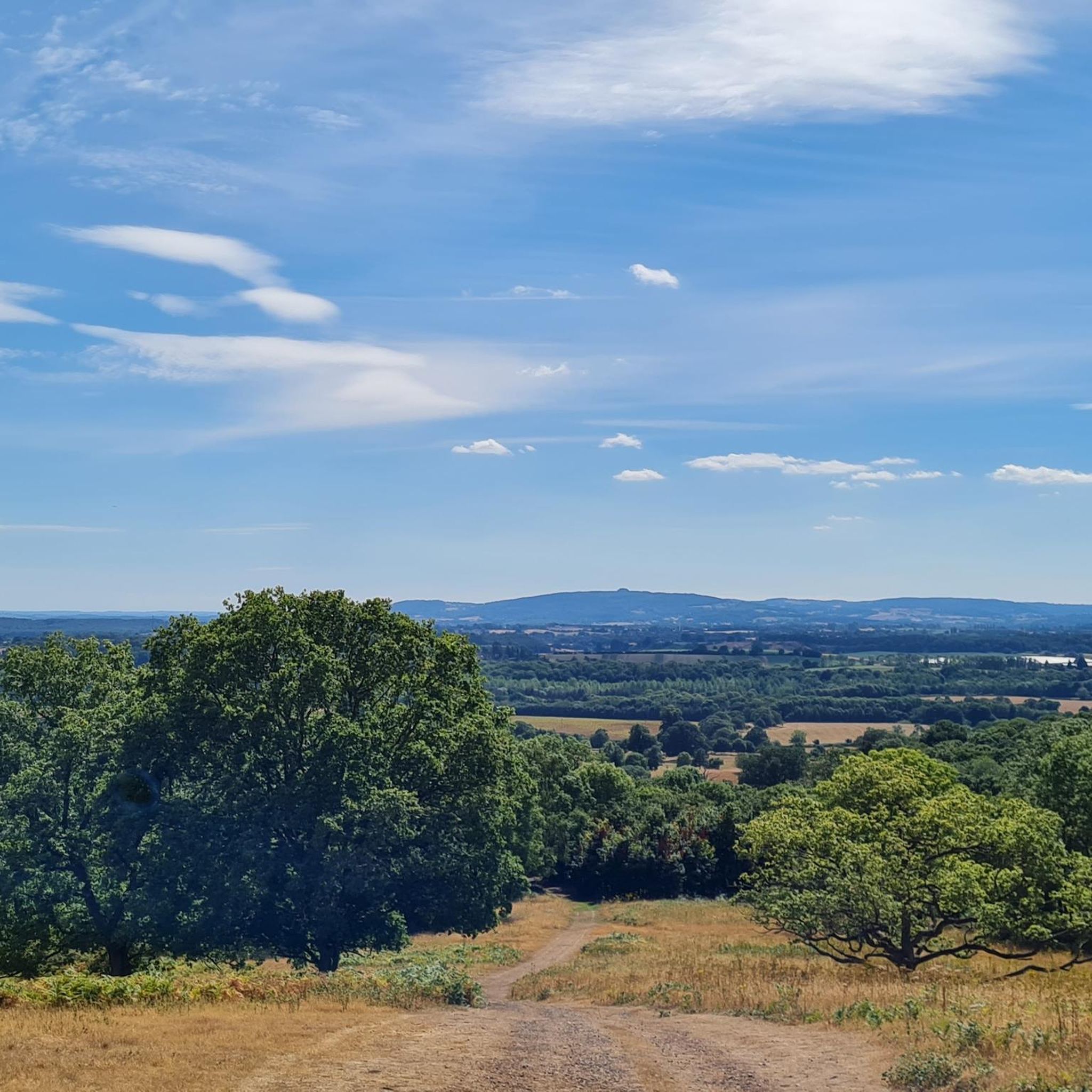
One of the finest hills in the Malverns with it's Iron Age Hillfort (yes another one on the Malverns!), and superb views west across Eastnor Park. It used to be heavily wooded on the Eastern Side, but Ash Die-back disease has caused a huge number of large mature Ash trees to be felled in recent times. This is still a hill to be savoured and you will not see too many people here either.
0
0
The other end of Hereford beacon, with good views of the Eastnor Estate with it's obelisk.
0
0
Enjoy the walk up from Clifford Mesne, and then taken in the expansive views. Don't miss the copse at the top, planted to commemorate Queen Victoria's Golden Jubilee.
0
0

Midsummer Hill rises in the southern part of the Malvern Hills and is a very worthy objective. Site of a former hillfort, along with neighbouring Hollybush Hill, it provides extensive views, with the impressive Eastnor Castle visible in the Herefordshire countryside. A hike to the top could be combined with Herefordshire Beacon to the north, or a longer outing traversing the entire Malvern ridge.
0
0

Jubilee Hill is situated in the range of Malvern Hills that runs about 13 kilometres (8 mi) north-south along the Herefordshire - Worcestershire border. It lies between Perseverance Hill and Pinnacle Hill and has an elevation of 327 metres (1,073 ft). Jubilee Hill was named by the Malvern Hills Conservators in 2002 in honour of the Golden Jubilee of Elizabeth II. The Duke of York unveiled a plaque at the top of the hill, commemorating its new identity, in 2003. The plaque was taken away by someone sometime in March/April 2018. The site was also previously known, and is still today by a group of locals, as 'Dad's Hill', after a well-loved local bicycle shop-owner called Mr Earp who climbed Jubilee Hill frequently. Commemorated there upon his death a local group still climb the hill on the same day every year in his name[citation needed]. Jubilee Drive, the road which runs along the western (Herefordshire) side of the hills, was built and named for the Golden Jubilee of Queen Victoria, in 1887. Source: Wikipedia
0
0
The Herefordshire Beacon is one of the highest peaks of the Malvern Hills. It is surrounded by a British Iron Age hill fort earthwork known as British Camp. The fort subsequently had a ringwork and bailey castle built inside its boundary and there is evidence of 120 huts in the area. British Camp has been a scheduled monument since 1923. On the eastern slope of Herefordshire Beacon, there is a disused reservoir, British Camp Reservoir, which holds approximately 213,000 cubic metres (7,500,000 cu ft) of water. Herefordshire Beacon represents one of the Malvern Hills, 1,109 feet (338 m) high, and is the second highest summit in the hills. It is within the county of Herefordshire, but is directly adjacent to the border with Worcestershire to the east. Atop Herefordshire Beacon, there is an Iron Age hill fort, known as British Camp, and would have held a settlement between 4th century BCE and 1st century CE. A ringwork and bailey castle was built within the site of the hill fort, and there is evidence of 120 huts having been built within the boundaries of the fort. The hill fort received scheduled monument status on 10 August 1923. Nearby to British Camp, on the eastern slope of Herefordshire Beacon, there is a reservoir called British Camp Reservoir. It has a capacity of 213,000 cubic metres (7,500,000 cu ft), although it has not been used for many years. In 2017, Severn Trent proposed to dismantle the treatment plant associated with the reservoir and drain it, leaving an 8,000 cubic metres (280,000 cu ft) pond. source: Wikipedia
0
0
Midsummer Hill is situated in the range of Malvern Hills that runs approximately 13 kilometres (8 mi) north-south along the Herefordshire-Worcestershire border. It lies to the south of Herefordshire Beacon with views to Eastnor Castle. It has an elevation of 284 metres (932 ft). To the north is Swinyard Hill. It is the site of an Iron Age hill fort which spans Midsummer Hill and Hollybush Hill. The hillfort is protected as a Scheduled Ancient Monument and is owned by Natural England. It can be accessed via a footpath which leads south from the car park at British Camp on the A449 or a footpath which heads north from the car park in Hollybush on the A438. The hillfort is very unusual in that the ramparts enclose two hills and the intervening valley. Bowden speculates that the spring within the valley "enhance[s] the position of the hillfort as a site of symbolic value". Source: Wikipedia
0
1
Frequently Asked Questions
What historical landmarks can I explore around Redmarley D'Abitot?
The village and its surroundings are rich in history. You can visit St Bartholomew's Church, which features a medieval tower base from around 1190 AD and historical wall monuments. The church's tower also bears grooves believed to be from sharpening arrows before the Battle of Redmarley in 1644. Additionally, explore the remains of a late 12th-century hall over a vaulted cellar at Bury Court Farm, or discover several timber-framed buildings from the 1500s within the village. For ancient history, the Herefordshire Beacon (British Camp) and Midsummer Hill Iron Age Hillfort offer glimpses into Iron Age settlements with impressive earthworks.
Where can I find the best scenic views and natural features near Redmarley D'Abitot?
The area boasts several prominent viewpoints. Climb to the May Hill Summit, distinct with its 'hat of trees,' for far-reaching views towards the Welsh border and over the River Severn. The Malvern Hills offer multiple vantage points, including Millennium Hill and Jubilee Hill, both providing scenic vistas across the landscape. The Leadon Valley itself is picturesque, with the River Leadon winding through red sandstone hills and ancient woodlands.
Are there good hiking and walking trails around Redmarley D'Abitot?
Yes, the region offers a variety of walking and hiking routes. You can explore sections of the Gloucestershire Way and trails through Woorgreens Nature Reserve. For more structured routes, consider the 'Ragged Stone and Chase End Hills loop' or the 'Millennium Hill – Swinyard Hill loop.' Many trails lead to the prominent hilltops mentioned, offering rewarding views. You can find detailed hiking routes and their difficulties on the hiking guide for Redmarley D'Abitot.
What cycling routes are available in the Redmarley D'Abitot area?
Cyclists can enjoy several road cycling routes that explore the local countryside. Options include the 'Newent Market House – Climb to the Wind Turbine loop' and the 'Church Lane, Ledbury – Ledbury Market House loop.' There's also an 'easy' rated 'Pendock Cross Church loop' from Redmarley D'Abitot. For more details on these and other routes, refer to the road cycling guide for Redmarley D'Abitot.
What do visitors enjoy most about the attractions near Redmarley D'Abitot?
Visitors frequently praise the extensive and brilliant views from the hilltops, especially after a climb. The historical significance of sites like the Iron Age hill forts on Herefordshire Beacon and Midsummer Hill is also highly appreciated, offering a glimpse into ancient Britain's heritage. The variety of trails and the opportunity to conquer multiple 'mini peaks' along the Malvern Hills ridge are also popular highlights.
Are there any family-friendly attractions or activities in the area?
While specific family-focused attractions aren't detailed, the natural landscape provides ample opportunities for family outings. Gentle walks and exploring the historical sites like St Bartholomew's Church or the timber-framed buildings can be enjoyable for families. The less strenuous sections of the walking trails, particularly those with good views, are also suitable for families looking to spend time outdoors.
When is the best time to visit Redmarley D'Abitot for outdoor activities?
The region's rolling hills and woodlands are beautiful year-round. Spring and autumn offer pleasant temperatures for hiking and cycling, with vibrant foliage in autumn. Summer provides longer daylight hours for extended exploration. While winter can be colder, clear days can offer crisp views, especially from the hilltops. Always check local weather conditions before your visit.
Are there any unique or lesser-known historical sites to discover?
Beyond the prominent church, an enigmatic sub-circular enclosure, previously identified as a moat, lies south-east of the village. This earthwork features a ditch and a slightly raised bank, with a central island about 35 meters in diameter. The Old Rectory, near the church, also occupies an older moated site, hinting at the area's deeper historical layers.
Can I find places to eat or drink near the walking routes?
While specific cafes are not mentioned, the fan-out queries suggest that visitors often look for pubs near walks. Many villages in the Gloucestershire countryside typically have local pubs that offer refreshments and meals, providing a good stop after exploring the trails. It's advisable to check local listings for pubs in Redmarley D'Abitot or nearby villages like Pendock or Pauntley.
What is the terrain like for hiking around Redmarley D'Abitot?
The terrain around Redmarley D'Abitot is characterized by rolling hills, ancient woodlands, and farmland. The Malvern Hills, which are visible from the village and offer many hiking opportunities, are built on ancient rock and feature significant elevation changes. While some climbs, like to Herefordshire Beacon, can be steep, there are also easier walks through the valleys and lower hills. The distinctive red sandstone of the region influences the soil and some local buildings.
Are there any running trails in the area?
Yes, there are several running trails suitable for various distances and difficulties. You can find routes such as the 'Millennium Hill – Swinyard Hill loop from Bromesberrow' or the 'Pendock Cross Church loop from Pendock.' Longer options like the 'Princehill Wood – Collinpark Wood loop' and 'Grove Coppice – Ever Hill Coppice loop' from Redmarley D'Abitot are also available. For a comprehensive list, consult the running trails guide for Redmarley D'Abitot.
Most popular attractions around Redmarley D'Abitot

Get inspired with the komoot mobile app


Explore more
Still not found the Highlight you’re looking for? See guides of the top attractions in other regions:
