Attractions and Places To See around San Bartolomé De Corneja - Top 10
Best attractions and places to see around San Bartolomé De Corneja include historical architecture, significant religious sites, and the picturesque Corneja River valley. This region in Ávila, Spain, offers a glimpse into traditional rural life amidst a serene natural landscape. The area features traditional buildings with reinforced corners and substantial stone frames, alongside natural features like the Corneja River and its ancient footbridge. To the north, the landscape transitions to the foothills of the Serrezuela Abulense, while the Gredos massif…
Last updated: July 1, 2026
Peña Negra Pass
Highlight • Mountain Pass
Translated by Google •
Tip by

Ponseca Bridge
Highlight • Bridge
Translated by Google •
Tip by

Sign up now to discover places like this
Get recommendations on the best single tracks, peaks, & plenty of other exciting outdoor places.
Sign up for free
La Horcajada
Highlight • Settlement
Translated by Google •
Tip by
Nabarveja
Highlight • Settlement
No way to get lost (All to the right) ➡️🧭: This is a very easy route to follow. …
Translated by Google •
Tip by

Castle of Bonilla de la Sierra
Highlight • Castle
Translated by Google •
Tip by

Sign up for free to discover even more attractions around San Bartolomé De Corneja.
Sign up for free
Already have an account?
Start today with a free account
Your next adventure awaits.
Login or Signup



Tips from the Community

📍 Route: From La Lastra to the abandoned village of Nabarveja 🥾🏚️ No way to get lost (All to the right) ➡️🧭: This is a very easy route to follow. The key is to always take the right turns. You can't miss it! Easy Hike 🚶♂️✅: This is an easy, short route with hardly any hills. Ideal for a leisurely stroll without much physical exertion. The Path that Becomes a River 🌊🛣️: Near the village, the path narrows between farms. In winter, due to the rain, the path becomes a small river, and you have to walk through the water. Snow Experience ❄️☃️: We did it in the snow. It's not particularly difficult, but water is the main obstacle. With good hiking boots like ours, it's perfectly manageable 🥾💪. Nabarveja, the forgotten village 🏚️✨: The snow-covered ruins create a magical atmosphere. A true journey back in time 📸. 💡 Seasonal tips: In Winter: 🧊 Waterproof boots are a must for the wet section! In Summer: ☀️ Highly recommended as it's flat and short, although the path will be dry.
0
0

Beautiful views, on a good day you can see people taking off on paragliders.
0
0

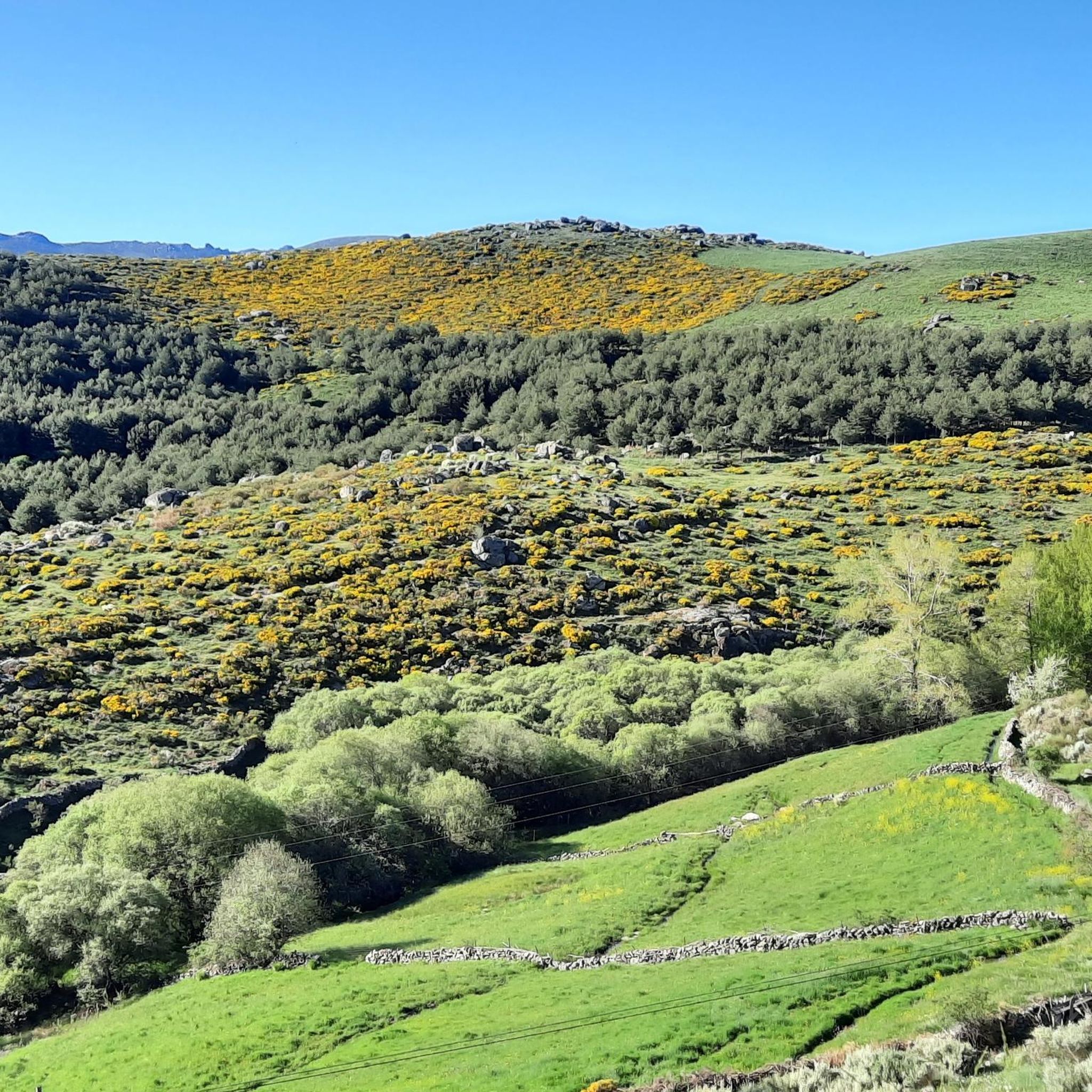
La Horcajada is located in the southwest triangle of the province of Ávila. It is practically the space between the foothills of Gredos and the mountain ranges of Malpartida and Collado del Mirón, on the one hand, and the port of Villatoro and the confluence of the Corneja and Tormes rivers, on the other. This surface has been called "Valdecorneja" for centuries. The Cancionero de Baeza, from 1445, for example, records this. The four most important towns in the Valley are, possibly since Vetton times or before, El Mirón, Piedrahíta, La Horcajada and El Barco de Ávila. La Horcajada is located about 75 kilometers southwest of the provincial capital, Ávila, about 82 kilometers from Salamanca and 185 kilometers from Madrid. The town is located at 1033 m above sea level. n. m. between the towns of Piedrahíta and Barco de Ávila on the slopes of the Sierra de la Horcajada.
1
0
A large port, 15 km long if we start from Piedrahita, and with a constant slope of 6% except for a couple of short sections that are less and some sections that reach 9%, but very punctual. The condition of the asphalt is good, it is one of the few ports in the area with a surface in good condition. Upstairs it has very good views and there are usually people doing paragliding (if the weather conditions allow it)
0
0
Old bridge, currently misnamed La Fonseca, its real historical name is La Ponseca. It belongs to the municipality of La Horcajada, which has also recently been rehabilitated because its rock was detaching and its stability was beginning to be endangered. It crosses the river Corneja and as a curiosity, Emperor Carlos V passed over this bridge on his retirement journey to the Yuste monastery.
2
0

While riding my bike near Villar de Corneja, I come across this beautiful medieval bridge that allows us to cross the Corneja river. This river was really useful for irrigating the orchards and using the mills.
1
0

La Horcajada is located in the southwest triangle of the province of Ávila. It is practically the space between the Gredos foothills and the Malpartida and Collado del Mirón mountains, on the one hand, and the port of Villatoro and the confluence of the Corneja and Tormes rivers, on the other.
0
0
The port of Peña Negra, on its north face, starts from the town of Piedrahita, at the turnoff to Pesquera. Already in the same streets of Piedrahita the slopes stabilize around 5-6%, which will be the usual trend. Because Peña Negra, as can be seen in the altimetric profile, is a really regular port, except for a few short breaks in the second half.
0
0
Frequently Asked Questions
What historical sites can I explore in the San Bartolomé De Corneja area?
The region is rich in history. You can visit the impressive Castle of Bonilla de la Sierra, located in a town renowned for its beauty and cobbled streets. Don't miss the ancient Ponseca Bridge, a rehabilitated structure over the Corneja River, famously crossed by Emperor Carlos V. Additionally, the area features significant religious sites like the Iglesia de San Bartolomé Apóstol with its tall tower, and the rustic Iglesia de San Juan Bautista in Palacios de Corneja, known for its unique belfry and imposing entrance.
What natural landscapes and viewpoints can I discover around San Bartolomé De Corneja?
The area offers serene natural beauty. The Corneja River valley is a prominent feature, with plains, meadows, and riverside woods. For breathtaking panoramic views, head to Peña Negra Pass, a 15 km mountain pass known for its consistent 6% slope and opportunities to see paragliders. To the north, you'll find the foothills of the Serrezuela Abulense with pastures and holm oak dehesas, while the majestic Gredos massif provides a dramatic backdrop to the south.
Are there opportunities for cycling near San Bartolomé De Corneja?
Yes, the region is excellent for cycling. You can find various routes for road cycling, touring bicycles, and mountain biking. For example, there are challenging road cycling routes like the 'Puerto de Peñanegra y Chia desde San Martin' or more moderate touring bicycle loops such as the 'Castle of Bonilla de la Sierra loop from Piedrahíta'. Explore more options on the dedicated cycling guides: Road Cycling Routes, Cycling Routes, and MTB Trails around San Bartolomé De Corneja.
What kind of hiking trails are available in the region?
You'll find accessible trails connecting the surrounding villages, perfect for exploring the scenic environment. One unique option is the easy route to the abandoned village of Nabarveja, which offers a journey back in time amidst ruins. While generally easy, be aware that in winter, parts of the path near Nabarveja can become wet, requiring waterproof boots. For more structured routes, consider the various cycling guides which often include paths suitable for hiking, such as those found in the MTB Trails around San Bartolomé De Corneja guide.
Are there any unique architectural features to see in San Bartolomé De Corneja?
Beyond the churches and castles, both San Bartolomé de Corneja and Palacios de Corneja preserve examples of traditional rural architecture. Look for buildings with reinforced corners made of large ashlar blocks, doors and windows framed with substantial stone, and corrals with wooden gates. A few stately homes also dot the landscape, showcasing the region's historical building styles.
What is the <a href="https://www.komoot.com/highlight/4099788" target="_blank" rel="noopener">Ponseca Bridge</a>, and why is it significant?
The Ponseca Bridge, sometimes misnamed La Fonseca, is an old, rehabilitated bridge crossing the Corneja River. Its historical significance stems from the fact that Emperor Carlos V passed over it during his retirement journey to the Yuste monastery. It's a beautiful medieval structure that once played a crucial role in irrigating orchards and powering mills in the area.
What can I expect when visiting <a href="https://www.komoot.com/highlight/5216726" target="_blank" rel="noopener">Peña Negra Pass</a>?
Peña Negra Pass is a large mountain pass, approximately 15 km long with a consistent 6% slope. It's well-regarded for its good asphalt condition, making it popular for cyclists. From the top, you'll be rewarded with very good views, and on favorable weather days, you might even see people taking off on paragliders, adding to the scenic experience.
Is there a 'hidden gem' or less-known attraction worth visiting?
Consider a visit to Nabarveja, an abandoned village that offers a unique, tranquil experience. The easy, short route to Nabarveja is ideal for a leisurely stroll, and the snow-covered ruins in winter create a particularly magical atmosphere. It's a true journey back in time, offering a glimpse into a forgotten rural past.
What is the best time to visit San Bartolomé De Corneja for outdoor activities?
The region is enjoyable across seasons. For hiking to places like Nabarveja, summer is highly recommended as the paths are dry. However, the snow-covered ruins in winter offer a magical experience, though waterproof boots are a must for potentially wet sections. For cycling, the good condition of roads like those leading to Peña Negra Pass makes it accessible for much of the year, but always check local weather conditions.
What is the significance of the Corneja River in the area?
The Corneja River is central to the region's landscape and history. It flows through the valley, creating plains, meadows, and cultivated fields, and is lined with riverside woods. Historically, it was crucial for irrigating orchards and powering mills, as evidenced by structures like the Ponseca Bridge. An ancient footbridge (pasadera) along the river is also a point of interest.
What can I find in the settlement of <a href="https://www.komoot.com/highlight/5584401" target="_blank" rel="noopener">La Horcajada</a>?
La Horcajada is a historical settlement located in the 'Valdecorneja' region, nestled between the foothills of Gredos and other mountain ranges. It's one of the four most important towns in the valley, with a history possibly dating back to Vetton times. Situated at 1033 meters above sea level, it offers a glimpse into the traditional life and geography of the area.
Are there any family-friendly activities or attractions?
The tranquil rural atmosphere and accessible trails make the area suitable for families. Exploring the traditional architecture in the villages or taking an easy stroll to the abandoned village of Nabarveja can be enjoyable for all ages. The natural landscapes, including the Corneja River valley, provide gentle environments for outdoor exploration.

Get inspired with the komoot mobile app


Explore more
Still not found the Highlight you’re looking for? See guides of the top attractions in other regions:
