The best walks and hikes around Králický Sněžník
4.7
(854)
16,176
hikers
255
hikes
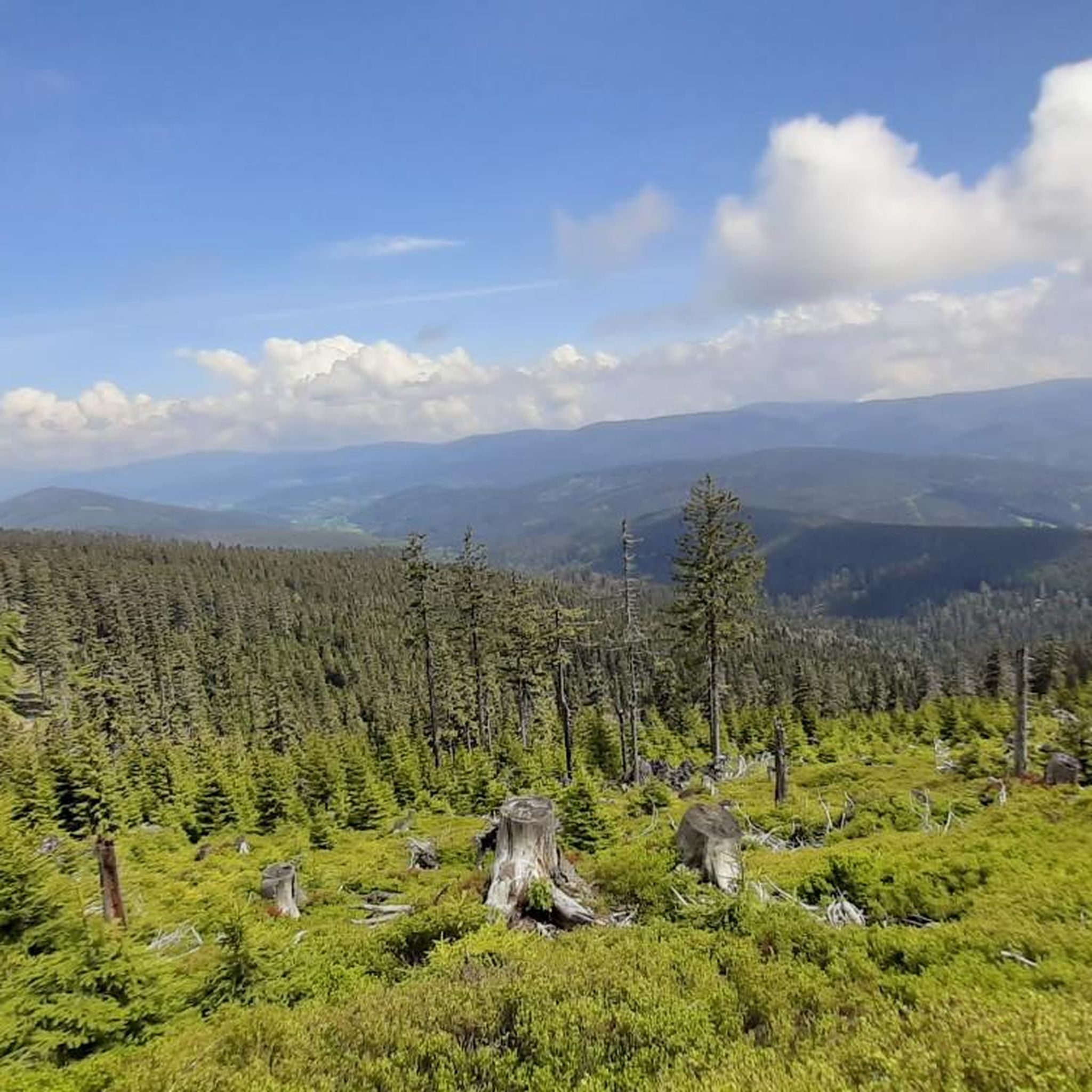
Hiking around Králický Sněžník offers diverse landscapes within a prominent mountain range, reaching elevations between 1,423 and 1,425 meters. This area is known as the "Roof of Europe" due to its triple watershed, where water flows to three different seas, and is also the source of the Morava River. The region features deep forests, subalpine meadows, and unique ecosystems protected within the Králický Sněžník National Nature Reserve. Varied terrain includes peat bogs and rock formations like the "Swallow Stones."
Best hiking trails around Králický Sněžník
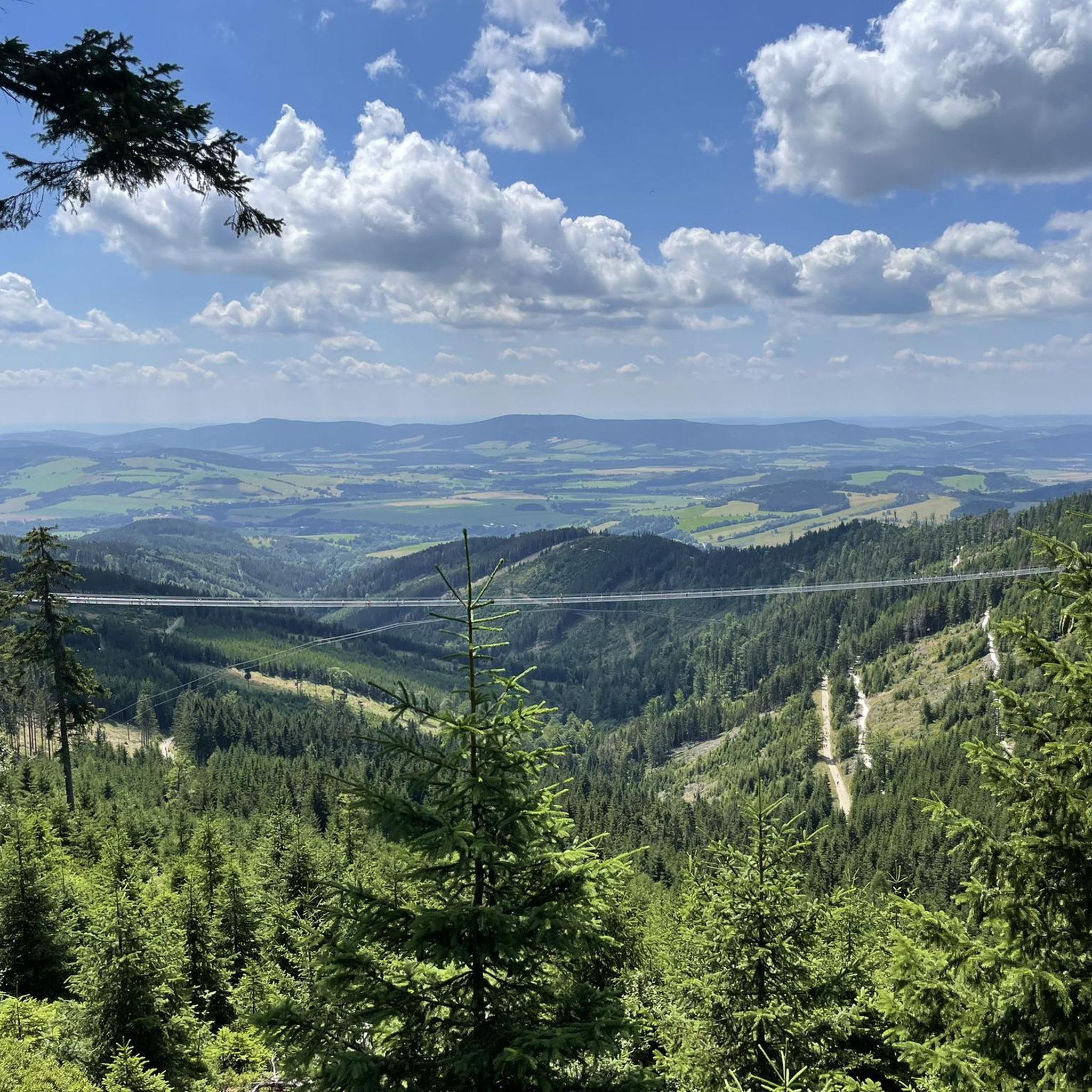
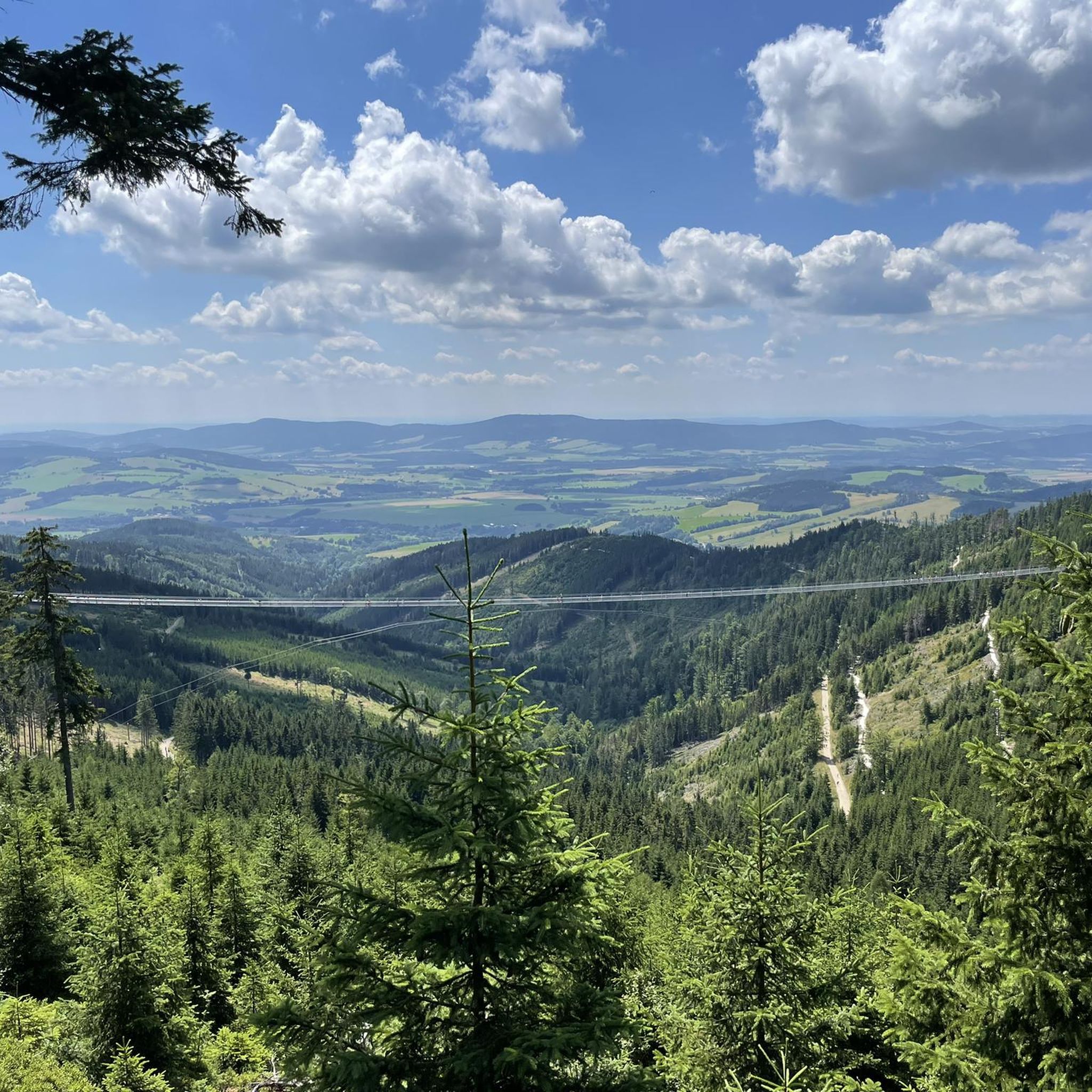
- The most popular hiking route is Sky Bridge 721 – Sky Bridge 721 Dolní Morava loop from Masyw Śnieżnika, a 1.7 miles (2.7 km) trail that takes 46 minutes to complete. This easy route offers views of the modern Sky Bridge 721.
- Another top favourite among local hikers is Sky Bridge 721 – Sky Bridge 721 loop from Masyw Śnieżnika, an easy 0.8 miles (1.3 km) path. This short loop provides access to the Sky Bridge 721 attraction.
- Local hikers also love the Sky Bridge 721 Dolní Morava – Sky Bridge 721 loop from Velká Morava, a 7.1 miles (11.5 km) trail leading through varied terrain, often completed in about 3 hours 40 minutes.
- Hiking around Králický Sněžník is defined by majestic mountain peaks, dense forests, and the unique triple watershed, offering panoramic views. The network provides options for easy walks, moderate hikes, and challenging ascents suitable for different ability levels.
- The routes in Králický Sněžník are highly rated by the komoot community with an average score of 4.7 stars from over 840 reviews. More than 16,600 hikers have used komoot to explore Králický Sněžník's varied terrain.
Last updated: July 10, 2026
4.0
(1)
95
hikers
Easy hike. Great for any fitness level. Easily-accessible paths. Suitable for all skill levels.
35
hikers
1.27km
00:20
10m
10m
Easy hike. Great for any fitness level. Easily-accessible paths. Suitable for all skill levels.

Sign up for free
3
hikers
5.25km
01:43
230m
240m
Easy hike. Great for any fitness level. Easily-accessible paths. Suitable for all skill levels.
4.6
(8)
153
hikers
Hard hike. Very good fitness required. Easily-accessible paths. Suitable for all skill levels.
4.7
(9)
133
hikers
25.9km
08:19
1,090m
1,090m
Hard hike. Very good fitness required. Easily-accessible paths. Suitable for all skill levels.
Get access to more routes and recommendations from other explorers.
Sign up for free
Already have an account?
Our route recommendations are based on thousands of hikes, rides, and runs completed by other people on komoot.
Start today with a free account
Your next adventure awaits.
Login or Signup

Tips from the Community

The first mention of the development of Śnieżnik Mountain dates back to 1809, when the owner of Międzygórze, Count Wilhelm von Magnis, built barns and shepherd's huts on the mountain pasture below Śnieżnik. In 1838, Międzygórze was purchased by Princess Marianna of Orange, the Lady of Kamieniec Ząbkowicki – daughter of the King of the Netherlands and wife of a Prussian prince. In 1840, she invited her father, King Wilhelm, with whom she reached the summit of Śnieżnik on July 20th. In 1869, the Duchess took over the land on the mountain pasture below Śnieżnik. She commissioned a highlander from Switzerland to build a Swiss mountain hut (Schweizerei am Schneeberg or Schweizerei auf dem Schneeberg) on the mountain pasture below Śnieżnik, which now forms the main part of the mountain hut. Construction was completed in 1871. The building initially served as a tourist inn, with 50 beds and a large dining hall. In the following years, the buildings were modernized several times. In 1872, utility rooms were built on the site of an old dairy farm. In 1880, a meteorological station was opened at the inn. In the 1930s, the inn had 30 beds. After World War II, the building stood empty until 1946. The dilapidated buildings were taken over by "Orbis," renaming it "Szwajcarka." In 1947, the Polish Tatra Mountain Shelter Board took over. The following summer, a shelter was opened, named "Na Śnieżniku" to distinguish it from the "Szwajcarka" shelter in Rudawy Janowickie. In 1950, the building became the property of the Polish Tourist and Sightseeing Society. At that time, the shelter had 63 beds. In the 1980s, the shelter was thoroughly modernized and renovated thanks to the efforts of its then-lessee, Zbigniew Fastnacht, who managed the facility from 1982 to 2001. After his death, in recognition of his achievements, the shelter was named after him.
1
1
Śnieżnik is the highest peak of the Śnieżnik Massif, the second-highest range in the Polish Sudetes. It belongs to the Crown of Polish Mountains and lies in the Western Sudetes. The Polish-Czech border runs through the summit, where the borders of the historical regions of Silesia, Bohemia, and Moravia meet. In September 2022, a new observation tower was officially opened at the summit, offering views of Śnieżka in the Karkonosze Mountains, the Orlické, Bialskie, Złote, Bystrzyckie, and Opawskie Mountains. Trails lead to Śnieżnik from both the Polish and Czech sides. The most popular trails are from Międzygórze and Kletno, leading through the PTTK "Na Śnieżniku" mountain hut. The longer trail, running along the border, begins in the Czech Republic at Pod Klepáčem and passes through Trójmorski Wierch, Puchacz, and Mały Śnieżnik.
0
1

WoW was a highlight of our hike on the EB.
7
0
The nature-oriented path leads you to the Brocken 🤭 ne Glatzer Schneeberg
8
0
Found below the summit, water tastes great.
6
0
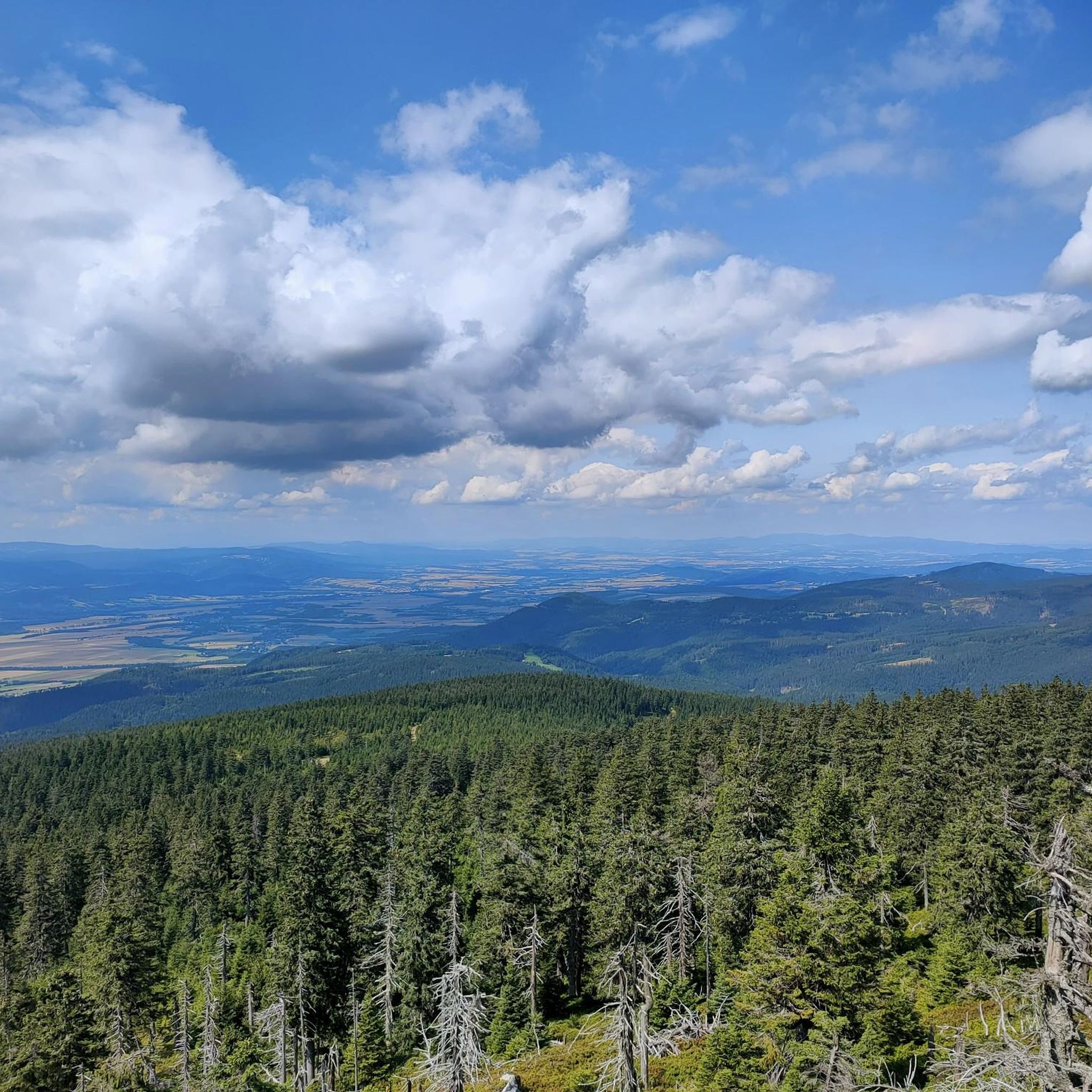
The climb is not easy, but the view makes up for it.
7
0
Far-sightedness guaranteed in good weather, only the dirt of the other visitors trickles down on your head🤭
7
0
It makes a good photo opportunity, but I don't know the story behind it. It would be nice if the inn were still standing; it's missing from the mountain.
7
0
Frequently Asked Questions
How many hiking trails are available in the Králický Sněžník region?
The Králický Sněžník region offers a wide variety of hiking experiences, with over 240 routes recorded on komoot. These range from easy walks to challenging ascents, catering to different fitness levels.
What kind of terrain can I expect when hiking around Králický Sněžník?
Hikers in Králický Sněžník will encounter diverse terrain, including deep forests, subalpine meadows, and unique ecosystems. The region features areas with peat bogs and distinctive rock formations like the 'Swallow Stones'. The trails lead through majestic mountain peaks and offer panoramic views.
Are there any family-friendly hiking options in Králický Sněžník?
Yes, Králický Sněžník offers several easy walks suitable for families. For instance, the Sky Bridge 721 – Sky Bridge 721 loop from Masyw Śnieżnika is a short, easy 1.3 km path that provides access to the Sky Bridge 721 attraction, which is popular with families.
What are some notable landmarks or natural features to see while hiking?
The region is rich in natural and man-made attractions. You can visit the Králický Sněžník Summit for expansive views, see the iconic Stone Elephant Monument, or explore the Morava Spring (Pramen Moravy), which is the source of the Morava River. The modern Sky Bridge 721 and the Śnieżnik Observation Tower also offer unique experiences and views.
What makes Králický Sněžník unique from a geographical perspective?
Králický Sněžník is famously known as the 'Roof of Europe' or a 'triple watershed point'. Water flowing from this mountain eventually reaches three different seas: the Black Sea, the Baltic Sea, and the North Sea. It is also the source of the Morava River, a significant natural feature.
Are there any challenging hikes for experienced trekkers?
Absolutely. For experienced hikers, routes like the Králický Sněžník Summit – Sky Bridge 721 Dolní Morava loop from Velká Morava offer a difficult 23.1 km journey with significant elevation gain. Another demanding option is the Śnieżnik Observation Tower – Sky Bridge 721 Dolní Morava loop from Morava, spanning nearly 26 km.
What do other hikers say about the trails in Králický Sněžník?
The trails in Králický Sněžník are highly regarded by the komoot community, holding an average rating of 4.7 stars from over 840 reviews. Hikers frequently praise the diverse landscapes, panoramic views, and the well-maintained paths that lead through forests and to significant natural features.
Is it possible to do a circular walk that includes the Sky Bridge 721?
Yes, there are several circular routes that incorporate the Sky Bridge 721. An example is the Sky Bridge 721 Dolní Morava – Sky Bridge 721 loop from Velká Morava, a moderate 11.5 km trail that allows you to experience this modern marvel as part of a longer hike.
What is the best time of year to go hiking in Králický Sněžník?
The best time for hiking in Králický Sněžník is generally from late spring to early autumn (May to October) when the weather is milder and trails are clear of snow. During these months, you can fully enjoy the diverse landscapes and panoramic views. Winter offers opportunities for snow sports, but hiking requires appropriate gear and awareness of conditions.
Are there any protected natural areas in Králický Sněžník?
Yes, a significant portion of the area around the summit is protected within the Králický Sněžník National Nature Reserve. Established in 1990, this reserve spans approximately 1,700 hectares, preserving primeval forests, subalpine meadows, and unique ecosystems, including rare plant species.
Where can I find more information about the Králický Sněžník region?
For additional information about the region's attractions and hiking opportunities, you can explore resources like Visit Czechia's guide to Dolní Morava hiking or learn more about the National Nature Reserve Králický Sněžník.
Most popular routes around Králický Sněžník
Most popular attractions around Králický Sněžník

Get inspired with the komoot mobile app


Explore more
Browse the best Hikes in other regions.
