The best cycling routes around Baralla
4.3
(95)
112
riders
7
rides
Touring cycling routes around Baralla traverse a region characterized by its integration into the historic Camino de Santiago, offering varied landscapes and cultural exploration. The terrain includes rural roads, picturesque villages, and areas with significant natural features. Cyclists can expect a blend of challenging ascents and scenic paths through the Galician countryside. The area provides diverse routes suitable for different skill levels, often featuring historical monuments and natural landmarks.
Best touring cycling routes around Baralla
- The most popular touring cycling…
Last updated: May 16, 2026
4.8
(12)
84
riders
46.6km
03:31
1,070m
1,070m
Hard bike ride. Very good fitness required. Mostly paved surfaces. Suitable for all skill levels.
5.0
(1)
13
riders
65.0km
04:56
1,470m
1,470m
Hard bike ride. Very good fitness required. Mostly paved surfaces. Suitable for all skill levels.

Sign up for free
3
riders
57.4km
03:51
970m
960m
Hard bike ride. Very good fitness required. Mostly paved surfaces. Suitable for all skill levels.
5
riders
108km
07:57
2,470m
2,470m
Hard bike ride. Very good fitness required. Mostly paved surfaces. Suitable for all skill levels.
3
riders
16.2km
01:16
440m
440m
Moderate bike ride. Good fitness required. Mostly paved surfaces. Suitable for all skill levels.
Get access to more routes and recommendations from other explorers.
Sign up for free
Already have an account?
Our route recommendations are based on thousands of hikes, rides, and runs completed by other people on komoot.
Start today with a free account
Your next adventure awaits.
Login or Signup
Popular around Baralla
Tips from the Community

One of the highest points on the French Way of the Camino de Santiago, located between Triacastela and Fonfría, already in the province of Lugo. At 1,335 meters above sea level, this peak offers a natural viewpoint overlooking the Galician mountains. The area is often exposed to wind and changeable weather, even in summer, but the views and the feeling of having reached a milestone more than compensate. There's a hostel/bar right at the summit, useful as a stopping point for pilgrims and cyclists. Dress warmly before reaching the top: the temperature here can drop suddenly, even on sunny days. If you're on a mountain bike or e-bike, make sure you have good traction on descents and that your brakes are checked: the descent towards Fonfría is fast and winding. It's a good place to rest and refill your water or coffee before continuing.
1
0
One of the oldest monasteries in the West, dating back to the 6th century and the heart of the Ribeira Sacra region of Lugo. Its large cloister is the largest in Spain, and the complex is impressive both for its size and its history linked to the Camino de Santiago. Arriving via the detour from the French Way is a gift: a peaceful stretch, with a river and picture-perfect vegetation. However, once you leave, you have to climb back… and your legs remember.
1
0


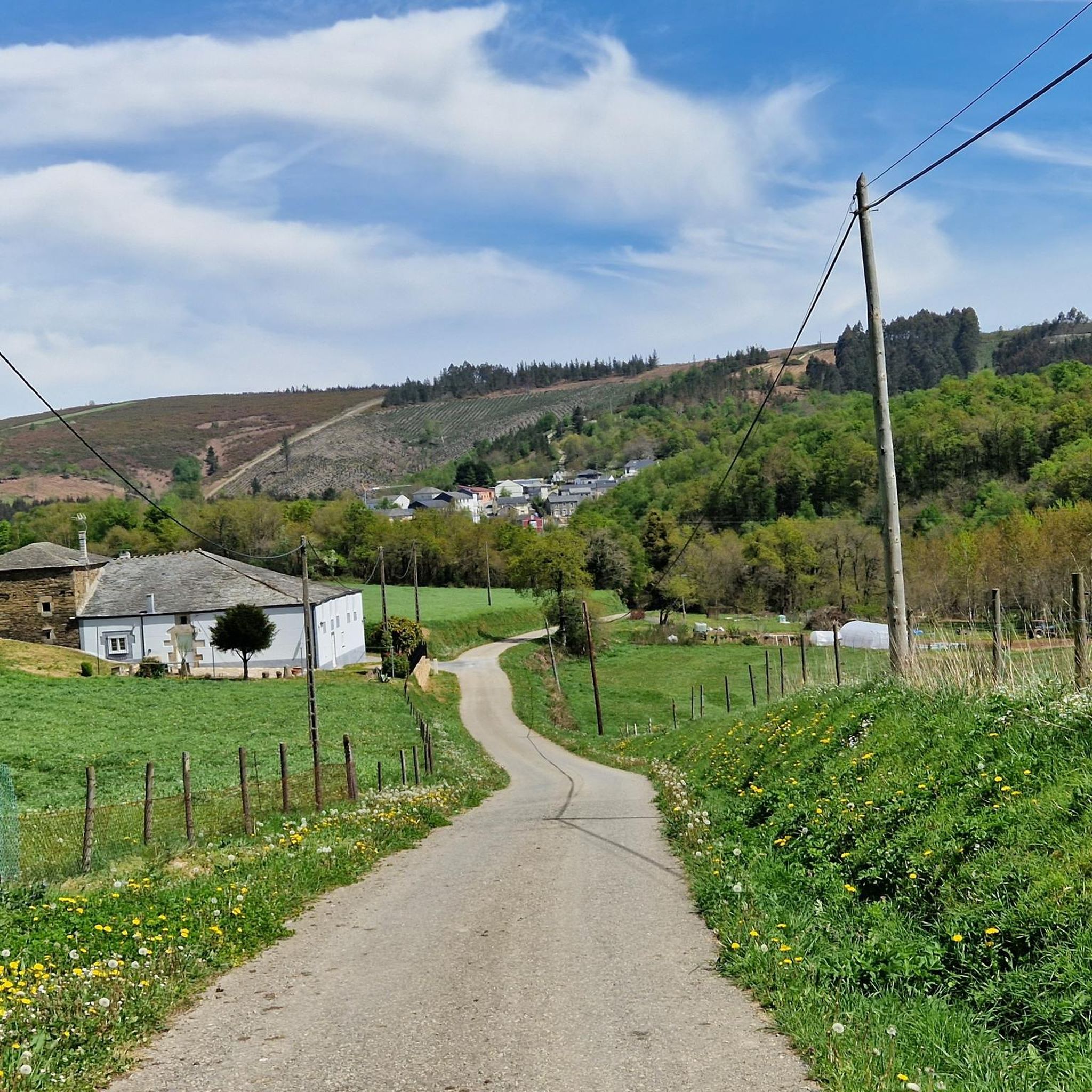
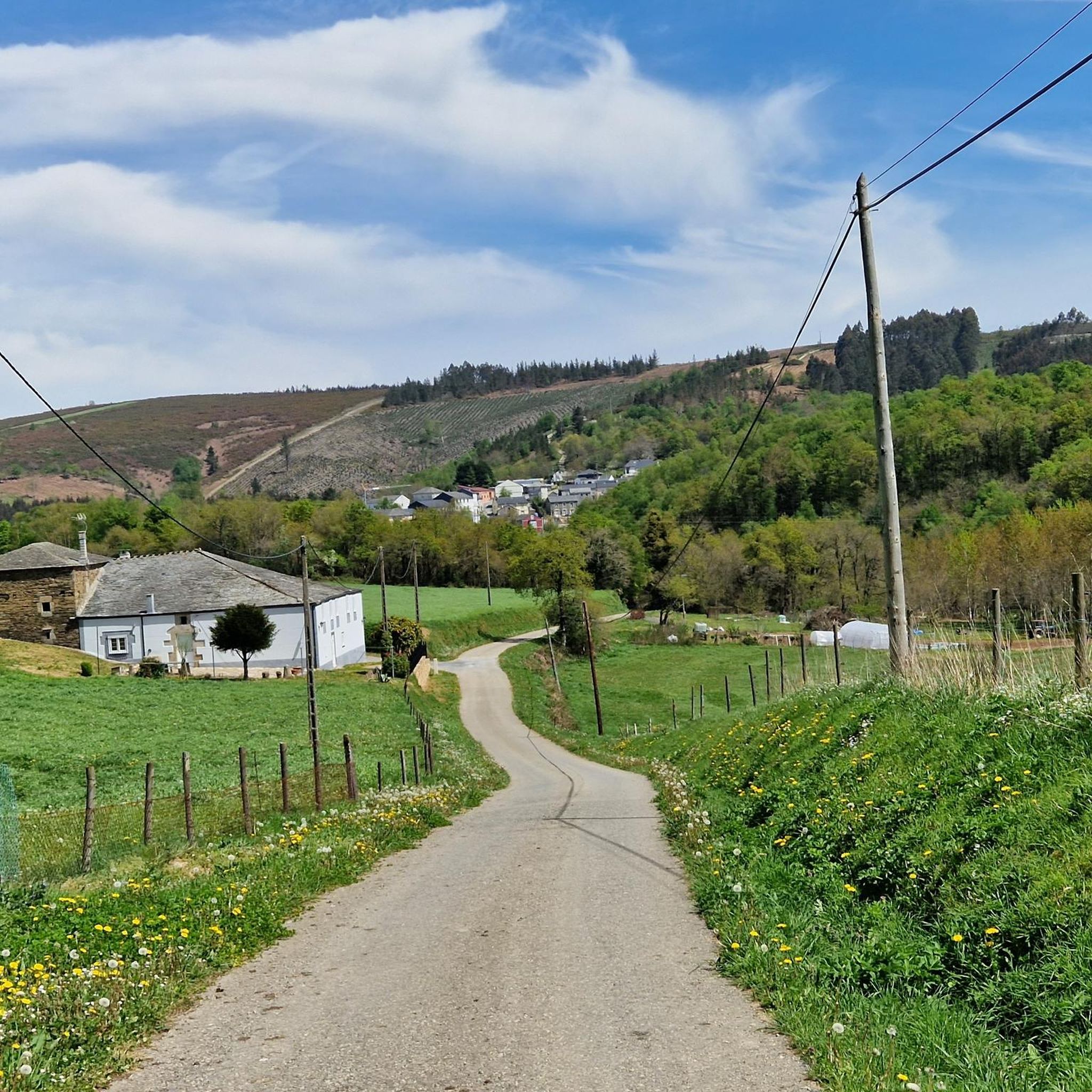
In the small village of Ramil at the foot of the Camino, just before Triacastela, stands one of Galicia's most beautiful century-old chestnut trees. Its trunk spans 8.5 meters and, with its hollow spaces and thick branches that seem to embrace the tree, resembles an X-ray of time.
0
1

Frequently Asked Questions
How many touring cycling routes are available around Baralla?
There are over 8 touring cycling routes documented around Baralla on komoot, offering diverse experiences through the region's landscapes.
What are the typical difficulty levels for touring cycling routes in Baralla?
Most touring cycling routes around Baralla are considered difficult, featuring significant elevation gain characteristic of the Galician countryside. There is also one moderate route available for those seeking a less strenuous ride.
What kind of natural features can I expect to see along the cycling routes in Baralla?
The region is rich in natural beauty. You can encounter significant natural monuments like the Ancient Chestnut Tree in Ramil, an over 800-year-old landmark along the Camino de Santiago. Routes also traverse diverse rural landscapes and the Galician countryside.
Are there any family-friendly touring cycling routes in Baralla?
While many routes in Baralla are rated as difficult due to significant elevation changes, the region offers varied terrain. For family-friendly options, it's best to look for routes with less elevation gain or shorter distances. Currently, the listed routes are predominantly challenging, so careful review of elevation profiles is recommended.
What historical landmarks or points of interest can I visit while cycling near Baralla?
Baralla's routes often follow or cross the historic Camino de Santiago. Notable landmarks include the Pilgrim Monument in Triacastela and the Ancient Chestnut Tree in Ramil. The Camino also forks at Triacastela, offering paths that pass by significant sites like the Benedictine monastery of Samos (on the Samos Route).
Are there any circular touring cycling routes around Baralla?
Yes, several routes are designed as loops. For example, the Traditional house – Alto do Poio loop from Toldaos is a challenging 73.3-mile route, and the Traditional house – Triacastela loop from As de Quintas covers 40.4 miles through rural roads.
What do other touring cyclists say about the routes in Baralla?
The touring cycling routes in Baralla are highly rated by the komoot community, with an average score of 4.8 stars from over 20 reviews. Cyclists often praise the challenging terrain, the integration with the historic Camino de Santiago, and the scenic beauty of the Galician countryside.
Are there any amenities like water stops or picnic areas along the routes?
Yes, some areas offer convenient amenities. For instance, the area around the Ermita del Carmen de Vilabade is known for its pleasant picnic spots, shaded areas, and a fountain where cyclists can refill water bottles.
Can I access any of the touring cycling routes in Baralla using public transport?
Baralla's location on the Camino de Santiago means that some villages along the route may have limited public transport connections, often catering to pilgrims. For specific route access via public transport, it's advisable to check local bus schedules or regional train services that connect to towns like Triacastela or Sarria, which are often starting points or pass-throughs for these routes.
What is the best season for touring cycling in Baralla?
The region's climate suggests that spring and autumn offer the most pleasant conditions for touring cycling, with milder temperatures and less extreme weather. Summer can be warm, especially on exposed sections, while winter may bring colder temperatures and potentially more challenging conditions.
Are there any long-distance touring cycling options starting from or passing through Baralla?
Given Baralla's position on the Camino de Santiago, it serves as a segment of a much longer pilgrimage route. Cyclists can undertake multi-day tours, integrating sections like the Cebreiro Pass – Viewpoint of O Cebreiro loop from Toldaos, which is over 100 km, into a broader journey along the Camino.
Are there any routes that explore the source of the Eo River?
Yes, you can explore the area around the source of the Eo River. The Baleira Hostel – Source of the Eo River loop from A Fontaneira is a difficult 57.4 km route that takes you through this natural area.
Most popular routes around Baralla
Most popular attractions around Baralla

Get inspired with the komoot mobile app


Explore more
Browse the best Cycling routes in other regions.
