Attractions and Places To See around Rada De Haro - Top 11
Best attractions and places to see around Rada De Haro include a variety of historical sites, castles, and monuments. This region offers 11 distinct places to explore, providing insights into local history and architecture. Visitors can discover structures dating back centuries, often situated to offer views of the surrounding landscape. The area provides opportunities to engage with cultural heritage through its preserved historical landmarks.
Best attractions and places to see around Rada De Haro
- The most popular attractions is Castillo…
Last updated: May 17, 2026
Castillo de Belmonte
Highlight • Castle
Its architectural style combines Gothic and Mudejar elements.
It has …
Translated by Google •
Tip by

El Puntal Mill
Highlight • Monument
Translated by Google •
Tip by

Sign up now to discover places like this
Get recommendations on the best single tracks, peaks, & plenty of other exciting outdoor places.
Sign up for free
Almudí Gate (Christ of the Absent)
Highlight • Historical Site
Translated by Google •
Tip by

Castle of Villaescusa de Haro
Highlight • Castle
Translated by Google •
Tip by
Collegiate Church of San Bartolomé
Highlight • Religious Site
Translated by Google •
Tip by
Sign up for free to discover even more attractions around Rada De Haro.
Sign up for free
Already have an account?
Start today with a free account
Your next adventure awaits.
Login or Signup
Popular around Rada De Haro


Tips from the Community

Built in the 15th century by order of Don Juan Pacheco, first Marquis of Villena, the castle is a notable example of Gothic-Mudejar architecture. The castle has been restored and turned into a museum, and is now considered a Site of Cultural Interest. In addition to its rich history, the castle is known for events such as the National Medieval Combat Championship, which is held annually.
3
0
The castle was built in 1456 by order of Juan Pacheco, a prominent nobleman during the reign of Henry IV. Its architectural style combines Gothic and Mudejar elements. It has a peculiar triangular plan and a strategic location on the top of a hill. Over the centuries, the castle has witnessed historical events, from visits by the Catholic Monarchs to restorations and cultural events. Today, the castle hosts exhibitions, dramatized tours, medieval combat tournaments and the impressive Trebuchet Park, which displays full-scale siege engines. 😊🏰
4
0

Built in the 15th century by order of the first Marquis of Villena, Don Juan Pacheco, it is located on the San Cristóbal hill. Currently the castle is owned by the Ducal House of Peñaranda y Montijo, which through a management company chaired by the Count of Montalvo, Mr. Javier Fitz-James Stuart de Soto, has carried out a final rehabilitation between 2008 and 2016 with which has become a museum and also hosts various events. In the month of May/June, the Historical Recreation Days are held in the Castle, which allow us to see the life of warriors, artisans, doctors, monks, lords or peasants. National and international medieval combat tournaments are also held, a spectacular contact sport with period weapons and armor.
1
0
This is one of the gates in the wall that gives access to the town of Belmonte. In addition to the Almudí, it was known by other names: Puerta del Rollo or Cristo de los Ausentes. The name Puerta de Almudí comes from being next to the Pósito, a stone house attached to the door that was the place used to collect grains, mainly wheat, in order to lend them to farmers and neighbors during the months of less abundance. . The term Almudí refers to the public house intended for the purchase and sale of wheat, as well as for other grains, foodstuffs or merchandise, which were stored inside, or warehouse, with the purpose that you do not accrue taxes while they would not be sold. The name of the Roll is due to the fact that in front of it was the stone roll or column that served as an insignia of jurisdiction and that, in many other cases, also served as a pillory to execute the prisoners. The name Puerta del Cristo de los Ausentes is due to the fact that it houses a bronze image of this Christ, the work of the Cuenca sculptor José Antonio Lafuente Roldán, in 1967.
0
0

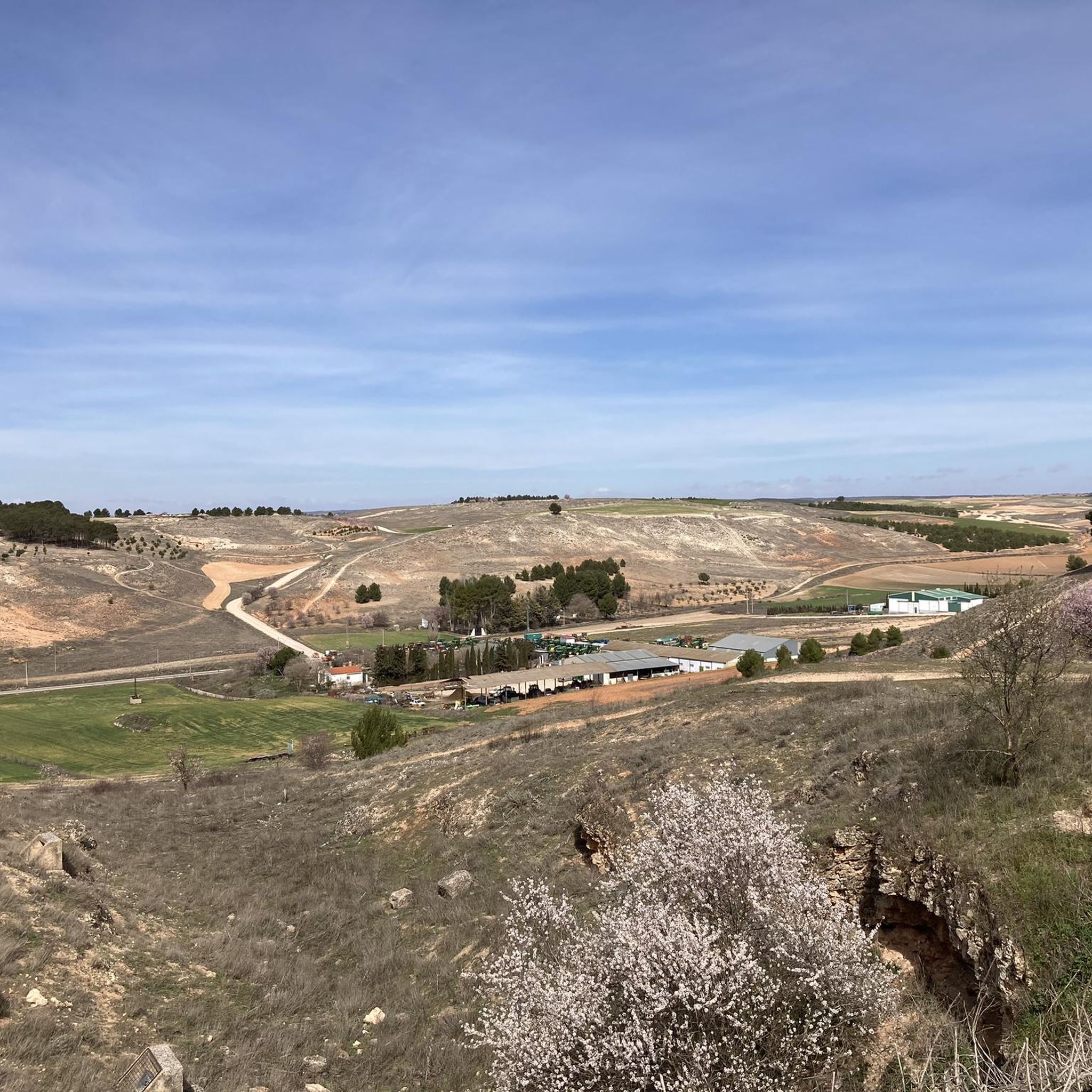
Apart from the interesting Renaissance castle from the 15th century, the place offers wonderful panoramic views of the nearby Záncara river and the entire surrounding plain.
0
0
Nice 15th century castle. Inside is a museum.
1
0
One of the three mills in Belmonte that maintain their shape that we know from the stories of Don Quixote. It can be visited - it maintains its original machinery (confirm the schedule that varies between summer and winter). From this point you can admire Belmonte and its surroundings.
1
0
One of the three Belmonte mills that maintains its shape that we know from the stories of Don Quixote, can be visited - it maintains its original machinery (confirm the hours that vary between summer and winter). From this point you can admire Belmonte and its surroundings.
2
0
Frequently Asked Questions
What historical sites can I explore around Rada De Haro?
The region is rich in history, featuring several significant landmarks. You can visit the impressive Castillo de Belmonte, a 15th-century castle known for its Gothic and Mudejar architecture. Another key site is the Collegiate Church of San Bartolomé, often called the cathedral of Castilla La Mancha, built on a 5th-century Visigothic parish. Don't miss the Castle of Villaescusa de Haro, a Renaissance castle offering panoramic views.
Are there any family-friendly attractions around Rada De Haro?
Yes, several attractions are suitable for families. The Castillo de Belmonte offers dramatized tours, medieval combat tournaments, and a Trebuchet Park, which can be very engaging for children. Additionally, the El Puntal Mill, one of the typical windmills from Don Quixote's stories, maintains its original machinery and can be visited inside, providing an ideal walk for the whole family.
Where can I find the best panoramic views around Rada De Haro?
For stunning panoramic views, head to the Castle of Villaescusa de Haro. Located on top of a hill, it offers privileged vistas of the Záncara River and the surrounding plain. The El Puntal Mill also provides excellent views of Belmonte and its surroundings from its hilltop location.
What hiking opportunities are available near Rada De Haro's attractions?
The area around Rada De Haro offers various hiking trails. You can find routes like the 'Belmonte – circular via the Castle, the Collegiate Church of San Bartolomé and El Puntal' (easy, 4.3 km) or the 'Castillo de Haro – circular from Villar de la Encina' (moderate, 17.8 km). For more options, explore the hiking guide for Rada De Haro.
Can I go cycling or mountain biking in the Rada De Haro area?
Absolutely! The region provides several routes for both cycling and mountain biking. For cycling, consider the 'Villaescusa de Haro from Belmonte — circular by Osa de Vega' (moderate, 43 km). Mountain bikers can tackle routes such as the 'Collegiate Church of San Bartolomé – Castillo de Belmonte loop from Belmonte' (moderate, 42.6 km). Discover more routes in the cycling guide and MTB trails guide.
Are there any lesser-known historical sites or 'hidden gems' to discover?
While not as widely known as the castles, the Almudí Gate (Christ of the Absent) in Belmonte is a fascinating historical site. It's one of the original gates to the town, rich in history and known by several names reflecting its past uses, including a public house for grain trade and a place for justice. It houses a bronze image of Christ, adding to its unique character.
What is the best time to visit Rada De Haro for outdoor activities?
While specific data isn't provided, generally, spring and autumn offer pleasant temperatures for exploring historical sites and engaging in outdoor activities like hiking and cycling around Rada De Haro. Summers can be hot, and winters can be chilly, so checking local weather forecasts is always recommended.
What kind of architecture can I expect to see in the region?
The architecture around Rada De Haro primarily showcases historical styles. The Castillo de Belmonte is a prime example of Gothic and Mudejar elements, while the Castle of Villaescusa de Haro features Renaissance design. The Collegiate Church of San Bartolomé is a significant example of Gothic architecture.
What do visitors enjoy most about the attractions in Rada De Haro?
Visitors particularly appreciate the well-preserved historical sites and the rich history they represent. The Castillo de Belmonte is often highlighted for its impressive condition, engaging exhibitions, and events that transport visitors to medieval times. The panoramic views from hilltop locations like the Castle of Villaescusa de Haro are also highly praised.
Are there any religious buildings of note in the area?
Yes, the Collegiate Church of San Bartolomé is a prominent religious landmark. Known as the cathedral of Castilla La Mancha, this Gothic-style church was built on an ancient Visigothic parish and has been a symbol of faith and religiosity in the town for over five centuries.
What should I bring for a day trip to Rada De Haro's attractions?
When planning a day trip, it's advisable to bring comfortable walking shoes, especially if you plan to explore castles or take advantage of the viewpoints. Sun protection (hat, sunscreen) is recommended during warmer months. For historical sites, consider bringing a camera to capture the architectural details and scenic views. Always check the opening hours of specific attractions before your visit.
Most popular routes around Rada De Haro

Get inspired with the komoot mobile app


Explore more
Still not found the Highlight you’re looking for? See guides of the top attractions in other regions:
