The 18 Most Amazing Peaks around Llinars Del Vallès
Best mountain peaks around Llinars Del Vallès are situated in a region bordered by the larger Massís del Montseny and Serralada Litoral mountain ranges. While the municipality itself features historically significant elevated points rather than prominent natural mountain peaks, these sites offer unique opportunities for exploration. The area provides a blend of historical landmarks and natural viewpoints, making it suitable for various outdoor activities. Visitors can find elevated points that offer panoramic views and insights into local heritage.
Best mountain…
Last updated: May 19, 2026
Corredor Sanctuary
Highlight • Religious Site
Translated by Google •
Tip by

La Torrassa del Moro
Highlight • Monument
Open on Saturdays, Sundays and public holidays …
Translated by Google •
Tip by

Sign up now to discover places like this
Get recommendations on the best single tracks, peaks, & plenty of other exciting outdoor places.
Sign up for free
Montalt
Highlight • Summit
Montalt is a mountain that belongs to the Catalan coastal range, within the Corredor mountain range and the …
Translated by Google •
Tip by

Creu de Montcabrer Summit
Highlight • Summit
Sea and Cabrils.
Translated by Google •
Tip by

Ascent to Turó de l'Home from Sant Celoni
Highlight (Segment) • Climb
Translated by Google •
Tip by

Sign up for free to discover even more peaks around Llinars Del Vallès.
Sign up for free
Already have an account?
Start today with a free account
Your next adventure awaits.
Login or Signup
Popular around Llinars Del Vallès
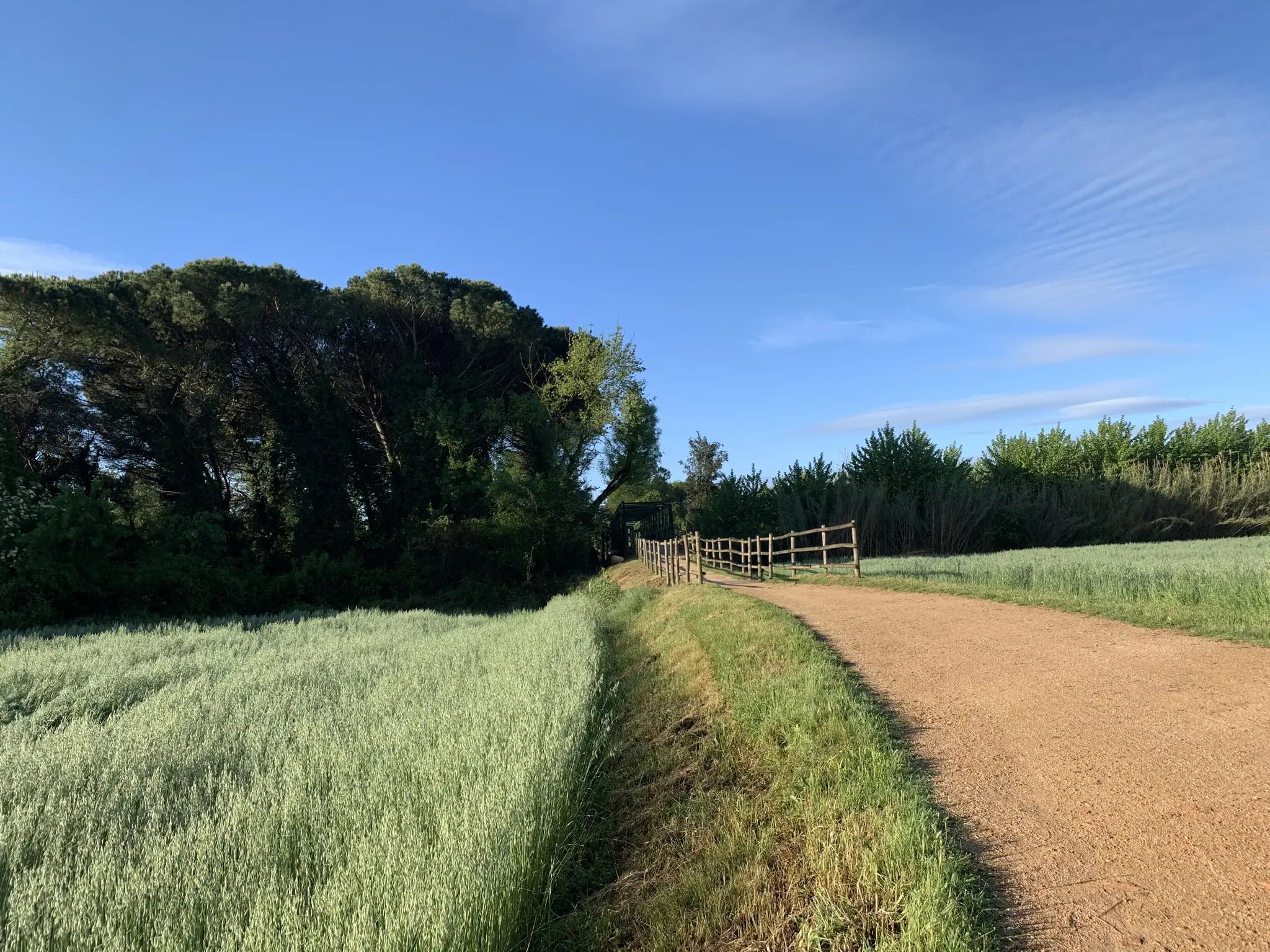
Barcelona to Girona – a road cycling mecca on your gravel bike
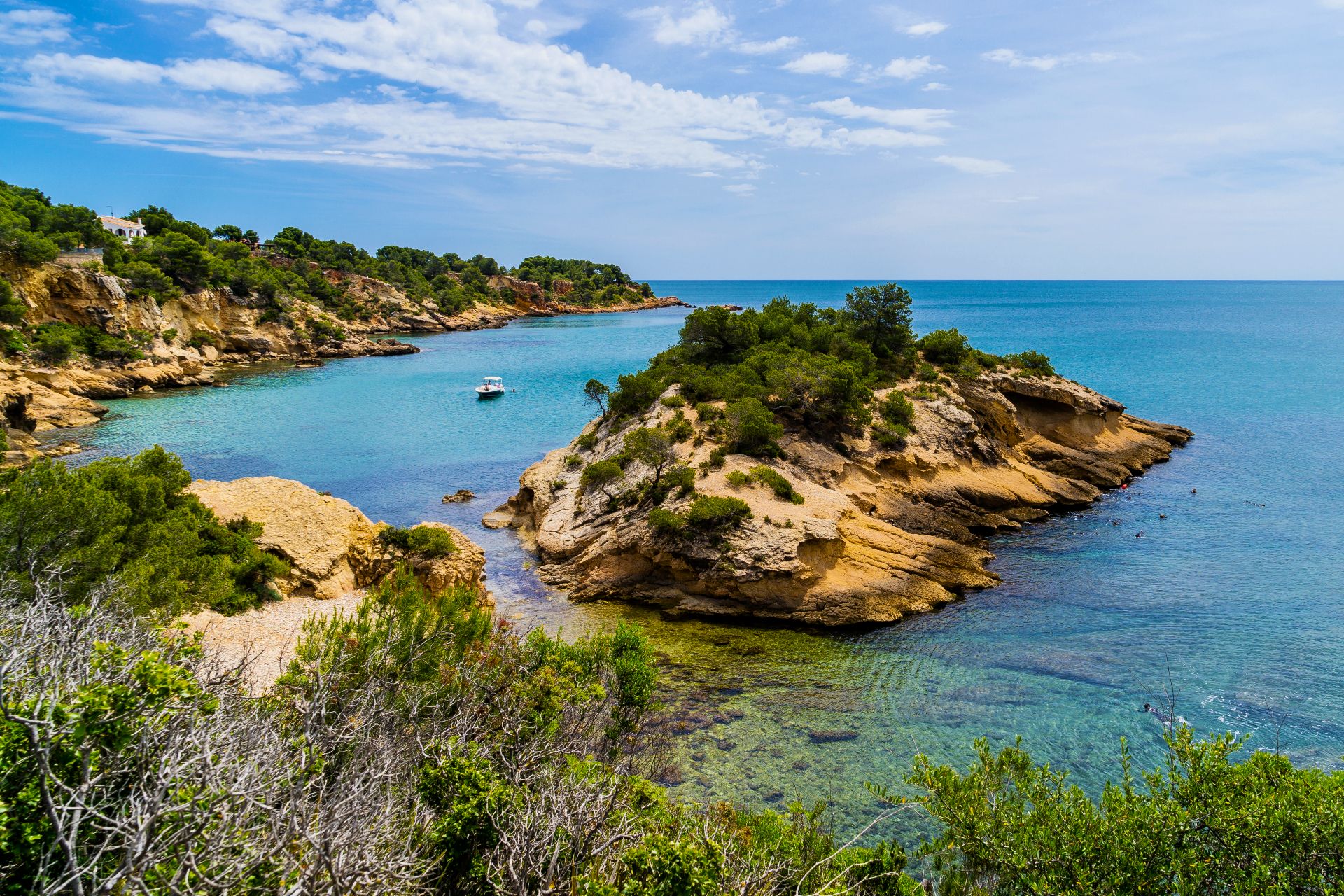
The Catalan coast on foot – Mediterranean Path (GR 92)
Road Cycling Routes around Llinars Del Vallès
MTB Trails around Llinars Del Vallès
Cycling around Llinars Del Vallès

Gravel biking around Llinars Del Vallès
Hiking around Llinars Del Vallès
Running Trails around Llinars Del Vallès


Tips from the Community

The Creu de Montcabrer crowns one of the most emblematic points of the Serralada Litoral. The current cross, placed in 1982 and blessed in 1983, is the last in a long tradition dating back to 1565. Over the centuries, it has been replaced several times due to lightning, vandalism, and even bullet impacts during the Civil War. In addition to its unique history, this place is wonderful for the spectacular views it offers: from Montseny to Barcelona, passing through the Castell de Burriac and reaching Blanes on clear days. It's ideal for stopping, breathing, and contemplating the landscape. 🚴 WARNING: Do not attempt to ride down the path that leads to the caves located just below the cross. It is not suitable for cycling and can be dangerous. It is recommended to return along the same path you came in.
3
0

La Creu de Montcabrer (311 meters) is a viewpoint with spectacular views of the sea and mountains. The iron cross that presides over it has a long history of legends related to the towns of Cabrera de Sea and Cabrils.
1
0
From the same hill and in a southerly direction (toward the sea) descends a rocky ridge. There are three caves where various archaeological remains have been found. Looking out to sea from the cross, on the left side and near the summit, there is the Cova dels Tres Cercles. On the right side and at mid-height, the Cau de les Formigues. In the center and at the bottom of the ridge, the Cave of the Good Women. Access to all of them is not easy, as you need to have a minimum of climbing skills and also wear suitable walking shoes.
3
0
Popular belief gives Montcabrer a range of peculiar characteristics such as, for example, that the rocks are magnetized or that smoke has been seen coming out of the stones because there is a volcano below. A legend says that, on an ugly winter day, a goatherd from the Pyrenees who lived in Cabrils died there. The goatherd was well known and loved for his ability to cure illnesses using mountain herbs, and this is where the name Montcabrer comes from.
3
0
On the small esplanade at the top there is a cross: the Santa Creu de Cabrils. The existence of a cross is already recorded in 1565 in a property document that mentions it as a threshold. Later on, we again find information about a cross that was planted in June 1707, in a solemn procession, to appease the rains that were damaging the crops. It was made of teak wood and was 20 spans. Inside was a glass tube with the vicar general's license and some fragments of the relics of the Holy Martyrs of Vilassar de Dalt. In July 1726, during an afternoon summer storm, a bolt of lightning tore it to pieces and scattered the bones of the saints.
4
0
The Sanctuary has its origins in the 16th century and is in the late Gothic style. Since 1984 it has been run by the Auladell Perarnau family. Our location, very close to the top of the Corredor mountain range, allows us to enjoy an excellent landscape.
6
0

There are four slopes to climb Turó de l'Home. They all share the last 6 km, once you take the detour that takes you to the highest point of the Montseny massif. The slope marked in this section is the toughest (the one that starts in Sant Celoni and passes through Mosqueroles), with almost 25 km and 1,400 m of elevation gain. It is a very challenging pass that rivals the great Alpine passes. The second slope begins at a bridge over the Tordera River, past the villages of Santa Maria de Palautordera and Sant Esteve de Palautordera. This second slope joins the first in the village of Costa del Montseny, from where it is almost 15 km to the summit of Turó de l'Home. The third slope starts in Sant Celoni (like the first) and passes through the village of Campins. At Santa Fe del Montseny, take a detour to the left to Coll de Santa Helena, from where there is only a 1 km descent to the final detour to Turó de l'Home. The fourth slope starts in the province of Girona, specifically from Viladrau, crossing Coll de Gomarra, Coll de Bordiol, Sant Marçal, Santa Fe del Montseny, Coll de Santa Helena, and Turó de l'Home. This is undoubtedly the easiest slope, although its initial section has 2 km of 10% gradients. It is a completely different slope from the previous ones.
0
0

Good views of Montseny. Good mountain bike descents.
1
0
Frequently Asked Questions
What are some recommended mountain peaks to visit around Llinars Del Vallès?
Beyond the well-known spots, consider visiting Creu de Montcabrer Summit, which offers spectacular views of both the sea and mountains and has a rich history tied to local legends. For a challenging climb with rewarding vistas, the Ascent to Turó de l'Home from Sant Celoni is a notable option within the broader Montseny massif.
Are there any historical sites or monuments on the elevated points near Llinars Del Vallès?
Yes, the region is rich in historical elevated points. La Torrassa del Moro is an ancient cylindrical watchtower with a Roman base and medieval upper level, offering panoramic views. The Corredor Sanctuary, a late Gothic religious building from the 16th century, is another significant historical site located very close to the top of the Corredor mountain range.
What kind of views can I expect from the mountain peaks in the area?
Many elevated points around Llinars Del Vallès offer breathtaking panoramic views. From La Torrassa del Moro, you can see the coastline and the Vallès region. Montalt provides magnificent views of the entire Maresme coast to the south and Montseny to the north. The Hermitage of Sant Sebastià also offers beautiful views, especially around sunset.
Are there family-friendly hiking options around Llinars Del Vallès?
While specific 'family_friendly' tags are not universally applied to all peaks, the Hermitage of Sant Sebastià is an ideal destination for a leisurely visit with a shaded area and picnic spot. The hiking routes to La Torrassa del Moro are generally considered moderate, with some loops taking 2-3 hours, which can be suitable for families depending on their activity level.
What outdoor activities can I do near these mountain peaks?
The region offers a variety of outdoor activities. You can explore numerous road cycling routes, such as the 'Canyamars Town Center – Fountain loop from Cardedeu' or the challenging 'Montseny village – Coll Formic Pass loop from Palautordera'. For mountain biking, trails like 'La Torrassa del Moro – Hermitage of Saint Sebastian loop from Llinars del Vallès' are popular. You can find more details on these activities in the Road Cycling Routes around Llinars Del Vallès and MTB Trails around Llinars Del Vallès guides.
Are there specific hiking trails that incorporate historical sites?
Yes, you can combine hiking with historical exploration. For instance, the 'Hermitage of Saint Sebastian – La Torrassa del Moro loop' is a moderate 15.1 km hike that connects two significant historical elevated points, offering both natural beauty and cultural heritage.
What is the best time to visit the mountain peaks and elevated points in Llinars Del Vallès?
The region can be enjoyed throughout the year. Spring and autumn offer pleasant temperatures for hiking and exploring. The interior of La Torrassa del Moro is open to visitors on weekends and holidays, typically from 9 AM to 1 PM, making these times ideal for accessing its terrace for 360-degree views.
Are there any challenging climbs for experienced hikers or cyclists?
Absolutely. The Ascent to Turó de l'Home from Sant Celoni is a very challenging pass, with almost 25 km and 1,400 m of elevation gain, rivalling great Alpine passes. For cyclists, routes like 'Canet de Mar Beach – Can Bordoi Pass loop from Llinars del Vallès' are rated as difficult.
What do visitors enjoy most about the mountain peaks and elevated points in this region?
Visitors highly appreciate the blend of historical significance and natural beauty. The panoramic views from spots like La Torrassa del Moro and the peaceful, natural setting of the Corredor Sanctuary are frequently highlighted. The opportunity to combine moderate hikes with exploring ancient sites and enjoying scenic vistas is a major draw.
Are there places to eat or get refreshments near the elevated points?
Yes, some locations offer amenities. The Corredor Sanctuary has a restaurant with a grill serving typical Catalan food on weekends and holidays, with options for indoor or terrace dining. La Torrassa del Moro also offers bar service, sandwiches, and barbecue on Saturdays, Sundays, and public holidays from 9 AM to 1 PM.
What is the significance of La Torrassa del Moro?
La Torrassa del Moro is an ancient cylindrical watchtower with a base dating back to the Roman era, making it an archaeological rarity. It was later converted into a hunting lodge and restored. Its strategic location provides breathtaking panoramic views, and its historical layers offer a unique glimpse into the region's past. You can learn more about its history on Wikipedia.
Can I find natural monuments or unique geological features in the area?
While the region is more known for its historical elevated points, natural features are present. Montalt is a natural summit within the Corredor mountain range, surrounded by forest, and houses a geodesic vertex. The broader Massís del Montseny and Serralada Litoral mountain ranges, which border Llinars del Vallès, offer more extensive natural mountainous terrain.
Most popular routes around Llinars Del Vallès
Most popular attractions around Llinars Del Vallès

Get inspired with the komoot mobile app


Explore more
See even more amazing summits around Llinars Del Vallès with these guides:
